The Prodigal and the Powder Keg: Setting Mercy Against a Nation's Grief
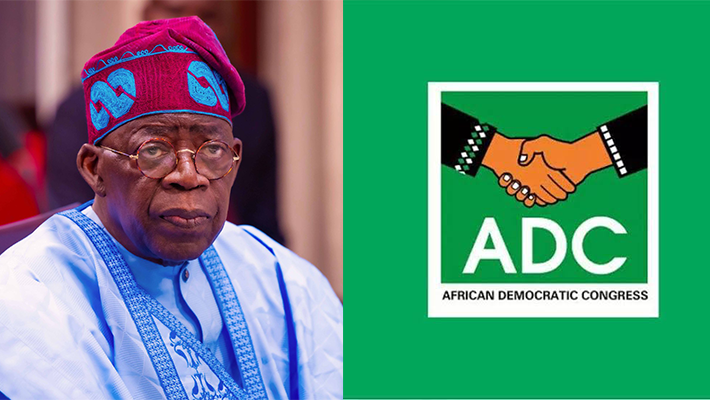
In the twilight hours of a Sunday that would soon fracture the already fragile conscience of a nation, Mallam Bolaji Abdullahi, the National Publicity Secretary of the African Democratic Congress, sat before the press and delivered a statement that landed with the force of artillery in a quiet valley. He challenged the moral arithmetic of a government that had apparently decided that nearly eight hundred men who once wielded Kalashnikovs against sleeping villages could now be welcomed back into the fold as though they were merely wayward children returning from a reckless journey. The Tinubu administration's reported plan to reintegrate approximately eight hundred so-called repentant terrorists into Nigerian communities—a program whispered about in official corridors and now shouted across front pages from Vanguard News to Peoples Gazette—has opened a fissure in the national psyche so deep that it threatens to swallow whatever remains of public trust in the state's capacity to protect its own. According to Vanguard News, which first carried the explosive story by Luminous Jannamike, the ADC did not merely disagree with the policy; it eviscerated it. The party described the move as evidence of a government that is not only soft on terror but fundamentally clueless on security, a charge that echoes through the hollowed-out marketplaces and military checkpoints of a country that has spent more than a decade burying its children at the hands of insurgency.
The party's statement, as reported by Leadership Newspaper and the Nigerian Tribune, framed the reintegration not as an act of national healing but as a dangerous failure of judgment. This failure portrays insurgents as "brothers" and even "prodigal sons" rather than as combatants in a coordinated campaign of violence. That campaign has claimed thousands of lives, destroyed ancient communities, and displaced millions across the savannas of the northeast. In that single press release, Abdullahi articulated what countless Nigerians have muttered in hushed tones across shattered IDP camps and anxious dinner tables. Terrorism is not a family dispute to be resolved with embraces and platitudes. It is a cancer that demands excision, not accommodation. Any government unable to grasp this reality may be prescribing poison while calling it medicine.
The Rhetoric of Brotherhood: How Soft Words Harden Political Divisions
As reported by Vanguard News, the ADC's statement cut to the heart of a political crisis that extends far beyond the technicalities of deradicalization programs or the bureaucratic machinery of Operation Safe Corridor. Instead, it exposed what opposition figures and security analysts alike describe as a catastrophic blurring of the line between statecraft and sentimentality in the highest corridors of power. The party's critique, which Business Day and the Nigerian Tribune both highlighted in their Sunday editions, centered on a pattern of official rhetoric that has increasingly framed violent insurgents not as enemies of the republic but as misunderstood kinfolk. Abdullahi warned that this linguistic drift risks trivializing the gravity of terrorism while simultaneously eroding the government's moral authority to govern a wounded populace. According to Peoples Gazette, the ADC declared that "this is not balance," arguing instead that the administration's approach represents a dangerous failure of judgment and political accommodation taken too far. This language resonates deeply in a political landscape where the ruling party has repeatedly promised to crush insurgency only to find itself offering what appears to many as a bureaucratic amnesty dressed in the robes of reconciliation. Political observers note that this controversy arrives at a moment when President Bola Ahmed Tinubu's government is already navigating treacherous waters of economic reform and social unrest.
The decision to embrace eight hundred former combatants—without, critics say, a transparent framework for justice or victim restitution—threatens to become the albatross that defines his security legacy. The ADC's intervention, as covered by Leadership Newspaper, reflects more than mere opposition grandstanding. It channels a visceral fear among many Nigerians that their government has mistaken the theater of peace for its substance, trading the hard work of military victory and judicial accountability for the easier spectacle of staged repentance. The controversy is not without precedent; as the Google News aggregation noted, Punch Newspapers had earlier reported widespread outrage trailing the reintegration of 744 ex-terrorists, suggesting that the current batch of nearly 800 represents not an isolated experiment but an expanding policy architecture. Yet beneath the political maneuvering lies a genuinely existential question about the nature of sovereignty itself. A state that cannot guarantee justice to its victims while offering fresh starts to their victimizers may soon discover that legitimacy, like trust, cannot be reintegrated at the barrel of a press statement.
Scarred Earth and Sacred Trust: Communities Trapped Between Memory and Reconciliation
The human geography of this crisis is etched into the scarred earth of Borno, Yobe, and Adamawa, where villages that once echoed with market-day laughter now stand as silent memorials to a decade of butchery. The announcement of reintegration has landed like salt upon wounds that have never been permitted to heal. As Vanguard News reported, the ADC explicitly warned that the planned reintegration could weaken the fight against insurgency while putting already traumatized communities at further risk. This prediction carries the weight of lived experience in regions where mothers still search for abducted daughters and farmers dare not return to fields fertilized by the bones of their neighbors. The cultural fabric of northern Nigeria, with its deep Islamic traditions of forgiveness and its communal ethos of redemption, would under ordinary circumstances provide fertile soil for reconciliation. Yet as the Nigerian Tribune and Peoples Gazette both noted, the ADC's statement forcefully rejected any framing of terrorism as a domestic quarrel, insisting that the scale of devastation demands a reckoning that transcends the personal and enters the realm of national justice. Millions have been displaced, ancient trade routes severed, and entire generations traumatized by violence that cannot be washed away with ceremonial apologies. Community leaders and trauma specialists, speaking on condition of anonymity to avoid official reprisal, have described the reintegration plan as a form of secondary victimization.
It prioritizes the psychological comfort of perpetrators over the safety and dignity of survivors who have received neither adequate compensation nor the basic assurance that their tormentors will not one day sleep in the next compound. According to Leadership Newspaper, the party stressed that anything short of a clear, transparent, and victim-centered approach risks undermining both public trust and the fight against terrorism itself. This position reflects an emerging consensus among civil society organizations that true peace cannot be built upon the silencing of victims. In the crowded internally displaced persons camps that dot the landscape like refugee cities within their own country, the language of "brothers" and "prodigal sons" does not translate into comfort but into betrayal. It suggests that the blood spilled was merely the currency of a family disagreement rather than the catastrophic price of a national failure.
The Arithmetic of Atonement: Counting Coins While Villages Count Their Dead
Beneath the emotional thunder of the ADC's criticism lies a cold economic reality that few in government seem eager to calculate. The cost of deradicalizing, rehabilitating, and reintegrating eight hundred former insurgents represents a substantial diversion of resources from the very communities those insurgents helped to impoverish. This creates a perverse accounting system where destruction is rewarded with investment and victimhood is met with further neglect. As Business Day highlighted in its coverage, the ADC's characterization of the government as soft on terror and clueless on security extends implicitly to the economic management of the conflict. The party questioned whether the millions of naira required to feed, house, counsel, and monitor repentant terrorists might not be better spent rebuilding the shattered infrastructure of Borno State or compensating farmers whose entire livelihoods vanished in clouds of smoke and terror. The Google News aggregator, drawing from Punch Newspapers and other outlets, referenced related debates surrounding Operation Safe Corridor, a program that has consumed significant federal funding since its inception yet has produced results that remain ambiguous in terms of sustainable peace and potentially counterproductive in terms of community stability. Economic analysts familiar with northeast Nigeria's reconstruction challenges note that the region requires billions of dollars in infrastructure investment, agricultural rehabilitation, and educational restoration.
Yet each former combatant reintegrated represents not only a direct cost in program funding but an opportunity cost in political attention and bureaucratic bandwidth that could have been directed toward the millions of law-abiding citizens languishing in displacement. According to Vanguard News, the ADC raised serious questions about whether the government has a clear plan to keep Nigerians safe. This query carries profound economic implications in a region where investor confidence remains shattered and where the return of former terrorists to commercial hubs could paralyze the very markets that form the backbone of survival. The party's warning, echoed across multiple platforms from Peoples Gazette to the Nigerian Tribune, suggests that an economic strategy built upon appeasement rather than justice is not merely morally bankrupt but fiscally shortsighted. No amount of deradicalization spending can purchase the social capital required to restart an economy that operates on trust.
The Digital Battlefield: Narratives, Outrage, and the Viral Architecture of Fear
In the age of instantaneous information warfare, the ADC's Sunday statement did not merely travel through the traditional arteries of Nigerian journalism. It detonated across the digital ecosystem, with headlines from Daily Post Nigeria, TheCable, and The Guardian Nigeria News cascading through WhatsApp groups, Twitter threads, and Facebook timelines with the velocity of a contagion. The story transformed a policy announcement into a national referendum on the government's competence. As TheCable's headline bluntly declared, "Nigerians furious over reintegration of repentant terrorists," capturing a sentiment that algorithmic engagement metrics amplified into a roar. This roar drowned out the more measured bureaucratic justifications offered by officials familiar with the technicalities of disarmament, demobilization, and reintegration frameworks. The technological dimension of this crisis cannot be separated from its political fallout, for in a media landscape where Vanguard News and Peoples Gazette compete for clicks in real-time, the ADC's stark framing of the issue proved far more virally potent than any government press release. The opposition framed the choice as one between justice and dangerous accommodation. This framing proved more powerful than any nuanced defense of counter-radicalization theory. Digital media scholars observing the trajectory of the story note that the administration's language of "brothers" and "prodigal sons," once confined to official podiums, became in the digital sphere a weapon turned against its makers.
It was mocked in memes, dissected in podcast rants, and weaponized by opposition influencers who understand that in Nigeria's current information economy, emotional authenticity travels farther than policy detail. Leadership Newspaper's online edition and Business Day's digital platforms both reported the story with increasing urgency as engagement metrics spiraled upward. This created a feedback loop in which public outrage compelled more coverage, which in turn deepened the outrage, until the reintegration plan began to look less like a security strategy and more like a public relations catastrophe. Yet this technological battlefield cuts both ways, for while the ADC has successfully harnessed viral outrage to challenge the government's narrative, the same digital infrastructure that amplifies criticism also serves as the medium through which disinformation, ethnic grievance, and panic can spread. The information war surrounding these eight hundred repentant men may ultimately shape their reception more decisively than any official rehabilitation curriculum ever could.
Tomorrow's Harvest: Sowing Peace or Planting the Seeds of the Next Insurgency?
As the dust settles over the ADC's rhetorical offensive and the Tinubu administration retreats into the defensive crouch of bureaucratic silence, Nigeria stands at a crossroads that will define not merely the remainder of this presidency but the security architecture of the nation for a generation. The decision to welcome eight hundred former terrorists back into the social contract is either the opening chapter of a genuine peace or the epilogue of a failed state too exhausted to demand justice. Security experts and conflict historians, drawing parallels to amnesty programs in the Niger Delta and other global deradicalization efforts, caution that reintegration without rigorous prosecution, without transparent community consultation, and without a victim-centered framework does not extinguish insurgency but merely refrigerates it. Such programs preserve the resentments and structural grievances that birthed the violence in the first place. According to Vanguard News, the ADC maintained that terrorism requires leadership that understands the stakes and is prepared to act with firmness and clarity. Many analysts fear this standard will not be met if the government continues to treat the northeast crisis as a public relations challenge to be managed rather than a moral wound to be healed. The future implications of this policy, as dissected across Leadership Newspaper, Peoples Gazette, and the Nigerian Tribune, extend into every dimension of Nigerian life.
They touch the political legitimacy of the ruling party, the social cohesion of traumatized communities, the economic recovery of a devastated region, and the informational trust that binds citizens to their government in an age of digital skepticism. If these eight hundred men return to communities that do not want them, to economies that cannot sustain them, and to justice systems that have not adjudicated their crimes, the harvest will not be peace. It will be the bitter fruit of the next radicalization cycle, sown in the fertile soil of abandonment and betrayal. The ADC's warning, delivered with the urgency of a fire alarm in a burning house, ultimately asks Nigerians to look beyond the immediate spectacle of repentance. The nation must confront the harder question of what kind of country emerges when those who destroyed lives are embraced while those who survived the destruction are asked simply to forgive and forget.
📰 Sources Cited
- Leadership Newspaper: ADC Says Tinubu Govt’s Terrorist Reintegration Plan Shows Softness On Terror
- Google News Nigeria: ADC faults FG’s plan to reintegrate repentant terrorists - The Guardian Nigeria News
- Peoples Gazette: ADC attacks Tinubu govt over planned reintegration of ‘repentant’ terrorists
- Vanguard News: ADC slams FG over plan to reintegrate 800 ‘repentant terrorists’
- Business Day: ADC faults terrorists reintegration plan
- Leadership Newspaper: ADC Says Tinubu Govt’s Terrorist Reintegration Plan Shows Softness On Terror
- Nigerian Tribune: Tinubu govt’s terrorist reintegration plan exposes dangerous softness on terror – ADC
0 Comments
Sign in to commentNo comments yet. Be the first to share your thoughts!