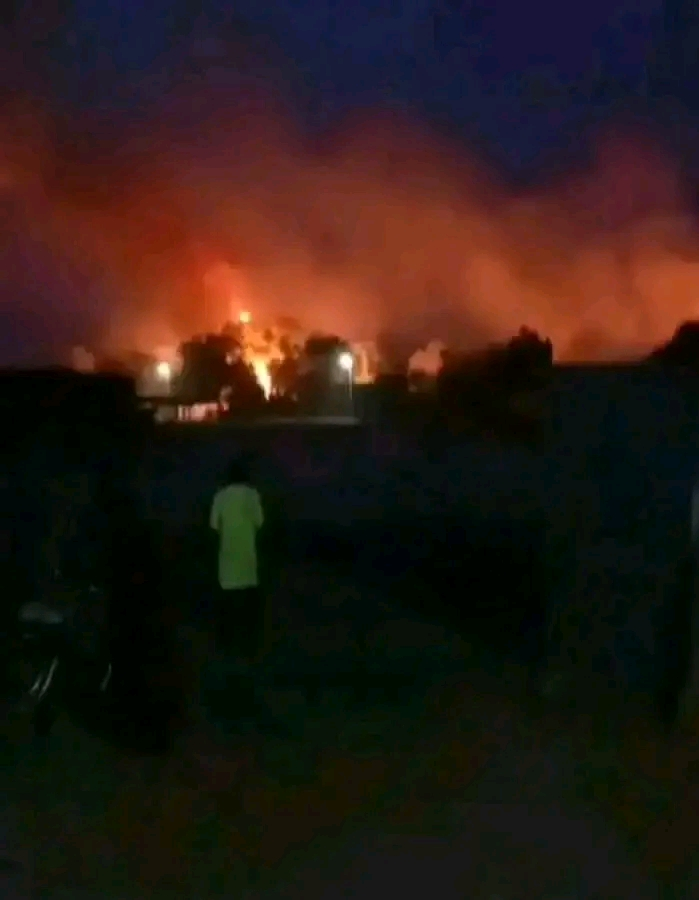
The sun had just dipped below the horizon on a fateful Saturday evening when terror descended upon Kautikari, a small village in northeastern Nigeria's Borno State. Suspected Boko Haram and ISWAP terrorists stormed the community, leaving a trail of destruction in their wake. The insurgents, known for their brutal tactics, targeted the very fabric of the community: its schools. The primary and secondary schools in Kautikari were set ablaze, their classrooms reduced to smoldering ruins. This latest attack is a stark reminder of the persistent threat that Boko Haram poses to education in the region. As reported by Vanguard News, the incident occurred around 7 p.m., sending residents fleeing into the bush for safety. The attack on Kautikari is the latest in a series of assaults on educational infrastructure in the region, perpetrated by the very same insurgents who have been waging a brutal campaign against the Nigerian state for over a decade.
The flames that engulfed the schools in Kautikari are a symptom of a larger problem: the ongoing insurgency in northeastern Nigeria. Boko Haram, which translates to "Western education is forbidden," has long been opposed to formal education, particularly for girls. The group's ideology is rooted in a radical interpretation of Islam, which rejects the values and principles of Western education. According to Channels TV, the Police Public Relations Officer, ASP Nahum Daso, confirmed that the attack on Kautikari was repelled by the Joint Task Force stationed in the area, but not before the insurgents had killed a 50-year-old man and set ablaze two classroom blocks. The attack is a stark reminder of the group's continued presence in the region and its willingness to target civilians and infrastructure.
The Shadows of Fear: Boko Haram's War on Education
The attack on Kautikari is not an isolated incident. In recent months, Boko Haram has stepped up its attacks on schools and educational institutions in the region. In May, an unspecified number of students were abducted from Mussa-Biri Primary School and Junior Day Secondary School in Askira-Uba Local Government Area of Borno State. According to Channels TV, the incident occurred in the early hours of the day, while the students were in class receiving lessons. The terrorists arrived on a large number of motorcycles, shortly after troops on a routine patrol had left the area. The abduction sent shockwaves through the community, with many parents and teachers left traumatized by the incident. The Nigerian Union of Teachers (NUT) in Borno State staged a peaceful protest, demanding the release of the abducted pupils, students, and teachers. The union's National Publicity Secretary, Yusuf Ibn-Tom, urged both the federal and state governments to intensify efforts to secure the release of the abductees and provide a safe and conducive learning environment in schools across the state.
The war on education waged by Boko Haram has had far-reaching consequences for the region. Many schools have been forced to close, leaving thousands of children without access to education. According to Daily Trust, the attack on Kautikari is a stark reminder of the need for increased security measures to protect schools and educational institutions in the region. The Nigerian government has deployed troops to the region to combat the insurgency, but the attacks continue to occur. The lack of security has created a culture of fear, with many parents and teachers reluctant to send their children to school. The economic impact of the insurgency has also been significant, with many businesses forced to close due to the insecurity.
The Economic Backdrop: Insurgency, Displacement, and Poverty
The insurgency in northeastern Nigeria has had a devastating impact on the regional economy. According to the World Bank, the conflict has resulted in the displacement of over 2 million people, with many forced to flee their homes and livelihoods. The displacement has led to a significant increase in poverty, with many families struggling to access basic necessities like food and shelter. The lack of economic opportunities has also contributed to the growth of the insurgency, with many young people drawn to the group's promise of a better life. As reported by PM News Nigeria, the attack on Kautikari has left the community in fear and confusion, with many families displaced temporarily as they sought safety away from the village. The economic impact of the insurgency has been felt across the region, with many businesses forced to close due to the insecurity.
The attack on Kautikari is also a reminder of the need for a comprehensive approach to addressing the insurgency. The Nigerian government has responded to the insurgency with a mix of military and humanitarian efforts, but more needs to be done to address the root causes of the conflict. According to Arise News, the insurgents' ability to launch attacks on remote communities like Kautikari highlights the need for improved security measures, including increased troop deployments and community-based initiatives. The government must also address the economic and social needs of the affected communities, including providing support for displaced persons and rebuilding damaged infrastructure.
Future Implications: A Blueprint for Recovery or a Band-Aid?
The attack on Kautikari is a stark reminder of the ongoing threat posed by Boko Haram to education in northeastern Nigeria. The Nigerian government must take a comprehensive approach to addressing the insurgency, including improving security measures, addressing the root causes of the conflict, and providing support for affected communities. According to Peoples Gazette, the incident has left the community traumatized, with many residents still fearful of another attack. The government must work to rebuild trust with the community and provide a safe and conducive learning environment for children. The international community must also play a role in supporting efforts to address the insurgency, including providing humanitarian assistance and supporting initiatives to promote education and economic development in the region.
In conclusion, the attack on Kautikari is a stark reminder of the need for a comprehensive approach to addressing the insurgency in northeastern Nigeria. The Nigerian government must work to improve security measures, address the root causes of the conflict, and provide support for affected communities. The international community must also play a role in supporting efforts to address the insurgency. Only through a concerted effort can we hope to rebuild the region and provide a safe and conducive learning environment for children. As the region looks to the future, it is clear that a multi-faceted approach is needed to address the complex challenges posed by the insurgency. The government, international community, and local stakeholders must work together to develop a blueprint for recovery that addresses the economic, social, and security needs of the region.
📰 Sources Cited
- Arise News: Boko Haram, ISWAP Terrorists Burn Schools In Fresh Chibok Attack
- Channels TV: Suspected Terrorists Kill One, Burn Two Classroom Blocks In Borno
- Punch Nigeria: Terrorists invade Borno school, kill one, set classrooms ablaze
- PM News Nigeria: Boko Haram escalates attacks, burns schools in latest Chibok invasion
- Peoples Gazette: One wounded as Boko Haram members raze classrooms in Chibok
- Daily Trust: BREAKING: Boko Haram sets schools on fire in Borno
- Vanguard News: Boko Haram/ISWAP terrorists set Chibok schools ablaze
0 Comments
Sign in to commentNo comments yet. Be the first to share your thoughts!