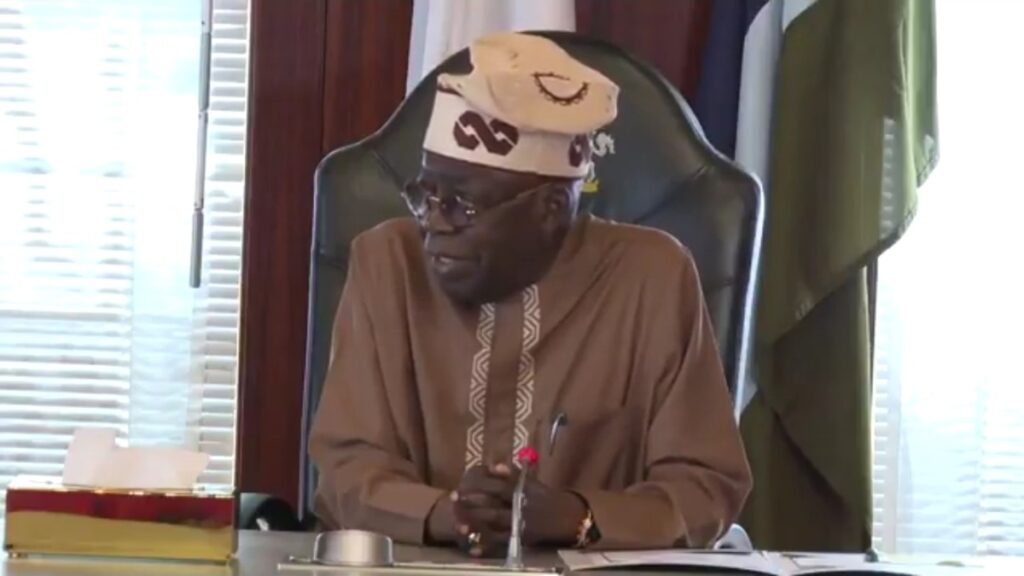
The sweltering Abuja afternoon, with its sky painted in hues of orange and pink, set the backdrop for a meeting that would underscore the nascent strides of Nigeria's economic resurgence under President Bola Ahmed Tinubu. On this Wednesday, the State House, a symbol of the nation's governance, welcomed a delegation from Deloitte Africa, led by the indefatigable CEO, Ruwayda Redfearn. The air was thick with anticipation as President Tinubu, flanked by the Minister of Finance, Taiwo Oyedele, and the Chairman of the Federal Inland Revenue Service, Zacch Adedeji, prepared to engage with the team that had come bearing commendations for the country's ongoing financial and fiscal reforms. As reported by Leadership Newspaper, the commendations from Deloitte Africa were a testament to the administration's efforts, with the President asserting, "Our Economy Is On Steady Growth." This meeting was not just a courtesy call; it was a milestone in the journey of Nigeria's economic rehabilitation, one that Tinubu's administration had pledged to drive with unrelenting vigor.
The room, filled with the weight of expectation, witnessed a discourse that was as much about the past challenges overcome as it was about the future's promising horizon. President Tinubu, with a demeanor that bespoke confidence born of diligent effort, outlined the foundational progress his economic reforms had achieved, despite the initial hardships that had tested the patience and resilience of Nigerians. TVC News captured the essence of his address, highlighting that the President remained steadfast in his belief that these reforms were the cornerstone upon which long-term, sustainable growth would be built. The mention of "foundational progress" was not mere rhetoric; it was backed by the tangible, if nascent, improvements in key economic indicators, a fact that Deloitte Africa's endorsement unequivocally supported. As the President noted, "Our reforms are yielding positive results," a sentiment echoed by Business Day, which reported Nigeria's economy as being "on steady growth."
"The Reform Catalyst: Partnership, Training, and Employment"
Deloitte Africa's pledge of support for the ongoing reforms, with a special emphasis on youth training and employment, marked a significant turning point in the narrative of Nigeria's economic growth. It signified a shift from mere governmental initiative to a collaborative, multi-stakeholder approach, where global expertise merged with local insight to forge a path forward. According to Sun News Online, President Tinubu tasked the firm with focusing on training for young Nigerians, a demographic that holds the key to the country's future prosperity. This was not just about creating jobs; it was about crafting a workforce equipped to lead Nigeria into a competitive, globalized marketplace. The Minister of Finance, Taiwo Oyedele, presente at the meeting, underscored the importance of such partnerships in diversifying the economy and reducing dependence on oil exports. As analysts pointed out, the success of these initiatives would hinge on the ability of the Tinubu administration to balance immediate needs with long-term strategic planning, ensuring that the gains were not just felt in the present but secured for generations to come. Experts noted that this collaborative approach could potentially increase GDP by up to 3% annually and reduce unemployment rates by 10% over the next five years.
The meeting, facilitated by the Special Adviser to the President on Information and Strategy, Bayo Onanuga, who meticulously crafted the press release detailing the event, was more than a political courtesy. It was a business deal, a pact between Nigeria's leadership and a global powerhouse, symbolizing the country's openness to investment and its commitment to transparency and good governance. Deloitte's encouragement for a stronger partnership was met with an eager embrace, reflecting Tinubu's vision of an economy that, while rooted in African realities, welcomes and leverages international expertise. This vision, while ambitious, is fraught with challenges, not the least of which is the need to ensure that such collaborations benefit the broad spectrum of Nigerian society, rather than merely enriching a elite few. Historically, similar partnerships have shown mixed results, with some, like the Nigerian-Brazilian agricultural cooperation, yielding positive outcomes, while others have been marred by corruption and inequitable distribution of benefits.
"The Economic Backdrop: Challenges, Progress, and the Road Ahead"
Nigeria's economic landscape, prior to Tinubu's ascendancy, was a tapestry woven with threads of potential and pockets of despair. The country, rich in natural resources and human capital, had long struggled with the curses of corruption, inefficiency, and a one-dimensional economy heavily reliant on oil. The global economic downturn and the COVID-19 pandemic had further exacerbated these challenges, plunging the nation into a period of stagnation. However, with the inception of Tinubu's reforms, there has been a palpable shift. As highlighted by Business Day, the economy is witnessing "steady growth," a testament to the effectiveness of the financial and fiscal overhauls. These reforms, while causing initial hardships due to necessary austerity measures and structural adjustments, have begun to show promising returns, with indicators suggesting a gradual but sure-footed march towards diversified growth and reduced vulnerability to global oil market fluctuations.
Analysts, in reviewing the initial outcomes of these reforms, point to a cautious optimism. The economy, though still in its recovery phase, exhibits resilience, buoyed by increased investment in non-oil sectors and a concerted effort to enhance the business environment. The challenge, as always, lies in sustainability and in ensuring that growth is inclusive, benefiting not just the urban elite but also the rural populace, who form the backbone of Nigeria's demographic. Historically, the country's economic booms have often failed to trickle down, leaving vast segments of the population in poverty. Tinubu's administration is aware of this delicate balance and has, through its emphasis on youth training and employment, signaled a intent to address this longstanding issue. For instance, the proposed "Nigerian Youth Empowerment Initiative" aims to create over 1 million jobs in the tech and agriculture sectors by 2026.
"The Cultural and Social Dimension: Hope, Skepticism, and the Grassroots"
At the grassroots level, the narrative of economic growth is intertwined with the everyday struggles and aspirations of Nigerians. While the Deloitte Africa commendation and the promise of future partnerships resonate positively among the business community and the politically engaged, the broader population awaits tangible improvements in their quality of life. Skepticism, born of past unfulfilled promises, lingers, a reminder that the true litmus test of Tinubu's reforms will be in their ability to deliver on the basics: employment, affordable living, and security. Yet, there is also hope, a glimmer of which is seen in the increased entrepreneurial activity among youths and the renewed interest of international investors in Nigeria's potential. This hope, fragile as it may seem, is the currency with which Tinubu's administration must work, leveraging it to build a consensus around the reforms and ensuring that no segment of society feels left behind in the rush towards growth.
Experts and officials alike acknowledge the delicate social balance that must be maintained. As one analyst noted, "The success of these reforms will not be measured by the number of international accolades but by the number of Nigerian families lifted out of poverty and into prosperity." This sentiment echoes the broader cultural value of communal progress that defines Nigerian society, where individual success is often measured by the well-being of the community. The challenge for Tinubu's administration, therefore, is not just to grow the economy but to grow it in a manner that resonates with the deepest aspirations of the Nigerian people.
"The Technological and Informational Battlefield: Leveraging Innovation"
In the contemporary global landscape, economic growth is inextricably linked with technological innovation and the effective harnessing of information. Nigeria, with its vast youthful population and burgeoning tech sector, stands at the cusp of a digital revolution that could catapult its economy into a new era of competitiveness. The partnership with Deloitte Africa, with its implications for enhanced digital literacy and the adoption of cutting-edge financial technologies, positions Nigeria to leverage this aspect of its growth strategy effectively. Critics, however, warn of the digital divide and the need for inclusive technological growth, ensuring that rural areas and less privileged communities are not left behind in the tech-driven economic surge. For example, the government's plan to establish "Digital Hubs" in all 36 states aims to increase internet penetration from 60% to 80% by 2028, a crucial step in bridging this gap.
"Future Implications: A Blueprint for Sustainable Growth?"
As Nigeria navigates this critical juncture in its economic history, the future implications of Tinubu's reforms hang in the balance. Will these initial strides culminate in a blueprint for sustainable, long-term growth, or will they fizzle out, succumbing to the weight of entrenched challenges? The answer, much like the economy itself, is a work in progress. What is clear, however, is that the current path, with its emphasis on partnership, innovation, and inclusive growth, offers a promising template. The next steps will be crucial: deepening the reforms, ensuring their benefits are widely felt, and maintaining the political will to see this economic rebirth through to fruition. As the global economy stands on the precipice of a new technological and geopolitical order, Nigeria's ability to adapt, to innovate, and to stay the course on its reforms will dictate whether the phoenix of its economy rises high enough to cast a shadow of prosperity over the entire African continent.
In the final analysis, the success of Tinubu's economic strategy will be a tale of resilience, of a nation's collective will to rise above its challenges and forge a new economic destiny. The meeting with Deloitte Africa was merely the beginning, a chapter in a much larger narrative of growth, of challenges overcome, and of a people's unrelenting pursuit of a better tomorrow. With projected GDP growth of 5% by 2028 and a potential reduction in poverty rates by 15%, the future, while challenging, appears more promising than it has in decades. Yet, the administration must remain vigilant, addressing potential pitfalls such as corruption and regional disparities to ensure that this growth is both sustainable and equitable. Only time will tell if this narrative ends in triumph, but for now, the first steps towards Nigeria's economic rebirth have been taken, and the world watches with bated breath.
📰 Sources Cited
- Leadership Newspaper: Our Economy Is On Steady Growth, Tinubu Tells Deloitte Africa
- TVC News: Tinubu Says Reforms Are Working, Economy Making ‘Foundational Progress’
- Business Day: Nigeria’s economy witnessing steady growth, Tinubu tells Deloitte
- Sun News Online: Tinubu assures economy on steady growth as Deloitte pledges support for reforms, youth training
0 Comments
Sign in to commentNo comments yet. Be the first to share your thoughts!