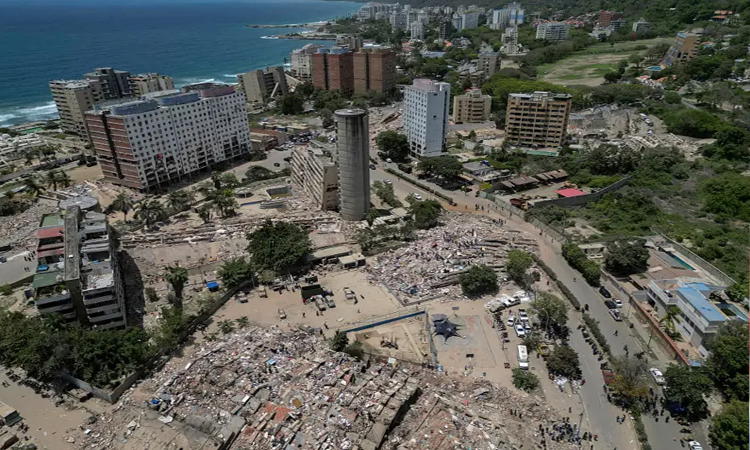
The catastrophic earthquakes that ravaged Venezuela on June 24, leaving a trail of destruction and despair in their wake, have brought to the forefront a harrowing tale of forgotten lives - those of United States deportees who found themselves in the midst of the disaster. As the death toll continues to rise, with reports indicating that it has surpassed 1,430, and thousands more injured or displaced, the international community is slowly beginning to grasp the magnitude of the humanitarian crisis unfolding in Venezuela. According to Vanguard News, rescue crews have been racing against time to find survivors in the rubble, as hopes of rescuing those trapped dwindle with each passing hour. The earthquakes, with magnitudes of 7.2 and 7.5, have not only claimed numerous lives but have also left millions on the brink of a catastrophic humanitarian crisis, with the United Nations estimating that up to 6.76 million people could be affected.
As reported by Channels TV, the United Nations migration agency has been working tirelessly to assess the damage and determine the extent of the humanitarian needs, revealing that the impact of the earthquakes is far more extensive than initially thought. The disaster has brought to light the plight of United States deportees, who, having been sent back to Venezuela, were left to fend for themselves in the aftermath of the earthquakes. Al Jazeera Africa reported that fears are growing for the safety of these deportees, who were taken to a hotel in La Guaira city, a region that was severely affected by the earthquakes. The search for these individuals continues, with many still unaccounted for, their fate hanging precariously in the balance. The Venezuelan government's response to the crisis has been hampered by the country's ongoing economic and political woes, with millions lacking access to basic necessities like sanitation and healthcare.
The Unseen Consequences: United States Deportees in the Eye of the Storm
The story of United States deportees in Venezuela is one of tragic irony - having been deported from the United States, often for minor infractions or after serving their sentences, these individuals found themselves in a foreign land, far from their families and support networks. As the earthquakes struck, they were among the most vulnerable, lacking the resources and connections to navigate the disaster. According to Punch Nigeria, the death toll from the earthquakes has risen to 1,430, with 3,238 injured, and thousands displaced, highlighting the dire need for humanitarian assistance. The United States government's role in deporting these individuals to a country they may not have lived in for years, if ever, has raised serious questions about the humanitarian implications of such actions. As TVC News reported, millions of people are now in urgent need of humanitarian assistance, with the international community scrambling to respond to the crisis.
The earthquakes have not only exposed the vulnerabilities of United States deportees but have also highlighted the broader humanitarian crisis in Venezuela. The country's economic and political instability, exacerbated by the leadership of Nicolas Maduro, has left its citizens in a precarious state, with many struggling to access basic necessities. The earthquakes have pushed the country to the brink of collapse, with the infrastructure and social services already under strain. As Blueprint Newspapers reported, the rescuers and civilians searched for earthquake survivors in the Venezuelan state of La Guaira on Saturday, amidst a scene of utter devastation. The international community's response to the crisis has been crucial, with the United States military repairing and reopening a key seaport in the hardest-hit area, as reported by Channels TV.
Humanitarian Crisis Unfolding: The Road to Recovery
As the situation in Venezuela continues to unfold, the international community is faced with the daunting task of responding to the humanitarian crisis. The earthquakes have not only caused widespread destruction but have also exposed the deep-seated vulnerabilities of the Venezuelan people. The United States deportees, among the most marginalized, are in dire need of assistance, with many still trapped or missing. According to PM News Nigeria, despite fading hopes of finding more survivors, rescue operations continue around the clock, with emergency workers refusing to abandon the search. The road to recovery will be long and arduous, requiring a sustained and coordinated effort from governments, international organizations, and civil society.
The humanitarian response to the crisis has been multifaceted, with various organizations and governments pledging support. The United States aid efforts, as reported by Vanguard News, are underway, with the military playing a crucial role in repairing critical infrastructure. However, the scale of the disaster demands a more comprehensive and sustained response. As the situation continues to evolve, it is clear that the humanitarian crisis in Venezuela will have far-reaching consequences, not just for the Venezuelan people but also for the regional and global community.
Future Implications: A Blueprint for Humanitarian Response
The devastating earthquakes in Venezuela have brought to the forefront the need for a more nuanced and compassionate approach to migration and deportation policies. The humanitarian crisis unfolding in Venezuela serves as a stark reminder of the consequences of such policies, particularly in the context of countries with fragile economies and political systems. As the international community responds to the crisis, it is imperative that a more comprehensive and sustainable approach is adopted, one that prioritizes the needs and dignity of affected individuals. According to Peoples Gazette, a man was rescued from the rubble after four days, highlighting the importance of continued rescue efforts. The fate of United States deportees in Venezuela serves as a critical test case for the global community's commitment to humanitarian principles and human rights.
As the world watches the unfolding drama in Venezuela, it is clear that the implications of this disaster will be felt for years to come. The response to this crisis will set a precedent for future humanitarian disasters, highlighting the need for a more coordinated and effective international response. The story of United States deportees in Venezuela is a tragic reminder of the human cost of policy decisions, and it is imperative that the global community learns from this tragedy to prevent similar crises in the future. The road to recovery will be long, but with a sustained and compassionate effort, it is possible to rebuild and restore the lives of those affected by this devastating disaster. The humanitarian crisis in Venezuela is a complex issue that requires a multifaceted response, involving governments, international organizations, and civil society. As the situation continues to evolve, it is clear that a more nuanced and compassionate approach is needed to address the needs of affected individuals and communities.
📰 Sources Cited
- Vanguard News: Venezuela quakes kill 1,400 as time running out to find survivors
- Punch Nigeria: 3,238 injured as Venezuela earthquakes death hits 1,430
- TVC News: Venezuela Earthquake Death Toll Rises to 1,430 as Millions Face Humanitarian Crisis
- PM News Nigeria: ‘The worst disaster in 123 years’: Venezuela reels as quake death toll hits 1,430
- Blueprint Newspapers: Venezuela earthquake death toll rises to 1,430
- Channels TV: Up To 6.7m People Could Be Affected By Venezuela Earthquakes — IOM
- Vanguard News: Earthquakes in Venezuela kill 920, thousands missing
- Channels TV: Venezuela Begins Burial Of Quake Victims, Key Port Opens With United States Aid
- Al Jazeera Africa: Fears for people deported from United States to Venezuela hours before earthquakes hit
- Peoples Gazette: Venezuela Earthquakes: Man rescued from rubble after four days as death toll rises above 1,700
0 Comments
Sign in to commentNo comments yet. Be the first to share your thoughts!