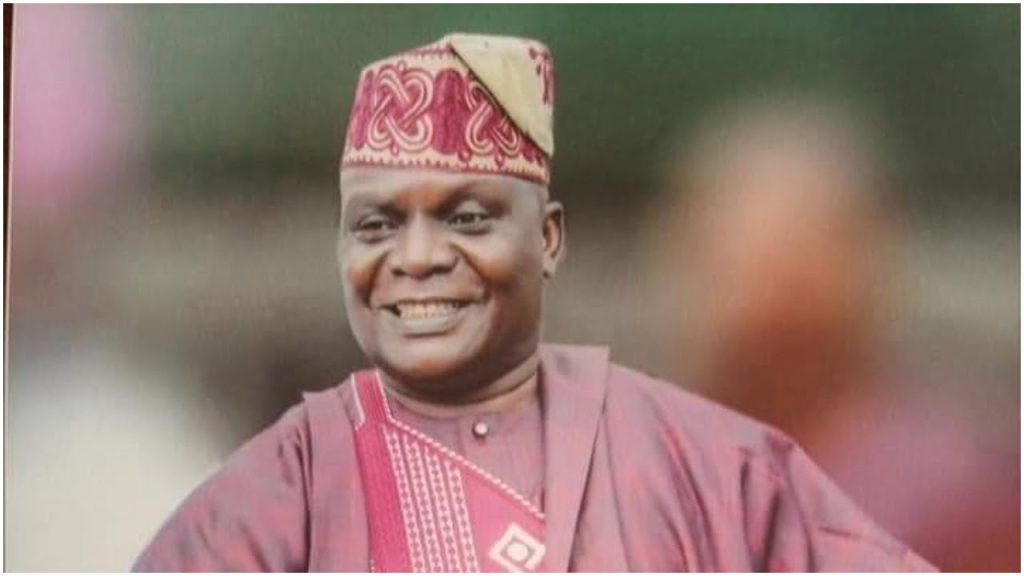
The early morning light over Osun State filtered through a haze of anticipation as voters drifted toward polling units, their footsteps echoing on roads that had become arteries of a democratic pulse. In the weeks leading up to the governorship contest, the air had thickened with rumors, each whisper carrying the weight of past elections and the promise of a new chapter. Social media buzzed with a tweet from the global afro‑beat star Davido, who claimed that the chairman of the Peoples Democratic Party, Sunday Bisi, had been seized from his Ilesa residence by police officers around two o’clock in the afternoon, a claim that rippled through both supporter camps and neutral observers alike. Simultaneously, reports from grassroots contacts painted a picture of cash changing hands in quiet corners of market stalls and polling booths, with allegations that the All Progressives Congress and the Accord Party were offering sums ranging from two thousand five hundred to twenty thousand naira per voter, a practice that turned the secret ballot into a transactional exchange. The Imole Campaign Council, buoyed by what it described as an overwhelming show of support for incumbent Governor Ademola Adeleke, projected a victory margin so wide it would render any contest moot, while also accusing the APC of collaborating with security forces to intimidate opposition supporters through arrests and the deployment of soldiers.
Within hours of voting commencing, the Director‑General of the Adeleke campaign, Senator Lere Oyewumi, stood before journalists and asserted that fifty‑two individuals had been dragged from the residence of a local lawmaker in Irewole, their detention framed as part of a broader pattern of arrests targeting Accord Party affiliates. Meanwhile, the Independent Corrupt Practices and Other Related Offences Commission deployed monitors to Ejigbo, their presence a silent reminder that the specter of vote‑buying had not gone unnoticed by anti‑graft bodies, even as no arrests or seizures were announced at the time of reporting. In a stark turn, hoodlums descended upon the polling unit of the African Democratic Congress candidate in Ejigbo, smashing the windows of journalists’ vehicles and forcing electoral officials to suspend voting amid a chaotic scene that underscored the fragility of press freedom during the exercise. All these threads—arrests, cash incentives, campaign bravado, security deployments, media attacks, and institutional oversight—wove together a tableau that was as much about the mechanics of an election as it was about the soul of a state navigating the turbulent waters of democratic consolidation.
The Stage of Allegations: Arrests, Accusations, and the Audible Whisper of Vote‑Buying
The narrative of the Osun governorship election began to unfold like a courtroom drama, each allegation a piece of evidence presented before an unseen jury of citizens. Davido’s tweet, though unverified by police command, became a flashpoint that illuminated the precarious relationship between celebrity influence and political perception, prompting supporters of the PDP to rally around the claim that Sunday Bisi’s arrest was an attempt to decapitate the opposition’s grassroots machinery just as voters were heading to the polls. In the same breath, the Politics Nigeria report detailed specific figures offered by competing parties, noting that a voter at Eleye Open Space in Irewole Local Government Area asserted that Accord, the party of Governor Adeleke, had handed out N2,500 while the APC’s candidate, Bola Oyebamiji, was said to be distributing a staggering N20,000, a disparity that hinted at differing strategies of inducement and perhaps differing access to resources. These claims were not isolated; they echoed across localities, with residents of Ilesa describing APC agents paying N20,000 per voter and Accord offering N10,000 in some zones, while in Ila the amounts reportedly fluctuated as Accord raised its offer from N10,000 to N20,000 and the APC hovered around N15,000, and in Ile‑Ife a similar pattern emerged with APC at N15,000 and Accord at N10,000, suggesting a fluid market where loyalty was bid upon in real time.
The Imole Campaign Council’s statement, released through its spokesperson Pelumi Olajengbesi, amplified the sense of an uneven playing field, alleging that APC officials were offering voters N50,000 and N25,000 to “harvest” their votes, a claim that, if true, would represent a scale of vote‑buying far beyond the modest sums cited by individual voters and would point to a coordinated effort to overwhelm the electoral process with financial muscle. Senator Lere Oyewumi’s allegation of fifty‑two arrests at a lawmaker’s residence added a visceral layer to the narrative, describing how roughly two dozen police officers stormed the property in the early hours, smashed the gate, and detained occupants including the local Accord Party chairman, an act he characterized as intimidation designed to keep opposition supporters away from their polling units. Oyewumi further contended that this was part of a series of pre‑election arrests, citing the detention of the Accord Party chairman in Ward 6 and a youth leader days earlier, all of whom, he said, were being held in Osogbo without any reasonable offense merely to prevent their participation in the vote. The convergence of these allegations—celebrity‑driven arrests, granular cash offers, sweeping campaign claims, and targeted detentions—created a mosaic that suggested the election was being fought not only over policy platforms but also over the very mechanisms through which citizens could express their will.
The Economic Undercurrent: Cash, Promises, and the Market of Loyalty
Beneath the surface of political rhetoric lay an economic current that flowed through the election like a subterranean river, shaping voter behavior in ways that campaign slogans could not capture. The monetary figures cited by witnesses and reported by Politics Nigeria transformed the act of voting into a quasi‑economic decision, where the immediate gain of a few thousand naira could outweigh longer‑term considerations of governance and development. In areas such as Eleye Open Space, the alleged N2,500 from Accord and the N20,000 from APC presented a stark choice: accept a modest token from the incumbent’s party or hold out for a substantially larger sum from the challenger, a dynamic that turned polling units into impromptu markets where the commodity was the voter’s endorsement. This transactional atmosphere was further complicated by reports that agents from both parties had been distributing between N10,000 and N20,000 in various local government areas, suggesting a competitive bidding war that varied from ward to ward, with some voters claiming to have collected money from both sides, thereby hedging their bets in a climate of uncertainty. The Imole Campaign Council’s accusation that APC officials were offering N50,000 and N25,000 to “harvest” votes, if substantiated, would indicate a willingness to invest heavily in securing electoral outcomes, perhaps reflecting the party’s calculation that the cost of buying votes was lower than the cost of losing control of a state rich in agricultural potential and mineral resources.
Such expenditures, however, raise questions about the source of funds and the broader implications for public finance, as money diverted to vote‑buying could otherwise be allocated to infrastructure, health, or education—sectors that are critical to Osun’s long‑term prosperity. Moreover, the presence of cash incentives risks eroding the normative foundation of democratic participation, replacing civic duty with a short‑term profit motive and potentially fostering a culture where electoral outcomes are perceived as purchasable rather than earned through policy merit. The economic dimension, therefore, is not merely a side note to the political contest; it is a powerful undercurrent that can shift the tide of an election, influence voter turnout, and leave lasting imprints on the relationship between citizens and the state.
The Cultural Crossroads: Youth, Music, and the Militia of Misrepresentation
Culture, in its many forms, intersected with the electoral process in Osun, lending the contest a distinctive rhythm that resonated beyond the confines of policy papers and campaign rallies. The involvement of Davido, a globally recognized afro‑beat artist whose influence stretches across continents, highlighted how popular culture can become a conduit for political messaging, turning a tweet into a rallying cry that amplified claims of arrest and mobilized fans who might otherwise remain disengaged from partisan politics. His platform, wielded with the immediacy of social media, transformed a local allegation into a national conversation, illustrating the power of celebrity to shape perceptions of legitimacy and injustice in real time. Parallel to this musical influence, the youthful energy of Osun’s populace manifested in both vibrant support bases and, disturbingly, in the mobilization of hoodlums who disrupted voting and attacked journalists in Ejigbo, their actions a stark reminder that cultural expression can also take violent forms when channeled through illicit networks. The assault on media personnel—windscreens smashed, side windows shattered, reporters narrowly escaping physical harm—struck at the heart of democratic culture, which depends on a free press to bear witness, to question, and to hold power accountable. When journalists are targeted, the cultural contract that undergirds transparency frays, leaving citizens to rely on fragmented rumors and partisan narratives.
Moreover, the allegations of soldiers being deployed to arrest Accord Party campaigners, as asserted by the Imole Campaign Council, introduced a militaristic timbre to the cultural landscape, suggesting that the symbols of state authority were being employed not to protect the electoral process but to suppress dissent. This blending of music, youth activism, media intimidation, and possible militarization created a cultural tableau where the election was not merely a political event but a stage upon which competing identities—celebrant, activist, enforcer, and victim—performed their roles, each seeking to define the meaning of citizenship in Osun. The cultural dimension, therefore, serves as both a mirror and a mold, reflecting societal values while simultaneously shaping the possibilities for democratic engagement.
Future Implications: A Blueprint for Ballot Integrity or a Band‑Aid on Broken Trust?
Looking ahead, the lessons embedded in the Osun governorship election offer a critical juncture for Nigeria’s democratic trajectory, presenting policymakers, civil society, and international observers with a choice between instituting robust reforms or applying superficial patches to a system strained by mistrust. The allegations of vote‑buying, whether proven or not, underscore the necessity of strengthening the enforcement capabilities of bodies such as the Independent Corrupt Practices and Other Related Offences Commission, ensuring that monitoring translates into tangible consequences for those who attempt to commodify the ballot. Simultaneously, the claims of arbitrary arrests and the deployment of security forces to intimidate opposition supporters point to a urgent need for clear, enforceable guidelines governing the conduct of police and military personnel during elections, perhaps through the establishment of independent oversight panels equipped with real‑time reporting mechanisms and the authority to sanction abuses. The role of social media, exemplified by Davido’s tweet, suggests that platforms must be leveraged not only for rapid information dissemination but also for fact‑checking initiatives that can mitigate the spread of unverified claims that may inflame tensions. Furthermore, the attacks on journalists highlight the imperative to safeguard press freedom through protective legislation, rapid response units, and international solidarity networks that can deter violence against media workers and ensure that the public receives accurate, unfiltered accounts of electoral proceedings.
From a cultural standpoint, investing in civic education programs that emphasize the intrinsic value of voting—beyond immediate material gain—could help shift the electorate’s focus from transactional inducements to long‑term national development. Finally, fostering dialogue between political parties, traditional institutions, and youth organizations may create a consensus framework that addresses the root causes of electoral violence and mistrust, paving the way for elections that are perceived not as battles to be won through cash or coercion, but as collective exercises in self‑determination. If Osun can transform the challenges highlighted in this election into a catalyst for comprehensive reform, it may offer a blueprint for other states grappling with similar dilemmas; if, however, the response remains limited to ad‑hoc statements and isolated interventions, the election risk becoming merely a band‑aid on a deeper wound, leaving the democratic process vulnerable to the same cycles of allegation, intimidation, and disillusionment that have plagued past contests. The path forward, therefore, demands both courage and creativity, a willingness to confront uncomfortable truths, and the resolve to build a system where the ballot truly reflects the will of the people, untainted by cash, fear, or fear‑induced silence.
📰 Sources Cited
- Vanguard News: Osun Poll: Davido alleges arrest of PDP chairman Sunday Bisi
- Politics Nigeria: How Much APC, Accord Allegedly Paid Voters in Osun Election Emerges
- Vanguard News: Osun election: Adeleke will win with wide margin, campaign council boasts
- Vanguard News: Adeleke campaign DG alleges arrest of 52 voters in lawmaker’s residence
- Vanguard News: Osun Election: ICPC monitors polling units amid vote-buying allegations
- Vanguard News: Osun Election: Hoodlums attack journalists as voting stops at ADC candidate’s unit in Ejigbo
0 Comments
Sign in to commentNo comments yet. Be the first to share your thoughts!