The Anatomy of a Warning: When the Regulator's Pen Becomes a Sword
The dry season heat had barely begun to lift from Abuja when the National Broadcasting Commission released its missive, a bureaucratic warning that would, within hours, ignite the kind of political firestorm that only an approaching election season can fuel. According to Daily Trust, the commission cautioned broadcasters against bullying guests, misuse of platforms, and other code breaches, while Sun News Online reported that the NBC specifically warned media presenters against passing opinions as facts or using their platforms to intimidate guests as the 2027 general election draws closer. With President Bola Ahmed Tinubu widely expected to seek re-election and opposition figures already marshalling forces under the African Democratic Congress coalition framework, the commission's insistence on "strict and uncompromised compliance" with the Nigeria Broadcasting Code felt less like a routine administrative reminder and more like the opening salvo in a war over narrative control. The regulator made clear that any anchor who "expresses personal opinion as fact, bullies or intimidates a guest, or denies fair hearing to opposing views" would be classified as committing a Class B offence, a designation that carries the implicit threat of sanctions capable of shuttering programmes or crippling licences. By Saturday, the advisory had found its most prominent critic in former Vice President Atiku Abubakar, who took to his X handle to deliver a philippic that would reverberate through the nation's media houses and political war rooms.
As Leadership Newspaper reported, Atiku described the directive as yet another troubling attempt to muzzle the media and shrink the space for free expression in a country where the press has long served as both the conscience and the battleground of democracy. In the calculus of Nigerian power, where regulatory pronouncements often carry the weight of political instruction, the NBC's timing—coming precisely as the nation's political thermometer begins to rise—suggested to observers across the spectrum that this was no ordinary enforcement notice but rather a harbinger of the contest to come.
The Fourth Estate Trembles: Press Freedom in an Age of Weaponised Ethics
Atiku's statement, as reported by Daily Trust and Politics Nigeria, was not merely a defence of journalistic privilege but a broadside against what he perceives as a systematic erosion of democratic discourse. "The Code of Conduct advisory issued by the National Broadcasting Commission is yet another troubling attempt to muzzle the media and shrink the space for free expression in Nigeria," the former vice-president declared, his words carrying the weight of a man who has stood at the pinnacle of power and now finds himself cast in the role of chief antagonist. According to Politics Nigeria, Atiku argued that Nigeria's media industry has grown into a formidable institution respected globally for its resilience and professionalism, an achievement he implied was now under threat not from market forces or technological disruption, but from the very regulator meant to nurture its development. The Nigerian Tribune captured his central thesis with crystalline precision: ethical standards, he maintained, are not seasonal tools to be weaponised during campaigns but constant obligations that should apply with equal force in election years and in the mundane intervals between them. As Leadership Newspaper noted, Atiku expressed alarm that each time elections approach, the NBC resorts to heavy-handed directives that do more to silence dissent than to uphold ethical journalism, a pattern he suggested exposes a deeper agenda—a government more interested in controlling narratives than in permitting a free, fair, and transparent electoral process. "I stand firmly with Nigeria's broadcast industry and all media platforms resisting this creeping censorship," he stated, his declaration transforming a regulatory advisory into a referendum on the health of the nation's democracy and setting the stage for the fierce counterattack that would follow before the weekend had ended.
The Ghost of 2007: Memory, Hypocrisy, and the Politics of Selective Amnesia
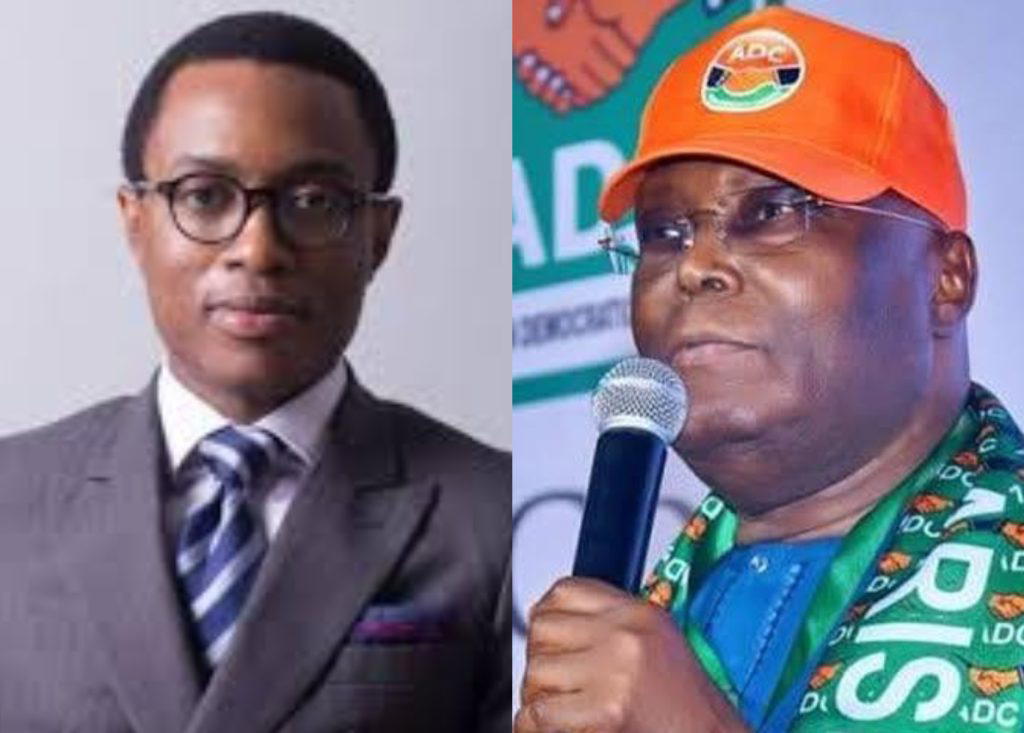
The response from the presidency arrived with the swiftness of a digital-age rebuttal, delivered not through the stately channels of a formal government communique but via the same social media battlefield where Atiku had launched his attack. Otega Ogra, Senior Special Assistant to President Tinubu on Digital Engagement, Strategy and New Media, posted his counterstatement on X on Sunday, and as Vanguard News reported, he wasted little time before deploying the sharpest weapon in political warfare: historical contradiction. "First off, Alhaji Atiku Abubakar... are you saying the NBC regulatory warning on January 17, 2007 for broadcasters to follow the code of practice when you were VP was an attempt by your administration to illegally muzzle opposition?" Ogra demanded, his question hanging in the digital ether like a challenge hurled across a duelist's field. The Vanguard article detailed how the presidential aide accused Atiku of failing to distinguish between a regulator performing its statutory duties and regulatory overreach, asking whether the former vice-president was projecting his own authoritarian instincts onto the current administration. But Ogra did not stop at the 2007 parallel; according to the same Vanguard report, he pivoted to Atiku's record as Chairman of the Nigeria Council on Privatisation, alleging that nearly every action taken under his stewardship led to failures across many fronts, citing NITEL, Nigeria Airways, and Ajaokuta Steel Company as monuments to mismanagement.
Sun News Online captured the broader context, noting that the NBC's advisory comes amid rising political activity ahead of the 2027 elections, where the ruling party is expected to field President Tinubu for re-election while opposition figures continue consultations under the ADC coalition. With a final rhetorical flourish that seemed designed to wound as much as to warn, Ogra urged the former vice-president to "proofread what your handlers are writing on your behalf," transforming a debate about media freedom into a personal referendum on credibility and casting a long shadow over the earnestness of Atiku's defence of the press.
The Digital Colosseum: X, Algorithms, and the Velocity of Political Memory
In an era where the public square has been digitised and compressed into the glowing rectangles of smartphones, the Atiku-NBC dispute illuminates the profound transformation of Nigeria's political discourse from the analogue solemnity of broadcast studios to the frenetic, algorithm-driven battleground of social media. Peoples Gazette noted that Atiku said the timing and tone of the regulations expose a deeper agenda, but it was on X—formerly Twitter—that this agenda was most hotly contested, with Ogra's Sunday rebuttal demonstrating how quickly the presidency could mobilise its digital apparatus to counter narrative threats in real time. The technological dimension of this conflict extends far beyond the choice of platform; as Politics Nigeria reported, Atiku's original statement accused the Tinubu administration of attempting to stifle the media ahead of 2027, a charge that travelled from his X handle to newsrooms across the federation within minutes, bypassing the traditional gatekeepers that the NBC advisory was explicitly designed to regulate. Vanguard News captured this irony in its reporting, noting that while the commission warned television broadcasters and anchors against breaches of the Nigerian Broadcasting Code, the most consequential journalism and political commentary increasingly occurs not in licensed studios but in the unregulated wilderness of digital feeds and encrypted channels.
For a generation of Nigerians who consume their political news through mobile data rather than terrestrial antennas, the NBC's insistence on fairness, balance, and accuracy in traditional broadcasting can feel almost quaint, a regulatory framework designed for a mediascape that is rapidly vanishing. Yet as Atiku and the presidency traded barbs across the digital ether, both sides were unwittingly proving the former vice-president's point: in a truly free information ecosystem, ideas compete in the open market of public opinion, subject not to the sanction of regulators but to the judgment of citizens scrolling through their feeds at the speed of thought.
The Ledger of Liberty: Economic Stakes and the Cultural Architecture of Dissent
Beneath the volley of accusations and historical counter-accusations lies a terrain of economic and cultural significance that few commentators have fully excavated, for the regulation of Nigeria's broadcast media is never merely about the technical enforcement of ethical codes but about the allocation of a scarce and valuable resource: the public's attention. Daily Trust reported that the NBC warned broadcasters against bullying guests, misuse of platforms, and other code breaches, yet every seasoned market observer understands that in an economy where advertising revenue flows toward platforms that can deliver engaged audiences, the threat of regulatory sanctions functions as a chilling tax on controversial speech, skewing investment toward safe, government-friendly content and away from the adversarial journalism that democratic accountability requires. The cultural resonance of Atiku's defence, as captured by Leadership Newspaper and Sun News Online, taps into a deep well of Nigerian historical memory in which the press has served as the primary vehicle for anti-colonial resistance, military-era opposition, and the articulation of ethnic and regional aspirations that official channels would prefer muted; to silence the broadcaster, in this cultural calculus, is to silence the nation's pluralistic soul. When Atiku praised the media as a formidable institution respected globally for its resilience and professionalism, he was invoking not just a professional guild but a cultural institution that has absorbed the shocks of civil war, dictatorship, and economic collapse.
The reference by Ogra to the failures of NITEL, Nigeria Airways, and Ajaokuta Steel Company—enterprises that were meant to anchor Nigeria's economic sovereignty but instead became synonyms for waste—serves as an unintentional reminder that the mismanagement of public institutions extends to the information economy, where state control over narrative can devastate investor confidence as surely as failed privatisations devastated industrial capacity. In this light, the NBC advisory is not an isolated bureaucratic intervention but a symptom of a broader pattern where economic uncertainty and electoral anxiety converge to produce a governance model that treats information as a threat to be managed rather than a public good to be cultivated.
Future Implications: The Architecture of Silence and the Sound of 2027
As the dust settles on this weekend's rhetorical conflagration, the contours of Nigeria's 2027 electoral landscape are coming into sharper, more troubling focus, revealing a polity where the rules of engagement are being rewritten not in legislative chambers but in the terse statements of regulatory bodies and the viral posts of political operatives. According to Peoples Gazette, Atiku warned that the timing and tone of the NBC's regulations expose a deeper agenda, and if the months ahead follow the trajectory established by this advisory, analysts predict a steady escalation in confrontations between state regulators and media organisations. The Nigerian Tribune noted that Atiku, as a presidential candidate aspirant on the platform of the opposition African Democratic Congress, has positioned himself as the defender of press freedom, a stance that suggests the media will become an early and sustained battlefield in the opposition's broader strategy against the ruling party. Vanguard News captured the presidency's position equally clearly, reporting that Ogra and the Tinubu administration view the NBC's actions as standard regulatory responsibility rather than overreach, setting up a constitutional and philosophical clash that will likely dominate the pre-election period. For the thousands of journalists, producers, and station owners who must now navigate the vague strictures against expressing personal opinion as fact or denying fair hearing to opposing views, the economic and professional risks of non-compliance may prove more potent than any formal censorship, creating what one media analyst might call a self-censoring ecosystem where the fear of Class B offences produces a sterile, anodyne public discourse.
Yet history suggests that Nigerian media has rarely submitted quietly to regulatory shackles; from the colonial-era newspapers to the underground pamphlets of the military years, the nation's journalistic tradition has thrived precisely in the gaps between official prohibition and popular demand. As Atiku and the Tinubu administration trade historical accusations across the digital divide, the ultimate arbiter will not be the NBC's enforcement unit nor the presidency's social media team, but the Nigerian public itself, whose hunger for unvarnished truth in the lead-up to 2027 will either render this advisory a dead letter or transform it into the foundation of a more constrained, more anxious democratic experiment. Whether the ballot of 2027 is preceded by a vibrant cacophony of competing voices or by the hollow silence of a muzzled republic may well depend on how this first skirmish is ultimately resolved.
📰 Sources Cited
- Leadership Newspaper: Atiku Slams NBC Over Election Advisory, Says ‘It’s An Attempt To Muzzle Media’
- Vanguard News: Tinubu’s aide slams Atiku for criticising NBC over directive to media
- Nigerian Tribune: Atiku opposes NBC advisory code, calls it attempt to muzzle media
- Sun News Online: 2027: Atiku knocks NBC, says advisory aimed at silencing opposition
- Politics Nigeria: Atiku accuses Tinubu’s govt of plans to gag media, silence dissent ahead of 2027 elections
- Daily Trust: ‘Attempt to Stifle Free Speech’, Atiku rejects NBC Advisory
- Peoples Gazette: Atiku faults NBC over media advisory on 2027 elections
- Vanguard News: Atiku warns NBC directive could undermine media independence
0 Comments
Sign in to commentNo comments yet. Be the first to share your thoughts!