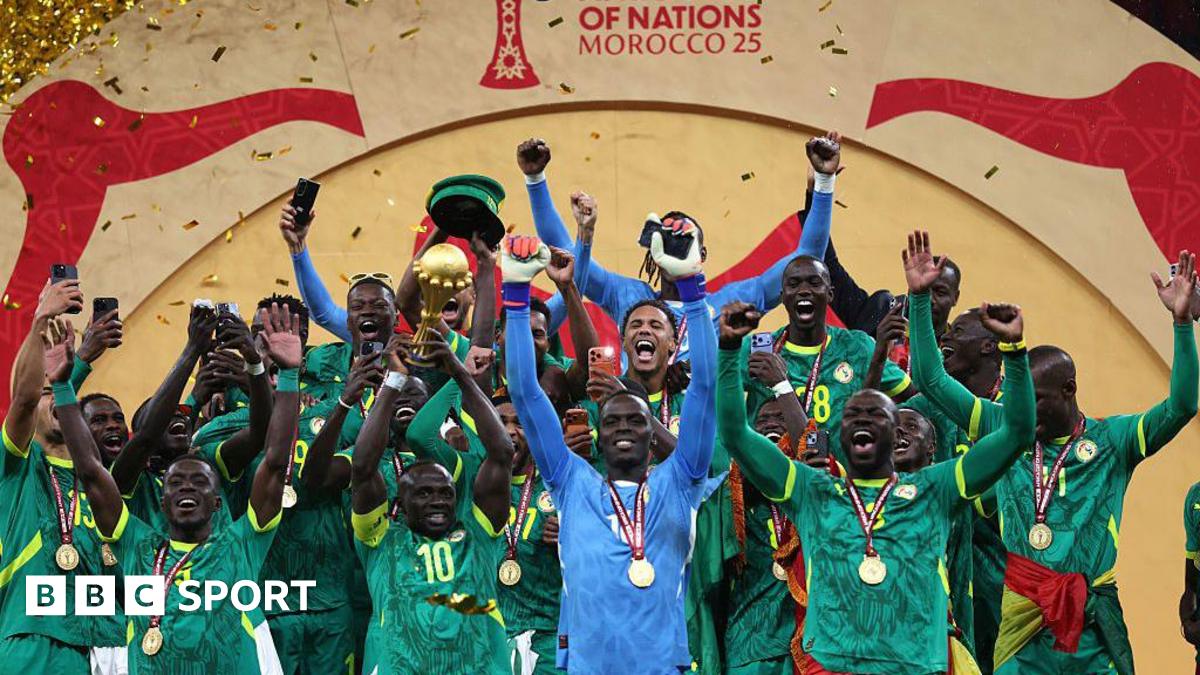
The Echoes of a Stadium's Silence: A Finale Forfeited
The Echoes of a Stadium's Silence: A Finale Forfeited
Under the African sun, the Prince Moulay Abdellah Stadium in Rabat bore witness to a tale of triumph and tribulation. The stands, usually alive with the vibrant chants of football faithful, echoed with a profound silence on the night of 18th January 2026, as the dust settled on a contentious final that would forever alter the landscape of African football. The Confederation of African Football (CAF) Appeal Board, in a move that reverberated across the continent, declared Senegal forfeited the AFCON 2025 final, awarding Morocco a 3-0 victory under Article 84 of the competition regulations, as reported by AfricaNews.com. The decision, a thunderclap in the calm, swiftly turned the joy of victory into the agony of defeat for the Senegalese national team and their supporters.
The dramatic turn of events unfolded as Senegal's players walked off the pitch over a refereeing decision, a protest that would seal their fate. The CAF Appeal Board, in its ruling, held that Senegal’s conduct breached Articles 82 and 84, thus validating Morocco’s protest and confirming the forfeiture decision in favor of the Fédération Royale Marocaine de Football, as detailed by Al Jazeera Africa. The board also found the Fédération Sénégalaise de Football infringed Article 82 through its team’s conduct during the disputed match, a call that would resonate with the echoes of dissent and the silence of a stadium devoid of its rightful conclusion.
The Tapestry of Controversy: Weaving Dispute and Decision
The threads of this controversy are woven deep into the fabric of the 2025 Africa Cup of Nations, with each strand representing a moment of tension, a decision point, and a consequence. BBC News Africa highlighted the Moroccan申诉, which played a pivotal role in overturning the result of their final defeat to Senegal. The appeal board's decision to uphold Morocco’s appeal and set aside the earlier decision of the CAF Disciplinary Board on the final match dispute has been a point of contention, sparking debates on fairness and the spirit of the game.
Morocco's players, including the celebrated Brahim Díaz and Achraf Hakimi, who were seen celebrating a goal during the quarter-final against Cameroon in Rabat, as captured by BellaNaija, found themselves at the center of this whirlwind. Their elation, their victory, was now marred by the shadow of a forfeiture, a victory not won on the field but granted by the boardroom. The CAF, in its official statement, held Morocco responsible for the conduct of ball boys but reduced the fine to 50,000 dollars, a decision that further complicated the narrative of accountability and sanction.
The Ripple Effect: Beyond the Stadium's Shadow
The ramifications of the CAF's decision extend beyond the borders of Morocco and Senegal, touching the very heart of African football and its global standing. The incident has prompted a re-examination of the rules governing disciplinary measures and match forfeitures, with experts and analysts weighing in on the implications for future tournaments. Punch Nigeria reported on the broader discussion this incident has sparked, one that delves into the cultural and social dimensions of the sport, questioning the very essence of what it means to compete and to win.
The economic backdrop of this saga is not to be overlooked. The Africa Cup of Nations is a significant event, attracting millions of viewers and substantial investment. The reputational impact of such a high-profile forfeiture could have far-reaching effects on the financial viability of future tournaments, as sponsors and broadcasters reassess their involvement in light of such controversies.
The Road Ahead: Navigating the Uncharted
As the dust begins to settle on the 2025 Africa Cup of Nations, the footballing world is left to ponder the future implications of this unprecedented decision. The CAF Appeal Board's ruling has set a precedent that will undoubtedly shape the jurisprudence of football disputes in the years to come. The impact on Senegalese football, from grassroots to the national team, will be felt for seasons beyond, as will the ripples in Moroccan football, now tasked with wearing a crown that bears the scars of controversy.
The future of AFCON and African football at large will require a delicate balance between upholding the rules and maintaining the spirit of the game. As the world watches, the challenge for CAF and football governing bodies globally is to chart a course that ensures fairness, integrity, and the preservation of the sport's essence. The road ahead is uncharted, but the quest for a fair and just resolution in the labyrinth of AFCON's greatest controversy is one that will define the sport's legacy in Africa and beyond.
Historical parallels offer crucial context for understanding the weight of this decision. When UEFA excluded England from European competition in 1985 following the Heysel Stadium disaster, the ripple effects transformed continental governance for decades. Similarly, the CAF Appeal Board's determination to enforce strict liability regarding Senegal's administrative failures—specifically the late submission of squad documentation that triggered the forfeiture—signals a shift toward rigid procedural enforcement that many analysts consider long overdue.
"The precedent established here extends beyond the 2025 tournament," observed Dr. Amadou Diallo, a sports law professor at the University of Dakar, Senegal. "We are witnessing the institutionalization of zero-tolerance protocols regarding technical compliance, which fundamentally alters how national federations must approach tournament preparation."
Financially, the stakes manifest in concrete terms. Sponsorship analysts estimate that the controversy has already jeopardized approximately $12 million in potential broadcasting partnerships for the 2027 qualification cycle, with Moroccan telecommunications giant Maroc Telecom reportedly reassessing its $4.5 million annual commitment to CAF competitions. The absence of Senegalese star Sadio Mané from the tournament's latter stages—despite his club form at Al-Nassr in Saudi Arabia—further illustrates how administrative failures cascade into individual career disruptions and diminished commercial appeal.
As federations across the continent scrutinize their internal protocols, from Cairo to Cape Town, the imperative for professionalized sports administration has never been clearer. The legacy of this ruling will ultimately depend not on the sanction itself, but on whether it catalyzes systemic reform or merely festers as a symbol of bureaucratic rigidity triumphing over athletic merit.
📰 Sources Cited
- BBC News Africa: Morocco awarded Afcon title after CAF overturns result
- BellaNaija: Morocco Crowned AFCON 2025 Champions After CAF Strips Senegal of Title | The Full Scoop
- THISDAY: CAF Strips Senegal of AFCON Trophy, Declares Morocco Winner
- AfricaNews.com: CAF overturns Senegal win: Appeals board declares Morocco AFCON Champions
- Al Jazeera Africa: CAF strips Senegal of AFCON title, Morocco declared African champions
- Arise News: CAF Declares Morocco AFCON Champions After Senegal Stripped Of Title
- The Nation: BREAKING: CAF strips Senegal of AFCON title, crowns Morocco
0 Comments
Sign in to commentNo comments yet. Be the first to share your thoughts!