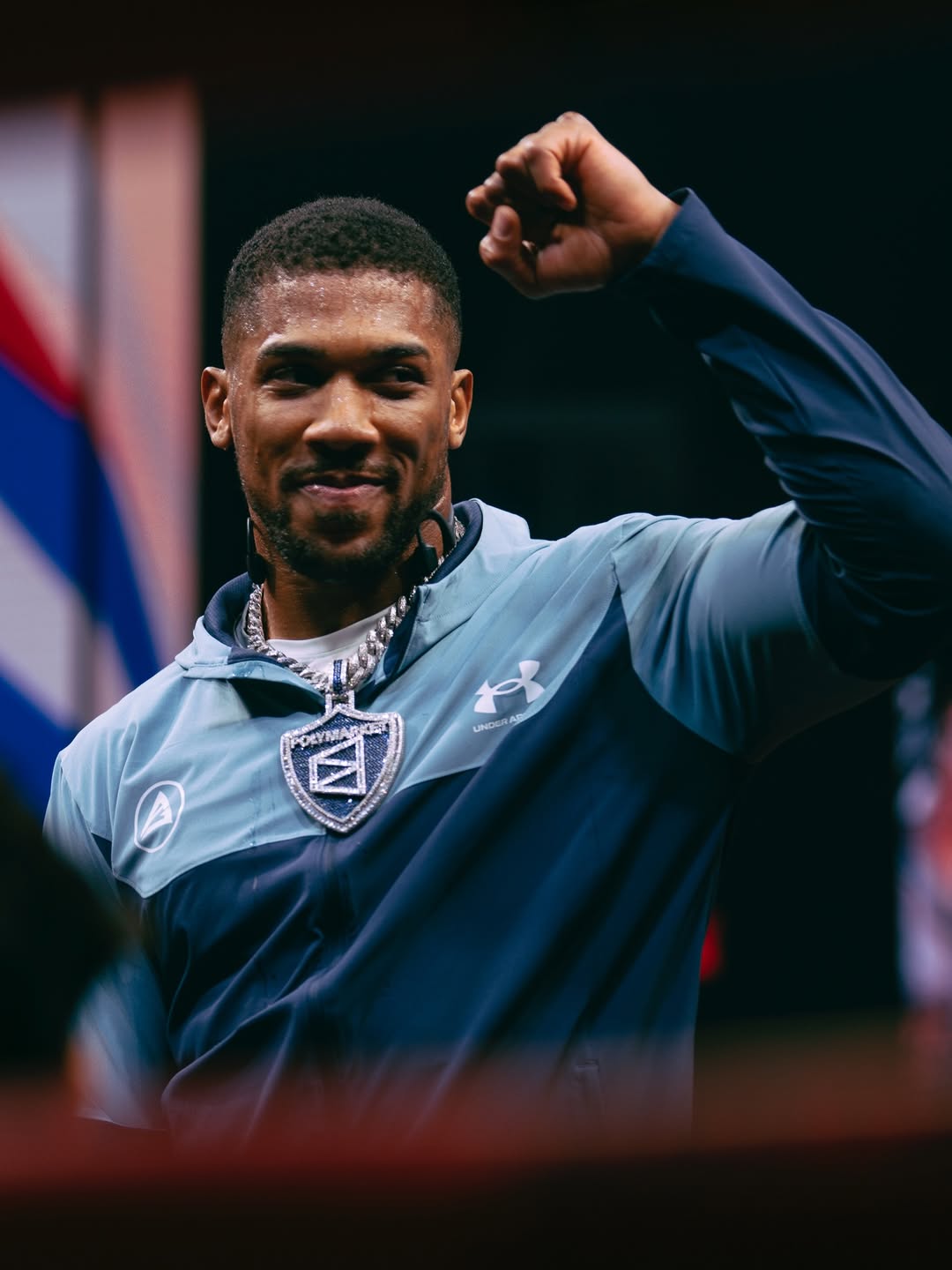
The Desert at Midnight: When a Ring Replaced a
Wreckage
On the evening of July 25, 2026, as the merciless Saudi sun finally surrenders to the floodlights of a purpose-built arena in Riyadh, Anthony Joshua will step through the ropes for the first time since a December night that nearly ended not merely his career but his life, a night when the asphalt of the Lagos-Sagamu road claimed two men and left the former unified heavyweight champion picking glass from his hair on the hard shoulder of Ogun State. The contrast could not be more stark: six months ago, according to Arise News, Joshua was a passenger in an SUV that collided with a stationary truck near the Sinoma area, an accident that killed his close associates Kevin Latif Ayodele and Sina Ghami and left the British-Nigerian boxer with injuries that, while officially described as minor, required a consolidation and rebuilding process that has kept him from the ring he once dominated. Now, as Daily Trust reported, the 36-year-old former Olympic gold medallist confirmed the bout on his X account and will face Kristian Prenga, a 35-year-old Albanian heavyweight with a 20-win, one-loss record and a 17-fight knockout streak, in a bout that Turki Alalshikh, the Saudi boxing chief, has positioned as part of an Esports World Cup event broadcast live on DAZN.
For the thousands of Nigerian fans who will watch in the early hours of the morning, and for the British faithful who have followed Joshua since his Watford days, the fight represents more than a tune-up contest ahead of the long-awaited Tyson Fury showdown; it is a resurrection, a defiant answer to the question that has haunted every comeback narrative in boxing history: can a man who has looked death in the face still summon the courage to look another heavyweight in the eye? The answer, if Joshua's own words are any guide, lies not in the glamour of Riyadh but in the grit of the rebuilding process that brought him here.
The Ghosts of December: Rebuilding on a Highway of Broken Glass
To understand the weight of Joshua's return, one must first walk the blood-stained stretch of tarmac where his world came to a halt on December 29, 2025, a date that now sits like a scar on the timeline of a career that had seemed, after victories over Francis Ngannou and Otto Wallin, to be entering its most commanding phase. As Leadership Newspaper reported, Joshua had secured a sixth-round knockout against Jake Paul in an exhibition bout just eleven days before the accident, adding to a professional record that stands at 29 wins and 4 losses with 26 knockouts, and suggesting the landlord—as he styles himself—was ready to collect his rent from the sport's elite. But the crash, which Punch Nigeria described as "tragic" and Complete Sports noted occurred while Joshua was a passenger in a vehicle driven by a member of his team, introduced a darkness that no championship belt could illuminate, killing two men who were not merely employees but companions in the lonely orbit of a global sports star. The boxing world, which had grown accustomed to narrating Joshua's career in the language of pay-per-view numbers and knockout ratios, was suddenly forced to confront the fragility of the men behind the gloves, a social dimension of tragedy that transcended the sport and touched the communities in Lagos and London where Joshua's Nigerian heritage and British upbringing have made him a singular cultural figure.
In the months since, as Arise News documented, Joshua has spoken openly about taking time to "consolidate and rebuild," a phrase that carries the weight of both physical rehabilitation and the less visible work of mourning, of processing survivor's guilt, and of deciding whether the risk of returning to a profession where concussion is currency is worth the reward. For analysts who study the psychology of elite athletes, Joshua's decision to fight again so soon after trauma is neither routine nor predictable; it places him in the lineage of fighters who have climbed back through the ropes not because they needed the money, but because the ring remains the only place where they know how to process pain. Yet the rebuilding has not been solitary; Joshua's promoter Eddie Hearn and the Saudi infrastructure around Riyadh Season have constructed a scaffolding of support that includes not merely training facilities but the psychological architecture necessary to stage a comeback of this magnitude. The result is a fighter who enters the ring in Riyadh carrying not just his own ambition but the memory of two men who will never see him fight again.
The Gatekeeper and the Gypsy King: Prenga, Fury, and the Architecture of Risk
If the accident represents the invisible weight on Joshua's shoulders as he walks to the ring, then the man standing across from him embodies the more conventional challenge that every comeback narrative demands: an unknown quantity with nothing to lose and everything to gain by toppling a legend. Kristian Prenga, as Daily Trust detailed, is a 35-year-old Albanian former kickboxing champion who brings a 20-win, one-loss record to Riyadh, with all twenty victories coming by knockout and a 17-fight winning streak that suggests a man riding a wave of destructive momentum rather than merely accumulating wins. Promoters have billed the clash as a tune-up contest, a phrase that carries both tactical truth and condescension, for in the heavyweight division there are no truly safe fights, and a single miscalculation against a knockout artist can derail not just a night but an entire legacy. The stakes are sharpened by what looms beyond July 25: the all-British showdown with Tyson Fury that Hearn has declared "signed, sealed, delivered," a fight that Frank Warren warned will be "killed" if Joshua fails to get past Prenga, and that Warren further complicated by suggesting the 37-year-old Fury may take an interim bout before facing Joshua in late October at the earliest.
As Business Day and Leadership Newspaper both reported, the Fury-Joshua deal represents a career-high payday for both men, with Fury expected to surpass the reported £80 million he earned against Oleksandr Usyk in 2024, and with speculation from BBC Sport that the bout could even land on streaming giant Netflix in November, transforming a traditional boxing match into a global media event. The economic dimension of this choreography is staggering: Saudi Arabia's Riyadh Season, under the direction of Turki Alalshikh, has effectively purchased the heavyweight division's most valuable narrative and relocated it to the desert, where the economics of oil wealth meet the economics of sport in a fusion that would have been unimaginable a decade ago. For Joshua, the Prenga fight is therefore not merely a physical test but a financial and reputational gate that must be unlocked before the true jackpot can be claimed.
The Kingdom's Canvas: Saudi Arabia and the Digital Colosseum
Beneath the spectacle of two men trading punches lies a transformation in how boxing is staged, consumed, and monetized, a shift that Riyadh has come to embody with the same ambition it once reserved for skyscrapers and sovereign wealth funds. Turki Alalshikh's announcement that the Prenga fight will feature as part of an Esports World Cup event and be broadcast live on DAZN, as Leadership Newspaper reported, signals a deliberate blurring of boundaries between traditional sport and digital entertainment, a technological dimension that targets not merely the older demographic of cable subscribers but the younger audiences who experience combat sports through smartphones, tablets, and gaming platforms. The cultural implications of this shift are profound: boxing, once the province of smoky halls and working-class neighborhoods in Liverpool and Lagos, is now being reimagined as a premium product for a global elite that consumes it from luxury boxes in Riyadh and living rooms in Los Angeles with equal ease. Joshua's own Nigerian heritage adds a particular resonance to this globalized stage, for while he fights under the British flag, his roots in the Yoruba-speaking communities of Ogun State connect him to a diaspora that spans from Lagos to London to Riyadh, a transnational identity that Saudi promoters have been savvy enough to recognize and market.
The decision to stage his comeback in the Kingdom rather than at Wembley or the O2 Arena is not merely logistical but symbolic, a recognition that the center of gravity in heavyweight boxing has shifted eastward, drawn by the gravitational pull of sovereign investment and the promise of purses that no European or American venue can currently match. For the sport's purists, this migration raises uncomfortable questions about authenticity and tradition; for its pragmatists, it represents the inevitable marriage of commerce and competition in a world where athletes are brands and fights are content. Yet for Joshua himself, the digital colosseum offers something more personal: a platform where the story of his comeback can be witnessed not just by the fortunate few in the arena but by the millions who have followed his journey from afar.
The Horizon Beyond the Gloves: Legacy, Retirement, and the Last Heavyweight War
Standing at the intersection of grief and ambition, Anthony Joshua now faces a future that will be determined not by the accident he survived but by the choices he makes in the twelve months that follow his return to the ring. The Fury fight, as THISDAY reported, carries an unspoken finality that few modern heavyweight contests have possessed: Frank Warren's prediction that the loser will retire, or that both men may hang up the gloves after their one-fight deal, transforms the bout from a sporting contest into a generational reckoning, a last stand for two fighters who have carried British boxing on the global stage for more than a decade. Joshua's own words—"the landlord will collect his rent"—reveal a man who understands that his legacy is not merely about belts defended or opponents defeated, but about the narrative arc of a career that has swung from Olympic glory to Wembley stadiums to the deserts of Saudi Arabia and back again. If he defeats Prenga and proceeds to face Fury, the winner will likely enter the pantheon of British boxing alongside Lennox Lewis and Henry Cooper, while the loser will face the melancholy reality of a sport that has no patience for former champions.
The political dimension of this moment, though subtle, cannot be ignored: in an era where Saudi Arabia is using sport to reshape its global image, Joshua's participation in Riyadh Season places him at the center of a soft-power strategy that extends far beyond the ring, implicating him in debates about sportswashing, human rights, and the moral cost of astronomical purses. For the two families in Nigeria mourning the loss of Kevin Latif Ayodele and Sina Ghami, the glitz of July 25 may offer little comfort, but it may also serve as a testament to the resilience of a man they once called friend. Whether Joshua emerges from this chapter as a cautionary tale or a redeemed champion will depend on his fists, his chin, and the unknowable calculus of fate that governs every fighter who dares to believe he can come back from the edge.
📰 Sources Cited
- BellaNaija: Anthony Joshua Confirms July 2026 Return to Boxing Against Kristian Prenga
- THISDAY: Anthony Joshua, Fury Fight Depends on Warm up Bouts
- Arise News: Anthony Joshua To Return On July 25 Against Kristian Prenga In Riyadh
- Punch Nigeria: Joshua confirms July 25 ring return after car crash
- Business Day: Anthony Joshua, Fury agree deal for blockbuster all-British showdown
- Daily Trust: Joshua set for comeback fight in July
- Leadership Newspaper: Joshua Signs Deal To Fight Fury – Hearn
- Peoples Gazette: Anthony Joshua announces comeback fight against Kristian Prenga
- Complete Sports: Joshua Signs Deal To Fight Fury
- Leadership Newspaper: Anthony Joshua Set For First Fight Since Deadly Car Accident
0 Comments
Sign in to commentNo comments yet. Be the first to share your thoughts!