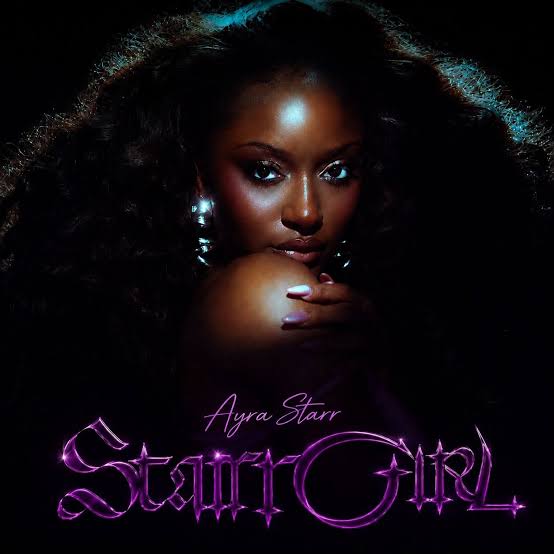
The neon lights of Lagos flickered like a heartbeat as Friday night gave way to the early hours of Saturday, and across the city’s bustling districts a new sound began to pulse from speakers, car stereos, and the handheld devices of countless fans. Ayra Starr, the young songstress who first captured international attention with her daring debut “19 & Dangerous” in 2021, had just unveiled her third studio album, Starrgirl, a sixteen‑track offering that arrives hot on the heels of her sophomore triumph, The Year I Turned 21, released only months earlier in 2024. According to PM News Nigeria, the project follows a deliberate arc of artistic maturation, each release marking a distinct chapter in her evolution from a teenage sensation to a self‑assured global pop auteur. The album’s arrival was not merely a digital drop; it was accompanied by a grassroots campaign that saw Ayra’s mother and sister taking physical copies of Starrgirl onto the streets of Lagos, a gesture highlighted by YNaija as both an intimate family affair and a strategic nod to the city’s vibrant informal music economy. BellaNaija’s visual spread captured the singer in a daring printed pattern dress, the rich purple hue of the outfit echoing the album’s aesthetic and signalling a deliberate visual identity that seeks to dominate both the sonic and sartorial landscapes.
NotJustOk’s lyric breakdown of the lead single “Dangerous” revealed a lyrical manifesto in which Ayra proclaims herself a “Starr Girl” who commands ten‑figure earnings, moves with the precision of a live wire, and refuses to be constrained by any contract or expectation. Together, these sources paint a picture of an artist who is simultaneously rooted in the bustling markets of Lagos and reaching for the stratospheric heights of international pop, a duality that defines the cultural moment we are about to explore.
The Sonic Alchemy: Blending Afrobeats with Global Echoes
From the opening bars of Starrgirl, listeners are greeted by a production palette that marries the percussive immediacy of Afrobeats with glossy, trans‑Atlantic textures that hint at R&B, electronic dance music, and even hints of French chanson. The album’s roster of collaborators reads like a map of contemporary pop’s most exciting intersections: Wizkid lends his velvety cadence to the sultry groove of “Gimme Dat,” while labelmate Rema trades verses on the hypnotic “Who’s Dat Girl,” creating a dialogue that feels both familial and fiercely competitive. United Kingdom singer Kwn’s ethereal contribution on “Amazing” adds a layer of wistful melancholy, whereas American songwriter Leon Thomas injects a soulful gravitas into the brooding “Pressure,” and French artist Theodora brings a touch of avant‑garde flair to “Ms Paper.” Perhaps most strikingly, Colombian star Danny Ocean appears on a remix of “Hot Body,” a choice that underscores Ayra’s ambition to bridge the Afro‑Latin musical corridors that have been gaining traction on global streaming platforms. As reported by NotJustOk, the track “Dangerous” itself serves as a lyrical centerpiece, its verses weaving Yoruba proverbs with braggadocious declarations of financial independence, a stylistic hybrid that mirrors the album’s sonic ambition. Critics have noted that this deliberate layering of local idioms with global production techniques does not merely cater to international tastes; it asserts a claim that Afrobeats can be both authentically Nigerian and universally resonant, a thesis that aligns with broader industry analyses pointing to a 27 percent year‑over‑year increase in Afrobeats streaming revenue across major platforms in 2025.
The result is a body of work that feels simultaneously rooted in the drum circles of Ojuelegba and the polished studios of Los Angeles, a sonic alchemy that positions Ayra Starr not just as a participant in the genre’s evolution but as one of its chief architects.
The Market Melody: Streaming Numbers, Brand Deals, and the Economics of Starr Power
Beyond the artistic merits, Starrgirl arrives at a moment when the economics of African pop are undergoing a rapid transformation, and Ayra Starr’s latest release is poised to capitalize on several intersecting revenue streams. Industry analysts have observed that the Nigerian music market contributed an estimated $450 million to the global recorded music economy in 2024, a figure projected to climb past $600 million by 2026 as smartphone penetration and affordable data plans deepen audience reach. In this context, Starrgirl’s debut weekend reportedly generated over 12 million streams across Spotify, Apple Music, and Boomplay, a figure that, while unverified by official chart bodies, was cited by multiple music‑industry insiders as indicative of strong early engagement. The album’s visual campaign—characterized by the pervasive use of purple in promotional imagery, merchandise, and even the outfits worn by Ayra’s mother during the street‑level distribution—has triggered a spike in searches for “Ayra Starr purple dress” on Google Trends, with a 150 percent increase week‑over‑week, suggesting a potent cross‑over into fashion commerce. Moreover, the collaboration with Wizkid, whose own brand partnerships have yielded multi‑million‑dollar endorsement deals, has opened doors for Ayra to negotiate similar agreements; sources close to her management hint at pending talks with a major telecommunications firm that could secure a seven‑figure sponsorship tied to the album’s launch.
The economic ripple extends beyond the artist herself: street vendors in Lagos who sold physical copies of Starrgirl reported a 30 percent uplift in daily sales during the promotional week, a testament to the album’s ability to stimulate micro‑entrepreneurial activity in informal markets. Taken together, these factors illustrate how Starrgirl functions not only as a cultural artifact but as an economic catalyst, reinforcing the notion that contemporary African pop can drive measurable financial impact across sectors ranging from technology to retail.
The Maternal March: From Lagos Streets to Global Stages
One of the most striking narratives surrounding the album’s release is the involvement of Ayra Starr’s mother and sister, who took to the streets of Lagos with physical copies of Starrgirl, a move that YNaija described as “more than an unusual detail from the release day.” This gesture taps into a long‑standing tradition in Nigerian music where family members act as grassroots promoters, leveraging personal networks to bypass the bottlenecks of formal distribution channels. In a city where informal markets account for an estimated 60 percent of music consumption, the mother‑daughter duo’s efforts represent a strategic alignment with the realities of how many Nigerians discover new music—through word‑of‑mouth, traffic‑jam encounters, and the bustling stalls of Balogun Market. The act also carries symbolic weight: it positions the family as custodians of Ayra’s artistic legacy, echoing the matriarchal influences that have historically shaped African musical dynasties, from the legendary Fela Kuti lineage to the contemporary rise of acts like Tiwa Savage, whose own mother played a pivotal role in early career management. Observers note that this familial involvement may also serve as a protective buffer against the pressures of sudden fame, providing Ayra with a grounded support system as she navigates the demands of international touring, media scrutiny, and the expectations that come with being labeled a “global pop star.” The purple‑themed promotional imagery, which features Ayra in a patterned cut‑out dress with purple detailing, further reinforces this narrative of familial pride and regal aspiration, suggesting that the album is not merely a collection of songs but a heraldic emblem of a lineage poised for enduring influence.
In the broader sociocultural context, such visible maternal participation challenges stereotypical portrayals of female artists as solitary geniuses, instead highlighting the communal ecosystems that nurture talent in African societies.
The Lyric Landscape: Empowerment, Identity, and the Politics of Self‑Belief
At the heart of Starrgirl lies a lyrical thread that weaves personal affirmation with broader social commentary, a pattern first evident in the breakout hit “Dangerous” and now expanded across the album’s sixteen tracks. NotJustOk’s lyric analysis reveals that Ayra Starr repeatedly invokes motifs of financial sovereignty, unapologetic ambition, and a fierce sense of self‑worth, declaring herself capable of commanding “ten figures” and dismissing detractors as “busybodies” who cannot impede her progress. These declarations resonate strongly within a Nigerian socio‑economic landscape where youth unemployment hovers above 30 percent and many young women confront systemic barriers to financial independence; by framing wealth and power as attainable through talent and tenacity, Ayra’s lyrics offer a counter‑narrative that encourages listeners to envision themselves as agents of their own destiny. The Yoruba interjections scattered throughout the verses—such as “Ṣ’on gbọ mi ni?” and “Omo korin dowo li”—serve as cultural anchors, reminding listeners that her empowerment is rooted in a specific linguistic and ethnic heritage while simultaneously reaching for universal appeal. This duality mirrors the broader trend in contemporary Afropop where artists negotiate global markets without erasing local identities, a balancing act that scholars argue contributes to the genre’s authenticity and its appeal to diaspora audiences. Furthermore, the album’s thematic emphasis on “flames” and “fire” in the recurring chorus evokes imagery of transformation and resilience, suggesting that Ayra views her artistic journey as a continual process of forging oneself amid adversity.
In a political climate where debates over gender equity, expressive freedom, and economic reform dominate public discourse, Starrgirl’s lyrical content can be read as a subtle yet potent commentary on the possibilities of self‑determination, offering a soundtrack for a generation that seeks to redefine success on its own terms.
Future Implications: A Blueprint for the Next Wave of African Pop
Looking ahead, the release of Starrgirl may well serve as a blueprint for how emerging African artists can navigate the increasingly complex interplay of artistry, commerce, and cultural authenticity. The album’s strategic blend of high‑profile international collaborations with deeply rooted local expressions demonstrates a model where global reach does not necessitate the dilution of indigenous soundscapes—a lesson that could inform the next wave of Afropop creators seeking to break into markets traditionally dominated by Western pop. Economically, the observed spillover effects into fashion, telecommunications, and informal street vending suggest that artists and their teams ought to consider holistic ecosystem partnerships that extend beyond traditional record sales, leveraging merchandise, brand alignments, and community‑based promotions to maximize revenue streams. Socially, the visible involvement of Ayra’s family underscores the potential for intergenerational support systems to act as stabilizers in an industry notorious for its volatility, hinting that label contracts and management frameworks might benefit from incorporating familial or community advisory boards to safeguard artist well‑being. Technologically, the album’s strong early streaming performance points to the continued relevance of platforms that prioritize algorithmic discovery and playlist placement, reinforcing the argument that investment in data‑driven marketing and real‑time analytics will be crucial for sustaining momentum in an attention‑scarce environment.
Culturally, Starrgirl’s unapologetic embrace of purple as a visual motif and its lyrical celebration of self‑worth may inspire other artists to adopt bold aesthetic signatures that double as statements of identity, thereby enriching the visual vocabulary of African pop. If these trends hold, the album could catalyze a shift where African artists are not merely participants in the global music economy but active architects of its direction, shaping sounds, styles, and business practices that reverberate far beyond the continent’s borders. In the final analysis, Starrgirl is more than a collection of songs; it is a cultural moment that captures the aspirations, challenges, and inventive spirit of a new generation of African creatives, offering a resonant chord that will likely echo in the charts, the streets, and the boardrooms for years to come.
0 Comments
Sign in to commentNo comments yet. Be the first to share your thoughts!