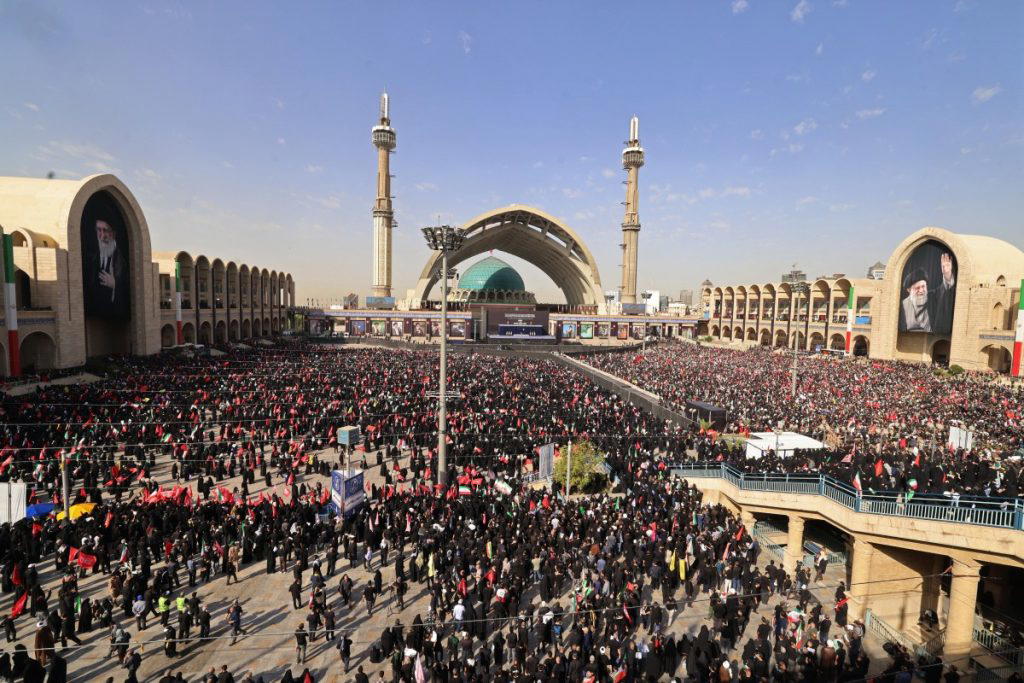
The streets of Tehran were a churning sea of black-clad mourners as the funeral procession for Iran's supreme leader, Ali Khamenei, began on Saturday, with Iranian authorities anticipating between 15 and 20 million participants in the capital over the next three days. As reported by Vanguard News, huge crowds gathered at Tehran's Grand Mosalla religious complex, waving red banners symbolizing vengeance and chanting "death to America" and "revenge, revenge" as they awaited the arrival of the coffin. The air was thick with the scent of incense and the hum of grief, as millions of Iranians poured onto the streets to bid farewell to the man who had ruled their country with an iron fist since 1989. According to Channels Television, the mourners' cries of "revenge, revenge" echoed through the streets, a chilling reminder of the deep-seated anger and resentment that has long been simmering beneath the surface of Iranian society. As the funeral ceremonies got underway, it became clear that Khamenei's death had unleashed a tidal wave of emotion, with the Iranian people gathering to pay their respects to a leader who had left an indelible mark on their nation's history. The funeral procession was a testament to the enduring power of Khamenei's legacy, with mourners from all walks of life coming together to mourn the loss of a leader who had shaped Iran's destiny for over three decades.
As Al Jazeera Africa noted, the ceremonies were not limited to Tehran, with mourners packing the streets of cities across Iran to pay their respects to the late supreme leader. The outpouring of grief was a remarkable display of the reverence and fear that Khamenei inspired in the Iranian people.
A Nation in Mourning: Grief, Anger, and the Weight of History
As the funeral procession made its way through the streets of Tehran, it was clear that the mood was one of somber reflection, with mourners carrying banners and flags bearing images of Khamenei and other revered figures from Iran's revolutionary past. According to PM News Nigeria, the atmosphere was electric, with thousands of mourners gathered at the Grand Mosalla complex, their voices raised in chants and slogans that reflected the complex mix of emotions that had been unleashed by Khamenei's death. The event was a poignant reminder of the enduring legacy of Iran's 1979 revolution, which had brought Khamenei and other hardline leaders to power. As Blueprint Newspapers reported, the funeral ceremonies were expected to continue for six days, culminating in Khamenei's burial in Mashhad, a city that holds deep significance for many Iranians. The prolonged period of mourning was a testament to the profound impact that Khamenei had had on Iranian society, and the deep sense of loss that his death had occasioned. As experts noted, Khamenei's rule had been marked by periods of intense repression and violence, as well as moments of relative calm and pragmatism, leaving behind a complex and contested legacy that would continue to shape Iran's future.
The funeral ceremonies were not just a tribute to the late supreme leader, but also a reflection of the country's turbulent history and its ongoing struggles.
The Cultural and Social Dimension: Identity, Grief, and the Politics of Vengeance
The funeral procession for Khamenei was a deeply symbolic event, reflecting the complex interplay of cultural, social, and political forces that have shaped Iranian society. As Al Jazeera Africa observed, the ceremonies were a testament to the enduring power of Shi'a Islam in Iran, with mourners gathering to pay their respects to a leader who had been revered as a guardian of the faith. The event was also a reflection of the deep-seated sense of grievance and injustice that has long been felt by many Iranians, who see their country as having been subjected to a century of foreign interference and aggression. The chants of "revenge, revenge" that echoed through the streets were a chilling reminder of the ongoing tensions between Iran and its perceived enemies, particularly the United States and Israel. As analysts noted, Khamenei's death was likely to have significant implications for Iran's domestic politics, with the succession of Mojtaba Khamenei as supreme leader a week after his father's killing raising questions about the future direction of the country. The cultural and social dynamics on display at the funeral ceremonies were a complex mix of grief, anger, and a deep-seated desire for vengeance and retribution.
The Economic Backdrop: Sanctions, Struggles, and the Weight of Isolation
As Iran mourns the loss of its supreme leader, the country is also grappling with a severe economic crisis, exacerbated by years of international sanctions and isolation. According to various reports, the Iranian economy has been struggling to cope with the impact of crippling sanctions, which have had a devastating effect on the country's oil exports, currency, and overall economic stability. The economic hardship has had a profound impact on the daily lives of ordinary Iranians, with many struggling to make ends meet in the face of rising prices and declining living standards. As experts noted, Khamenei's death was likely to have significant implications for Iran's economic future, with the new leadership facing a daunting task in navigating the complex web of international sanctions and diplomatic tensions. The economic backdrop to the funeral ceremonies was a stark reminder of the challenges that lie ahead for Iran's leaders, as they seek to navigate a treacherous global landscape and restore their country's economic fortunes.
Future Implications: A Path Forward or a Descent into Chaos?
As the funeral ceremonies for Ali Khamenei come to a close, the Iranian people and the international community are left to ponder the implications of his death for the country's future. According to analysts, the succession of Mojtaba Khamenei as supreme leader is likely to be accompanied by a period of significant uncertainty and potentially even turmoil, as different factions and interest groups vie for power and influence. The international community will be watching closely as events unfold, with many countries having a significant stake in Iran's future direction. As experts noted, the coming months and years are likely to be marked by significant challenges and opportunities, as Iran navigates a complex and rapidly changing global landscape. The question on everyone's lips is: what next for Iran? Will the country continue on its current path, or will it chart a new course? Only time will tell, but one thing is certain: the legacy of Ali Khamenei will continue to shape Iran's destiny for years to come. As the country moves forward, it is clear that the future will be marked by a complex interplay of domestic and international factors, with the potential for both significant challenges and opportunities. The world watches with bated breath as Iran navigates this critical juncture in its history.
📰 Sources Cited
- Vanguard News: Huge crowds gather as Khamenei funeral ceremonies begin in Iran
- Google News Nigeria: ‘Revenge, Revenge’: Iran Mourners Gather For Khamenei’s Funeral - Channels Television
- Blueprint Newspapers: Iran begins week-long funeral for slain supreme leader Khamenei
- Al Jazeera Africa: Millions mourn Iran’s Ali Khamenei amid historic funeral procession
- Al Jazeera Africa: Thousands gather as Khamenei funeral ceremonies open in Tehran
- PM News Nigeria: “Revenge, revenge” chants echo as Khamenei funeral begins in Iran
0 Comments
Sign in to commentNo comments yet. Be the first to share your thoughts!