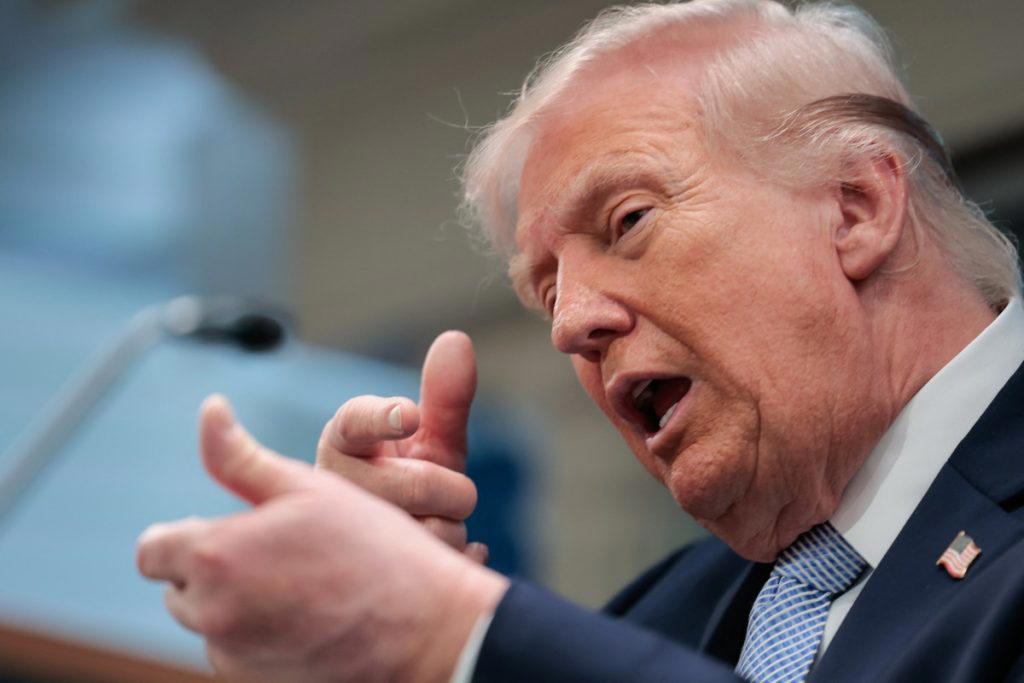
Trump's High-Stakes Gamble in the Shadow of War
The world held its breath as United States President Donald Trump vowed to destroy Iran's power plants and bridges unless the Iranian regime reaches a deal to end the war. It's a high-stakes gamble, one that has the potential to ignite a full-blown conflict in the Middle East. But what drives Trump's determination, and what are the implications of his words? As the clock ticks down, the world waits with bated breath, unsure of what the future holds.
The Anatomy of a Rift: Godfather vs. The PriestThe rift between Trump and Iran has been building for months, with both sides engaged in a game of brinksmanship. Trump's latest threat to destroy Iran's infrastructure is just the latest salvo in a long-running feud. According to Premium Times, the Iranian regime has been wary of Trump's bluster, viewing him as a "Godfather" figure who seeks to impose his will on the world. But what of the Iranian perspective? "We have no plans for the next round of negotiation, and no decision has been made in this regard," Iranian Foreign Ministry Spokesman Esmaeil Baqaei said in a statement. "The United States is carrying out behaviours that do not in any way indicate seriousness in pursuing a diplomatic process."
As reported by Vanguard News, Trump's latest threat has sparked a heated debate in Washington, with some lawmakers calling for caution. "The President's words are a threat to global stability, and we must be cautious in our response," said Senator John McCain. But Trump remains undeterred, convinced that his approach will ultimately lead to a breakthrough. "We're in a very, very strong negotiating position," he said in a statement. "Iran can get themselves on a very good footing if they make a deal." But what of the details? According to Daily Trust, the Iranian regime has refused to compromise on its nuclear program, viewing it as a non-negotiable aspect of its sovereignty.
As the standoff continues, the international community holds its breath, unsure of what the future holds. The Economic Backdrop: Stabilization, Acceleration, and Political Capital
The economic implications of a war between the United States and Iran are dire, with many analysts warning of a catastrophic collapse of global markets. According to Reuters, the 50-day war between the two countries has already led to a loss of $50 billion worth of oil, a staggering figure that has sent shockwaves through the global economy. But what of the broader implications? The war has also had a devastating impact on the Iranian economy, with many analysts warning of a humanitarian crisis in the making. "The Iranian economy is on the brink of collapse, and we must act quickly to prevent a disaster," said a senior official in the Iranian government.
As reported by Arise News, Trump's latest threat to destroy Iran's infrastructure has sparked a heated debate in Washington, with many lawmakers calling for caution. "The President's words are a threat to global stability, and we must be cautious in our response," said Senator John McCain. But Trump remains undeterred, convinced that his approach will ultimately lead to a breakthrough. "We're in a very, very strong negotiating position," he said in a statement. "Iran can get themselves on a very good footing if they make a deal." But what of the details? According to THISDAY, the Iranian regime has refused to compromise on its nuclear program, viewing it as a non-negotiable aspect of its sovereignty.
As the standoff continues, the international community holds its breath, unsure of what the future holds. The Cultural and Social Dimension: Faith, Identity, and the Grassroots
The cultural and social implications of a war between the United States and Iran are complex and far-reaching, with many analysts warning of a catastrophic impact on the region. According to Al Jazeera Africa, the war has already led to a surge in anti-American
...anti-American sentiment across the Middle East, as civilians from Baghdad to Beirut watch the escalation with a mixture of dread and defiance that transcends the immediate chessboard of Hormuz. The human cost of this confrontation seeps into the prisons of Tehran, where activists like Bita Hemmati face the gallows for daring to challenge the state, and into the homes of families who have lost sons and daughters to the brutal crackdown on January's anti-government protests, which activists say left thousands dead and tens of thousands arrested. As reported by Vanguard News, Trump attempted to interweave this human rights catastrophe into his negotiating strategy, posting on Truth Social that Iran could boost its chances of success by freeing eight women he claimed faced execution, a demand accompanied by photographs posted by pro-Israel activist Eyal Yakoby though AFP could verify only one identity through the Norway-based Hengaw human rights group.
The cultural fault lines here are not merely geopolitical but existential, pitting a theocratic regime that equates nuclear enrichment with national dignity against an American president who wields social media like a cudgel, reducing centuries of Persian identity to the caricature of what he calls "The Iran Killing Machine" in all-caps fury, and the grassroots suffering that accumulates in the space between their competing narratives of strength.
The Silence Before the Deadline: Negotiation, Extortion, or War
As Monday's deadline looms over Islamabad like a gathering storm, the question haunting policymakers is whether Trump's architecture of threats constitutes diplomacy or merely extortion dressed in dealmaker's clothing. According to Channels TV, Mohammad Bagher Ghalibaf, Iran's parliamentary speaker and chief negotiator, has insisted that the two sides remain "still far from the final discussion," a stark rebuke to Trump's sunny insistence that "nobody's playing games." The technological dimension of this crisis has transformed the negotiating table into a digital theatre, where Truth Social posts carry the weight of ultimata and the seizure of a Chinese cargo ship—described by Trump as a "gift" to Iran intercepted by American forces—becomes a prop in a reality show of global proportions. Danny Citrinowicz of the Tel-Aviv Institute for National Security Studies warned that Tehran has consistently absorbed economic pain while holding firm on core interests, suggesting Trump's calculation of quick capitulation may be dangerously mistaken. Pentagon Chief Spokesman Sean Parnell dismissed reports that clearing Hormuz of mines could require six months, calling such closure "completely unacceptable," yet the military reality suggests neither side possesses a decisive lever capable of forcing surrender without catastrophic cost.
With Netanyahu declaring that the war is not over yet and Sky News reminding the world that strikes on power infrastructure constitute breaches of international law, the path forward forks into three shadows: a face-saving compromise forged in Pakistani mediators' offices, a catastrophic extension of bombing that redraws the Middle East, or the slow attrition of a blockade that starves a nation while the world watches through smartphone screens.
📰 Sources Cited
- Vanguard News: Trump says United States in ‘very, very strong’ position for Iran talks
- Daily Trust: No decision on new talks, says Iran
- Daily Post Nigeria: ‘I’ve no problem meeting them’ – Trump downplays Iran’s rejection of talks
- Arise News: Trump Threatens Strikes On Iran’s Power Plants And Bridges, Sends Negotiators To Pakistan
- THISDAY: Trump Vows Total Destruction of Iran’s Bridges, Energy Infrastructure If No Deal
- Al Jazeera Africa: What would it take for the Iran-United States talks to succeed?
- Nairametrics: Trump threatens to destroy Iran’s power plants, bridges if negotiations fail tomorrow
- Google News Nigeria: Iran war latest: United States negotiators to return to Pakistan for talks as Trump repeats threat to Iran's infrastructure - BBC
- Channels TV: Trump Again Threatens To Destroy Iran Infrastructure If No Deal Reached
- Daily Post Nigeria: Trump threatens to target Iran infrastructure if talks fail
0 Comments
Sign in to commentNo comments yet. Be the first to share your thoughts!