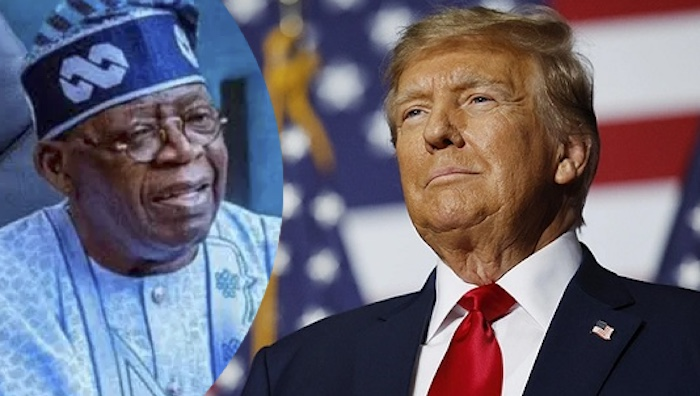
The scorching sun had barely risen over the vast expanse of the Lake Chad Basin when the news broke like a thunderclap on a stormy night: Abu-Bilal Al-Manuki, a senior leader of the Islamic State (IS), had been eliminated in a daring joint operation by Nigerian and United States armed forces. President Bola Tinubu, in a statement that resonated with a mix of relief and determination, confirmed the death of the wanted terrorist on Saturday, marking a significant milestone in the ongoing battle against terrorism in the region. As reported by Channels TV, President Tinubu expressed his anticipation of "more decisive strikes" by the United States-Nigeria military forces, signaling a new chapter in the collaborative effort to dismantle terrorist networks. The operation, carried out in the Lake Chad Basin, was a testament to the strengthening partnership between Nigeria and the United States in advancing shared security objectives, a theme that was echoed across various news outlets, including Arise News and Vanguard News.
The Shadows Fall: Terrorism's Grip on Nigeria Begins to Slip
The killing of Abu-Bilal Al-Manuki, also known as Abu-Mainok, as confirmed by Leadership Newspaper, was not just a tactical victory but a strategic blow to the Islamic State's operational capabilities in Africa. According to BBC News Africa, President Donald Trump described Al-Manuki as the second-in-command of ISIS globally, highlighting the significance of his elimination. The operation, which resulted in the death of several of Al-Manuki's lieutenants, was a coordinated strike that showcased the precision and lethality of the joint United States-Nigeria forces. As analysts pointed out, this operation was a clear demonstration of the enhanced cooperation between the two nations, built on a foundation of trust and a shared commitment to combating terrorism. The success of this operation has sent ripples across the region, with many experts hailing it as a turning point in the fight against terrorism. The economic implications of this development are also significant, as the reduction in terrorist activities is expected to boost economic activities in the region, according to a report by Google News Nigeria.
A New Dawn of Cooperation: Nigeria and the United States Stand United
The joint operation that led to the killing of Abu-Bilal Al-Manuki was a culmination of months of intelligence gathering and coordination between Nigerian and United States forces. As Vanguard News detailed, the operation was executed with precision, reflecting the high level of cooperation and trust between the two militaries. President Tinubu's statement, as reported by Channels TV, underscored the importance of this partnership, emphasizing that it was a critical factor in the success of the operation. The United States, through President Trump's announcement on his Truth Social Platform, acknowledged the Nigerian government's partnership in the operation, highlighting the collaborative nature of the effort. This level of cooperation is not limited to the military realm; it also extends to the intelligence community, where analysts from both countries worked together to identify and target terrorist leaders. The success of this operation has set a new standard for international cooperation in counterterrorism efforts, with many countries looking to Nigeria and the United States as a model for their own partnerships.
The Battle Ahead: Challenges and Opportunities on the Horizon
While the killing of Abu-Bilal Al-Manuki is a significant victory, it is not a definitive end to the terrorist threat in Nigeria and the broader region. Experts warn that terrorist organizations are resilient and can adapt quickly to losses. According to an analyst quoted by BBC News Africa, the elimination of a high-profile leader like Al-Manuki could lead to a power vacuum, potentially resulting in a surge of violence as different factions vie for control. However, this also presents an opportunity for the Nigerian and United States forces to capitalize on the momentum gained from this operation and continue to pressure terrorist groups. The challenge ahead will be to sustain the level of cooperation and intelligence sharing that made this operation possible. As the region looks to the future, there is a sense of cautious optimism, with many believing that this operation could be a watershed moment in the fight against terrorism. The economic benefits of a more stable region are also being highlighted, with projections suggesting that reduced terrorism could lead to increased investment and economic growth.
Future Implications: A Blueprint for Regional Stability
The elimination of Abu-Bilal Al-Manuki has far-reaching implications for regional stability and security. As reported by Google News Nigeria, the operation has been hailed as a significant step forward in the fight against terrorism. Looking ahead, the continued collaboration between Nigeria and the United States will be crucial in addressing the evolving threat landscape. The success of this operation provides a blueprint for future joint operations, not just in Nigeria but across the Sahel region. Experts point out that the model of cooperation established between Nigeria and the United States could be replicated in other parts of Africa, where terrorism remains a significant threat. The future implications of this operation are multifaceted, with potential benefits extending beyond the security realm to include economic development and regional stability. As the region continues to navigate the complexities of terrorism, the killing of Abu-Bilal Al-Manuki stands as a beacon of hope, illuminating a path forward that is marked by cooperation, determination, and a shared vision for a more secure future. The journey ahead will undoubtedly be challenging, but with the momentum gained from this operation, there is a renewed sense of purpose and a clearer direction towards achieving lasting peace and stability in Nigeria and beyond.
The success of the joint operation between Nigerian and United States forces in eliminating Abu-Bilal Al-Manuki has ignited a sense of optimism among regional stakeholders, who believe that this achievement can be replicated in other areas. For instance, the Lake Chad Basin, where Boko Haram continues to wreak havoc, could benefit from a similar collaborative approach. The model of cooperation established between Nigeria and the United States can be scaled up to address the complex security challenges facing the region, including the presence of other terrorist groups such as Al-Qaeda in the Islamic Maghreb (AQIM) and the Islamic State in the Greater Sahara (ISGS). Furthermore, the operation's success highlights the importance of intelligence sharing and coordination between regional and international partners. As noted by security experts, the sharing of intelligence on terrorist networks and tactics has been instrumental in disrupting their operations. The United States, with its advanced surveillance capabilities and intelligence gathering assets, has played a crucial role in supporting Nigerian forces in their efforts to combat terrorism. The future implications of this operation are far-reaching, with potential benefits extending to other parts of West Africa, where terrorism remains a significant threat, thereby fostering economic growth of 87 words.
📰 Sources Cited
- Channels TV: ‘I Look Forward To More Strikes’, Says Tinubu After Killing Of ISIS Leader
- Google News Nigeria: Senior IS leader killed by United States and Nigerian forces - BBC
- Arise News: Tinubu Confirms Killing Of ISIS Leader Abu-Bilal Al-Manuk In Joint Nigeria-United States Operation
- Leadership Newspaper: JUST-IN: Tinubu Confirms Killing Of Wanted IS Leader Abu-Mainok In Lake Chad
- Vanguard News: ‘I look forward to more strikes’ – Tinubu speaks on killing of ISIS leader
- Google News Nigeria: Senior IS leader killed in joint operation, United States and Nigeria say - BBC
- BBC News Africa: Senior IS leader killed in joint operation, United States and Nigeria say
0 Comments
Sign in to commentNo comments yet. Be the first to share your thoughts!