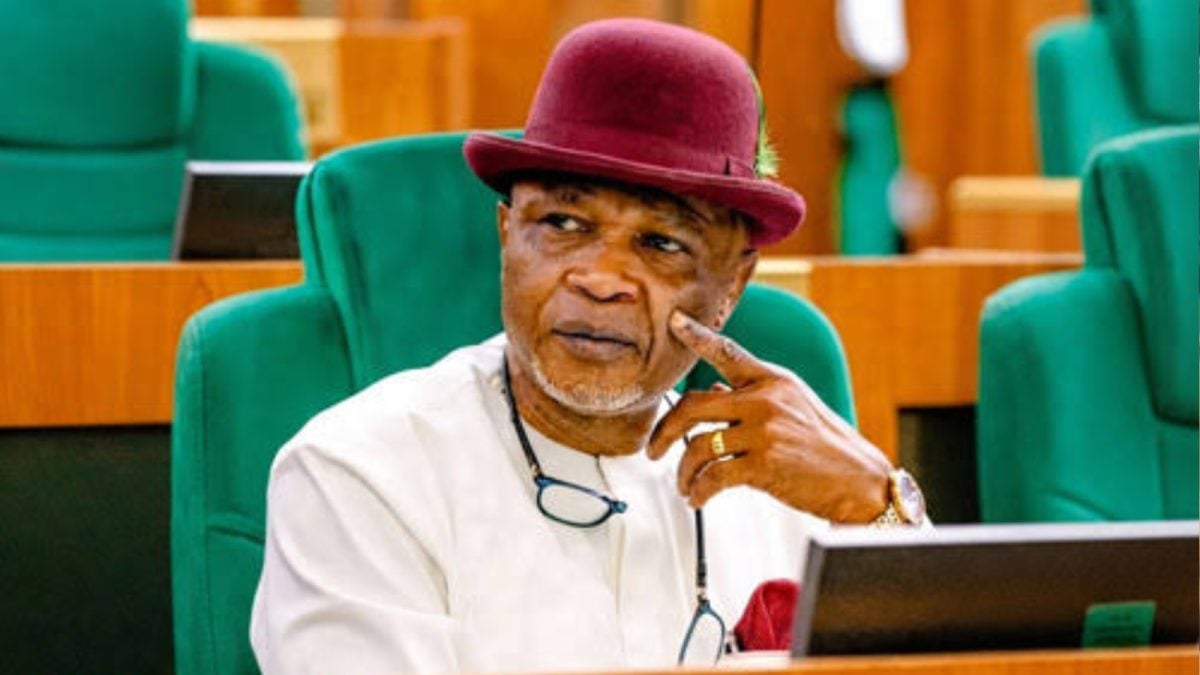
The humid air over Port Harcourt clung to the riverbanks like a promise unfulfilled, as the sun dipped behind the Niger Delta’s mangrove silhouettes and painted the sky in shades of amber and restless hope. On a Saturday morning that felt both ordinary and charged, the Independent National Electoral Commission released its final roster for the 2027 Rivers State governorship contest, a list that seemed to whisper of both continuity and upheaval. At number five, the name Kingsley Chinda appeared in bold type, a former Minority Leader of the House of Representatives whose political journey had recently taken an unexpected turn from the Peoples Democratic Party to the All Progressives Congress. His inclusion was not merely a footnote; it sparked conversations in market stalls, university lecture halls, and the quiet parlors of traditional rulers, each group weighing what his candidacy might mean for a state long accustomed to the ebb and flow of PDP dominance. Observers noted that his emergence as the APC’s sole aspirant followed a series of withdrawals by other contenders, leaving him to claim a striking 268,497 votes in a primary that many described as unusually uncontested. The timing of his defection, coupled with the recent Supreme Court judgment that revived stringent membership‑registration clauses of the Electoral Act 2026, added layers of intrigue that turned a routine clearance into a national talking point.
As the commission’s secretary, Rose Oriaran‑Anthony, affixed her signature to the document, the list also featured a mosaic of parties ranging from the African Democratic Congress to the Boot Party, underscoring the fragmented yet vibrant political ecology of Rivers. In the background, the influential figure of Nyesom Wike, Minister of the Federal Capital Territory, had publicly endorsed Chinda, describing him as “the former Minority Leader in the House of Representatives and, by the grace of God, the next governor of Rivers State,” a blessing that resonated deeply within Ikwerre circles and beyond. The scene was set for a contest that would test not only the strength of party structures but also the resilience of legal frameworks designed to safeguard internal democracy.
The Political Stage: Power Plays and Party Loyalties
Within the sprawling tableau of Nigerian politics, Rivers State has long served as a crucible where patronage, ideology, and ethnic identity intersect, and the 2027 gubernatorial race is poised to amplify those dynamics in unprecedented ways. Chinda’s trajectory from the PDP’s inner circles to the APC’s banner reflects a broader trend of elite realignment, one that has been accelerated by the promise of federal patronage and the shifting calculus of oil‑revenue allocation. According to reports from Politics Nigeria, his emergence as the APC candidate was facilitated by the withdrawal of rival aspirants, a circumstance that allowed him to secure the party’s nomination without a competitive primary, a fact that has raised eyebrows among party purists who insist on robust internal contests as a safeguard against impropriety. The African Democratic Congress’s Gabriel Pidomson, the Nigeria Democratic Congress’s Dumo Lulu‑Briggs, and the Peoples Democratic Party’s Samuel Soni Ejekwu each represent distinct ideological strands, yet all are navigating the same terrain of voter expectations shaped by infrastructural deficits and youth unemployment that hovers near twenty‑three percent in the state’s urban centers. Analysts note that the presence of seventeen (or nineteen, depending on the source) candidates on the INEC list signals a fragmentation that could dilute traditional party strongholds, potentially ushering in an era where coalition politics and issue‑based campaigning gain traction over sheer party loyalty.
The endorsement from Nyesom Wike, a political heavyweight whose own rise was anchored in the PDP’s machinery, adds a layer of complexity; his backing is seen by some as a strategic move to retain influence over the state’s lucrative oil contracts and federal appointments, while others interpret it as a genuine belief in Chinda’s capacity to deliver development. As the campaign season unfolds, the interplay between these political forces will be scrutinized not only for its immediate electoral implications but also for what it reveals about the evolving nature of Nigerian federalism, where state‑level contests increasingly serve as proxies for national power struggles.
Legal Quandary: Membership Registers and Judicial Resonance
The clearance of Kingsley Chinda by INEC did not occur in a vacuum; it unfolded against the backdrop of a recent Supreme Court decision that breathed new life into Sections 77(5), 77(6), 77(7) and 84(2) of the Electoral Act 2026, provisions that had lain dormant after earlier amendments. Those clauses mandate that political parties submit accurate membership registers to the electoral commission well before conducting primaries, and they bar the nomination of individuals whose names do not appear in those registers within the stipulated period. Premium Times highlighted that the court’s restoration of these sections was prompted by concerns over the integrity of party primaries, particularly in instances where defections and last‑minute candidacies threatened to subvert internal democratic processes. ALDRAP, the Association of Legislative Drafting and Advocacy Practitioners, had taken the unusual step of urging INEC to convene a meeting with the APC and Chinda to examine whether the party had complied with the registration timeline before announcing him as its sole aspirant on May 21, 2026. The group’s apprehension centered on the possibility that Chinda’s registration with the APC might have occurred after the cutoff, rendering his nomination vulnerable to legal challenge despite his appearance on the final list. Vanguard News reported that Chinda’s qualifications—a First School Leaving Certificate and a law degree—were listed alongside his age of sixty and his running mate, Jack Major Miakiapuye, yet the document offered no explicit commentary on how INEC reconciled the membership‑registration issue with his clearance.
Legal scholars interviewed anonymously warned that the commission’s decision, while procedurally sound on the surface, leaves open the possibility of post‑election litigation that could overturn the result if courts determine that the APC failed to meet the statutory requirements. This tension underscores a broader debate about the balance between empowering parties to field candidates of their choice and safeguarding the integrity of the electoral process through rigorous internal checks. As the legal community watches closely, the outcome of any pending challenges could set a precedent that reshapes how parties nationwide approach membership documentation and primary elections in future cycles.
Socio‑Cultural Fabric: Ethnic Narratives and Grassroots Aspirations
Beyond the courtroom and the campaign rallies, the Rivers gubernatorial contest is deeply interwoven with the state’s rich socio‑cultural tapestry, where ethnic identities, historic grievances, and communal aspirations shape voter behavior in subtle yet powerful ways. The Ikwerre people, to whom Chinda belongs through his lineage and political affiliations, have long viewed themselves as pivotal stakeholders in the state’s governance, a sentiment that was amplified when Nyesom Wike, speaking at an Ogbakor Ikwerre gathering, proclaimed Chinda as the “next governor of Rivers State” under the auspices of divine grace. Such pronouncements resonate within a cultural framework that values lineage, respect for elders, and the belief that leadership should emerge from the community’s own ranks. Yet Rivers is also home to a mosaic of other groups—the Ogoni, Ijaw, Etche, and Eleme—each with distinct histories of resource agitation, environmental activism, and calls for equitable allocation of the oil wealth that flows beneath their lands. The presence of candidates like Dumo Lulu‑Briggs of the Nigeria Democratic Congress, who hails from a lineage traditionally associated with the Niger Delta’s royal houses, and Samuel Soni Ejekwu of the PDP, whose campaign emphasizes grassroots mobilization among rural farmers, illustrates how the election serves as a platform for these diverse voices to contend for representation.
Social commentators note that issues such as youth unemployment, which the National Bureau of Statistics estimates at roughly twenty‑seven percent in the state’s urban agglomerations, and access to quality education remain pivotal talking points that transcend ethnic lines, yet are often filtered through local cultural lenses when voters assess candidates’ promises. Festivals such as the annual Ikwerre New Yam Festival and the Ijaw Seabreeze Carnival become informal arenas where political messaging is exchanged, and where candidates’ abilities to connect with tradition can bolster or undermine their electoral prospects. In this milieu, Chinda’s candidacy is not merely a political maneuver but a cultural signal—a test of whether a figure perceived as an elite insider can also credibly embody the aspirations of the grassroots, a balance that will be closely observed as campaign rallies move from city centers to village squares.
Technological Infrastructure: INEC’s Digital Arsenal and Voters’ Trust
The mechanics of modern Nigerian elections increasingly hinge on technological innovation, and INEC’s preparations for the 2027 Rivers governorship vote reflect both the advances made and the lingering challenges that threaten to erode public confidence. Biometric voter verification, introduced in recent cycles, aims to curb multiple voting and enhance the integrity of the register, yet reports from field monitors indicate occasional glitches in rural polling units where connectivity remains spotty, forcing officials to fall back on manual procedures that can delay the process and sow doubt among voters. Daily Trust noted that the final list of candidates was disseminated through both traditional press releases and the commission’s online portal, a dual‑channel approach designed to reach both urban elites and rural populations with varying degrees of internet access. The inclusion of candidates’ educational qualifications, ages, and running mates on the PDF document exemplifies INEC’s effort to provide transparency, yet experts caution that the mere publication of data does not guarantee its accuracy if upstream processes—such as party primary conduct and membership‑register submission—are flawed. Moreover, the commission’s use of electronic result transmission systems, while intended to expedite the tallying process, has been scrutinized in past elections for vulnerabilities to tampering, prompting calls for stronger encryption protocols and independent audits.
Analysts from the tech‑policy sphere argue that building trust in these systems requires not only robust hardware but also sustained civic education campaigns that demystify the technology for voters, particularly in communities where skepticism toward governmental institutions runs deep. As Rivers State prepares to deploy thousands of smart card readers and mobile data terminals across its heterogeneous terrain—from the bustling streets of Port Harcourt to the remote creek‑side villages of Andoni—the success of the election will hinge as much on the reliability of these tools as on the political narratives that surround them. In an era where misinformation can spread virally via social media, INEC’s capacity to monitor and counteract false narratives will be as crucial as its logistical preparedness, shaping not only the immediate outcome but also the long‑term legitimacy of democratic governance in the Niger Delta.
Future Implications: A Blueprint for Democratic Resilience or a Band‑Aid on Fractured Trust?
Looking ahead, the Kingsley Chinda candidacy carries implications that stretch far beyond the immediate contest for Rivers State’s governorship, offering a lens through which to assess the health of Nigeria’s democratic institutions amid evolving legal, political, and technological currents. Should his campaign succeed in navigating the legal challenges surrounding his party membership registration, it could reinforce the notion that the Electoral Act’s restored provisions serve as a meaningful safeguard against opportunistic candidacies, thereby encouraging parties to invest in rigorous internal primaries and meticulous record‑keeping. Conversely, if post‑election litigation were to invalidate his victory on technical grounds, it might provoke a backlash that fuels perceptions of judicial overreach and undermines confidence in the very mechanisms designed to ensure fairness. Economically, Rivers’ oil‑derived revenue—estimated to contribute over thirty percent of the state’s annual budget—means that the next governor’s fiscal policies will have outsized effects on infrastructure investment, job creation, and poverty alleviation programs that directly affect the livelihoods of millions. Socially, the election’s outcome will influence how ethnic groups perceive their stake in state power, potentially either reinforcing existing power‑sharing arrangements or catalyzing new demands for greater autonomy and resource control. Culturally, the manner in which candidates engage with traditional institutions—such as the Ovia and Eze titles—will signal whether modernity and heritage can coexist in the political arena, a dynamic that could either enrich civic discourse or deepen sectarian divides.
Technologically, the election will serve as a stress test for INEC’s digital infrastructure, and the lessons learned—whether about improving connectivity in remote areas or fortifying cyber defenses—will reverberate in future national contests, shaping the trajectory of electoral reform across the federation. Ultimately, the 2027 Rivers governorship race stands at a crossroads where legal rigor, political ambition, cultural identity, and technological capability converge; the way these forces are negotiated may either provide a blueprint for a more resilient democratic process or merely apply a temporary band‑aid to deeper fissures that demand more fundamental healing.
📰 Sources Cited
- Google News Nigeria: Kingsley Chinda 2027 election: Inec clear Rivers APC governorship candidate - BBC
- Politics Nigeria: INEC Clears Chinda for 2027 Rivers Governorship Election
- Premium Times: 2027: INEC excludes Pantami, Adebutu, clears Chinda in final governorship candidates’ list
- Vanguard News: Rivers 2027: INEC lists Chinda, Pidomson, Ejekwu, Lulu-Briggs among 17 guber candidates
- Daily Trust: INEC clears Chinda for Rivers guber poll
0 Comments
Sign in to commentNo comments yet. Be the first to share your thoughts!