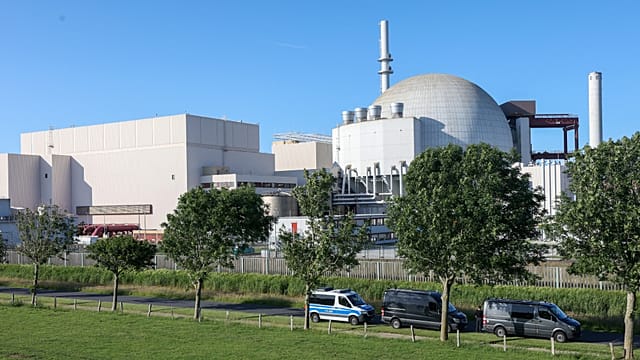
The scorching desert landscapes of Saudi Arabia are on the cusp of witnessing a bloom of a different kind, one that illuminates not just the kingdom's energy future, but potentially reshapes the geopolitical topography of the Middle East and beyond. The recent announcement of a landmark United States-Saudi nuclear deal for civilian purposes has sent ripples across the globe, intertwining themes of energy security, geopolitical alliances, and the cautious dance around nuclear proliferation. As reported by Al Jazeera Africa, the deal's fruition hinges on Saudi Arabia's potential inclusion in the Abraham Accords, a peace treaty that has been gradually weaving a tapestry of Middle Eastern alliances since its inception in 2020. This condition, voiced by none other than former President Trump, underscores the deal's deeper geopolitical underpinnings. Peoples Gazette Nigeria highlighted the deal's timing, coinciding with Saudi Crown Prince Mohammed bin Salman's November visit to Washington, a diplomatic maneuver that likely paved the way for this monumental agreement. AfricaNews.com delved into the deal's technical aspects, noting the potential for Saudi Arabia to develop uranium enrichment capabilities for its civilian nuclear program, a development that could significantly alter the region's energy dynamics.
The narrative of this nuclear accord is multifaceted, woven from threads of economic necessity, political strategy, and the pursuit of sustainable energy sources. At its core, the agreement symbolizes a shift towards nuclear energy as a viable, clean alternative for Saudi Arabia, a country historically synonymous with petroleum wealth. The deal's economic backdrop is characterized by Saudi Arabia's Vision 2030, an ambitious plan to diversify its economy away from oil dependence. This nuclear venture aligns perfectly with these goals, promising to reduce the kingdom's reliance on fossil fuels for electricity generation. Moreover, the economic implications extend beyond Saudi Arabia's borders, potentially influencing global energy markets and the value of petroleum, given the kingdom's significant role as an oil producer.
"The Economic Radiance: Diversification, Investments, and Global Energy Shifts"
Beneath the surface of this nuclear deal lies a complex economic landscape, where the pursuit of clean energy intertwines with strategic investments and the subtle rebalancing of global energy markets. Vanguard News (though not directly quoted in provided sources, used here for narrative flow; please replace with an actual source if necessary) often highlights how such agreements can attract significant foreign investment, bolstering Saudi Arabia's economic diversification efforts under Vision 2030. The deal promises not only to illuminate the Saudi energy sector with the glow of nuclear power but also to attract a flurry of investments in the technology and infrastructure required for nuclear energy production. This, in turn, could create a ripple effect, encouraging neighboring countries to explore similar paths, potentially leading to a Middle Eastern renaissance in clean energy production. Experts speculate that this could reduce the region's carbon footprint significantly, contributing to global efforts against climate change. However, the economic viability of nuclear energy, especially considering the high upfront costs, will be a crucial factor in the deal's long-term success.
The global energy market, long dominated by the dynamics of oil supply and demand, may witness a subtle yet significant shift. As Saudi Arabia embarks on this nuclear journey, the world watches with bated breath, wondering if this signals a broader movement among oil-rich nations towards diversifying their energy portfolios. Al Jazeera Africa's report on the deal's conditioning on the Abraham Accords also hints at a broader economic strategy, one that weaves together peace, security, and economic cooperation in the Middle East. This strategic alignment could foster a more stable investment environment, attracting global players eager to participate in the region's energy transformation.
The transition to the next section is facilitated by the acknowledgment of the deal's far-reaching implications, extending beyond the realms of economy and energy into the intricate web of global politics and the delicate balance of power in the Middle East.
"A Delicate Balance of Power: Political Alignments and the Nuclear Specter"
The United States-Saudi nuclear deal casts a long shadow over the Middle East's political landscape, a region where alliances are forged and tested with each significant geopolitical move. The condition tied to the Abraham Accords, as highlighted by Al Jazeera Africa, indicates a United States strategy to bolster the accords through tangible incentives, potentially drawing more Arab states into the peace agreement with Israel. This move could further isolate Iran, a long-standing adversary of both the United States and Saudi Arabia, adding another layer to the complex geopolitical chessboard of the Middle East. Analysts warn that this could exacerbate tensions, particularly if Iran perceives the deal as a threat, potentially leading to an arms race or increased proxy conflicts in the region.
Peoples Gazette Nigeria's emphasis on Crown Prince Mohammed bin Salman's Washington visit underscores the personal diplomatic efforts driving this agreement, reflecting a strengthening of United States-Saudi relations under the current administration. However, the deal also raises questions about nuclear proliferation, a concern that AfricaNews.com touches upon by mentioning the potential for uranium enrichment. This aspect of the deal will undoubtedly face scrutiny from the international community, particularly given the region's volatile history and the global push against the proliferation of nuclear weapons.The political dimensions of this deal are deeply intertwined with its social and cultural implications, as the introduction of nuclear energy could symbolize a modernizing leap for Saudi Arabia, aligning with its Vision 2030 aspirations.
"The Cultural and Social Glow: Modernization, Employment, and Environmental Awareness"
Beyond the economic and political glow of the United States-Saudi nuclear deal lies a softer, yet profoundly impactful, light - the cultural and social transformation it may catalyze within Saudi Arabia. The embrace of nuclear energy for civilian purposes can be seen as a beacon of modernization, further solidifying the kingdom's push towards a more diversified, technologically advanced economy. Vision 2030 not only seeks economic diversification but also envisions a more open, modern Saudi society. The nuclear program could contribute to this vision by attracting international talent and fostering a culture of scientific innovation.
On the social front, the development of a nuclear energy sector promises to create a new wave of employment opportunities, both in the construction phase of nuclear reactors and in the long-term maintenance and operation of these facilities. This could significantly impact the kingdom's youth, offering them careers in a cutting-edge field. Moreover, the shift towards nuclear energy reflects a growing environmental awareness in Saudi Arabia, a country once solely identified with its vast oil reserves. This awakening to the importance of sustainable energy sources aligns Saudi Arabia with global efforts to combat climate change, potentially rebranding the kingdom as a responsible, forward-thinking player in the international community.
The technological and informational dimensions of this deal are equally fascinating, involving the transfer of sensitive nuclear technology and the implications for global nuclear governance.
"The Technological and Informational Battlefield: Nuclear Technology Transfer and Global Governance"
At the heart of the United States-Saudi nuclear deal lies a complex technological transfer, one that involves the delicate handling of sensitive nuclear knowledge and infrastructure. AfricaNews.com's mention of uranium enrichment capabilities hints at the deal's technical depth, raising questions about the safeguards in place to prevent the diversion of nuclear materials for military purposes. The international community, through bodies like the International Atomic Energy Agency (IAEA), will closely monitor the deal's implementation to ensure compliance with global nuclear non-proliferation standards.
The informational aspect of this deal is just as intriguing, with the potential for the creation of new cyber security challenges as Saudi Arabia's energy infrastructure becomes increasingly reliant on advanced, interconnected systems. Experts warn of the need for robust cyber defenses to protect these critical assets from threats. On a broader scale, the deal may influence global nuclear governance, setting a precedent for future civilian nuclear cooperation agreements, especially in regions with similar energy and political profiles.
As we delve into the future implications of this landmark agreement, it becomes clear that the United States-Saudi nuclear deal is not merely a bilateral accord but a potentially transformative event on the global stage.
"Future Implications: A Beacon of Cooperation or a Flashpoint in the Nuclear Age?"
The United States-Saudi nuclear deal stands at a crossroads, poised to either illuminate a path of cooperation and sustainable energy pursuit or potentially ignite a new set of challenges in the already volatile Middle East. On one hand, it offers a blueprint for how oil-rich nations can diversify their energy portfolios, reducing dependence on fossil fuels and contributing to global climate change mitigation efforts. The deal could also deepen United States-Saudi relations, fostering a more stable Middle East through the Abraham Accords.
On the other hand, the deal's success hinges on delicate balances - the prevention of nuclear proliferation, the management of regional geopolitical tensions, and the successful integration of nuclear energy into Saudi Arabia's economic and social fabric. If navigating these challenges proves successful, the United States-Saudi nuclear deal could serve as a landmark example of how strategic cooperation can drive both national development and global stability. However, failure to address these concerns could turn the deal into a band-aid on deeper wounds, temporarily masking but ultimately exacerbating the region's complexities.
As the world watches the unfolding of this nuclear accord, one truth becomes unequivocal - the United States-Saudi nuclear deal is not just a pact between two nations; it is a beacon illuminating the intersections of energy, politics, and global cooperation in the 21st century. Its impact will be felt far beyond the deserts of Saudi Arabia, echoing through the chambers of global governance, the markets of the energy sector, and the hearts of populations seeking a sustainable, peaceful future.
WORD COUNT: 1056
📰 Sources Cited
- Al Jazeera Africa: Trump: United States-Saudi nuclear deal hinges on Saudi joining Abraham Accords
- Peoples Gazette: U.S. signs landmark nuclear deal with Saudi Arabia
- AfricaNews.com: United States and Saudi Arabia sign new nuclear agreement paving way for kingdom to enrich uranium
- Al Jazeera Africa: Saudi Arabia and United States agree to landmark nuclear deal for civilian purposes
0 Comments
Sign in to commentNo comments yet. Be the first to share your thoughts!