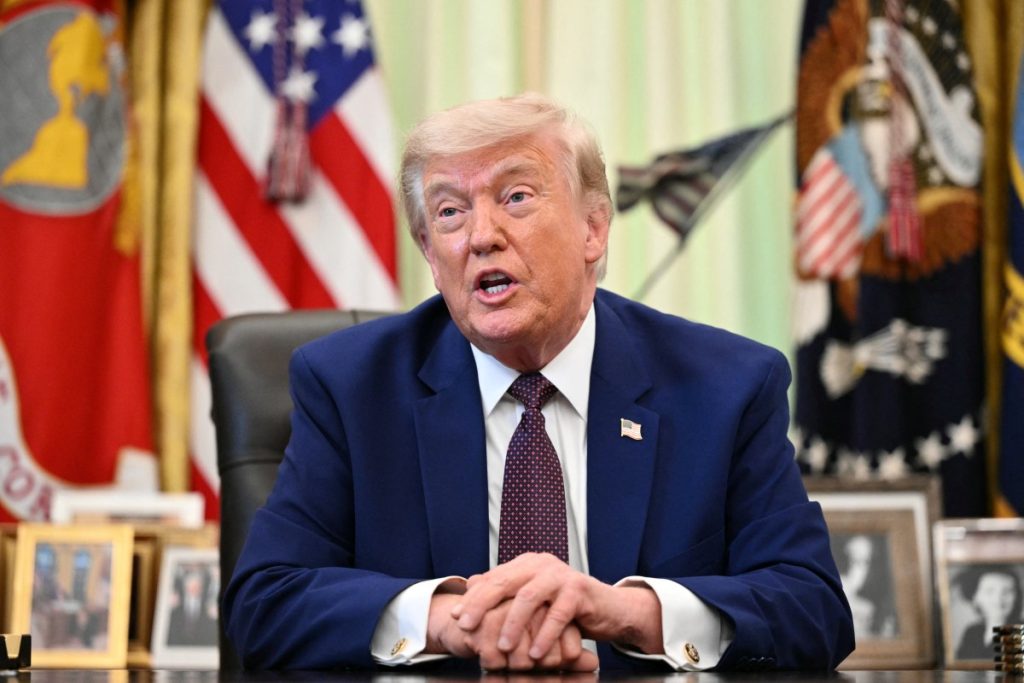
The morning light filtered through the blinds of the Situation Room as aides whispered about a decision that had rippled across continents just hours before. President Donald Trump, seated behind the Resolute Desk, stared at a notification flashing on his Truth Social feed: the livestream of Nidal Hasan’s execution had been scrapped. The announcement, brief yet seismic, arrived on a Thursday afternoon when the nation was still digesting the latest polls showing eight in ten Americans opposed to broadcasting the death of the Fort Hood shooter. Critics had likened the plan to a macabre reality show, warning that turning a military execution into a global stream would risk transforming Hasan into a martyr and eroding the moral authority of the armed forces. Human rights groups, the United Nations, and even senior members of Trump’s own party had warned that the spectacle could violate international norms against torture and degrading treatment. Yet just days earlier, Defense Secretary Pete Hegseth had championed the idea, arguing that a public broadcast would serve as a stark deterrent to terrorism, a chilling reminder that America’s justice could be witnessed by anyone with an internet connection. The tension between those competing visions—security theater versus solemn restraint—had set the stage for a confrontation that would play out not only in courtrooms and press briefings but also in the living rooms of millions who now faced the prospect of watching a state‑sanctioned killing unfold in real time.
As the president’s fingers hovered over the keyboard, the weight of history pressed upon him: the last military firing squad execution had occurred in 1945, a relic of a bygone era when warfare was still confined to battlefields, not bandwidth. Now, in an age where every smartphone could become a broadcast studio, the question was no longer whether the state could kill, but whether it should allow the world to watch. The decision to pull the plug on the livestream was therefore more than a policy reversal; it was a moment when technology, morality, and politics collided, forcing the nation to confront what kind of spectacle it was willing to tolerate in the name of justice.
The Echoes of a Firing Squad: History, Honor, and the Hollow Promise of Deterrence
The image of a firing squad has long occupied a dark corner of American military lore, evoking both the stern discipline of bygone wars and the uneasy spectacle of state‑sanctioned violence. When Defense Secretary Pete Hegseth first floated the idea of livestreaming Hasan’s execution, he invoked a deterrent logic that echoed Cold War propaganda: let the world see how America deals with terrorists and scum, he declared, suggesting that the visual impact could dissuade future acts of violence. Yet historians were quick to point out that the last time the U.S. military employed a firing squad was in 1945, when Private Eddie Slovik was shot for desertion—a punishment that had long since been deemed obsolete and morally fraught. According to Vanguard News, the impending execution would mark the first such event in over eight decades, a fact that lent the proceedings an air of archaic ceremony rather than modern deterrence. The Death Penalty Information Center notes that only 135 troops have been executed by the military since 1916, underscoring how rare such sentences have become in an era dominated by life imprisonment without parole. Moreover, the very nature of a firing squad—multiple shooters, a volley of bullets, the ritualistic counting—carries a symbolic weight that transcends mere punishment; it invokes notions of collective responsibility and, paradoxically, a communal act of violence that can easily be reframed as a spectacle.
Critics argued that broadcasting this ritual would not deter terror but rather furnish extremist recruiters with a potent propaganda tool, a point echoed by retired generals who warned in an open letter that the stream would “taint the honor of the military” and “ensure that Hasan becomes a martyr.” The economic calculus, too, was murky: setting up a secure, high‑definition livestream would require substantial resources—encrypted servers, bandwidth allocations, and a cadre of technicians—funds that could otherwise be directed toward victim support programs or mental health services for survivors. In the end, the president’s retreat from the livestream plan reflected a reluctant acknowledgment that the deterrent promise was, at best, speculative and, at worst, a dangerous gamble with the nation’s moral ledger.
The Digital Arena: Truth Social, Algorithms, and the Battle for Public Sensibility
In the hyper‑connected landscape of 2026, the prospect of a government‑sanctioned livestream was not merely a technical feasibility but a cultural flashpoint that tapped into the zeitgeist of viral outrage and algorithmic amplification. Trump’s announcement came via his preferred platform, Truth Social, a network that has become a conduit for his unfiltered pronouncements and a barometer of his base’s sentiments. As reported by Channels TV, the president’s post struck a curious balance: he acknowledged that he had initially viewed the livestream as a potential deterrent, yet he conceded that “many very good and well‑meaning people would rather not watch him die.” This candor, unusual for a leader known for doubling down on contentious moves, suggested an awareness of the shifting tides of public opinion, especially after a Washington Post‑ABC News‑Ipsos poll revealed that 80% of Americans opposed the broadcast. The backlash was not confined to partisan echo chambers; it spanned the ideological spectrum, drawing condemnation from Democratic lawmakers, Republican stalwarts like House Speaker Mike Johnson, and even international figures such as the British and Australian prime ministers, who labeled the plan “abhorrent.” The United Nations went further, declaring that streaming the execution would constitute torture under international law, while the president of the United States Conference of Catholic Bishops denounced it as a “barbaric promotion of a culture of death.” Such a chorus of dissent forced the administration to reckon with the power of digital platforms to mobilize moral outrage at lightning speed.
Analysts noted that the very mechanics of livestreaming—real‑time comments, instant sharing, the potential for the clip to be remixed into memes or propaganda—posed risks that traditional media broadcasts never carried. In this context, the decision to cancel the stream can be read as an attempt to retain control over the narrative, to prevent the execution from becoming a decentralized, uncontrollable digital artifact that could be weaponized by adversaries. The episode thus illustrates how technology has transformed the politics of punishment: where once a state could rely on the solemnity of a closed‑door ceremony, it now must navigate a terrain where every act of coercion is susceptible to instantaneous global scrutiny, remix, and reinterpretation.
Victims, Faith, and the Moral Weight of a Nation’s Conscience
Beyond the corridors of power and the hum of servers, the human dimension of the Fort Hood tragedy remained a quiet but relentless force shaping the debate. Nidal Hasan’s attack on November 5, 2009, claimed the lives of thirteen unarmed soldiers and left thirty‑two others wounded, a toll that still echoes in the testimonies of survivors and the grief of families who gather each year at the memorial site. According to Leadership Newspaper, twelve of the thirteen deceased were service members, and thirty of the wounded were also in uniform, underscoring the attack’s direct assault on the military community. The survivor who stopped Hasan—a civilian police officer—remains paralyzed from the waist down, a living reminder of the violence’s enduring physical scars. In the aftermath, Hasan chose to represent himself at trial, calling no witnesses and offering no testimony, a stance that many interpreted as a deliberate attempt to hijack the proceedings for ideological spectacle. His sentencing to death by a military jury in 2013 came after the court heard that he opposed U.S. occupations of Iraq and Afghanistan and had communicated online with the radical cleric Anwar al‑Awlaki, an American‑born extremist later killed in a drone strike. These details painted a portrait of a man whose motivations were entangled with both personal grievance and a transnational jihadist narrative, a complexity that made the prospect of reducing his death to a simplistic livestream all the more troubling to religious leaders.
The Catholic Church, invoking its longstanding opposition to the death penalty, warned that broadcasting the execution would glorify violence and undermine the sanctity of life. Meanwhile, victim advocacy groups emphasized that the families of the fallen deserved dignity, not a global audience for their loss. Some relatives expressed a desire to witness the execution in person, a private act of closure that the president’s statement allowed, noting that immediate family could still attend if they wished. This nuance highlighted a crucial distinction: while the state could offer a sanctioned, intimate moment of reckoning, it could not—nor should it—transform that moment into a mass‑consumed commodity. The social fabric, therefore, resisted the commodification of grief, insisting that justice, however severe, must be administered with a reverence that shields the mourning from the voyeuristic gaze of the internet.
The Road Ahead: Precedents, Policy, and the Fragile Balance of Spectacle and Sovereignty
The cancellation of the Hasan livestream does not erase the underlying tensions that gave rise to the proposal; rather, it leaves a lingering question about how future administrations will navigate the intersection of technology, punishment, and public sentiment. In the wake of the decision, analysts have begun to sketch potential scenarios: a future where executions remain closed‑door affairs, shielded from the prying eyes of livestream platforms; or, conversely, a scenario where a different political climate revives the idea of public broadcasts as a tool of deterrence or populist appeasement. The economic implications are also worth pondering. The Defense Department had earmarked funds for a secure streaming infrastructure, including cybersecurity measures to prevent hacking or unauthorized redistribution—expenditures that now may be redirected toward other priorities, such as upgrading veterans’ healthcare or investing in counter‑radicalization programs. Politically, the episode has added another layer of complexity to the already fraught relationship between the Pentagon and the White House, particularly as Secretary Hegseth faces scrutiny over his handling of the Iran war stalemate and its fallout on Republican prospects in the upcoming midterm elections. His advocacy for the livestream, while ultimately overruled, has become a point of contention within the GOP, with some factions viewing it as a necessary show of strength and others decrying it as a detrimental distraction from more pressing legislative agendas.
Culturally, the debate has reignited a national conversation about the role of media in shaping perceptions of justice. Scholars warn that the normalization of state‑sanctioned violence as entertainment could desensitize audiences, eroding the moral shock that societies traditionally rely upon to uphold humane standards. Technologically, the episode underscores the double‑edged sword of livestreaming capacity: while it offers unprecedented transparency, it also opens avenues for exploitation, misinformation, and the transformation of legal proceedings into viral spectacles. As the nation moves forward, the legacy of this moment may be measured not merely in the fate of one condemned man, but in the broader consensus it helps forge about how much of the state’s power we are willing to expose to the glare of the global audience—and how much we choose to keep veiled in the solemn privacy that justice, at its best, demands.
📰 Sources Cited
- Leadership Newspaper: Trump Cancels Livestream Of Fort Hood Shooter Nidal Hasan’s Planned Execution
- Channels TV: Trump Scraps Plan To Livestream Execution After Broad Backlash
- TVC News: Trump Calls off Plans to Livestream Fort Hood’s Shooter Execution
- Vanguard News: Trump scraps plan to livestream firing squad execution
- Al Jazeera Africa: Trump says Fort Hood United States shooter execution will not be livestreamed
0 Comments
Sign in to commentNo comments yet. Be the first to share your thoughts!