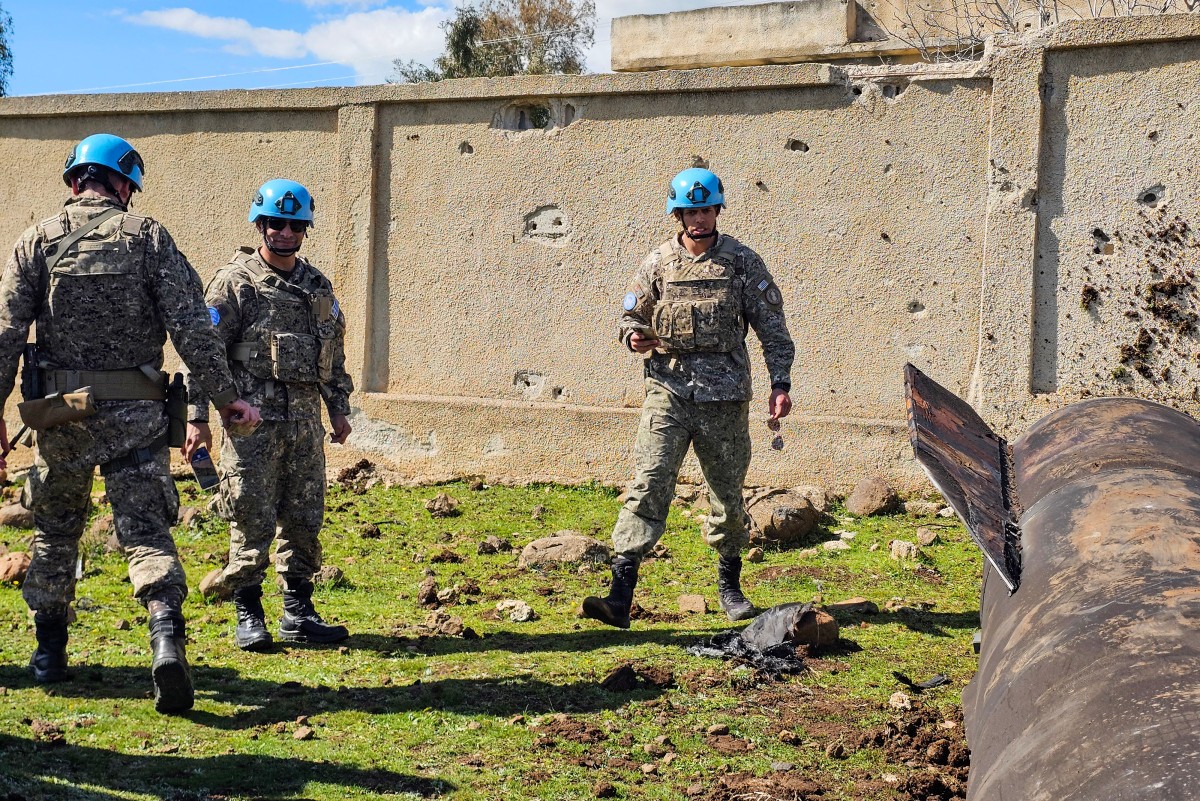
The Echoes of War: Iran's Retaliation and the Middle East's Tremors
The Echoes of War: Iran's Retaliation and the Middle East's Tremors
The Middle East, a cradle of civilizations, has once again donned the cloak of conflict. As the sun rose on a fateful morning, it unveiled a landscape marred by the harsh reality of war. According to Channels TV, Iran, in a defiant response to a wave of U.S. strikes, launched missile attacks on multiple countries hosting tens of thousands of American troops across the Middle East. This reciprocal violence has painted the skies with trails of smoke and fire, a stark reminder of the delicate balance of power in this region.
The strategic importance of Bahrain, hosting Naval Support Activity Bahrain, which serves as the base for the U.S. Navy's Fifth Fleet and the U.S. Naval Forces Central Command headquarters, cannot be overstated. As Punch Nigeria reported, with the deep-water port accommodating the largest U.S. military vessels, Bahrain has been a critical asset for the U.S. military operations in the Middle East since 1948. The recent Iranian missile strike on the 5th Fleet's service center has sent shockwaves through a region already on tenterhooks.
In the wake of these strikes, the skies have closed. As Al Jazeera Africa detailed, at least eight countries, including Iran, Israel, Jordan, and Qatar, shuttered their airspace, bringing global air travel to a standstill. This move not only disrupts the flow of people and goods but also escalates the tension, as airlines are forced to cancel flights, leaving travelers stranded and economies reeling from the sudden halt in transportation.
The Rumbling Skies: United States and Israel's Offensive and Iran's Defensive Posture
The Peoples Gazette reported on the explosions in northern Israel following the attacks on Iran, a grim testament to the escalating conflict. The Iranian armed forces, as stated by Iranian television, have not hesitated to target U.S. bases in the region, further intensifying the situation. This tit-for-tat exchange of aggression has set the stage for a geopolitical chess match with real-life consequences.
United States President Donald Trump, in a video address posted to his Truth Social platform, announced the start of combat operations against Iran, as detailed by Channels TV. Trump's speech was a declaration of intent, outlining the U.S. military's mission to defend the American people by eliminating imminent threats from the Iranian regime. The historical grievances, including the 47 years of hostility and the violent takeover of the U.S. embassy in Tehran, have culminated in this moment, where the rhetoric of "Death to America" has been met with a show of force.
The Dissonance of Discord: Ripple Effects on Global Airspace and Economies
The economic ramifications of this conflict are far-reaching. With airspace closures across the Middle East, as Punch Nigeria reported, major airlines have been forced to cancel flights, leading to significant financial losses and disruptions in global supply chains. The halt in air travel not only affects the airlines but also the tourism industry, as travelers rethink their plans to visit the region, and businesses that rely on the constant flow of goods and services.
The social dimension of this crisis cannot be ignored. Fear and uncertainty grip the hearts of millions as they watch the skies, once a symbol of freedom and connection, now a theater of war. The cultural ties that bind these nations are tested, as the fabric of cooperation is torn apart by the relentless march of conflict.
The Unseen Battles: Cyber and Information Warfare
In the age of information, the battles are not only fought in the skies and on the ground. The Technological and Informational Battlefield is a silent yet fierce front. Cyber-attacks, misinformation campaigns, and the control of narrative are becoming increasingly important in shaping public opinion and influencing global responses to the conflict.
Future Implications: A World Adrift in a Sea of Uncertainty
As the dust begins to settle, the world is left to grapple with the implications of these strikes. The path ahead is fraught with challenges. Will this be a turning point, as exiled Iranian prince Reza Pahlavi suggests, urging Iranians to prepare for a 'final victory'? Or will it plunge the region into a protracted conflict, with no clear victor in sight? The economic, social, and political repercussions will be felt for years to come, as nations recalibrate their strategies and the world watches with bated breath.
The Middle East, once again, stands at a crossroads, its fate hanging in the balance as the world's powers play out their strategies. The echoes of war reverberate across the sands, a reminder of the high stakes and the human cost of conflict. As we look to the future, the question remains: can diplomacy rise from the ashes of war, or will the cycle of violence continue to shape the destiny of this ancient land?
The economic hemorrhaging extends beyond immediate border closures. According to the International Air Transport Association, carriers across the region have suspended approximately 600 weekly flights, translating to $120 million in weekly revenue losses. Dubai International Airport, the world's busiest international hub, reported a 15% decline in transit passengers as travelers bypass routes skirting Iranian airspace, forcing carriers to absorb additional fuel costs exceeding $50,000 per diverted long-haul flight.
Diplomatic channels, meanwhile, remain congested with back-channel negotiations. Qatari officials have hosted emergency talks between Iranian and Western intermediaries, while Oman maintains its traditional role as the region's discreet messenger. Yet these efforts confront entrenched positions: Tehran demands guarantees against further Israeli strikes, while Tel Aviv insists upon the dismantlement of proxy militias in Lebanon and Syria.
The humanitarian calculus grows direr. The United Nations Refugee Agency estimates that renewed hostilities could displace an additional 2.3 million civilians, straining camps already overwhelmed by decade-old Syrian refugee crises. In Lebanon's Bekaa Valley, families stockpile essentials as memory of the 2006 war's devastation resurfaces, while Iranian civil society faces renewed internet blackouts amid government fears of organized protest.
Energy markets reflect this volatility, with Brent crude futures spiking 8% following the strikes. European nations, still recalibrating after Russian supply disruptions, now confront renewed vulnerability in Gulf transit routes through the Strait of Hormuz, through which one-fifth of global oil shipments pass daily.
📰 Sources Cited
- Channels TV: Iran Strikes Bahrain, Others Hosting United States Forces In Middle East
- Punch Nigeria: Airspace closed across Middle East as United States-Israel strike Iran
- Peoples Gazette: Explosions in northern Israel after attacks on Iran
- Channels TV: FULL TEXT: Trump’s Speech Announcing United States Military Strikes In Iran
- Channels TV: At Least Two Killed In Attack On Iraq Base
- Al Jazeera Africa: Airspace closed, airlines halt flights as United States, Israel attack, Iran responds
- Al Jazeera Africa: United States, Israel bomb Iran: A timeline of talks and threats leading up to attacks
- Punch Nigeria: Exiled Iranian Prince Pahlavi backs United States-Israel-strikes, says ‘final victory’ near
- Channels TV: United States, Israel Launch Strikes Against Iran
- Peoples Gazette: Israel, U.S. launch joint attack on Iran
0 Comments
Sign in to commentNo comments yet. Be the first to share your thoughts!