A Violent Prelude: The Agadagba Incident
A Violent Prelude: The Agadagba Incident
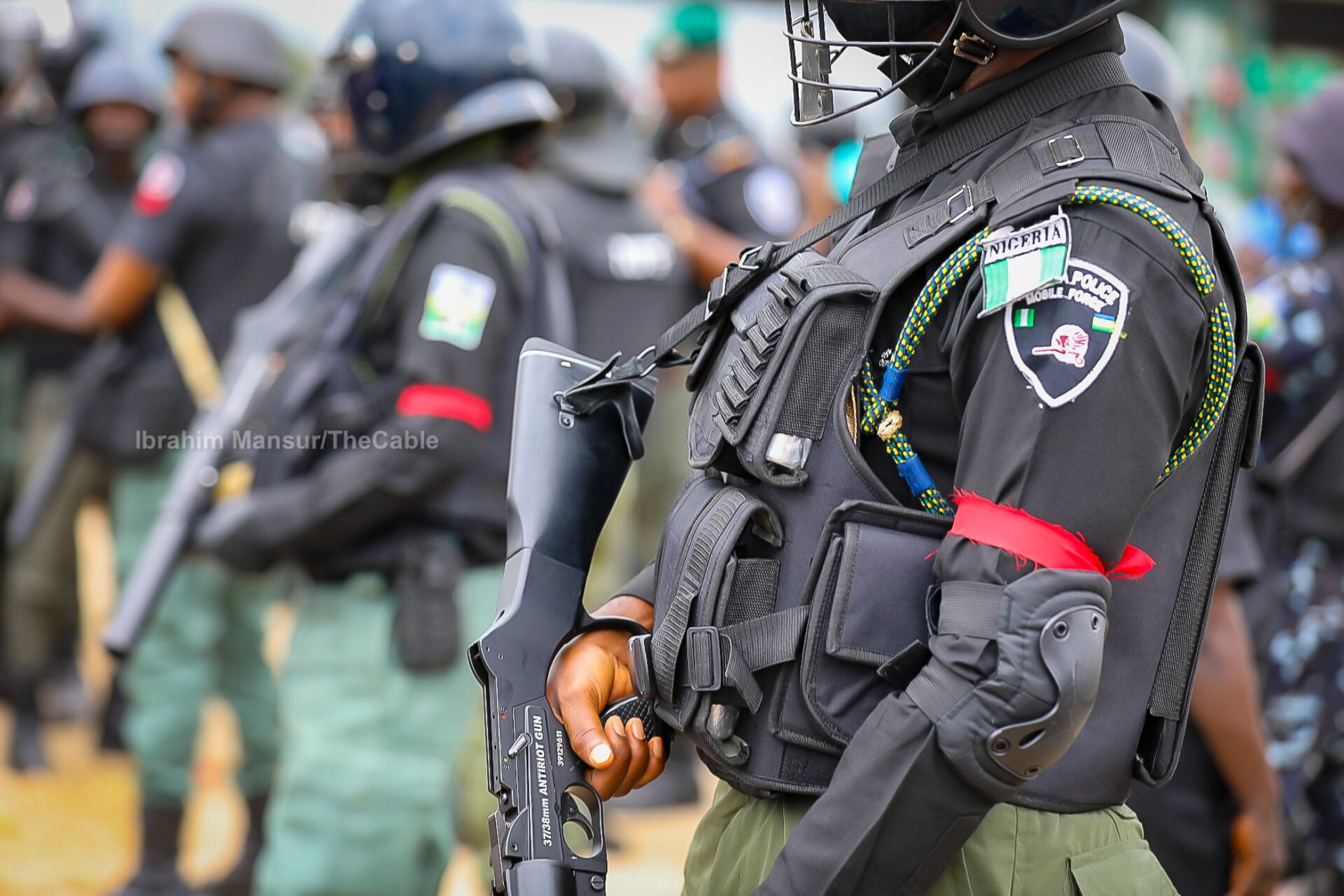
In the rural heart of Ondo State, the hum of daily life was brutally interrupted by a violent act that resonated far beyond its local confines. A trio of assailants descended upon a female police officer, Inspector Ige Olayinka, who found herself outnumbered and outmatched in the Agadagba community. The incident, as narrated by the Police Public Relations Officer in Ondo State, Abayomi Jimoh, was more than a mere assault—it was an insurrection against the very fabric of law enforcement, a brazen challenge to the authority that holds Nigeria together.
The suspects, identified as Amos Ajemigi, Tari Ofoezu, and Lots Alonge, did not merely confront the officer; they stripped her of her service riot gun and other belongings, an act that Jimoh described as an affront to constituted authority and a threat to public order. The command’s swift response, a testament to its zero tolerance for violence against its personnel, led to the arrest of the perpetrators, but the incident left an indelible mark on the community and the nation at large.
The Shadow War: A Nationwide Struggle with Firearms
As the dust settled in Ondo, the echoes of violence reverberated across Nigeria, highlighting a pervasive issue that plagues the nation: the illicit arms trade. In Lagos State, the Police Command arrested 47 suspected criminals in a series of coordinated operations targeting criminal elements, a stark reminder of the scale of the problem. The operation underscored the relentless efforts of law enforcement to combat the proliferation of illegal weapons, which fuel a shadow war that endangers public safety and undermines social order.
In Ogun State, a father and his 13-year-old son were arrested for possessing a locally made pistol, a poignant illustration of the insidious reach of the illegal arms trade. The arrest during a stop-and-search operation painted a grim picture of the accessibility of firearms, even to the youth, and the potential for violence that such accessibility portends.
The Arsenal of the Underground: A Network Exposed
The illicit arms trade in Nigeria extends beyond the confines of the country, with international dimensions that complicate the issue. The arrest of a 25-year-old woman, Nafisa, by the Department of State Services (DSS) in Kano for alleged trafficking in ammunition is a case in point. Nafisa, from Kankara, Katsina State, was found with 220 rounds of ammunition concealed within a bag of garri, a revelation that speaks to the sophistication and隐蔽性 of the arms network.
The arrest followed a tip-off to the intelligence service, underscoring the critical role of information in combating gunrunning. Nafisa's confession that the ammunition was sent by an officer in Lafia, Nassarawa State, whom she had never met, reveals the impersonal yet deadly transactions that fuel the trade. The consignments, sent to various motor parks for collection and distribution, underscore the vast and complex web of illegal arms distribution that spans across states and regions.
The Ripple Effect: Societal Impacts and Responses
The arrests in Ondo, Lagos, Ogun, and Kano are but a few threads in the tapestry of Nigeria's battle against illegal firearms. The impact of this illicit trade extends into the socio-economic fabric of the nation. According to analysts, the proliferation of illegal arms exacerbates violence, fuels criminal activities, and escalates insecurity, which in turn hampers economic development and social cohesion.
The cultural dimension of the issue is equally significant. The accessibility of firearms to minors, as seen in the Ogun State case, indicates a worrying erosion of societal values and the potential for a lost generation ensnared in a cycle of violence. The challenge for Nigeria is not merely legislative but also educational, requiring a concerted effort to address the root causes of the appeal of firearms among the youth.
The Arsenal of Democracy: Legislative and Policy Responses
In response to the growing menace, Nigeria's legislative and policy machinery has been set in motion. The government has increased funding for intelligence services and law enforcement, aiming to bolster their capabilities to intercept and dismantle illegal arms networks. Policymakers are also grappling with the need for stricter gun control laws and the enforcement of existing regulations.
However, the fight against illegal firearms is a complex one, requiring not just legal and enforcement measures but also a shift in societal attitudes and values. As experts note, the success of any policy initiative hinges on the active participation of the community and a collective commitment to peace and security.
Guns and Ghosts: Future Implications and the Road Ahead
The future implications of Nigeria's struggle with illegal firearms are profound. The nation stands at a crossroads, confronted with the specter of escalating violence and the potential for social unrest. The road ahead is fraught with challenges, from strengthening intelligence gathering to reforming law enforcement practices and fostering a culture of peace.
The fight against illicit arms is not just a battle for the safety of Nigerians; it is a fight for the soul of the nation. As the echoes of gunfire fade, the real work begins—building a Nigeria where the rule of law prevails, and where the arms of violence are silenced forever. It is a daunting task, but one that Nigeria must undertake with determination and resolve, for the sake of its people and the promise of a more peaceful future.
A Torrent of Firearms: The Illicit Arms Trade in Nigeria
Nigeria, grappling with a surge in illegal firearms, confronts an illicit trade network that spans the continent and beyond. The Nigeria Security Tracker has documented a disturbing trend of increased gun violence, with over 2,500 reported incidents since 2011. This trade not only imperils national security but also undermines the fabric of society as younger generations become entangled in its deadly web.
According to a recent report by the International Crisis Group, Nigeria's gun market has been fueled by a confluence of factors including regional conflicts, porous borders, and a thriving black market. The porous nature of Nigeria's borders, especially with Mali and Niger, has been a conduit for the influx of small arms. The United Nations Office on Drugs and Crime (UNODC) has highlighted the severe impact of such trafficking on regional stability, as it exacerbates communal clashes and feeds the cycle of violence.
The Plight of Youths: A Generation at Risk
The allure of firearms among Nigerian youth is a symptom of deeper societal malaise. High unemployment rates, coupled with a lack of educational and economic opportunities, push many into the arms of criminal networks. As Punch Nigeria reported, the arrest of a minor in Ogun State armed with an AK-47 underscores the severity of the situation. Such incidents point to a generation at risk, with firearms becoming a tragic norm rather than an anomaly.
The educational system in Nigeria, plagued by inadequate funding and outdated curricula, fails to equip young people with the skills needed in the modern economy. This gap, combined with a lack of recreational and vocational opportunities, creates a fertile ground for the spread of gun culture, as observed by experts at the Lagos-based Center for Democracy and Development.
Legislative and Policy Responses: A Multifaceted Approach
In an effort to combat the proliferation of illegal firearms, the Nigerian government has enacted legislation such as the Firearms Act and the Robbery and Firearms (Special Provisions) Act. These laws mandate strict penalties for illegal possession and use of firearms. However, as Vanguard Nigeria pointed out, enforcement remains a significant challenge due to corruption and inadequate resources.
The National Assembly has also proposed the National Commission for the Prohibition of Small Arms and Light Weapons Bill, aimed at coordinating efforts to curb the illicit arms trade. This bill, if passed, would provide a comprehensive framework for regulating and controlling the circulation of small arms within Nigeria.
Societal Shift: Education and Community Engagement
Beyond legislation, a paradigm shift is required in Nigeria’s approach to gun control. Community engagement and educational initiatives are crucial to dissuading youths from the path of violence. Programs that focus on conflict resolution, peace education, and socio-economic empowerment can help redirect the energies of at-risk youth.
The success of such initiatives can be seen in the "Safe Schools" program in Lagos, which has reduced violence in educational institutions by fostering a culture of peace and non-violence. Similarly, vocational training programs in Kano and Kaduna have provided alternative livelihoods for former militants, steering them away from a life of crime.
The Road to Stability: Challenges and Prospects
The journey towards a more stable and secure Nigeria is fraught with challenges. The nation must balance the imperative of immediate security measures with the long-term goal of societal reform. Strengthening intelligence services and law enforcement is essential, but so is investing in education, employment opportunities, and community development.
The international community also plays a vital role in supporting Nigeria's efforts. Through collaborative initiatives such as the United Nations Programme of Action on Small Arms, there is scope for enhanced regional cooperation and information sharing to dismantle the networks that sustain the illegal arms trade.
In conclusion, Nigeria's struggle with illegal firearms is a complex tapestry of social, economic, and political issues. The path to a peaceful and secure future requires a multifaceted approach that addresses both the immediate dangers and the root causes of this pervasive problem. It is a task that demands the commitment of all stakeholders, from the government to the grassroots, in a collective effort to reclaim Nigeria's future from the grip of violence.
📰 Sources Cited
- Daily Post Nigeria: Police arrest three for disarming female officer in Ondo
- Nigerian Tribune: Police arrest 47 suspected criminals, recover arms in Lagos
- Punch Nigeria: Police arrest father, teenage son over illegal firearm in Ogun
- Sun News Online: DSS arrests woman, 25, for gunrunning in Kano
- Punch Nigeria: Police arrest graduate for running illegal arms factory in Uyo
- The Nation: Police arrest two armed robbery suspects, cultists in Delta
0 Comments
Sign in to commentNo comments yet. Be the first to share your thoughts!