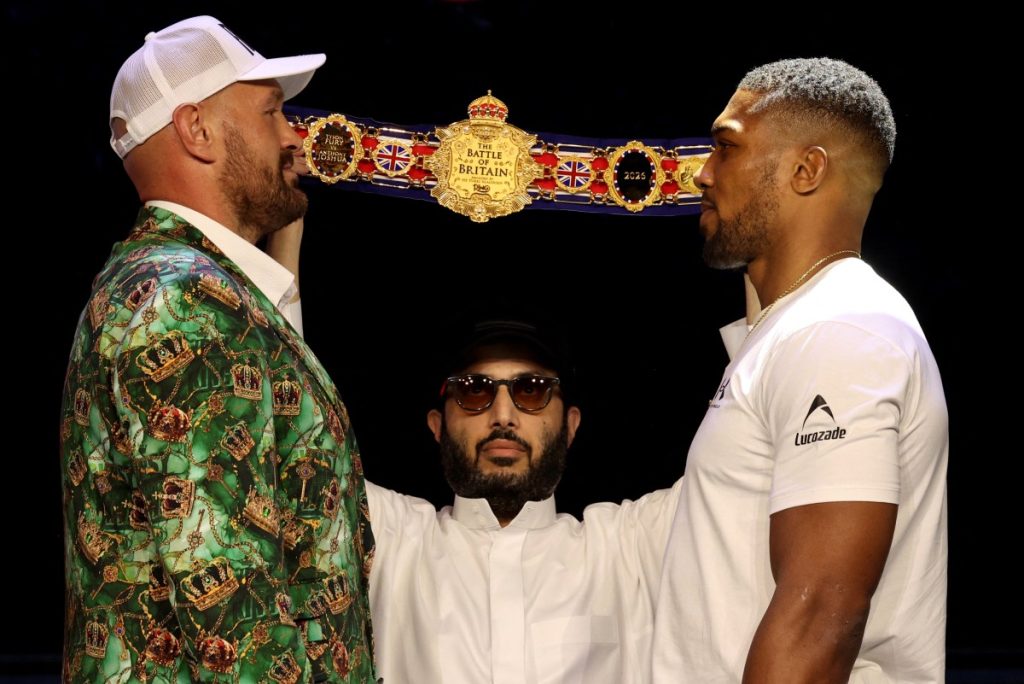
The night air over Cardiff hangs heavy with anticipation as the Principality Stadium prepares to host a clash that has lingered in the collective imagination of boxing fans for over a decade. Tyson Fury, the self‑styled Gypsy King, strides toward the ring with a swagger that blends bravado and a peculiar political homage, announcing his intention to invite former United States President Donald Trump to lead his procession, a gesture rooted in a personal gratitude that dates back to a travel ban lifted at the White House in June 2026. Across the way, Anthony Joshua, the two‑time world heavyweight champion, eyes the same stage with a laser focus, declaring in interviews with Punch Nigeria that he envisions a first‑round knockout that would deliver a spectacular victory and silence the doubters who have questioned the timing of this long‑awaited showdown. The bout, confirmed for December 11, arrives without a contractual rematch clause, a detail both camps have affirmed according to Punch Nigeria, stripping away a safety net that might have softened the stakes and forcing each fighter to lay everything on the line in a single night. As Netflix prepares to broadcast the event to a massive American audience, the start time could creep past 2 a.m.
local time, a scheduling concession that underscores the commercial gravity of the encounter and the transatlantic tug‑of‑war over where the fight should have taken place, with early talks pointing toward Madison Square Garden before Joshua’s camp insisted on keeping the contest on British soil. In this swirling mix of sport, spectacle, and geopolitics, the Cardiff night promises to be more than a mere heavyweight duel; it becomes a stage where personal loyalties, national pride, and the unpredictable theater of celebrity intersect under the glare of global lights.
The Economic Undercurrents: Purse, Pay‑Per‑View, and the Price of Prestige
Financial stakes loom large behind the glittering façade of the Fury‑Joshua encounter, with promoters and broadcasters calculating the potential windfall from a fight that has been dubbed the “Battle of Britain” and marketed as a historic heavyweight mega‑fight. According to Business Day, the event is poised to generate significant revenue streams from pay‑per‑view purchases, especially in the United States where Netflix’s subscriber base will tune in during the early morning hours, a timing choice driven by the desire to capture prime‑time viewership across multiple time zones. Industry analysts estimate that the gross earnings could surpass £50 million when factoring in ticket sales at the 80,000‑capacity Principality Stadium, sponsorship deals, and merchandising, figures that would place this bout among the most lucrative non‑title heavyweight contests in recent memory. The absence of a rematch clause, as highlighted by Punch Nigeria, adds a layer of fiscal risk for both camps; without a guaranteed second encounter, each fighter must maximize earnings from this singular event, prompting Fury to leverage his flamboyant persona and Joshua to capitalize on his marketability as a global ambassador for British sport. Economists note that the influx of tourism and hospitality spending in Cardiff on fight night could provide a temporary boost to the local economy, with hotels reporting near‑full occupancy and restaurants anticipating a surge in patronage from international fans.
Yet, some observers caution that the reliance on a single high‑profile event for economic gain mirrors a broader pattern in sport where cities chase fleeting spectacles rather than investing in sustainable sporting infrastructure, a debate that resurfaces each time a mega‑fight is announced.
The Political Stage: Trump’s Invitation, Diplomatic Overtones, and the Soft Power Play
Tyson Fury’s overture to Donald Trump is not merely a whimsical flourish; it carries subtle political resonance that reflects the intricate relationship between sport, celebrity, and international diplomacy. As reported by Vanguard News and echoed across multiple outlets including Complete Sports and Sun News Online, Fury’s desire to have the former U.S. president lead his ring walk stems from a personal thank‑you for the role Trump played in overturning a travel ban that had previously barred the Gypsy King from entering the United States, a detail Fury recounted after meeting Trump at the UFC Freedom 250 event at the White House in June 2026. This gesture, framed by Fury as an invitation to his “old buddy, old pal,” is tempered by his own acknowledgment that Trump’s current presidential duties make attendance unlikely, a candid admission that underscores the tension between personal gratitude and the realities of political office. Political commentators suggest that the spectacle of a former president escorting a British heavyweight into the ring could be interpreted as a soft‑power maneuver, signaling a continued transatlantic camaraderie that transcends official diplomatic channels. Meanwhile, the bout’s location in Cardiff, rather than the initially contemplated Madison Square Garden, reveals a political negotiation of sorts; Joshua’s camp successfully resisted the lure of the American market, insisting that the fight remain on British soil, a decision framed by some as an assertion of national pride in the face of commercial pressures.
The interplay of these dynamics highlights how a sporting event can become a conduit for broader narratives about allegiance, influence, and the symbolic weight of celebrity endorsements in an era where athletes wield platforms that rival those of traditional statesmen.
Cultural Reverberations: Identity, Heritage, and the Gypsy King’s Narrative
Beyond the purse and the politics, the Fury‑Joshua clash taps deep into cultural veins that course through both fighters’ identities, offering a canvas upon which themes of heritage, resilience, and communal pride are painted. Tyson Fury’s frequent invocation of his Romani roots—evident in his moniker “Gypsy King” and his flamboyant ring‑walk attire—serves as a celebration of a marginalized community that has historically faced prejudice across Europe and beyond. His willingness to showcase symbols such as a cap emblazoned with “Donald Trump for Prime Minister” during public appearances, as noted in the Vanguard News image caption, reflects a provocative blend of irony and allegiance that challenges conventional expectations of how athletes navigate political expression. Anthony Joshua, meanwhile, embodies a different cultural narrative: a British‑Nigerian whose rise to global stardom has become a source of inspiration for diaspora communities, particularly in Nigeria where his bouts are followed with fervent passion, as evidenced by the extensive coverage from Punch Nigeria, Al Jazeera Africa, and Vanguard News. Joshua’s prediction of a first‑round knockout is not merely a tactical statement; it resonates with a cultural expectation of delivering decisive, exhilarating performances that honor the sacrifices of those who have supported his journey from the streets of Watford to the pinnacle of heavyweight boxing.
Sociologists observe that the confrontation between these two distinct cultural personae—Fury’s unapologetic, itinerant showmanship versus Joshua’s disciplined, globally minded professionalism—creates a rich dialogue about what it means to represent a nation in an increasingly interconnected world, where athletes can simultaneously embody local roots and global appeal.
Technological and Informational Battlefield: Streaming, Scheduling, and the Digital Fan Experience
The modern boxing spectacle is inseparable from the technological frameworks that deliver it to audiences worldwide, and the Fury‑Joshua encounter exemplifies how streaming platforms, data analytics, and broadcast logistics shape the fan experience. Netflix’s acquisition of the broadcasting rights marks a significant shift from traditional pay‑per‑view models to a subscription‑based streaming approach, a move that aligns with the company’s strategy to capture live sports audiences and leverage its global reach. As reported by Sun News Online and corroborated by multiple sources, the decision to potentially start the fight as late as 2 a.m. in Cardiff is driven by the need to accommodate Netflix’s substantial U.S. viewership, ensuring that the event airs during prime‑time hours across American time zones. This scheduling nuance illustrates the growing power of digital platforms to dictate the temporal logistics of live events, a phenomenon that has prompted discussions among broadcasters, promoters, and athletes about the balance between commercial imperatives and the welfare of fighters who must adapt to unconventional fight times. Furthermore, the buildup to the bout has been amplified through a cascade of social media clips, behind‑the‑scenes documentaries, and interactive fan polls, creating an informational ecosystem where every tweet, Instagram story, and YouTube analysis contributes to the narrative momentum.
Media analysts note that this digital deluge not only heightens anticipation but also introduces challenges related to misinformation, as unverified rumors about fight conditions, injury statuses, or political entanglements can spread rapidly, necessitating vigilant fact‑checking by journalists and official bodies alike. In this way, the Fury‑Joshua showdown stands at the intersection of athletic competition and technological innovation, where the outcome is measured not only in rounds knocked out but also in the ways the event reshapes how sports are consumed, discussed, and remembered in the digital age.
Future Implications: A Blueprint for Transatlantic Sporting Diplomacy or a Fleeting Flash?
Looking beyond the immediate roar of the crowd and the final bell, the Fury‑Joshua encounter holds potential lessons for the future of international sports diplomacy, athlete branding, and the economics of mega‑events. Should the fight deliver the explosive, first‑round knockout Joshua has predicted, it could reinforce a narrative of British boxing resurgence, prompting increased investment in grassroots programs across the United Kingdom and inspiring a new generation of fighters who see a clear pathway to global stardom. Conversely, if Fury’s unorthodox tactics and psychological warfare—exemplified by his Trump invitation and his self‑deprecating labeling of Joshua as a “bum”—prove effective, it may signal a shift toward fighters leveraging celebrity and political symbolism as integral components of their fight‑style, blurring the lines between sport and entertainment. Economists warn that reliance on singular, high‑stakes events for revenue generation poses risks; diversifying income streams through sustained league structures, regional tournaments, and digital content offerings could provide more stable financial foundations for promoters and athletes alike. Politically, the episode underscores how athletes can act as informal ambassadors, using their platforms to express gratitude, advocate for causes, or engage in subtle diplomacy, suggesting that future sporting agreements might benefit from explicit frameworks that recognize and harness such soft‑power potentials.
Culturally, the juxtaposition of Fury’s Romani heritage and Joshua’s Nigerian‑British identity highlights the growing importance of inclusive representation in sports, encouraging governing bodies to adopt policies that celebrate diversity while combating discrimination. Technologically, the Netflix‑driven scheduling experiment may prompt other sports leagues to reconsider traditional broadcast windows, fostering a more flexible, viewer‑centric approach that could enhance global accessibility. Ultimately, the Cardiff night may serve as either a blueprint for how sport can intertwine with politics, culture, and technology in a purposeful, sustainable manner—or a cautionary tale of how the lure of spectacle can overshadow the deeper values that underpin athletic competition. As the lights dim on Principality Stadium and the echoes of the clash fade, the world will watch closely to see which narrative endures.
📰 Sources Cited
- Punch Nigeria: No rematch clause for Fury vs Joshua super-fight
- Al Jazeera Africa: Fury to invite United States President Trump to lead ring walk before Joshua fight
- Punch Nigeria: Fury to invite Trump to lead ring walk before Joshua fight
- Vanguard News: Fury to invite Trump to lead ring walk before Joshua showdown
- Business Day: Fury plans Trump ring walk for Joshua fight
- Punch Nigeria: Joshua predicts first-round knockout against Fury
- Al Jazeera Africa: Tyson Fury vs Anthony Joshua fight confirmed, but is the bout too late?
- Sun News Online: Fury to make Donald Trump offer for Joshua fight
- Complete Sports: I’ll Ask Trump To Join My Ringwalk Against Joshua –Fury
- Google News Nigeria: Fury to invite Trump to lead ring walk before Joshua showdown - France 24
0 Comments
Sign in to commentNo comments yet. Be the first to share your thoughts!