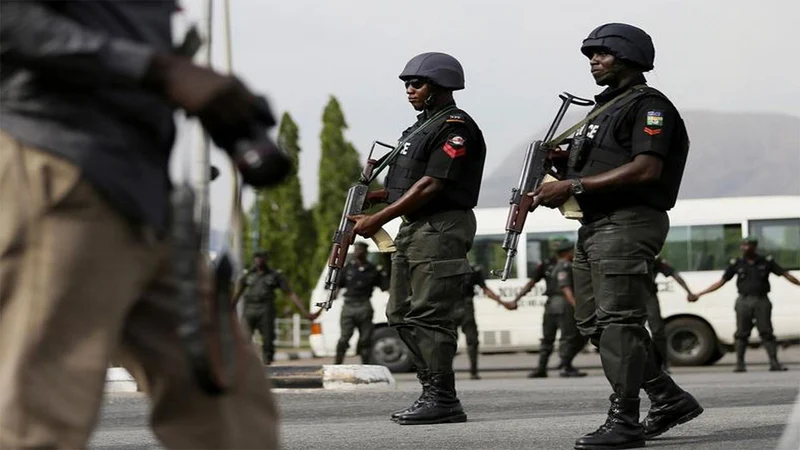
In the humid twilight of Oda community, nestled within the sprawling expanse of Akure South Local Government Area in Ondo State, the ordinary rhythm of evening commerce was shattered by an act of violence that would have remained shrouded in the anonymous darkness of Nigeria's insecurity crisis were it not for the unblinking eye of technology. The grainy footage, captured by a Closed-Circuit Television camera positioned somewhere along the dusty arteries of this southwestern settlement, recorded what thousands of Nigerian families dread with paralyzing certainty: the sudden, brutal snatching of innocent victims by armed predators who have turned kidnapping from isolated criminality into a sprawling industrial enterprise. Within hours of the abduction, this digital evidence had transcended its local origins, cascading across social media platforms with the viral velocity that characterizes contemporary Nigerian justice-seeking, transforming private tragedy into public spectacle and, ultimately, into the evidentiary foundation for one of the most sophisticated police operations the region has witnessed in recent memory.
While the Ondo State Police Command would later celebrate the rescue of three victims and the apprehension of three suspects through a statement issued by DSP Abayomi Jimoh, their success story cast into sharp relief the darker narratives unfolding elsewhere in the federation, particularly in Bauchi State where 20-year-old Rabiu Safiyanu was arrested by detectives from the 'C' Divisional Headquarters for a kidnapping that ended with the discovery of a four-year-old boy buried in a shallow grave, a tragedy announced by SP Nafiu Habib on a somber Sunday that reminded the nation that for every victory against the kidnapping epidemic, countless other victims vanish into statistics, their fates sealed before the algorithms of justice could engage.
The Lens of Retribution: Digital Vigilance and the Anatomy of a Rescue
The transformation of the Ondo kidnapping from another entry in Nigeria's vast catalog of violent crimes into a case study of successful law enforcement intervention hinged upon the command's immediate recognition that the digital footprint left by the CCTV footage represented more than mere evidence—it constituted a roadmap to resolution. According to PM News Nigeria, the command wasted no time in activating its intelligence team upon receiving the viral footage, deploying a sophisticated matrix of digital surveillance analysis that represented a significant evolution from the traditional policing methods that have historically struggled against the adaptive tactics of organized criminal syndicates. This technological pivot, leveraging coordinated field operations synchronized with cyber-tracking capabilities, marked a departure from the reactive posturing that has often characterized Nigerian security responses, instead embracing a proactive intelligence-led model that analysts suggest may signal a broader institutional shift toward modernization. Punch Nigeria reported that the Anti-Kidnapping Squad executed targeted operations with surgical precision, utilizing the visual data to identify patterns of movement, vehicle registration details, and geographic markers that would have been invisible to conventional investigative techniques, ultimately cornering one suspect whose capture would prove to be the thread that unraveled the entire conspiracy.
The interrogation of this initial detainee, conducted under the protocols that DSP Jimoh later described in his official communications, yielded actionable intelligence that cascaded into the arrests of two additional accomplices, demonstrating how technology, when married to traditional detective work, creates a multiplier effect in dismantling criminal networks that have long exploited the technological asymmetry between law enforcement and outlaw elements.
Blood and Soil: The Social Architecture of Fear in Southwest Nigeria
Beneath the operational details and the celebratory tone of press releases lies a complex social fabric that has been increasingly strained by the penetration of kidnapping gangs into communities that once considered themselves insulated from the worst excesses of Nigeria's security challenges. The Oda community, situated within the political and cultural heartland of Ondo State, represents a demographic crossroads where urban expansion meets traditional settlement patterns, creating the kind of socioeconomic heterogeneity that security experts identify as fertile ground for criminal exploitation. Daily Post Nigeria's coverage of the incident emphasized the location specificity of the rescue—Oda community within Akure South—highlighting how kidnapping has migrated from the geopolitical zones historically associated with banditry into the relatively peaceful southwestern states, unsettling the regional self-perception of the Yoruba heartland as a sanctuary from the kidnapping economy that has plagued the North and Niger Delta. This geographic diffusion of criminality carries profound cultural implications, as communities that have maintained communal vigilance systems known as vigilante or hunter associations find themselves outgunned and outmaneuvered by syndicates equipped with modern communication devices and weaponry.
The viral nature of the CCTV footage, as documented by Peoples Gazette, served not only as a tool for police investigation but as a communal catharsis, allowing residents who had felt increasingly powerless against invisible threats to witness the machinery of justice engage with their lived reality, transforming passive victims into active participants in the surveillance state that increasingly defines modern Nigerian urban security.
Command Decisions: Institutional Memory and the Politics of Swift Justice
The divergent outcomes of the Ondo rescue and the Bauchi tragedy illuminate the stark variance in police effectiveness across Nigeria's federated security architecture, raising critical questions about resource allocation, training protocols, and the political will that determines whether a kidnapping case concludes with tearful reunions or mournful burials. In Ondo State, the rapid response orchestrated under the aegis of the State Police Command reflects what security analysts characterize as a high-functioning node within a decentralized system, where local leadership possesses both the autonomy and resources to deploy specialized units like the Anti-Kidnapping Squad without awaiting bureaucratic clearance from Abuja. According to TVC News, the Bauchi case involving Rabiu Safiyanu followed a different trajectory, one where the detection capabilities of the 'C' Divisional Headquarters, while ultimately successful in apprehending the perpetrator, could not reverse the fatal outcome for the four-year-old victim discovered interred in a shallow grave, a temporal difference of hours or minutes that separates rescue from recovery in the mathematics of kidnapping intervention.
Political observers note that the Ondo success story arrives at a crucial moment for the Nigeria Police Force, which has been seeking to rehabilitate its public image amid widespread allegations of corruption, brutality, and incompetence, offering a narrative template that emphasizes competence and compassion over the heavy-handed tactics that have historically defined police-civilian relations.
The statements issued by spokespersons Jimoh and Habib, while both announcing arrests, carried markedly different tonal registers—one of triumph and reassurance in Ondo, one of somber resolution in Bauchi—reflecting how the outcomes of police operations become instrumentalized within the broader political discourse surrounding security governance in an election cycle where the safety of citizens remains the paramount metric of state legitimacy.
The Ledger of Dread: Economic Calculus in the Kidnap Economy
The dismantling of the Ondo syndicate and the arrest of Safiyanu in Bauchi represent merely the visible disruptions of an underground economy that has grown increasingly sophisticated in its financial architecture, extracting ransoms that range from modest sums extracted from working-class families to millions of naira demanded from corporate executives and political figures. Security economists estimate that kidnapping now constitutes a multi-billion naira industry in Nigeria, with the Oda community incident fitting a pattern of opportunistic abductions targeting middle-class commuters and small business owners who possess sufficient liquidity to pay moderate ransoms without attracting the high-profile law enforcement attention that follows the kidnapping of elites. The CCTV footage that proved so crucial to the Ondo investigation suggests a targeting of victims in commercial areas where cash transactions remain prevalent, indicating that the perpetrators possessed sophisticated intelligence about local economic patterns and the cash-flow rhythms of market days.
In Bauchi, the involvement of a 20-year-old suspect like Rabiu Safiyanu points to the demographic desperation driving recruitment into kidnapping rings, where unemployed youth facing diminished economic prospects in a contracting national economy view the risks of criminal enterprise as commensurate with the rewards, particularly when contrasted with the meager returns of legitimate agricultural or service sector employment.
The cost of the police response itself—encompassing the technological infrastructure of CCTV analysis, the fuel and logistics of coordinated field operations, and the post-rescue medical and psychological care for the three victims—represents a significant public expenditure that raises questions about the sustainability of reactive security models versus preventive investments in community development and youth employment that might dry up the recruitment pools from which such syndicates draw their foot soldiers.
Panopticon Rising: Technology, Trust, and Tomorrow's Security Landscape
As the Ondo State Police Command returns to routine patrols and the Bauchi 'C' Divisional Headquarters prepares its case file against Safiyanu for prosecution, the implications of these twin narratives extend far beyond the immediate circumference of their respective communities, offering a glimpse into the future of security governance in a Nigeria increasingly defined by the ubiquity of surveillance technology and the democratization of forensic evidence. The role of viral CCTV footage in cracking the Ondo case suggests a paradigm shift wherein the architecture of public safety is being decentralized, transferred from the exclusive domain of state security apparatuses into the hands of private citizens who install cameras outside their shops and homes, inadvertently creating the mesh networks of visibility that make criminal anonymity increasingly untenable. Security experts predict that this hybrid model of private surveillance feeding public investigation will accelerate as the costs of CCTV systems continue to plummet, potentially creating a patchwork of monitored spaces that could extend the state's forensic reach into the rural and semi-urban territories where kidnapping syndicates have traditionally operated with impunity.
However, this technological optimism must be tempered by the recognition that for every Ondo success story where digital evidence leads to rescue, there remains the Bauchi reality where even detection cannot reverse tragedy, reminding policymakers that cameras capture crimes but cannot prevent them without the concomitant development of rapid response capabilities and community intelligence networks.
The challenge for Nigeria's security architecture lies in scaling the Ondo model—where digital surveillance, activated intelligence teams, and coordinated field operations converged to save lives—while simultaneously addressing the socioeconomic root causes that continue to populate the ranks of kidnapping syndicates with young men like Rabiu Safiyanu, ensuring that the viral videos of tomorrow capture not just the mechanics of crime but the prevention of tragedy through the proactive construction of a society where the economic incentives for kidnapping are eclipsed by the opportunities of legitimate enterprise.
📰 Sources Cited
- TVC News: Bauchi: Police Arrest Kidnapper, Recover 4-year-old Victim Buried In Shallow Grave
- PM News Nigeria: Police bust kidnapping ring in Ondo, rescue 3 victims
- Punch Nigeria: Police arrest three suspects in viral Ondo kidnapping case, rescue victims
- Daily Post Nigeria: Kidnapping: Police arrest 3 suspects, rescue 3 victims in Ondo
- Peoples Gazette: Ondo police nab suspected kidnappers, rescue three victims
0 Comments
Sign in to commentNo comments yet. Be the first to share your thoughts!