"In the Fading Light of Diplomacy: A Rift Deepens"
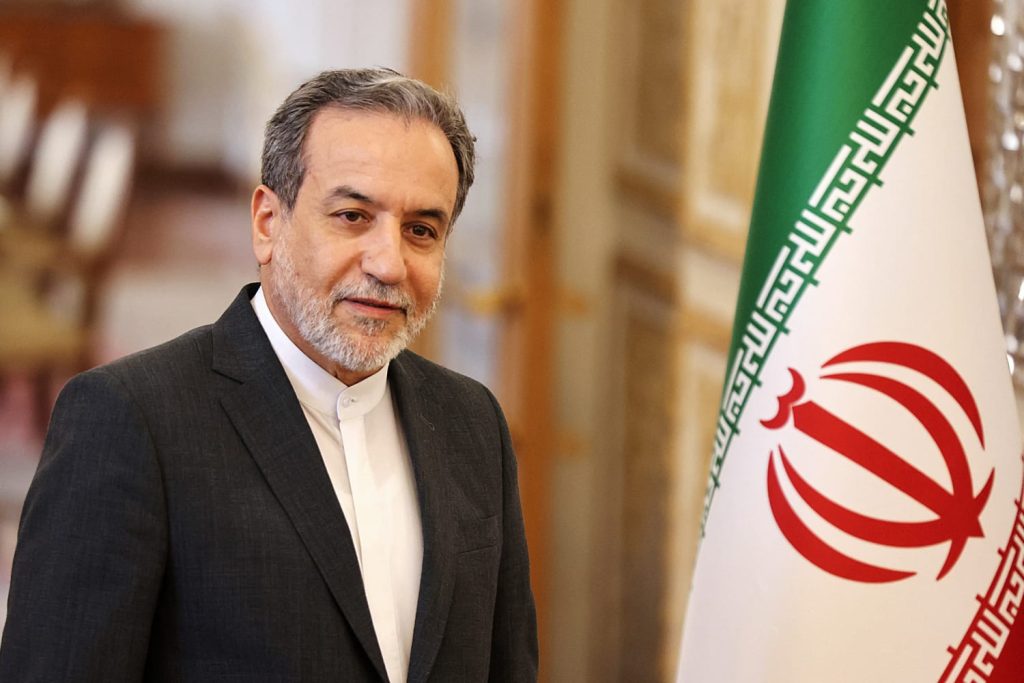
As the sun sets over the bustling streets of Lagos, the air is thick with the weight of uncertainty. The news from the Middle East has sent shockwaves around the world, leaving investors on edge and diplomats scrambling to salvage what's left of the peace talks. The Iranian foreign minister, Abbas Araghchi, has just landed in Russia, where he will meet with Vladimir Putin in a last-ditch effort to revive the stalled negotiations. But the chances of success seem slim, and the blame game is already underway.
According to Premium Times, Araghchi blamed the United States for the talks breakdown, saying that Washington's intransigence had made it impossible for Tehran to reach a deal. The Iranian foreign minister's comments were made in Saint Petersburg, Russia, where he is expected to meet with Putin in the coming days. The visit is seen as a desperate attempt to salvage the situation, but experts warn that the rift between the two nations may be too deep to be bridged.
As reported by Vanguard News, Araghchi visited Oman between visits to Pakistan, where the first and only round of talks between Washington and Tehran took place. The talks were mediated by Islamabad, but they ultimately ended in failure. The United States President, Donald Trump, scrapped a planned trip by his envoys, Steve Witkoff and Jared Kushner, citing the lack of progress. Trump's decision was seen as a blow to the peace efforts, and it has left many wondering if the United States is genuinely interested in reaching a deal.
"The Economic Backdrop: Stabilization, Acceleration, and Political Capital"
The economic implications of the stalled peace talks are already being felt. As Brent crude futures rose 1% to $107.20 a barrel, investors are bracing themselves for a potential economic downturn. The United States West Texas Intermediate was up 1.5% to $95.80 a barrel, and the dollar index was down 0.18% to 98.465. The euro traded flat at $1.1726, while sterling bought $1.3544. The economic uncertainty is not just limited to the energy sector, as the global markets are also feeling the impact.
According to Channels TV, the dollar index's decline is a sign of the growing unease among investors. The instability in the dollar is a reflection of the uncertainty in the global economy, and it's a worrying trend for policymakers. The economic backdrop is complex, with multiple factors at play. The war in the Middle East has disrupted global supply chains, and the impact is being felt across various sectors. The economic instability is not just a short-term problem, but it has long-term implications for the global economy.
"The Cultural and Social Dimension: Faith, Identity, and the Grassroots"
The cultural and social implications of the stalled peace talks are just as significant as the economic ones. The conflict in the Middle East has been fueled by deep-seated cultural and social differences. The Iranian foreign minister's visit to Russia is seen as a desperate attempt to salvage the situation, but experts warn that the cultural and social rift between the two nations may be too deep to be bridged.
According to Arise News, the United States President, Donald Trump, has signaled openness to dialogue, but his administration's policies have created a sense of unease among Iranian officials. The United States President's comments have been seen as a sign of flexibility, but many are skeptical about the sincerity of his intentions. The cultural and social dimension of the conflict is complex, with multiple factors at play. The war in the Middle East has created a sense of uncertainty among the grassroots, and it's a worrying trend for policymakers.
"The Technological and Informational Battlefield"
The technological and informational battlefield is another critical dimension of the conflict. The war in the Middle
The technological and informational battlefield is a crucial aspect of the conflict in the Middle East. The war has led to a significant increase in cyber attacks, as various actors seek to disrupt the opposing side's command and control systems. This has resulted in widespread disruptions to critical infrastructure, including power grids, financial institutions, and communication networks.
According to a recent report by the cybersecurity firm, FireEye, Iran has been involved in a series of high-profile cyber attacks against Saudi Arabian targets, including the country's oil facilities and financial institutions. These attacks have had a significant impact on the global economy, with oil prices spiking in response to the disruptions.
On the other hand, the United States has been accused of launching cyber attacks against Iranian targets, including the country's nuclear facilities. While the United States has not publicly confirmed these attacks, experts believe that they have had a significant impact on Iran's ability to develop its nuclear program.
The technological and informational battlefield is not limited to cyber attacks alone. The war in the Middle East has also led to a significant increase in the spread of disinformation and propaganda. Various actors, including government agencies, terrorist groups, and social media companies, have been accused of spreading false information and manipulating public opinion.
For example, a recent report by the fact-checking firm, Snopes, found that a viral social media post claiming that the United States had launched a military strike against Iran was actually a false narrative created by a group of pro-Iranian activists. The post was widely shared on social media, causing widespread confusion and panic among the public.
The spread of disinformation and propaganda has significant consequences for the global economy and national security. It can lead to market volatility, social unrest, and even conflict. As such, policymakers must take steps to address this issue and provide accurate and reliable information to the public.
"The Humanitarian and Environmental Dimension"
The humanitarian and environmental dimension of the conflict in the Middle East is another critical aspect that cannot be ignored. The war has led to a significant increase in human suffering, with millions of people displaced, injured, or killed. The conflict has also had a devastating impact on the environment, with oil spills, chemical attacks, and other forms of pollution causing irreparable damage to the ecosystem.
According to a recent report by the humanitarian organization, Oxfam, over 10 million people have been displaced by the conflict in the Middle East. Many of these people are living in dire conditions, with limited access to food, water, shelter, and healthcare. The conflict has also led to a significant increase in human rights abuses, including torture, arbitrary detention, and extrajudicial killings.
The environmental impact of the conflict is also significant. The war has led to the release of large quantities of oil and chemicals into the environment, causing widespread pollution and damage to the ecosystem. For example, a recent oil spill in the Persian Gulf has had a devastating impact on marine life, with thousands of birds and fish dying as a result.
The humanitarian and environmental dimension of the conflict is not limited to the immediate region. The war in the Middle East has global implications, with the potential to cause widespread harm to the environment and human populations around the world. As such, policymakers must take steps to address this issue and provide support to those affected by the conflict.
In conclusion, the conflict in the Middle East is a complex and multifaceted issue that cannot be understood through a single lens. The economic, cultural, social, technological, informational, humanitarian, and environmental dimensions of the conflict are all interconnected and interdependent. Policymakers must take a comprehensive approach to addressing this issue, one that takes into account the complex and nuanced nature of the conflict.
📰 Sources Cited
- Google News Nigeria: Iranian foreign minister blames United States for talks breakdown as he visits Russia - BBC
- Vanguard News: Iran FM blames United States for failure of talks after landing in Russia
- Channels TV: Dollar Unstable As Traders Assess Stumbling United States-Iran Talks
- Arise News: Iran Minister Heads To Russia As Trump Urges Tehran To ‘Call’ For Talks Amid Stalled Diplomacy
0 Comments
Sign in to commentNo comments yet. Be the first to share your thoughts!