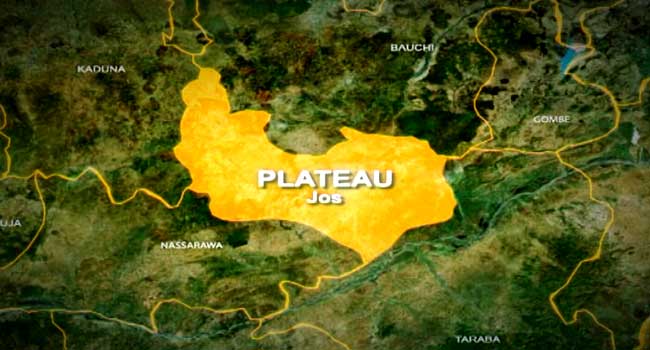
The early morning light over Barkin Ladi Local Government Area had barely begun to filter through the thin haze of harmattan when the first shots rang out near the abandoned quarry at Kworos Gangare, shattering the fragile quiet that had settled over the village after nights of restless vigil. According to Punch Nigeria, gunmen emerged from the surrounding bush with lethal precision, targeting a group of artisanal miners who had risen before dawn to scratch a living from the earth’s stubborn seams, leaving two young men—Phalip Luka, twenty‑five, and Sunday John, thirty‑four—lifeless on the red‑dirt floor while two others clutched wounds that would later be tended in the dim corridors of Jos General Hospital. The attack was not an isolated flare‑up but part of a broader pattern that Channels Television reported had claimed at least seven lives across two days, with more than twenty hectares of farmland reduced to charred stubble in the districts of Jol, Riyom, Exland, Gashish, Rapwomol and Dorowa Babuje, a devastation that the Berom Youth Moulders Association (BYM) described as a deliberate strike at the very foundations of communal survival. As the sun climbed higher, the BYM’s statement, signed by National Publicity Secretary Rwang Tengwong, painted a picture of communities living in fear, where the simple act of tilling a field or walking to a market had become an act of courage, and where every life lost left a family devastated while every destroyed farm pushed survivors closer to hunger and poverty.
The narrative that unfolded over those forty‑eight hours was not merely a tally of casualties but a stark illustration of how economic desperation, ethnic tension, and state fragility intertwine to turn the fertile plateau into a theater of violence, a reality that would later echo in the corridors of Abuja and even reach the desks of American lawmakers demanding accountability.
The Scarred Earth of Barkin Ladi: When Mining Meets Militia
Deep within the rocky outcrops of Marit village, where the glint of tin and tantalite has long drawn hopeful diggers with little more than picks, shovels, and dreams, the violence of September 23 took on a particularly cruel specificity as gunmen ambushed a mining crew at roughly one o’clock in the afternoon, a detail corroborated by both Blueprint Newspapers and Vanguard News, which reported that five miners were killed and two others injured in the sudden, savage assault that left the site littered with broken tools and blood‑soaked earth. According to the BYM’s account, the victims included not only the two miners from Kworos Gangare but also three additional souls—Isaiah Pam Dung, forty‑seven, a married father of two; Barnabas Gyang Jack, twenty‑three, newly wed with a child; and Manasseh Luka Mushwer, twenty‑six—whose lives were snatched away in separate but coordinated strikes at Nghar, Exland and Gassa on the following day, September 24, suggesting a calculated campaign that moved like a tide across the landscape. Local hunters and security operatives, as noted in a Vanguard sidebar, had earlier repelled a suspected terrorist incursion in the Latok community of Qua’an‑Pan LGA, demonstrating that while some resistance exists, the overall security net remains frayed and reactive rather than preventive.
An anonymous security analyst, speaking on condition of anonymity, observed that the attackers appeared to exploit known gaps in the night‑curfew enforcement—specifically the widely ignored 6 p.m. to 6 a.m. restriction—allowing them to move under cover of darkness and strike at moments when villagers were most vulnerable, whether they were bent over a mine shaft or tending to a late‑afternoon crop. The economic implications are immediate and severe: artisanal mining, though informal, contributes an estimated fifteen percent of Plateau State’s non‑oil mineral revenue, and the loss of skilled diggers not only deprives families of daily wages but also discourages future investment in a sector that could, with proper regulation, become a engine for sustainable development rather than a flashpoint for conflict. In the words of a community elder from Marit, whose voice trembled as he recalled the sight of his nephew’s lifeless body, “We dig not for riches but for survival; when the earth itself turns against us, what hope remains for our children?” This sentiment captures the profound sense of betrayal felt when the very resources meant to sustain life become conduits for death.
The Harvest of Fear: Farmlands Razed and Livelihoods Shattered
Beyond the immediate horror of lost lives, the assault on Plateau’s agricultural heartland reveals a deeper, more insidious strategy aimed at undermining food security and forcing displacement, a point underscored by Channels Television’s report that over twenty hectares of farmland were razed in the same twenty‑four‑hour window that saw the miners fall, a figure that translates roughly to the loss of staple crops capable of feeding several hundred families for an entire season. The BYM’s statement enumerated the specific locales—Jol in Riyom, Exland in Gashish, Rapwomol and Dorowa Babuje—where torch‑wielding militias set ablaze cassava fields, yam ridges, and maize plots, effectively erasing months of labor in a matter of hours and leaving behind a landscape of ash that crunched under the feet of returning villagers who found their granaries empty and their children’s faces gaunt with hunger. According to an agricultural officer from the Plateau State Ministry of Agriculture, speaking off the record, the destruction represents not just a seasonal setback but a potential long‑term decline in yields, as soil nutrients are depleted by fire and the fear of returning to the fields keeps many farmers idle, thereby reducing the state’s agricultural output by an estimated eight percent in the affected zones—a statistic that, when multiplied across the region’s reliance on subsistence farming, threatens to push food prices upward and exacerbate malnutrition rates already hovering near critical levels.
The social fabric, meanwhile, is fraying at the seams: women who once walked miles to market with baskets of produce now travel in groups, eyes darting for signs of ambush, while elders recount how the nightly curfew, intended to protect, has instead become a symbol of state impotence, its violations ignored by attackers who move with impunity. A local women’s leader, her hands calloused from years of grinding grain, lamented, “We used to sing while we worked; now we whisper prayers, afraid that even our songs might draw attention to where we hide.” This climate of fear has also spurred a nascent trend of internal displacement, with families fleeing to the relative safety of Jos metropolis, straining urban resources and creating pockets of informal settlements where sanitation and access to clean water are precarious, further compounding the humanitarian challenge.
The Political Crossfire: Security Gaps and International Alarm
The violence in Plateau has not unfolded in a vacuum; it sits at the intersection of long‑standing ethno‑religious tensions, competition over land between predominantly Christian farming communities and Muslim herder groups, and a security apparatus often criticized for being reactive, under‑resourced, and occasionally complicit in the very cycles it purports to break. Governor Caleb Mutfwang, after visiting the scarred communities of Barkin Ladi, convened an urgent meeting of the Plateau State Security Council, a gathering that included police chiefs, military representatives, traditional rulers, and officials from the Ministry of Interior, where discussions centered on intelligence sharing, preventive patrols, and the protection of civilians—a move that, while commendable, was described by a political analyst from Abuja as “a necessary but overdue step that still lacks the teeth of concrete implementation and accountability.” The governor’s administration has also pointed to recent successes, such as the joint operation with local hunters that repelled an attack on the Latok community, yet critics argue that such ad‑hoc collaborations cannot replace a coherent, state‑wide strategy that addresses root causes like poverty, land degradation, and the proliferation of small arms. Internationally, the situation has attracted heightened scrutiny; United States Representative Anna Paulina Luna took to her verified X account to denounce the killings, alleging that security agencies had received prior warnings but failed to act sufficiently, a claim she reinforced by tagging Secretary of State Marco Rubio and urging a reassessment of U.S.
aid policies toward Nigeria. Her comments echo a broader trend of concern from Washington, where former President Donald Trump had previously praised President Bola Tinubu’s efforts to protect Christian communities, illustrating how the plight of Plateau’s villagers has become a touchstone in the diplomatic dialogue between Abuja and Washington. Adding another layer, the Miyetti Allah Cattle Breeders Association of Nigeria (MACBAN) issued a statement cautioning against attributing criminal acts to any ethnic group without evidence, a reminder that the narrative of “herder versus farmer” can be dangerously reductive and that extremist elements often exploit these fault lines for their own ends. A retired army general, now a consultant on regional security, noted that the plateau’s topography—its scattered hills, dense bush, and limited road networks—makes surveillance difficult, yet investments in drone technology, community‑based early warning systems, and mobile‑based reporting apps could significantly improve situational awareness if paired with political will and adequate funding.
Future Implications: A Blueprint for Peace or a Band‑Aid on Bleeding Wounds?
Looking ahead, the trajectory of Plateau State hinges on whether the current wave of violence will catalyze a comprehensive, multidimensional response or merely elicit temporary patches that leave the underlying wounds festering. Economic revitalization must be paired with security reform: investing in formalizing artisanal mining through cooperative models, providing access to credit, and enforcing environmental safeguards could transform a sector that currently fuels conflict into a source of stable revenue, while simultaneously reducing the incentive for armed groups to prey on vulnerable diggers. Parallel to this, agricultural resilience can be bolstered by introducing drought‑resistant seed varieties, establishing community seed banks, and deploying agro‑forestry techniques that not only restore soil health but also create natural buffers that deter opportunistic attacks. On the political front, a genuine reconciliation process—facilitated by neutral mediators, grounded in truth‑telling, and inclusive of women and youth—could begin to dismantle the deep‑seated mistrust that has turned neighbors into adversaries, especially if it is coupled with transparent land‑reform initiatives that clarify usage rights and reduce competition over scarce fertile plots. Technologically, leveraging the widespread penetration of mobile phones to create a real‑time incident‑reporting platform, linked to a rapid‑response command center, could shrink the gap between early warning and effective intervention, a strategy that has shown promise in other conflict‑prone regions of Africa.
Finally, the international community, while mindful of sovereignty, has a role to play in supporting capacity‑building, sharing best practices in community policing, and ensuring that aid is not merely humanitarian but also peace‑building, targeting the socioeconomic drivers of violence. As a seasoned correspondent who has walked the scarred fields of Barkin Ladi reflected, “The plateau’s soil remembers every drop of blood spilled upon it; it will also remember every seed planted in hope.” If those seeds are nurtured with justice, equity, and unwavering resolve, the land may yet yield a harvest of peace rather than a harvest of horror.
📰 Sources Cited
- Punch Nigeria: Five miners feared killed, two injured by gunmen in Plateau
- Channels TV: Seven Reportedly Killed, Farmlands Destroyed In Fresh Plateau Attacks
- Blueprint Newspapers: Breaking: 5 miners killed, others injured in Plateau attack
- Vanguard News: Five miners killed in fresh Plateau attack
- Politics Nigeria: United States Lawmaker Raises Alarm Over Killing of Christians in Plateau
0 Comments
Sign in to commentNo comments yet. Be the first to share your thoughts!