DEEP DIVE
| February 20, 2026
From the FCT's grassroots to the halls of power, a nation tests its institutions, its leaders, and its democratic resolve.
In the cool, planned streets of Abuja’s Asokoro district, the quiet of a Thursday morning was broken by the arrival of state vehicles. Operatives of the Independent Corrupt Practices and Other Related Offences Commission (ICPC) conducted a search at the residence of former Kaduna State governor, Nasir El-Rufai, a figure whose political influence stretches far beyond his home state. According to Vanguard Nigeria, the action, confirmed by El-Rufai’s media adviser, marks a significant escalation in a probe surrounding the ex-governor. This scene of legal scrutiny against a political titan unfolded just as, across the Federal Capital Territory, over 2.8 million registered voters prepared to head to 2,822 polling units. They were to elect council chairmen in six area councils—Abaji, Abuja Municipal, Bwari, Gwagwalada, Kuje, and Kwali—in what the Independent National Electoral Commission (INEC) billed as the first major test of the newly signed Electoral Act 2026.
These simultaneous events—a high-profile anti-corruption operation and a foundational local election—are not coincidental. They are interconnected pulses in the body politic of Africa’s most populous democracy, revealing a nation engaged in a profound, multi-front struggle to define its governance. It is a struggle between accountability and impunity, between grassroots representation and centralized power, between fiscal recklessness and prudence, and between the shadowy geopolitics of conflict profiteering and the transparent demands of national security. This is the story of Nigeria in a pivotal moment, where every institution, from the Bureau of Public Procurement to the local government council, is under unprecedented stress and scrutiny.
## The Grassroots Litmus Test: Democracy’s Frontline in the FCT
This Saturday’s area council elections in the FCT represent more than a routine administrative exercise. As Vanguard Nigeria reported, INEC is poised to use this poll, alongside critical bye-elections in Rivers and Kano states, as a “litmus test” for the Electoral Act 2026. The new law, assented to by President Bola Tinubu, promises enhancements in electoral transparency and technology. Its first major outing will be watched for logistical smoothness, adherence to new timelines, and the conduct of political actors.
According to Premium Times, the stakes are intensely personal in two councils: Abaji and the Abuja Municipal Area Council (AMAC), where the incumbent chairpersons are seeking re-election. “In today's poll, performance in the last four years may decide their fate,” the publication noted, highlighting a rare instance where local governance records, rather than purely partisan allegiances, could sway voters. With elections conducted across 62 wards, the polls are a barometer for public sentiment towards the ruling All Progressives Congress (APC) at the grassroots, especially within the nation’s capital, a microcosm of Nigeria’s ethnic and regional diversity.
The National Assembly has mounted a robust defence of the new electoral framework. According to Vanguard Nigeria, the House of Representatives stated that the Electoral Act 2026, though “imperfect,” was enacted in strict compliance with constitutional procedures and “reflects the collective will of the National Assembly.” However, the system faces challenges from within. In a separate legal drama reported by Premium Times, an unregistered political association has sued INEC, seeking the deregistration of a rival party. The case hinges on the argument that “the registration of a political party is not a favour to any association but a constitutional process guided by law.” This litigation underscores the perpetual tensions in Nigeria’s crowded political space, where the boundaries of legal participation are constantly contested.
## The Accountability Drive: Procurement Reforms and the Shadow of Prosecution
While voters assess candidates, federal agencies are conducting their own assessments of government conduct, with seismic financial and legal implications. The Bureau of Public Procurement (BPP) announced a staggering achievement: N1.1 trillion in savings from procurement reforms in 2025 alone. According to Premium Times, the Bureau’s Director-General also reported reduced contract approval timelines, additional cost savings, and “tougher sanctions imposed on erring contractors and non-compliant government officials.”
Perhaps more significantly, the BPP has introduced new measures to monitor the notoriously opaque world of constituency projects. Premium Times detailed a system that allows the Bureau to track project progress through technological and manual mechanisms, designed to help lawmakers monitor contractors in their constituencies. This move directly targets a long-standing conduit for waste and corruption, where funds are released for projects that never materialize, eroding public trust. If effectively implemented, this system could revolutionize the relationship between legislative representation and tangible development.
This drive for accountability, however, finds its most dramatic expression not in spreadsheets, but in raids. The ICPC’s search of El-Rufai’s Abuja residence, as covered by both Premium Times and Vanguard Nigeria, sends a powerful message. The former governor is not just any politician; he is a former Minister of the Federal Capital Territory, a two-term governor, and a kingmaker whose brand of assertive, reformist governance earned him both ardent supporters and fierce critics. The probe’s specifics remain undisclosed, but its public nature is a landmark event.
The action has ignited a fierce debate on the nature of proof and political motive. In an opinion piece for Premium Times titled “El-Rufai and the burden of proof,” Jacob Edi argued that the principle of onus probandi is “foundational to jurisprudence and civic order.” He noted that “a former governor alleging criminal surveillance of the apex of Nigeria’s security architecture is not engaging in political theatre; he is levelling claims with constitutional, criminal and diplomatic ramifications.” This frames the ICPC action within a broader context of allegations and counter-allegations between El-Rufai and the federal government, turning a legal procedure into a high-stakes political drama that tests the independence of Nigeria’s anti-corruption institutions.
## The States in Focus: Governance, Protest, and Fiscal Scandal
Beyond the federal capital, Nigeria’s 36 states present a mosaic of governance styles, challenges, and controversies. In Enugu State, a different model of political engagement was on display. Premium Times reported that organized labour leaders publicly hailed Governor Peter Mbah after a strategic consultative meeting at the Government House. This commendation for dialogue stands in stark contrast to the frequent acrimony between state governments and labour unions over wage issues and working conditions, suggesting a potential template for conflict resolution through engagement.
In Ogun State, Governor Dapo Abiodun focused on the tangible deliverables of governance. He commissioned the Lantoro–Oke-Yidi Road and rolled out a new infrastructure plan for Ogun Central Senatorial District. According to Premium Times, the governor described the project as part of a “deliberate infrastructure drive aimed at deepening connectivity and economic growth.” Such ribbon-cutting ceremonies are the classic currency of political capital, aiming to show citizens direct, visible benefits from government.
However, in Edo State, a shadow hangs over the books. A Premium Times SPECIAL REPORT uncovered that expenditures totalling N14.15 billion were made outside legislative approval under Governor Monday Okpebholo. The report detailed how several arms and departments of the state government engaged in this extra-budgetary spending, “raising questions about fiscal discipline.” This is not a mere accounting discrepancy; it strikes at the heart of legislative oversight and public finance integrity, echoing concerns that have plagued Nigerian states for decades and undermining the social contract.
Meanwhile, in Plateau State, Vanguard Nigeria reported the arrest of a bar owner and another woman for allegedly trafficking three girls to Ghana. This case, handled by the State Gender and Equal Opportunities Commission, highlights how state-level institutions are grappling with severe social crimes, often with limited resources. In Lagos, residents of Alagbado petitioned the state Chief Judge over the “illegal and violent enforcement of a court judgment” by court officials, a reminder that the administration of justice at the local level can itself become a source of grievance.
## The Geopolitical Web: Conflict, Corruption, and Foreign Entanglements
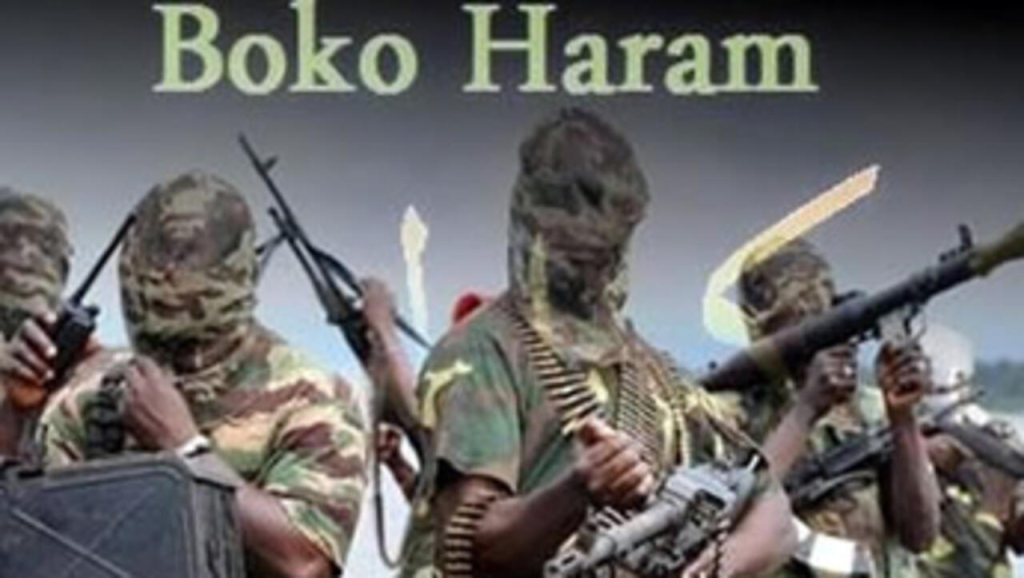
Looming over these domestic political and governance stories is a revelation of breathtaking cynicism and international intrigue. An investigation by Drop Site News (DSN), reported by Vanguard Nigeria, has alleged that the late American financier and convicted sex offender Jeffrey Epstein collaborated with former Israeli Prime Minister Ehud Barak to profit from the Boko Haram insurgency in Nigeria.
According to the report, email exchanges released by the U.S. Justice Department in 2018 showed Epstein facilitating talks in 2015 between Jide Zeitlin, then-chairman of Nigeria’s Sovereign Investment Authority (NSIA), and Sultan Ahmad bin Sulayem, then-chairman of DP World, the UAE-based global ports giant. The discussions allegedly focused on how Zeitlin could leverage his influence to help Sulayem secure shipping terminal projects in Lagos and Badagry—projects that had stalled since 2005. Sulayem resigned from DP World on February 13, 2026, after his ties to Epstein became public.
Furthermore, the investigation alleges that after resigning as Israel’s Defence Minister in 2013, Ehud Barak “used his Nigerian security connections to create energy and investment opportunities for associates in Israel.” This paints a picture of a nexus where a devastating domestic insurgency that has killed tens of thousands and displaced millions became a potential business opportunity for foreign actors with deep political connections. It raises disturbing questions about the integrity of past negotiations, the vulnerability of Nigeria’s sovereign assets, and the opaque intersections of global finance, diplomacy, and conflict.
## The Institutional Pulse: Labour, Culture, and Legacy
Other institutions are navigating their own complex relationships with the state. The Petroleum and Natural Gas Senior Staff Association of Nigeria (PENGASSAN) has openly rejected President Tinubu’s Executive Order directing the Nigerian National Petroleum Company Limited (NNPCL) to remit oil revenues directly to the federation account. According to Vanguard Nigeria, PENGASSAN President warned that the order could endanger about 4,000 jobs and destabilize the industry, calling for its immediate withdrawal. This puts a major labour union on a collision course with a key presidential policy, illustrating the difficult trade-offs in reforming the nation’s vital oil sector.
In the cultural sphere, a National Assembly panel has turned its attention to the underperformance of a national icon. According to Premium Times, lawmakers concluded that the National Theatre in Lagos is “not operating at its full potential as a revenue-generating cultural and tourism asset” and called for its better utilization. This highlights a recurring theme in Nigerian governance: the struggle to maintain and monetize public infrastructure, allowing national heritage to languish.
And in a moment of personal and political loss, the nation bid farewell to Senator Barinada Mpigi of Rivers State, as noted in a tribute in Vanguard Nigeria. His passing is a reminder of the human dimension within the political machinery, where personal relationships and legacies are woven into the fabric of governance.
## Future Implications: A Nation Forging Its Path
The concurrent events of this week are not isolated incidents; they are strands in the rope Nigeria is trying to weave to pull itself forward. The implications are vast and will define the nation’s trajectory toward its next general election in 2027 and beyond.
First, the credibility of the anti-corruption war is at a pivotal point. The El-Rufai probe will be watched to see if it follows due process to a conclusive, judicially determined end, regardless of the outcome. A transparent, fair process will strengthen institutions like the ICPC. A process perceived as politically motivated or inconclusive will further erode public faith. The BPP’s massive savings and new monitoring tools offer a complementary, preventive approach to corruption that could be transformative if sustained.
Second, the 2026 Electoral Act faces its first real-world examination. The conduct and outcomes of the FCT polls will either build confidence in INEC’s capacity to deliver credible elections under the new law or trigger early alarms for the 2027 cycle. The involvement of parties litigating over registration shows the legal framework will be stress-tested in courtrooms as well as at polling units.
Third, the Epstein-Barak revelations demand a rigorous, sovereign response. Nigeria’s security and intelligence apparatus must fully investigate the alleged exploitation of the Boko Haram crisis by foreign actors. This may necessitate uncomfortable scrutiny of past administrations and their associates. It also underscores the critical need for transparency in sovereign wealth investments and international partnerships.
Fourth, the tension between federal power and state autonomy will continue to evolve. From Edo’s fiscal scandal to PENGASSAN’s defiance of a presidential order, states, institutions, and unions are asserting their positions. The federal government’s ability to manage these tensions through a combination of law, dialogue, and political savvy will be crucial for national cohesion.
Finally, the eternal Nigerian quest for governance that delivers tangible benefits continues. The praised dialogue in Enugu, the road commissioning in Ogun, and the demand for a functional National Theatre all speak to a citizenry whose patience for grand political narratives is wearing thin. They are increasingly judging on results: security, jobs, infrastructure, and accountability.
Nigeria stands in a crucible of its own making, heated by the fires of expectation, scrutiny, and a deep yearning for progress. The search of a former governor’s home, the casting of votes in a council election, the unveiling of trillion-naira savings, and the shocking allegations of conflict profiteering are all part of the same story. It is the story of a complex democracy, flawed and resilient, engaged in the daily, arduous work of building itself. The world is watching, but more importantly, 220 million Nigerians are waiting—not just for outcomes, but for proof that the system itself is capable of enduring, evolving, and delivering.
### Nigeria's Crucible: Testing Institutions in the Shadow of Scandal and Reform
The search of a former governor’s residence, the quiet determination at a local council election, the staggering announcement of national savings, and the seismic allegations of wartime profiteering are not isolated events. They are interconnected stress tests for a nation perpetually in dialogue with its own potential. As Nigeria navigates this complex moment, the resilience of its institutions—from the courts to the security apparatus—and the patience of its citizens will define the trajectory of its democracy.
The Legal Arena: A Battlefield for Political Legitimacy
The litigation surrounding party registration is more than bureaucratic wrangling; it is a fundamental challenge to the rules of engagement in Nigerian politics. According to Premium Times, the Independent National Electoral Commission (INEC) faces multiple lawsuits from aggrieved associations claiming unfair exclusion from the upcoming electoral cycle. This judicialization of political competition underscores a critical evolution: the courtroom is becoming a primary arena for contesting legitimacy. This trend was foreshadowed in the protracted legal battles following the 2023 presidential election, which, despite their intensity, ultimately reinforced the authority of the judiciary as an arbiter. The current pre-election litigation will set crucial precedents for political inclusivity and the power of regulatory bodies like INEC to enforce membership and constitutional requirements. As constitutional law professor Chidi Odinkalu noted in an analysis for The Cable, "The judiciary is being asked not just to interpret the law, but to define the very boundaries of political society. Its rulings will either fortify the institutional pillars of our democracy or expose dangerous fissures."
Sovereignty Under the Microscope: The Epstein-Barak Fallout
The allegations, detailed in a recent Punch Nigeria investigation, that foreign actors like the late Jeffrey Epstein and former Mossad agent Ari Ben-Menashe exploited the Boko Haram insurgency for financial gain, strike at the heart of national sovereignty. They suggest a vulnerability that goes beyond military threat to a profound compromise of Nigeria’s crisis response mechanisms. A rigorous, sovereign investigation is non-negotiable. This demands more than a panel inquiry; it requires a forensic audit by a joint task force comprising the National Intelligence Agency (NIA), the Defence Intelligence Agency (DIA), and anti-corruption bodies. Such an investigation must have a mandate to follow evidence into the highest echelons of past administrations and their international partnerships. The 2012 report by Vanguard Nigeria on controversial security contracts during the Goodluck Jonathan administration may provide a starting point for this uncomfortable scrutiny. Furthermore, this scandal highlights the opaque nature of Nigeria’s sovereign wealth management. The Nigeria Sovereign Investment Authority (NSIA), while praised for its recent trillion-naira milestone, must now demonstrate an unprecedented level of transparency in its international investment portfolios to reassure a public justifiably wary of foreign entanglement in national trauma.
Federalism in Flux: Assertion, Defiance, and Dialogue
The tension between federal authority and sub-national autonomy is reaching a new pitch. The Edo State financial scandal, where over N28 billion was allegedly diverted from pension funds, as reported by The Guardian Nigeria, represents a failure of state-level accountability that the federal government is compelled to address. Conversely, the Petroleum and Natural Gas Senior Staff Association of Nigeria (PENGASSAN) defying a presidential directive on refinery operations is a potent symbol of institutional pushback from a critical sector. These are not mere conflicts but renegotiations of the federal compact. The federal government’s response cannot be monolithic. It must employ a calibrated mix of legal enforcement, as seen with the Economic and Financial Crimes Commission’s (EFCC) intervention in Edo, and strategic dialogue, exemplified by the successful negotiations that eventually resolved the PENGASSAN standoff. The model emerging in the South-East, particularly the praised multi-stakeholder security dialogue in Enugu, offers a template. It shows that when federal and state actors collaborate with traditional and community leaders, as confirmed by local reports from Daily Post Nigeria, tangible improvements in local security can be achieved without eroding constitutional roles.
The Bottom Line: Governance Measured in Results, Not Rhetoric
Beneath the high politics of scandal and litigation burns the impatient demand of everyday Nigerians. The citizen celebrating the commissioning of the 8.2km Somorin-Kemta Road in Ogun State, the artist demanding the revitalization of the dilapidated National Theatre in Lagos, and the business owner in Kano seeking reliable electricity are united by a diminishing tolerance for grand narratives. Their metric is brutally simple: results. The federal government’s announcement of N110 billion in energy support grants to states, covered extensively by BusinessDay, is a direct, if belated, response to this pressure. However, as political economist Dr. Ngozi Okonkwo argued in a recent lecture, "Trillion-naira savings and billion-naira grants are meaningless statistics to a population that cannot see, touch, or feel their translation into functional schools, efficient hospitals, and secure communities. The social contract is being rewritten in real-time, and it is now a performance-based agreement."
Nigeria’s current crucible is therefore a multidimensional test. It is a test of judicial integrity in the face of political pressure, of investigative resolve in confronting shadowy international exploitation, of governmental dexterity in managing centrifugal forces, and ultimately, of the entire system’s capacity to convert political energy into human progress. The world may be watching these institutional dramas, but the 220 million Nigerians living them are no longer passive spectators. They are active auditors, measuring every court ruling, every investigation, every federal-state confrontation, and every public project against the relentless standard of tangible betterment. The outcome will determine not just who governs, but whether the architecture of Nigerian governance itself can finally bear the weight of its people's expectations.
0 Comments
Sign in to commentNo comments yet. Be the first to share your thoughts!