DEEP DIVE
| February 20, 2026
The sprawling residence on the Aso Drive, one of Abuja’s most exclusive addresses, was surrounded by a tense quiet on Thursday morning. Operatives of the Independent Corrupt Practices and Other Related Offences Commission (ICPC), Nigeria’s premier anti-graft agency, moved in to conduct a search. The target was not a faceless bureaucrat, but Mallam Nasir El-Rufai, the fiercely intellectual and controversially polarizing former governor of Kaduna State. According to reports from Premium Times Nigeria and Vanguard Nigeria, the raid marked a dramatic escalation in a long-running probe, sending shockwaves through the nation’s political elite. El-Rufai’s media adviser, Muyiwa Adekeye, confirmed the operation on social media, framing it within a broader narrative of political persecution. This single event, a raid on a former high-flying governor, is a microcosm of the forces currently convulsing Africa’s most populous nation: the relentless, if often selective, pursuit of accountability; the bitter personal and ideological rivalries that define its politics; and the ever-present shadow of power struggles that reach into the highest echelons of the state.
This is Nigeria in 2026, a nation perpetually at a crossroads. As the Federal Capital Territory prepares for area council elections this Saturday—a crucial test for a new electoral law—the political theatre unfolds on multiple, interconnected stages. In state houses, governors juggle legacy projects, labour unrest, and, as a special report reveals, sometimes brazen fiscal indiscipline. In the National Assembly, lawmakers scrutinize underperforming national assets. In courtrooms, political associations fight for legitimacy. And in the opaque world of international finance, a shocking investigation alleges that Nigeria’s decade-long agony with Boko Haram became a profit centre for global predators. This is not merely politics as usual; it is a moment of intense pressure testing for Nigeria’s democratic institutions, its rule of law, and the very contract between the governed and their governors.
## The Raid and the Reckoning: El-Rufai and the Politics of Retribution
The ICPC’s move on El-Rufai’s residence is arguably the week’s most potent political symbol. The former governor, a key architect of Nigeria’s 2013 power sector privatization and a minister under President Olusegun Obasanjo, is a figure who commands fervent loyalty and deep animosity in equal measure. His tenure in Kaduna was marked by bold reforms in education and public service, but also by accusations of authoritarianism and sectarian polarization. The ICPC probe, details of which remain officially sealed, is believed to concern allegations of corrupt practices during his governorship.
In an op-ed for Premium Times Nigeria titled “El-Rufai and the burden of proof,” Jacob Edi framed the stakes in stark legalistic terms. “The principle of onus probandi, the burden of proof, is neither decorative nor discretionary. It is foundational to jurisprudence and civic order,” Edi wrote. He noted that “a former governor alleging criminal surveillance of the apex of Nigeria’s security architecture is not engaging in political theatre; he is levelling claims with constitutional, criminal and diplomatic ramifications.”
This statement hints at the broader context: El-Rufai has not been a silent target. He has publicly accused the administration of President Bola Tinubu of orchestrating a politically motivated witch-hunt, even alleging illegal surveillance of his communications. The raid, therefore, is more than an investigation; it is a high-stakes duel. For the government, a successful prosecution would burnish its often-questioned anti-corruption credentials and neutralize a formidable critic. For El-Rufai and his allies, it is evidence of a descent into vendetta politics, a weaponization of state institutions to settle scores. The outcome will send a definitive message about whether Nigeria’s anti-corruption agencies are truly independent arbiters or tools of the incumbent’s will.
## The Ballot Test: FCT Elections and the 2026 Electoral Act Litmus
While the drama unfolds on Aso Drive, a more mundane but equally critical democratic process is underway across the Federal Capital Territory. On Saturday, February 21, residents of Abaji, Abuja Municipal Area Council (AMAC), Bwari, Gwagwalada, Kuje, and Kwali will head to 2,822 polling units to elect their local council chairmen and councillors. According to Vanguard Nigeria, the FCT Police Command has imposed a 12-hour restriction of movement, from 6:00 a.m. to 6:00 p.m., to ensure order—a routine but telling reminder of the volatility often associated with Nigerian polls.
These elections, however, are anything but routine. As reported by Vanguard Nigeria, they represent the first major electoral outing under the newly signed Electoral Act 2026. The Act, hailed by reformers, promises tighter regulations on campaign finance, stricter results transmission protocols, and enhanced powers for the Independent National Electoral Commission (INEC) to prosecute electoral offenders. This weekend’s vote in the FCT, alongside concurrent bye-elections in Rivers and Kano states, will serve as a crucial litmus test. “INEC is poised to conduct its first major outing under the newly signed legal framework this Saturday,” Vanguard Nigeria reported, highlighting the commission’s own awareness of the scrutiny.
The profiles of the candidates, as analyzed by Premium Times Nigeria, reveal familiar patterns: a mix of incumbents seeking re-election on their records and challengers promising change. In Abaji and AMAC, the sitting chairpersons are fighting to retain their seats, their fates hinging on voter assessment of “performance in the last four years.” The elections will be a barometer of public sentiment not just on local issues like waste management and primary healthcare, but also as a proxy for national dissatisfaction or approval. A peaceful, credible poll will boost confidence in INEC’s capacity ahead of the looming 2027 general elections. A messy, contested one will raise familiar alarms about Nigeria’s democratic resilience.
## The States: Between Acclaim, Athletics, and Fiscal Allegations
Beyond the federal capital, Nigeria’s 36 state governors navigate their own distinct political ecosystems, this week offering a study in contrasts.
In Enugu, the atmosphere was one of conciliation. Governor Peter Mbah, whose tenure began with a controversial crackdown on illegal sit-at-home orders enforced by separatist agitators, hosted a “strategic engagement” with organized labour leaders at the Government House. The outcome, as reported by Premium Times Nigeria, was a commendation from the labour leaders—a significant political win for Mbah. In a nation where state governments are often locked in debilitating disputes with labour over unpaid wages and poor working conditions, such public harmony is a coveted asset, suggesting a governor successfully managing a key constituency.
In Yenagoa, the focus was on regional pride and soft power. Governor Douye Diri of Bayelsa State addressed “Team Bayelsa,” urging them to “remain disciplined and focused” as they prepare to defend their title at the upcoming Niger Delta Games. “Governor Diri charged Team Bayelsa to defend their title during the competition,” Premium Times Nigeria noted. Such events, while seemingly apolitical, are deeply political. They are investments in social cohesion, youth engagement, and regional prestige, allowing a governor in the restive Niger Delta to project an image of stability and normalcy.
Then, there is Edo State, where a cloud of alleged malfeasance darkens the picture. A SPECIAL REPORT by Premium Times Nigeria has raised serious questions about fiscal discipline under Governor Monday Okpebholo, detailing “Edo’s N14.15 billion extra-budgetary spending.” The report alleges that expenditures were made “outside legislative approval” across “several arms and departments” of the state government. In a country where transparency is elusive, such an allegation is grave. It strikes at the heart of public trust and governance accountability. If substantiated, it depicts a government operating with impunity, bypassing the legislative oversight that is a cornerstone of democratic budgeting. The Okpebholo administration’s response—or lack thereof—to these allegations will be closely watched, serving as another case study in how Nigeria’s political class handles accusations of corruption.
## The Institutional Front: Procurement Wins and Cultural Failures
Amidst the noise of politics, some federal institutions are quietly posting results, while others are being called to account.
In a rare piece of unequivocally positive news, the Bureau of Public Procurement (BPP) announced staggering savings from its reforms. According to Premium Times Nigeria, the BPP’s Director-General reported “N1.1 trillion savings from procurement reforms in 2025.” The bureau also cited “reduced contract approval timelines, additional cost savings, and tougher sanctions imposed on erring contractors and non-compliant government officials.” In a nation where public procurement has historically been a bottomless pit for graft and inefficiency, this figure is monumental. It represents potential funds that could be redirected to infrastructure, education, or healthcare. It is a testament to what technocratic focus within a reformed framework can achieve, offering a glimmer of hope that systemic change is possible.
Conversely, the National Assembly is turning its gaze to a national icon that has become a symbol of neglect: the National Theatre in Lagos. A parliamentary panel, as covered by Premium Times Nigeria, concluded that the centre “is not operating at its full potential as a revenue-generating cultural and tourism asset.” This critique goes beyond economics; it is cultural and symbolic. The National Theatre’s decay mirrors a broader national narrative of magnificent potential squandered by mismanagement and short-sightedness. The lawmakers’ intervention highlights a growing, if fragmented, recognition within the political establishment that national assets must be made productive, not just preserved as monuments to past glory.
## The Shadow World: Boko Haram, Epstein, and Geopolitical Exploitation
Perhaps the most disturbing political story of the week exists at the sinister intersection of global finance, geopolitics, and Nigeria’s domestic terror crisis. An investigation by Vanguard Nigeria, citing a report from Drop Site News (DSN), has unveiled allegations so grotesque they seem ripped from a conspiracy thriller. The report claims that the late American financier and convicted sex offender Jeffrey Epstein collaborated with former Israeli Prime Minister Ehud Barak “to profit from the Boko Haram insurgency in Nigeria.”
According to Vanguard Nigeria, “Email exchanges released by the United States Justice Department in 2018 showed Epstein facilitating talks between Jide Zeitlin, then-chair of Nigeria’s Sovereign Wealth Fund, and Barak’s security consultancy.” The alleged scheme involved proposing lucrative security and reconstruction contracts in Nigeria’s northeast, aiming to capitalize on the devastation wrought by the jihadist group. If true, this narrative paints Nigeria’s profound national trauma—a conflict that has killed over 350,000 people and displaced millions—as a business opportunity for international vultures. It suggests a level of cynical exploitation that implicates not just shadowy figures like Epstein, but also former heads of state and touches Nigeria’s own financial elite. This story, while requiring further verification, underscores how Nigeria’s internal weaknesses can make it a playground for global predatory interests, a dimension of politics often hidden from public view.
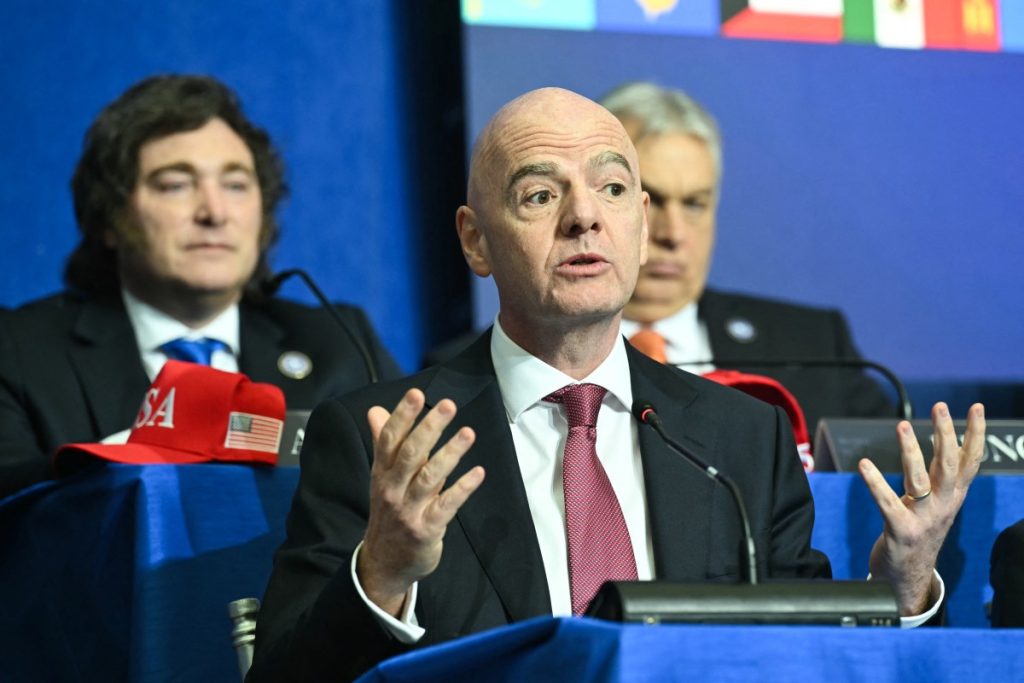
Simultaneously, on the international stage, Nigeria found itself peripherally involved in another high-profile reconstruction effort. Former United States President Donald Trump, alongside FIFA, announced a $75 million fund to rebuild soccer facilities in Gaza. “I’m also pleased to announce that FIFA will be helping to raise a total of $75 million for projects in Gaza,” Trump said, as reported by Vanguard Nigeria. While focused on the Middle East, this news resonates in Nigeria, a football-obsessed nation with its own vast infrastructure deficits. It invites uncomfortable comparisons about global prioritization and the mobilization of resources, highlighting the disparate attention and capital flows that define geopolitics.
## The Underlying Fault Lines: Economy, Energy, and Debt
Beneath the headlines of raids, elections, and scandals thrum the persistent, existential crises that define and constrain Nigerian politics.
The power sector, a decades-long failure, is a ticking debt bomb. Electricity Generation Companies (GenCos) have sounded a dire alarm, revealing that indebtedness in the sector has hit N6.5 trillion and is forecast to reach N8.8 trillion by year’s end, as reported by Vanguard Nigeria. This unsustainable debt cripples the sector’s ability to invest, maintain grids, or provide stable electricity, directly throttling economic growth and fuelling public anger.
On the mining front, tragedy has prompted federal action. The Minister of Solid Minerals Development, Dele Alake, launched a probe after a mining tragedy in Zurak community, Wase Local Government Area of Plateau State, left at least 37 miners dead. Vanguard Nigeria covered the federal delegation’s visit, underscoring the deadly human cost of informal, poorly regulated mining—a sector the government is desperate to formalize and monetize.
Finance Minister Wale Edun, meanwhile, raised a broader continental alarm, warning that “about 50 percent of low-income countries are in or approaching debt distress.” While Nigeria is classified as lower-middle-income, its debt service-to-revenue ratio remains perilously high, constraining every aspect of governance. This macroeconomic reality forms the bleak canvas upon which all political promises are painted.
Amidst this, glimmers of economic development persist. In Niger State, Governor Umar Bago enthusiastically assured the National Sugar Development Council and the Lee Group of his commitment to a “massive sugar project,” urging them to “choose any land in any part of the state.” Such agro-industrial ambitions are central to Nigeria’s diversification rhetoric, yet their success is perpetually challenged by insecurity, policy inconsistency, and infrastructure gaps.
## Future Implications: A Nation at an Inflection Point
The events of this pivotal week are not isolated incidents; they are interconnected threads in a larger tapestry that reveals Nigeria’s political trajectory.
The Accountability Theatre: The El-Rufai raid will set a precedent. A conviction based on solid evidence could mark a turning point, proving that no one is above the law. A botched prosecution or a perceived political acquittal, however, will deepen public cynicism, reinforcing the belief that anti-corruption is merely a weapon for the powerful. The 2026 Electoral Act faces its first real-world test this weekend. Its successful implementation in the FCT could restore faith in the electoral process ahead of 2027. Failure could plunge the nation into another cycle of pre-electoral dread and post-electoral litigation.
The Federal-State Dynamic: The contrast between Edo’s extra-budgetary scandal and Enugu’s labour peace illustrates the vast divergence in governance quality at the state level. It strengthens the argument for greater fiscal autonomy paired with ruthless transparency, suggesting that the future of Nigerian development may hinge less on federal monoliths and more on competitive, accountable state governance. The BPP’s success story offers a replicable model for efficiency, if the political will to adopt it exists elsewhere.
The Geopolitical Vulnerability: The Epstein-Barak allegations, if proven, represent a profound national security and dignity failure. They imply that during its moment of acute vulnerability, Nigeria’s crisis was commodified by foreign actors, potentially with insider collaboration. This should trigger a sweeping audit of all foreign security contracts and a radical overhaul of how Nigeria engages with international “consultants” in sensitive sectors.
The Ticking Time Bombs: The power sector debt and the general debt distress warning are existential threats. Politics that ignores these economic fundamentals is a dance on a volcano. The mining tragedy is a stark reminder that economic desperation, driven by a lack of opportunity, forces citizens into deadly informality. Sustainable politics must be built on economic inclusion and safety.
Nigeria stands at an inflection point. The path forward is bifurcated. One leads towards a reinforced cycle of predatory politics, where institutions are weaponized, elections are contested battlefields, public funds are treated as private spoils, and the nation’s wounds are exploited for profit. The other, more arduous path requires building legitimate authority through transparent elections, impartial accountability, prudent economic management, and a foreign policy that protects national sovereignty. This week’s stories—from the raid in Abuja to the elections in the councils, from the stadium in Bayelsa to the mine shaft in Plateau—capture the fierce struggle between these two futures. The outcome remains, as ever, hauntingly uncertain.
The Geopolitical Vulnerability: A Nation’s Sovereignty on the Auction Block
The allegations surrounding the Epstein-Barak consultancy, as reported by Premium Times, are not merely a scandal of corruption; they are a case study in the erosion of national sovereignty. The notion that foreign actors could allegedly commodify Nigeria’s most acute national security crisis—the Boko Haram insurgency at its peak—suggests a systemic failure of vetting and oversight that transcends any single administration. This episode finds echoes in historical precedents, such as the controversial multi-billion dollar oil-for-arms deals of the 2010s, which were later scrutinized for inflated contracts and shadowy intermediaries.
According to security analysts at the Lagos-based SBM Intelligence, the pattern reveals a dangerous dependency. “There is a recurring template,” says Cheta Nwanze, lead partner at the firm. “A profound security vacuum creates panic, panic opens the treasury, and the treasury attracts a global marketplace of ‘security consultants’ whose credentials are often as opaque as their contracts.” The 2014 contract with Specialized Tasks, Training, Equipment and Protection (STTEP) International, a South African private military company, while credited with some tactical successes, also sparked debates about the ceding of core military functions to for-profit foreign entities. The Epstein-Barak case, however, plunges into a darker realm, intertwining alleged financial malfeasance with the geopolitics of counter-terrorism.
This should trigger not just an audit, but a fundamental doctrinal shift. Nigeria’s security architecture requires a fortified, home-grown intelligence and procurement corps, insulated from the whims of political patrons and their international connections. The National Security Adviser’s office must be empowered with stringent legislative oversight to vet all foreign security engagements, making the process transparent to a classified parliamentary committee. Failure to do so leaves the nation perpetually vulnerable to what economist and former government advisor Bismark Rewane calls “sovereignty arbitrage,” where external actors profit from internal fragility.
The Ticking Time Bombs: Debt, Darkness, and Desperation
The Nigerian Electricity Regulatory Commission’s (NERC) revelation of a N47.2 billion market shortfall in just one month is a symptom of a power sector in cardiac arrest. This is not a simple debt; it is a cascading failure. Distribution Companies (DisCos), unable to collect tariffs due to metering gaps, consumer resistance, and crumbling infrastructure, cannot pay the Generating Companies (GenCos). The GenCos, in turn, cannot afford gas, supplied by companies like Shell and Chevron, who operate in dollars. The Central Bank of Nigeria’s (CBN) struggle to clear a multi-billion dollar backlog in foreign exchange obligations to these oil majors, as reported by BusinessDay, directly strangles the power sector. It is a vicious cycle where macroeconomic instability manifests as darkness in homes and stalls in factories.
The International Monetary Fund’s (IMF) debt distress warning places this in a terrifying context. With debt servicing consuming over 96% of federal revenue in the first quarter of 2024, according to the Debt Management Office (DMO), the state is functionally bankrupt for developmental purposes. Every naira spent on servicing the legacy debts of the Power Holding Company of Nigeria (PHCN) is a naira not spent on the social contracts that prevent tragedies like the Plateau mining collapse.
That tragedy in the village of Zawan, which claimed over 30 lives according to the Nigeria Tribune, is the human face of economic failure. It is a direct result of the collapse of formal, regulated mining sectors and the desperation of a youth population with a 53.4% unemployment rate, as per the National Bureau of Statistics (NBS). These artisanal miners, navigating unstable shafts for meager yields of tin and columbite, are not reckless; they are rational actors in an economy that has systematically excluded them. The proliferation of such deadly informality is a potent indicator of a state losing its monopoly on legitimate economic activity.
The Forked Path: Between Predation and Legitimacy
The raid on the Abuja restaurant, therefore, is more than an overreach; it is a metaphor. It represents a state apparatus that is increasingly efficient at policing dissent and extracting from the formal sector, yet impotent at regulating mines, collecting equitable taxes, or securing its borders. The contrasting image of the BPP saving N1.55 trillion in Bayelsa demonstrates that capability exists within the Nigerian system, but it is often isolated and starved of political support.
The path of predatory politics is well-trodden. It leads to Venezuela’s fate: immense natural wealth obliterated by institutionalized kleptocracy, resulting in hyperinflation and mass exodus. It mirrors the “resource curse” that has plagued the Niger Delta for decades, where oil wealth fuels conflict instead of development.
The alternative path—of legitimacy—is arduous but has clear benchmarks. It begins with electoral integrity, as demanded by the citizens in Kano and Ondo. It requires empowering agencies like the BPP and the Financial Reporting Council of Nigeria (FRCN) while insulating them from political pressure. It demands a sovereign wealth fund, like the Norway model, to convert mineral wealth into intergenerational equity, rather than a slush fund for patronage. Most critically, it necessitates a grand bargain between the state and its citizens: transparent governance in exchange for faithful tax compliance, moving from a culture of extraction to one of mutual accountability.
The stadium in Bayelsa, the mine in Plateau, the courtroom in Kano, and the restaurant in Abuja are not disconnected events. They are the simultaneous tremors of a nation straining under the weight of its choices. The struggle between these two futures will not be won in a single week or election, but in the daily, unglamorous work of building institutions that serve not the powerful, but the public. The haunting uncertainty is not in the outcome, but in whether Nigeria’s political class has the courage to choose the harder, right path over the familiar, ruinous one.
0 Comments
Sign in to commentNo comments yet. Be the first to share your thoughts!