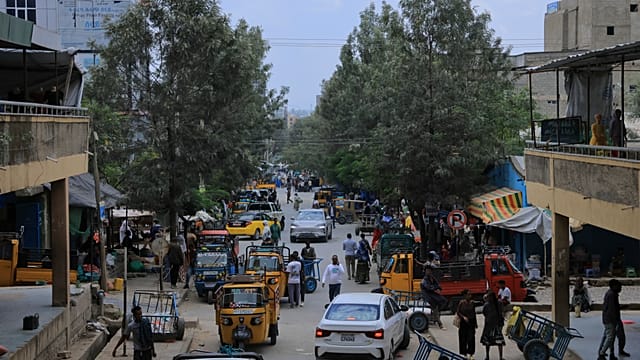
The early morning light fell over Mekelle like a hesitant promise, illuminating streets that had lain silent for days as Ethiopian federal forces moved in without resistance, claiming full control of the Tigray rebels’ regional capital after the Tigray People’s Liberation Front abandoned the city on Saturday. According to Channels TV, a local journalist confirmed that federal troops were patrolling key institutions and manning checkpoints, while residents described an eerie calm punctuated by the distant rumble of armored vehicles. Al Jazeera Africa reported that the main regional airport had been recaptured from Tigrayan fighters, reversing a takeover that had occurred just weeks earlier and restoring a vital gateway for humanitarian aid and military logistics. Two residents speaking to BBC News Africa, under condition of anonymity, said that pro‑government militia had taken over the city’s administrative buildings and that shopkeepers had hurriedly moved stock to safer locations, fearing looting and vandalism in the power vacuum. AfricaNews.com noted that businesses remained shuttered, their owners opting to safeguard merchandise rather than risk exposure to opportunistic crime, while a commander of a pro‑government militia told AFP that “we have taken control of Mekelle and we are marching forward,” signaling a resolve to press the offensive deeper into rebel‑held territory.
The capture came after the TPLF launched attacks on federal forces on September 23, reigniting fears of a return to the devastating civil war that claimed more than 600,000 lives between 2020 and 2022, a conflict that had left deep scars on the Ethiopian psyche. As federal troops restored communications for the first time in over a week, the hum of mobile networks returned, allowing families to reconnect and share news of the shifting front lines. Simultaneously, Ethiopia’s regional rivals gathered in the Egyptian city of Alamein for a mini‑summit, where presidents of Egypt, Somalia, Sudan and Eritrea convened to discuss the risk of a wider war that could engulf the Horn of Africa. The juxtaposition of a reclaimed city and a looming diplomatic conclave set the stage for a complex narrative of victory, vulnerability, and the fragile prospect of peace.
The Human Pulse of Mekelle: Lives in the Shadow of Conflict
In the wake of the federal advance, Mekelle’s inhabitants found themselves navigating a landscape where normalcy was both a memory and a fragile hope, as shop owners pulled down shutters and families huddled indoors, uncertain whether the silence heralded stability or the prelude to renewed clashes. According to AfricaNews.com, tens of thousands of Oromo had gathered in Addis Ababa just days earlier to celebrate the Irreecha thanksgiving festival, a vivid display of cultural resilience that stood in stark contrast to the subdued mood gripping the northern capital, where the festive spirit was replaced by cautious vigilance. Residents interviewed by BBC News Africa described how they had organized informal neighborhood watches, taking turns to patrol streets and protect homes from potential looters, a grassroots response born of necessity when official police presence remained thin. The local journalist cited by Channels TV noted that while federal troops manned key institutions, the absence of a visible civilian administration left many services—such as water distribution and electricity—intermittent, forcing households to rely on generators and stored supplies. Aid workers, speaking on condition of anonymity, warned that the disruption of supply chains threatened to exacerbate food insecurity, especially for children and the elderly who had already endured years of intermittent blockade and displacement.
Despite the tension, there were moments of quiet solidarity: street vendors shared what little they had, and elders recounted stories of past surges of violence, urging younger generations to remember the cost of hatred and the value of communal healing. The psychological toll was palpable, with reports of rising anxiety and sleeplessness among youth who had grown up amid the cyclical eruptions of conflict that have defined Tigray’s recent history. Yet, amidst the apprehension, a undercurrent of determination surfaced, as many expressed a cautious optimism that federal control might finally open space for dialogue, reconstruction, and the return of displaced families to their ancestral lands. The human pulse of Mekelle, therefore, beats with a paradoxical rhythm—fear intertwined with hope, loss mingling with the stubborn will to rebuild.
The Geopolitical Chessboard: Egypt Summit and Regional Rivalries
The capture of Mekelle did not occur in a vacuum; it unfolded against a backdrop of heightened regional diplomacy, as Egypt, Somalia, Sudan and Eritrea convened in Alamein under the shadow of an African Business Forum to deliberate on the escalating crisis that threatened to spill beyond Ethiopia’s borders. As reported by Channels TV, the summit was framed as a mini‑gathering of nations with strained relations to Addis Ababa, each harboring its own strategic concerns: Egypt wary of any encroachment on its Nile waters, Somalia apprehensive about cross‑border militancy, Sudan vigilant over its own internal fragility, and Eritrea nursing a long‑standing grudge over access to the Red Sea. Analysts noted that Eritrea’s President Isaias Afwerki, who shares a porous border with Tigray, has historically been accused by Ethiopia of providing direct support to the TPLF, a claim Asmara vehemently denies while simultaneously alleging that Ethiopia plots to seize Eritrean coastline—a accusation that adds a layer of mistrust to any diplomatic overture. The Sudanese Armed Forces chief, Abdel Fattah al‑Burhan, echoed concerns about the risk of a wider war, warning that the proliferation of arms and the influx of foreign fighters could destabilize the already volatile Sahel‑Horn corridor. Meanwhile, Somalia’s President Hassan Sheikh Mohamud emphasized the need for a coordinated regional response to curb terrorist exploitation of the chaos, pointing to past incursions by extremist groups that have used Ethiopia’s internal strife as a recruiting ground.
The Egyptian host, President Abdel Fattah al‑Sisi, positioned the dialogue as a preventive measure, urging participants to consider confidence‑building measures such as joint border patrols and humanitarian corridors that could alleviate civilian suffering while addressing security anxieties. Despite the diplomatic tone, underlying rivalries persisted, with each state leveraging the summit to voice grievances and seek assurances that their national interests would not be sacrificed in any eventual peace settlement. The juxtaposition of federal triumph in Mekelle and the concurrent diplomatic flurry in Alamein illustrated the dual nature of the crisis: a battlefield victory on the ground paralleled by a high‑stakes game of influence and negotiation unfolding in distant conference halls.
The Economic Aftermath: Trade, Aid, and Reconstruction
The immediate economic repercussions of Mekelle’s recapture reverrupted through local markets, supply chains, and the broader Ethiopian economy, as businesses grappled with the abrupt shift from rebel administration to federal oversight. AfricaNews.com reported that shops and markets remained closed, their owners having pre‑emptively moved inventory to safer locations, a precautionary measure driven by memories of looting during previous bouts of violence and a lingering distrust of the security situation. The local journalist cited by Channels TV noted that while federal troops had secured key institutions, the restoration of normal commerce hinged on the reopening of transport routes, particularly the Mekelle‑Addis Ababa highway, which had been intermittently blocked by checkpoints and occasional skirmishes. Analysts warned that the disruption of agricultural output in Tigray—a region known for its production of teff, barley, and livestock—could exacerbate national food inflation, already strained by global commodity price shocks and the lingering effects of the 2020‑2022 civil war that devastated farmland and displaced millions. Humanitarian organizations, speaking through anonymous channels, emphasized that the resumption of telephone and internet services, confirmed by AFP as having been restored for the first time in over a week, was a critical first step toward coordinating aid deliveries, yet cautioned that funding gaps persisted, with donor fatigue setting in after years of appeals for the Tigray crisis.
The federal government, meanwhile, announced plans to fast‑track reconstruction projects, pledging investments in road repair, school rehabilitation, and health clinic upgrades, though experts questioned the feasibility of rapid execution given bureaucratic hurdles and the need for transparent procurement to avoid corruption. In Addis Ababa, the Irreecha festival’s massive turnout underscored the resilience of Ethiopia’s commercial spirit, as traders displayed goods ranging from traditional textiles to modern electronics, signaling that economic life continued elsewhere even as the north wrestled with uncertainty. The economic dimension of the conflict, therefore, is not merely a ledger of losses but a complex interplay of risk, opportunity, and the enduring Ethiopian drive to rebuild amid adversity.
The Technological and Informational Battlefield: Communications and Propaganda
Control of the narrative emerged as a decisive front in the Mekelle contest, with both federal forces and the TPLF vying to shape perceptions through the rapid restoration and manipulation of communication channels. As reported by BBC News Africa, the reestablishment of mobile networks and internet access in Mekelle allowed residents to share real‑time images of federal patrols, thereby countering rebel claims of continued dominance and providing a tangible sense of governmental presence. Al Jazeera Africa highlighted that the federal recapture of the Mekelle airport not only restored a logistical hub but also served as a symbolic victory that was amplified through state‑run media outlets, which broadcast footage of troops raising the Ethiopian flag over the terminal, reinforcing a message of territorial integrity. Conversely, the TPLF, despite its withdrawal, reportedly leveraged encrypted messaging apps and diaspora networks to disseminate statements from leader Debretsion Gebremichael, who warned that the group would revert to guerrilla tactics reminiscent of their 2020‑2022 insurgency, underscoring a resolve to persist despite territorial setbacks. Analysts noted that the information war extended beyond the battlefield, influencing regional diplomacy; Egypt’s state media, for instance, framed the Alamein summit as a proactive stance against Ethiopian aggression, while Eritrean outlets portrayed the federal advance as an existential threat to Red Sea access.
The local journalist cited by Channels TV observed that the sudden influx of information—both verified and rumor‑filled—created a fog of war in which civilians struggled to discern truth, prompting community leaders to establish verification circles that cross‑checked social media posts with eyewitness accounts. In this environment, technological infrastructure became both a weapon and a shield: the ability to broadcast victory could bolster morale and attract international support, while the capacity to disrupt communications could hinder enemy coordination and sow confusion. As the federal government consolidates its hold, the struggle to control the flow of information will likely remain as pivotal as the struggle to control the streets, shaping not only the immediate perception of victory but also the long‑term trajectory of peace or renewed conflict.
Future Implications: A Blueprint or a Band‑Aid?
Looking ahead, the recapture of Mekelle presents Ethiopia with a critical juncture where the choices made today will determine whether the victory serves as a durable foundation for lasting peace or merely a temporary Band‑Aid over deep‑seated wounds. Historical precedent looms large: the Pretoria peace agreement of 2022, though never fully implemented, had managed to curb large‑scale hostilities for a period, suggesting that negotiated frameworks, when backed by credible enforcement mechanisms, can yield tangible respite. Analysts caution, however, that without addressing the root causes of the conflict—namely the political marginalization of the TPLF, ethnic grievances, and competing visions of federalism—the risk of relapse remains high, especially as Debretsion Gebremichael has signaled a return to guerrilla warfare should federal forces overextend. The regional dimension further complicates the outlook; Egypt’s concerns over Nile water security, Eritrea’s anxieties about Red Sea access, and Sudan’s internal fragility mean that any Ethiopian move toward consolidation will be scrutinized and potentially countered by neighboring states seeking to safeguard their own interests. Economically, the reconstruction of Tigray will demand substantial investment, transparent governance, and the inclusion of local stakeholders in planning processes to avoid perceptions of external imposition that could fuel resentment. Technologically, sustaining open and reliable communication channels will be essential not only for humanitarian coordination but also for preventing the spread of disinformation that could reignite hostilities.
Socially, healing the trauma inflicted on communities will require truth‑telling initiatives, psychosocial support, and programs that foster inter‑ethnic dialogue, drawing lessons from the resilience displayed during the Addis Ababa Irreecha celebration where diverse peoples gathered in shared gratitude. Ultimately, the path forward hinges on whether Ethiopia’s leadership can translate battlefield success into a comprehensive political settlement that addresses ethnic federalism, ensures equitable resource distribution, and builds trust among its diverse populace. If such a blueprint is pursued with sincerity and inclusivity, the dawn over Mekelle may herald a new era of stability; if not, the city’s streets may once again echo with the footsteps of conflict, reminding the Horn of Africa that victory without reconciliation is often fleeting.
📰 Sources Cited
- Channels TV: Ethiopia Controls Tigray Capital As Regional Rivals Meet In Egypt
- Al Jazeera Africa: Ethiopian government forces seize Tigray capital Mekelle as TPLF withdraws
- AfricaNews.com: Ethiopia’s Oromo celebrate Irreecha and call for peace as federal forces enter Mekelle
- BBC News Africa: Ethiopian rebel forces withdraw from Tigray regional capital
- AfricaNews.com: Ethiopia's federal forces retake Tigrayan capital Mekelle
- BBC News Africa: Ethiopian rebel forces withdraw from Tigray regional capital
- AfricaNews.com: Ethiopian forces recapture Mekelle airport from Tigrayan fighters
0 Comments
Sign in to commentNo comments yet. Be the first to share your thoughts!