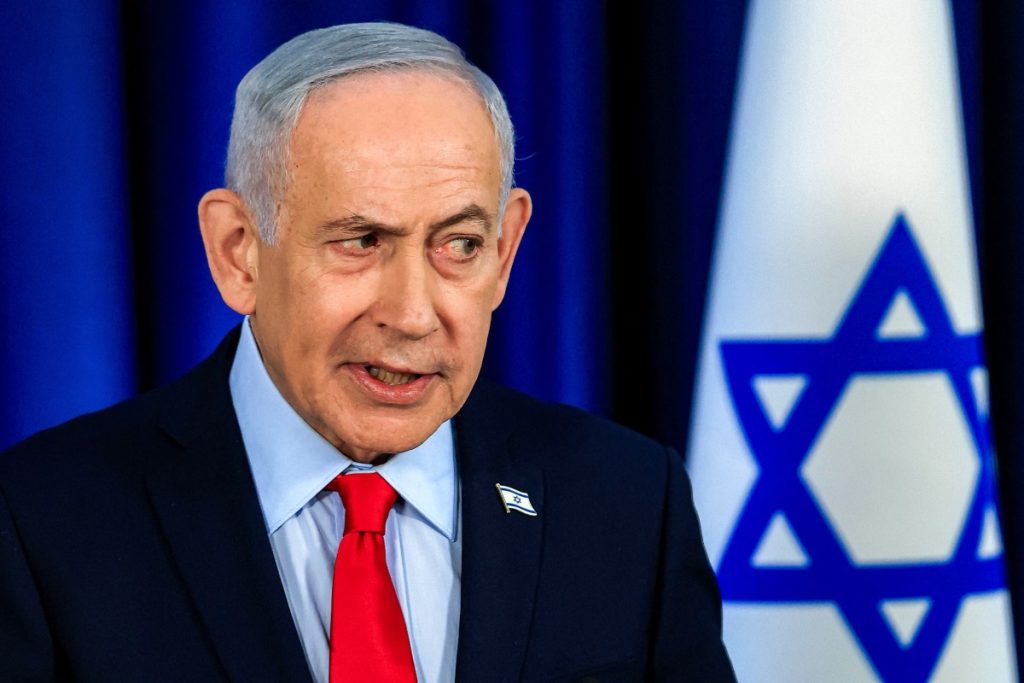
The gavel had barely fallen when the hall of the United Nations General Assembly swelled with a tension that felt less like diplomatic decorum and more like the charged air before a thunderstorm. Israeli Prime Minister Benjamin Netanyahu stepped to the podium amid a flutter of cameras and a low murmur that quickly rose to a restless hum, his presence a stark reminder of the domestic political fire he was desperately trying to quell back home. As reported by Channels TV, the prime minister, locked in a tight race for reelection on October 27, used the global platform not merely to outline Israel’s security concerns but to launch a broadside against perceived enemies and even longtime allies, a strategy that instantly sparked uproar among the assembled delegates. The atmosphere shifted dramatically when, within minutes of his opening remarks, dozens of envoys from across the world rose, gathered their belongings, and marched out of the chamber, some jeering, others booing, while Netanyahu’s own team stood and applauded in stark contrast. According to Premium Times, the speaker of the session shouted for order, trying to restore a semblance of parliamentary procedure as the hall echoed with the sound of footsteps and dissent. Netanyahu, undeterred, turned to those leaving and delivered a pointed barb, declaring, “If there are any other moral cowards who haven’t left this hall, please do so now,” a line that underscored both his defiance and his willingness to frame the protest as a moral failing on the part of his critics.
The scene was a vivid tableau of a leader wielding international rhetoric as a shield against domestic vulnerability, while the world watched, split between allegiance and outrage.
The Stage of Contention: A Chamber Divided
Netanyahu’s address was less a policy speech and more a political maneuver, a calculated effort to bolster his standing among Israeli voters who view a strong, unapologetic stance on security as a prerequisite for leadership. As detailed by Vanguard News, the prime minister framed his rhetoric around the looming threat of Iran, describing the Islamic Republic as a “murderous dictatorship” that must be prevented from acquiring nuclear weapons capable of annihilating Israel and threatening global stability. He claimed that the recent joint Israeli‑U.S. operations had stalled Tehran’s nuclear ambitions, a assertion that drew both applause from his supporters and skepticism from analysts who noted the enduring resilience of Iran’s nuclear infrastructure despite years of pressure. Simultaneously, he turned his fire toward traditional allies, accusing Britain and France of hypocrisy for imposing limited sanctions on Israeli exports from the occupied West Bank while simultaneously claiming to champion human rights, a critique that resonated with his narrative of Israel being unfairly singled out for its defensive actions. The prime minister also took aim at New York’s first Muslim mayor, Zohran Mamdani, labeling him antisemitic and asserting that his election had made many Jews feel unsafe in the city, a claim that Mamdani had previously countered by acknowledging his lack of authority to enforce an ICC arrest warrant against Netanyahu.
This blend of external threat portrayal and internal political bolstering painted a picture of a leader seeking to rally his base by casting Israel as a besieged fortress, even as the international community reacted with visible disapproval.
The Ripple Across Continents: Protests, Politics, and Personalities
The fallout from Netanyahu’s speech extended far beyond the marble walls of the UN, igniting protests in the streets of New York and reverberating through diplomatic capitals worldwide. As reported by Al Jazeera Africa, dozens of demonstrators gathered near the United Nations headquarters, many brandishing “stop the genocide” banners, while a notable contingent included Hollywood star Susan Sarandon, whose detention underscored the high‑profile nature of the dissent. The protests were not merely spontaneous; they were fueled by a deepening perception among many global observers that Israel’s military campaign in Gaza, which followed Hamas’s deadly October 7, 2023 attacks, had crossed into territory that warranted international scrutiny, a view bolstered by the International Criminal Court’s 2024 determination that there were reasonable grounds to believe Netanyahu bore responsibility for war crimes in the region. Meanwhile, Palestinian President Mahmoud Abbas, a perennial critic of Israeli policy, was conspicuously absent from the assembly after the Trump administration denied him a visa, a move he condemned in a video message played before Netanyahu’s remarks, declaring that the international community must reject “unlawful punitive measures” and the accusations that underpinned them. The absence of Abbas, coupled with the vocal walkout of delegates, highlighted a growing chasm between Israel and a significant segment of the global community that views its actions through the lens of occupation and humanitarian concern, rather than solely through a security prism.
The Economic Undercurrents: Sanctions, Trade, and the Shadow of Colonialism
Beneath the fiery rhetoric lay a series of economic undercurrents that Netanyahu sought to both deflect and exploit, particularly concerning the strained relations with Europe’s historic partners. According to Punch Nigeria, both Britain and France had imposed limited sanctions on Israeli exports originating from the occupied West Bank, measures that, while modest in scale, carried symbolic weight as they signaled a growing impatience with settlement expansion and its associated economic benefits for Israeli firms. Netanyahu seized upon these sanctions in his speech, accusing the two nations of hypocrisy by reminding the assembly of their own colonial pasts, arguing that they had no moral standing to lecture Israel on colonialism when their histories were replete with imperial conquests. This rhetorical maneuver was not merely a defensive tactic; it aimed to reframe the debate from one of contemporary policy to a broader historical narrative that could resonate with nationalist sentiments domestically and potentially blunt the impact of European economic pressure. Moreover, the prime minister’s allusion to the economic toll of sanctions served to remind his audience that Israel’s high‑tech sector, a cornerstone of its economy, remained vulnerable to secondary boycotts and reputational damage, a concern that Israeli business leaders have privately voiced amid rising European scrutiny.
The interplay of trade restrictions, historical grievances, and nationalist rhetoric thus created a complex backdrop in which economic considerations were inseparable from the political theater unfolding at the UN.
The Technological Theater: Pagercraft, Propaganda, and the ICC
Perhaps the most startling moment of Netanyahu’s address came when he brandished a pager device, a seemingly innocuous piece of hardware that he claimed was emblematic of a covert operation that had maimed hundreds of Hezbollah operatives and civilian bystanders alike. As detailed by Channels TV, the prime minister used the physical object to illustrate what he described as a successful Israeli intelligence effort to disrupt Iran‑backed militant capabilities, a narrative that sought to showcase Israel’s technological edge in the realm of unconventional warfare. The pager, rigged with explosives and allegedly shipped to Hezbollah operatives, became a prop in a broader story about preemptive strikes and the blurred lines between combatant and civilian in modern conflict, a topic that has increasingly occupied the agendas of international legal bodies. The International Criminal Court’s ongoing investigation into alleged war crimes in Gaza lent a sobering counterpoint to Netanyahu’s technological triumphs, as prosecutors examined whether such tactics, however effective, violated principles of proportionality and distinction under international law. Meanwhile, analysts noted that the very act of displaying the pager could be interpreted as a form of psychological warfare, intended to signal Israel’s willingness to employ clandestine, high‑risk methods against its adversaries while simultaneously rallying domestic support through a display of ingenuity and resolve.
The intersection of cutting‑edge military technology, legal accountability, and public perception thus formed a multifaceted dimension of the speech that extended far beyond the immediate diplomatic fallout.
Future Implications: A Blueprint for Diplomacy or a Band‑Aid on Bleeding Wounds?
Looking ahead, the episode at the UN General Assembly invites a series of questions about the trajectory of Israeli foreign policy, the efficacy of protest as a tool of international accountability, and the potential pathways toward de‑escalation in a region mired in cyclical violence. If Netanyahu’s strategy was to shore up his electoral prospects by projecting strength and defiance, the immediate aftermath suggests a polarized international landscape where traditional alliances are tested and new fault lines emerge, particularly between states that view Israel’s actions through a security lens and those that prioritize humanitarian and legal considerations. The walkout of delegates, while symbolic, may embolden other nations to adopt more assertive stances in future forums, potentially leading to a scenario where multilateral institutions become arenas of competing narratives rather than consensus‑building platforms. Economically, the continued imposition of targeted sanctions by European powers could incentivize Israel to deepen ties with alternative markets, yet also risk isolating its high‑tech sector from critical European investment and collaboration. Technologically, the showcase of capabilities like the pager operation may spur an arms race in covert capabilities, prompting adversaries to develop countermeasures and pushing international bodies to refine legal frameworks that address emerging forms of warfare. Ultimately, the events of that September afternoon serve as a reminder that diplomacy is not merely a matter of speeches and votes but a complex interplay of domestic politics, global perceptions, economic interdependence, and technological innovation, all of which will shape whether the international community can move toward a durable blueprint for peace or remain mired in applying band‑aids to wounds that refuse to heal.
📰 Sources Cited
- Channels TV: 81st UNGA: Israel’s PM Netanyahu Condemns Enemies, Allies In ‘Fiery’ UN Speech
- Punch Nigeria: FULL TEXT: Netanyahu’s UN speech as delegates walk out
- Punch Nigeria: Netanyahu denounces enemies, allies in fiery UN speech
- Vanguard News: Netanyahu denounces enemies, allies in fiery UN speech
- Al Jazeera Africa: Delegates walk out of Netanyahu’s UN speech
- Channels TV: 81st UNGA: Dozens Of Envoys Walk Out Of Netanyahu Speech
- Premium Times: Delegates walk out as Netanyahu addresses UNGA
0 Comments
Sign in to commentNo comments yet. Be the first to share your thoughts!