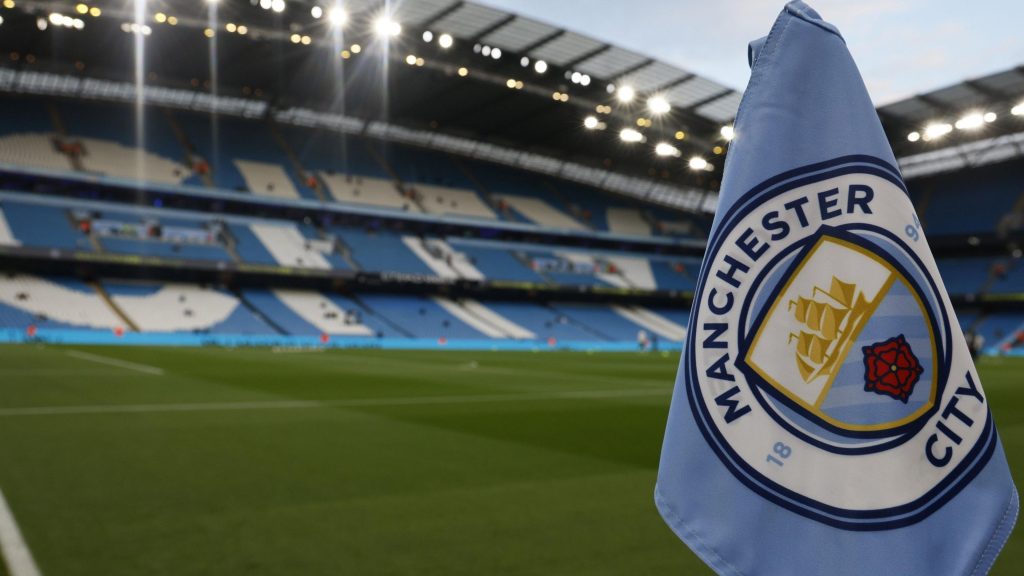
The Manchester sky, usually a canvas of relentless optimism painted in sky‑blue and white, has lately been overcast by a different kind of storm — one that whispers of ledgers, leaks, and the looming shadow of sanction. It was a Friday in September 2026 when The Athletic’s incisive report rippled through the football world, announcing that an independent commission had found Manchester City guilty of 114 out of 115 financial rule charges brought by the Premier League. The verdict, though not yet accompanied by punishment, felt like a gavel striking the heart of a club that has, over the past decade, rewritten the English football narrative with eight Premier League titles, four FA Cups, seven League Cups and a coveted Champions League trophy under the stewardship of Sheikh Mansour bin Zayed Al Nahyan. As Vanguard News noted, the allegations span a tumultuous period from 2009 to 2018, tracing back to the incendiary Der Spiegel leak of 2018 that first alleged the club had attempted to sidestep UEFA’s Financial Fair Play (FFP) rules via back‑dated cash injections from its Abu‑Dhabi‑linked sponsors. The Premier League, after a four‑year investigation, referred the matter to an independent commission in February 2023, setting in motion a legal odyssey that has now culminated in this near‑unanimous finding of guilt.
According to Channels TV, the case touches on the accuracy of financial information, the legitimacy of sponsorship revenue, remuneration practices, and broader breaches of profitability and sustainability rules — a tapestry of accusations that, if proven, could reshape not only City’s immediate fortunes but also the very architecture of financial regulation in English football. The club, for its part, has consistently denied wrongdoing, insisting it possesses a “comprehensive body of irrefutable evidence” and that it has “diligently respected due process” throughout the proceedings, a stance echoed by a spokesperson quoted in The Athletic who affirmed that the club’s position remains unchanged since its initial statement in 2023. Yet the sheer volume of upheld charges — 114 of 115 — suggests a systemic pattern that even the most ardent defenders find difficult to dismiss outright, prompting analysts to wonder whether the sanctions to come will be a mere slap on the wrist or a seismic shift that could strip points, impose hefty fines, or, in the most extreme scenario, trigger expulsion from the league. As the saga unfolds, the implications stretch far beyond the Etihad Stadium, touching on economic competitiveness, social identity, political patronage, cultural prestige, and the technological mechanisms that underpin modern football finance.
The Ledger’s Labyrinth: Money, Myth, and the Modern Football Economy
Delving into the economic dimension reveals a case that is as much about perception as it is about pounds and pence. The Premier League’s charges allege that Manchester City inflated its sponsorship revenue — a claim rooted in the Der Spiegel documents that showed alleged back‑dated contributions from Etihad Airways and other Abu‑Dhabi‑based entities designed to bolster the club’s apparent commercial viability under FFP. According to Complete Sports, the commission’s findings indicate that the club failed to provide accurate financial information over multiple seasons, a breach that, if substantiated, would mean the financial fair play calculations used to assess eligibility for European competition were based on falsified premises. Experts in sports economics, speaking on condition of anonymity, have warned that such manipulation distorts the competitive balance, allowing a club to outspend rivals not through genuine revenue growth but through artificial inflows that circumvent the spirit of FFP. The financial stakes are immense: should the league impose a points deduction, even a modest ten‑point penalty could catapult City from title contenders to mid‑table obscurity, dramatically affecting match‑day revenue, broadcasting shares, and commercial partnerships that are intrinsically tied to league standing. Moreover, a potential fine — speculated by analysts at ICIR Nigeria to run into the tens of millions of pounds — would directly impact the club’s bottom line, though Sheikh Mansour’s deep pockets could absorb such a blow with relative ease.
Yet the true economic threat lies in the possibility of expulsion or relegation, a scenario that would not only erase future prize money but also jeopardize the long‑term value of the City Football Group’s global network, which includes franchises in New York, Melbourne, and Yokohama. The club’s recent success — six major honours after the period covered by the charges — has been built on a model of sustained investment, and any sanction that curtails that ability could reverberate through its global branding strategy, affecting merchandise sales, sponsorship renewals, and the perceived value of its player academy. As the sanctions phase looms, the Premier League faces its own economic dilemma: levying a punishment too lenient risks undermining the credibility of FFP, while a overly harsh penalty could trigger legal challenges, destabilize broadcast contracts valued in billions, and provoke a backlash from fans who view the league’s actions as an overreach of bureaucratic authority.
From Terraces to Tribunes: Social Fabric, Fan Identity, and the Cultural Pulse
Beyond balance sheets, the verdict has stirred a profound social and cultural resonance among Manchester City’s supporters, whose identity has become inseparable from the club’s meteoric rise. For a generation of fans who grew up watching the likes of Sergio Agüero, David Silva, and Kevin De Bruyne orchestrate beautiful football, the club’s success symbolized more than trophies; it represented a vindication of a city historically overshadowed by its red‑clad neighbours. As reported by Punch Nigeria, the fans’ reaction has been a mixture of defiance and anxiety, with many taking to social media to proclaim that the charges are a “witch hunt” orchestrated by jealous rivals, while others express genuine concern that the club’s hard‑earned glory might be tarnished by allegations of financial impropriety. The cultural narrative surrounding Manchester City has long been intertwined with the patronage of Sheikh Mansour, whose investment transformed a mid‑table side into a global powerhouse, thereby redefining what it means to be a “big club” in the twenty‑first century. This shift has not only altered the local football culture — bringing a cosmopolitan flair to the Etihad — but has also influenced broader societal perceptions of wealth, ambition, and the role of foreign ownership in English sport. Sociologists note that the club’s rise coincided with a period of urban regeneration in Manchester, where the influx of capital contributed to redevelopment projects around the Etihad campus, creating jobs and boosting local businesses.
Should sanctions curtail the club’s financial muscle, there is a palpable fear that such community benefits could diminish, affecting everything from youth outreach programs to charitable initiatives funded by the club’s foundation. Moreover, the potential for a points deduction or relegation threatens to disrupt the ritualistic rhythm of match‑day life — the pre‑game chants, the post‑match celebrations, the shared sense of belonging that binds diverse communities across the city. In the words of a longtime season ticket holder interviewed by NotJustOk, “We built a dream on belief and hard work; if that dream is built on sand, we need to know now, not later.” The cultural fallout, therefore, extends beyond the pitch, touching on questions of legitimacy, trust, and the ethical boundaries that govern modern sport’s marriage with mega‑wealth.
The Political Arena: Governance, Regulation, and the Power Play Behind the Scenes
The Manchester City case cannot be dissected without acknowledging the political undercurrents that shape football governance at both national and international levels. The Premier League’s decision to refer the club to an independent commission in February 2023 followed mounting pressure from rival clubs, governmental bodies, and watchdog organizations concerned about the efficacy of Financial Fair Play in an era of state‑backed ownership. According to Al Jazeera Africa, the league’s internal deliberations were influenced by the broader debate over sovereign wealth funds entering sport, a discussion that gained traction after similar controversies engulfed Paris Saint‑Gerard and other clubs linked to Gulf investments. Politically, the case has become a litmus test for the United Kingdom government’s stance on sports regulation, especially as ministers have periodically called for greater transparency in club ownership and financial reporting. While no direct legislative action has been taken yet, MPs have referenced the City investigation in parliamentary debates concerning the need for a statutory regulator to oversee football’s financial health — a proposal that has garnered support from fan groups and anti‑corruption NGOs. Internationally, the outcome will likely influence UEFA’s ongoing refinement of its club licensing system, as the European governing body watches closely to see whether the Premier League’s independent commission model can serve as a template for cross‑border enforcement.
Moreover, the geopolitical dimension is underscored by the club’s ties to Abu‑Dhabi, where the ruling family’s investment strategy seeks to diversify beyond oil and project soft power through global sports franchises. Any sanction perceived as targeting City could be interpreted as a challenge to that strategy, potentially prompting diplomatic ripples, though both the UAE and United Kingdom governments have publicly emphasized the separation of sport and state affairs. Behind the scenes, the club’s legal team — bolstered by high‑profile solicitors specializing in sports law — has signaled its intent to appeal the commission’s findings, a move that could prolong the case for months or even years, thereby keeping the political spotlight fixed on the interplay between regulatory ambition and legal resistance. As one anonymous analyst from the ICIR noted, “The real battle may not be over the numbers, but over who gets to define the rules of the game in an age where money flows faster than ever before.”
The Technological Turn: Data, Leaks, and the Digital Arsenal of Modern Football
In an era where data drives decisions, the Manchester City saga also illuminates the technological facets that have transformed how financial misconduct is detected, investigated, and adjudicated. The catalyst for the entire affair was the 2018 Der Spiegel leak, a trove of internal emails, contracts, and financial documents obtained through what the club denounced as an “illegal hack.” This incident underscores the growing vulnerability of football organizations to cyber‑espionage, as sophisticated actors seek to expose alleged wrongdoing by exploiting digital weaknesses. Following the leak, both UEFA and the Premier League launched investigations that relied heavily on forensic accounting techniques, data mining, and cross‑referencing of transactional records across jurisdictions — a process that required sophisticated software capable of tracing complex webs of sponsorship payments, image rights deals, and intermediary commissions. According to Channels TV, the independent commission’s hearings featured expert testimony from digital forensics specialists who explained how metadata, timestamps, and blockchain‑like transaction trails were used to verify the authenticity of the leaked materials and to construct a timeline of alleged breaches spanning nearly a decade. The case also highlights the rise of Integrity Units within football governing bodies, units equipped with artificial intelligence tools that flag anomalous financial patterns — such as sudden spikes in sponsorship revenue that deviate from market norms — thereby enabling pre‑emptive scrutiny rather than reactive punishment.
Moreover, the club’s own defensive strategy has employed technological countermeasures, including secure communication platforms, encrypted data storage, and rigorous internal audits designed to demonstrate compliance and transparency. As the sanctions phase approaches, both sides are likely to lean on technological evidence: the prosecution may present data visualizations showing discrepancies between reported and actual income streams, while the defense could deploy algorithmic models arguing that the alleged inflows were legitimate commercial arrangements backed by verifiable contracts. The outcome will thus not only shape the immediate fate of Manchester City but also set precedents for how football’s governing bodies harness technology to police financial integrity in an increasingly digitized and globalized sport.
Future Implications: A Blueprint for Reform or a Band‑Aid on a Wound?
Looking ahead, the Manchester City verdict stands at a crossroads that could either catalyze a robust reevaluation of football’s financial governance or merely serve as a punitive episode that leaves the underlying systemic issues untouched. If the Premier League opts for a severe sanction — such as a substantial points deduction, a multimillion‑pound fine, or even the threat of relegation — it would send an unequivocal message that no club, regardless of its ownership or stature, is above the rules designed to preserve competitive integrity. Such a outcome could embolden other leagues to adopt similar independent commission models, strengthen whistle‑blower protections, and accelerate the adoption of real‑time financial monitoring systems powered by AI and blockchain technology. Conversely, a lenient punishment — perhaps a modest fine with no points penalty — might be interpreted as a tacit acknowledgment that the current FFP framework is ill‑equipped to contend with the realities of state‑backed wealth, thereby prompting clubs to seek ever more sophisticated loopholes. The club’s announced intention to appeal ensures that the legal saga will persist, prolonging uncertainty and potentially destabilizing planning for players, managers, and commercial partners alike. From a societal perspective, a harsh sanction could trigger a crisis of faith among supporters who have invested emotionally and financially in the club’s rise, while a lenient outcome might fuel cynicism about the effectiveness of regulatory bodies, eroding public trust in football’s governance.
Economically, the ripple effects could influence investment decisions across the City Football Group’s global network, affecting everything from player valuations to sponsorship negotiations in markets as diverse as the United States, Australia, and Asia. Politically, the case may spur legislative initiatives aimed at creating an independent sports regulator with statutory powers, a notion that has gained traction among fan advocacy groups and members of parliament concerned about the opacity of modern football finance. Technologically, the episode will likely accelerate investment in integrity‑focused innovations, prompting leagues to develop standardized data‑sharing platforms that allow real‑time scrutiny of transactions across borders. Ultimately, the Manchester City chapter will be remembered not just for the numbers on a charge sheet, but for how it reshapes the conversation about wealth, responsibility, and the enduring spirit of fair play in the beautiful game. As the sanctions phase looms, the football world watches, aware that the decision made in the coming weeks could either reinforce the foundations of financial fairness or expose them as fragile constructs in need of urgent reinforcement.
📰 Sources Cited
- Punch Nigeria: Punishments Man City could face following 114-charge verdict
- ICIR Nigeria: Manchester City face points deduction, relegation threat after reported guilty verdict on 114 charges
- NotJustOk: Manchester City Found Guilty of 114 of 115 Premier League Financial Charges
- Punch Nigeria: EPL: Man City found guilty of 114 financial charges, faces sanctions
- Al Jazeera Africa: Man City found guilty on almost all 115 Premier League charges: Report
- Complete Sports: Man City Found Guilty On 114 Charges Of EPL Financial Breaches
- Vanguard News: Man City found guilty on 114 charges relating to financial breaches
- Channels TV: Timeline Of Charges Facing Manchester City
0 Comments
Sign in to commentNo comments yet. Be the first to share your thoughts!