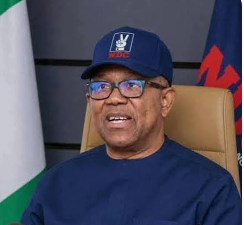
The news of Olu Jacobs’ passing arrived like a sudden curtain fall on a stage that had illuminated Nigerian storytelling for more than half a century, and within hours the digital airwaves throbbed with tributes that ranged from solemn presidential condolences to heartfelt recollections from ordinary fans who remembered his commanding baritone and the dignified gravitas he brought to every role. Peter Obi, the presidential candidate of the Nigeria Democratic Congress, took to his X handle on Thursday to mourn the veteran thespian, describing him as an embodiment of the Nigerian spirit and a living testament to the power of talent, discipline, and professionalism, a sentiment that echoed across the nation as citizens paused to reflect on the transient nature of life and the enduring legacy of those who devote themselves to their craft. Simultaneously, the Nigerian Tribune reported that President Bola Tinubu, Lagos State governor Babajide Sanwo‑Olu, and a host of other public figures had joined the chorus of remembrance, each highlighting Jacobs’ golden era contributions to film and theatre, his iconic voice that seemed to carry the weight of generations, and the standard he set for acting excellence across Africa and beyond. In the midst of this outpouring of admiration, Vanguard News drew attention to an undercurrent of political tension, noting that Obi’s tribute arrived while he remained silent on a looming N127.4 billion debt allegation leveled against his former administration by the Anambra State Government, a dispute that had seen the former governor challenge his successors to prove any outstanding liabilities or face the prospect of abandoning his campaign.
The juxtaposition of a nation mourning a cultural icon while a political figure grappled with fiscal accusations created a tableau that spoke to the complex interplay of art, memory, and governance in contemporary Nigeria, setting the stage for a deeper examination of how the loss of a legend can both unite and expose the fault lines of a society in transition.
The Economic Backdrop: Debt, Loans, and the Ledger of Legacy
According to Vanguard News, the Anambra State Government, through its Commissioner for Information and Value Reorientation, Dr Law Mefor, asserted that the Debt Management Office’s latest report showed a total balance of loans attributed to the Peter Obi administration amounting to N127.4 billion as of June 30, 2026, a figure derived from the official exchange rate and encompassing loans secured for malaria control, erosion management, education, and healthcare projects that the state continues to service on a monthly basis. Mefor further contended that while his administration had cleared roughly N22 billion in inherited gratuity arrears owed to retired state and local government employees and teachers, significant legacy liabilities persisted, including salary arrears owed to workers of the defunct Water Corporation that had endured throughout Obi’s tenure and pension and gratuity arrears for primary school teachers tracing back to the era of the late Governor Chinwoke Mbadinuju. In response, Obi had earlier declared that his government had settled historical gratuities and arrears exceeding N35 billion, insisted that no outstanding salaries, gratuities, or pensions remained when he handed over power, and maintained that contractors had been paid for all duly executed and certified projects, a claim he bolstered by pointing to the N2 billion ecological fund released three months before the end of his tenure for the Oko/Umuchiana erosion crisis, which he said he deliberately left for his successor because it was tied to a specific contractual obligation.
He also highlighted that, apart from the ecological fund, his administration had purportedly left behind more than N75 billion in savings, a reserve he argued demonstrated prudent fiscal stewardship and directly contradicted the debt allegations now being circulated. The ensuing debate, marked by Obi’s bold proclamation that he would cease campaigning if any contrary evidence could be established, transformed the mourning of a cultural figure into a flashpoint for broader discussions about accountability, transparency, and the long‑term ramifications of public borrowing in a nation striving to balance developmental aspirations with fiscal responsibility.
The Cultural and Social Dimension: Stage, Voice, and the Fabric of National Identity
The Leadership Newspaper captured the essence of Peter Obi’s tribute when it quoted him describing Olu Jacobs as “the embodiment of the excellence of the Nigerian spirit,” a phrase that resonated deeply with a populace that had grown up watching the actor’s performances on both stage and screen, where his disciplined approach and reverence for each role had set a benchmark for aspiring performers across the continent. PM News Nigeria featured a statement from Adebayo, who lauded Jacobs for defining the golden era of Nigerian entertainment with absolute discipline, noting that he treated every role with dignity and respect, thereby establishing a golden standard for acting that inspired millions and reverberated far beyond Nigeria’s borders, his iconic voice and commanding stage presence becoming reference points for excellence in African arts. The Nigerian Tribune, meanwhile, recorded the tributes of President Bola Tinubu and Governor Babajide Sanwo‑Olu, who emphasized Jacobs’ role as a film executive whose behind‑the‑scenes contributions helped shape the industry’s infrastructure, ensuring that the legacy of his artistry extended into the realms of production, distribution, and mentorship for emerging talents. These accolades painted a portrait of an artist whose life was not merely a series of performances but a sustained commitment to elevating Nigerian culture, a commitment that manifested in the way he carried himself with grace, the rigor he applied to his craft, and the generosity with which he shared his knowledge, thereby fostering a sense of national pride that transcended ethnic, linguistic, and regional divides.
As fans flooded social media with clips of his most memorable scenes, the collective remembrance acted as a cultural touchstone, reminding Nigerians of the power of storytelling to unite a diverse populace and of the enduring value of artists who dare to uphold the highest standards of their profession, even as the nation wrestles with economic and political challenges.
The Political Arena: Mourning, Campaigns, and the Contest of Narratives
Peter Obi’s public expression of grief for Olu Jacobs arrived at a moment when his political fortunes were already under scrutiny, and the tribute served both as a genuine homage and as a strategic maneuver within the broader narrative of his campaign for the presidency under the banner of the Nigeria Democratic Congress. By framing Jacobs as a symbol of excellence and a reminder of the need to make meaningful contributions to society, Obi aligned himself with the virtues of dedication and patriotism, qualities he sought to project onto his own political persona, while simultaneously sidestepping the contentious issue of the alleged N127.4 billion debt that the Anambra State Government continued to highlight. Vanguard News reported that Obi had earlier challenged the state government to prove any outstanding financial liabilities from his tenure, declaring that he would abandon his campaign if such proof emerged, a stance that underscored his confidence in his fiscal record and his willingness to stake his political future on the outcome of that verification process. The state’s rebuttal, led by Commissioner Mefor, pointed to the Debt Management Office’s figures and argued that while certain arrears had been cleared, legacy obligations persisted, particularly those linked to the defunct Water Corporation and primary school teachers, thereby keeping the debate alive in the public sphere.
This interplay of mourning and political contestation illustrated how the death of a beloved cultural figure can become a conduit for competing narratives about governance, accountability, and the moral obligations of public office, as supporters of Obi lauded his tribute as evidence of his respect for national heritage, while critics used the occasion to press for transparency on fiscal matters, turning a moment of collective sorrow into a platform for political discourse that reverberated across traditional media, online forums, and street conversations alike.
The Technological and Informational Battlefield: Social Media Tributes and Digital Memory
The immediacy of the tributes to Olu Jacobs was amplified by the digital ecosystems that now shape public discourse, with platforms such as X (formerly Twitter) and Instagram serving as the primary conduits for the outpouring of grief, admiration, and reflection that followed the announcement of his death. Leadership Newspaper noted that Obi’s condolence message was posted on his X handle on Thursday, a timing that allowed his words to circulate rapidly among his followers and to be picked up by news outlets, thereby ensuring that his voice joined the chorus of condolences emanating from political leaders, cultural institutions, and ordinary citizens alike. Vanguard News highlighted that the announcement of Jacobs’ passing originated from a post on his son Olusoji’s Instagram page, a detail that underscored the role of family‑generated content in shaping the initial narrative and enabling a personal, intimate glimpse into the mourning process that traditional press releases might not capture. As the news spread, users across Nigeria and the diaspora shared video clips of Jacobs’ most iconic performances, posted nostalgic photographs from his early career, and composed written reflections that emphasized his discipline, his voice, and the sense of dignity he imparted to every character he portrayed, thereby constructing a living digital archive that could be accessed by future generations of scholars, filmmakers, and fans.
This digital memorialization process illustrated how contemporary technology transforms moments of loss into interactive, participatory experiences, allowing the public to co‑create the legacy of a cultural icon in real time, while also providing politicians and public figures with a venue to express solidarity, shape perceptions, and engage with constituents in a manner that bypasses traditional gatekeepers and reaches audiences directly.
Future Implications: A Blueprint for Cultural Policy or a Band‑Aid on Fiscal Discourse?
The convergence of Olu Jacobs’ celebrated life, the nationwide mourning that followed his death, and the simultaneous surfacing of fiscal allegations against a former governor offers a lens through which to envision the trajectory of Nigeria’s cultural and political landscape in the years ahead. Analysts suggest that the profound public affection displayed for Jacobs could catalyze renewed calls for robust cultural policy frameworks that protect and promote the creative industries, ensuring that future generations of artists receive the support, training, and intellectual property safeguards necessary to thrive in an increasingly globalized marketplace. Observers note that the tributes from presidents, governors, and opposition leaders alike signal a rare moment of bipartisan recognition of the arts’ value, potentially opening avenues for legislative initiatives that earmark funding for film restoration, theatre revitalization, and arts education programs, thereby transforming an outpouring of grief into concrete investment in the nation’s creative capital. At the same time, the lingering debate over the N127.4 billion debt attributed to the Obi administration underscores the necessity of transparent fiscal management and the importance of independent auditing mechanisms that can distinguish between legitimate borrowing for developmental projects and unresolved liabilities that erode public trust. Experts warn that if the controversy remains unresolved, it risks overshadowing the cultural celebration and deepening cynicism about the intersection of politics and public service, whereas a clear, evidence‑based resolution could reinforce accountability and demonstrate that leadership can honor both cultural heritage and fiscal responsibility.
Ultimately, the legacy of Olu Jacobs may serve as both an inspiration for a vibrant, inclusive cultural renaissance and a cautionary tale about the imperative of integrity in governance, urging Nigeria to forge a path where the excellence of its spirit is reflected not only on the stage and screen but also in the ledgers that steward its future.
📰 Sources Cited
- Leadership Newspaper: Obi Mourns Olu Jacobs, Hails Actor As Embodiment Of Nigerian Excellence
- Vanguard News: Peter Obi mourns Olu Jacobs, silent on N127bn Anambra debt
- PM News Nigeria: Olu Jacobs was a shining light – Adebayo
- Nigerian Tribune: Tinubu, Sanwo-Olu, others pay tributes as veteran actor, Olu Jacobs, dies at 84
0 Comments
Sign in to commentNo comments yet. Be the first to share your thoughts!