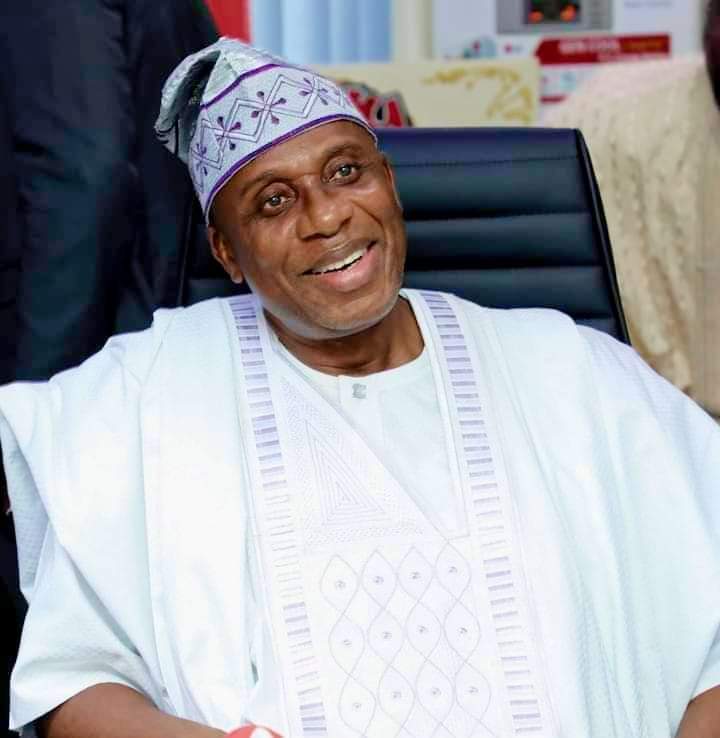
The Nigerian political landscape has long been a complex tapestry, woven from threads of diverse interests, ethnic affiliations, and ideological leanings. However, the recent developments within the African Democratic Congress (ADC) have brought to the forefront the deep-seated fissures that threaten to undermine the very fabric of the country's democratic process. As reported by Vanguard News, the ADC presidential primary election in Bayelsa State saw Rotimi Amaechi emerge victorious, securing a total of 44,404 votes, while Atiku Abubakar and Mohammed Hayatu-Deen trailed behind with 6,570 and 939 votes, respectively. This outcome, while significant in its own right, is merely a symptom of a larger malaise that has gripped the ADC, as the party grapples with internal strife and logistical challenges. According to Premium Times, the ADC returning officers noted that the primaries were conducted peacefully across the states, a fact that belies the underlying tensions and power struggles that are defining the party's trajectory. The African Democratic Congress, as acknowledged by its national publicity secretary, was not adequately prepared to conduct the primaries, a shortfall that necessitated a degree of adaptability and resilience to navigate the complexities of the electoral process. As the party braces for the impending 2027 presidential election, the specter of factionalism looms large, threatening to derail its prospects and undermine the democratic ethos that underpins the Nigerian political system.
The current president, Bola Tinubu, and the ruling All Progressives Congress are watching these developments with keen interest, aware that the fissures within the ADC could have far-reaching implications for the political landscape of Nigeria. As analysts and experts weigh in on the situation, it becomes increasingly clear that the ADC's internal dynamics are a microcosm of the broader challenges facing Nigerian democracy, where the interplay between ethnic, regional, and ideological interests often threatens to destabilize the political equilibrium. The forthcoming election, with its attendant uncertainties and possibilities, promises to be a defining moment in the country's political history, one that will test the resilience and cohesion of the Nigerian polity. As the ADC navigates this treacherous terrain, it must confront the existential questions that have arisen from its own factional crisis, and chart a course that reconciles its internal divisions with the imperative of presenting a united front against its political adversaries.
The Fractured Mirror of Nigerian Democracy: Reflections and Realities
The crisis within the ADC is a stark reminder of the frailties and vulnerabilities that afflict Nigerian democracy, a system that is often characterized by the personalized nature of political power, the instrumentalization of ethnicity and religion, and the pervasive influence of money politics. As reported by Channels TV, the battle for the ADC's presidential ticket has been fierce, with Atiku Abubakar, Rotimi Amaechi, and Mohammed Hayatu-Deen engaging in a high-stakes contest that has laid bare the deep-seated divisions within the party. The fact that a faction of the ADC has since emerged, with Dumebi Kachikwu as its presidential candidate, underscores the extent to which the party's internal dynamics have become increasingly fragmented and contentious. According to Leadership Newspaper, this development has significant implications for the party's electoral prospects, as it threatens to splinter the ADC's vote base and undermine its capacity to present a credible challenge to the ruling All Progressives Congress. As experts and analysts ponder the implications of this turn of events, it becomes clear that the ADC's crisis is merely a symptom of a broader malaise that affects the Nigerian political system as a whole. The country's democratic institutions, while resilient and adaptable, are often subjected to intense stress and pressure, as the competing demands and interests of various stakeholders threaten to overwhelm the system's capacity for accommodation and compromise.
In this context, the ADC's factional crisis serves as a metaphor for the larger challenges facing Nigerian democracy, where the pursuit of power and the aggregation of interests often take precedence over the imperatives of national unity and the common good. As the 2027 presidential election approaches, it remains to be seen whether the ADC, and indeed the Nigerian political system as a whole, can navigate these treacherous waters and emerge stronger, more resilient, and more united in the face of adversity. The answer to this question will depend, in large measure, on the ability of the country's political leaders to transcend their narrow interests and forge a broader consensus that prioritizes the needs and aspirations of the Nigerian people.
The Economic Backdrop: Nigeria's Developmental Challenges and the ADC's Electoral Prospects
The Nigerian economy, while vast and diverse, remains beset by a range of developmental challenges that have significant implications for the country's political landscape. As reported by Business Day, the ADC's factional crisis has been exacerbated by the party's lack of preparedness and logistical challenges, factors that have undermined its capacity to present a credible challenge to the ruling All Progressives Congress. According to Arise News, the ADC's national publicity secretary has acknowledged the party's shortcomings in this regard, noting that the party was not adequately prepared to conduct its nationwide primaries. This admission, while candid and introspective, underscores the extent to which the ADC's internal dynamics are influenced by a range of factors, including the party's organizational capacity, its financial resources, and its ability to mobilize support among the Nigerian electorate. As the 2027 presidential election approaches, the ADC's electoral prospects will depend, in large measure, on its ability to address these challenges and present a compelling vision for Nigeria's future, one that resonates with the aspirations and concerns of the country's diverse population. The Nigerian economy, while growing and dynamic, remains vulnerable to a range of external and internal shocks, including fluctuations in global commodity prices, security challenges, and the pervasive influence of corruption.
In this context, the ADC's ability to articulate a coherent and compelling economic vision will be critical to its electoral prospects, as Nigerian voters seek a party that can provide effective leadership and guidance in navigating the country's developmental challenges. As experts and analysts weigh in on the ADC's prospects, it becomes clear that the party's electoral fortunes will depend on its ability to transcend its internal divisions and present a united front against its political adversaries, while also articulating a vision for Nigeria's future that is inclusive, equitable, and responsive to the needs and aspirations of the Nigerian people.
The Cultural and Social Dimension: Identity, Ethnicity, and the ADC's Electoral Prospects
The Nigerian political landscape is often characterized by the complex interplay between identity, ethnicity, and religion, factors that have significant implications for the country's electoral dynamics. As reported by Politics Nigeria, the ADC's factional crisis has been influenced by a range of cultural and social factors, including the party's internal power struggles and the competing demands of various ethnic and regional interests. According to Vanguard News, the ADC's presidential primary election in Bayelsa State was marked by a significant turnout of voters, a fact that underscores the extent to which the party's electoral prospects are influenced by a range of cultural and social factors. The Nigerian electorate, while diverse and complex, is often characterized by a strong sense of ethnic and regional identity, factors that can influence voting behavior and shape the country's electoral outcomes. In this context, the ADC's ability to navigate these cultural and social complexities will be critical to its electoral prospects, as the party seeks to build a broad coalition of support that transcends ethnic and regional divides. As experts and analysts ponder the implications of the ADC's factional crisis, it becomes clear that the party's electoral fortunes will depend, in large measure, on its ability to articulate a vision for Nigeria's future that is inclusive, equitable, and responsive to the needs and aspirations of the country's diverse population.
The ADC's presidential candidate, Dumebi Kachikwu, will need to navigate these cultural and social complexities with skill and sensitivity, as he seeks to build a broad coalition of support that can propel the party to victory in the 2027 presidential election. The outcome of this election will depend, in large measure, on the ADC's ability to transcend its internal divisions and present a united front against its political adversaries, while also articulating a vision for Nigeria's future that is compelling, inclusive, and responsive to the needs and aspirations of the Nigerian people.
The Technological and Informational Battlefield: Social Media, Fake News, and the ADC's Electoral Prospects
The Nigerian political landscape is increasingly characterized by the pervasive influence of social media and the internet, factors that have significant implications for the country's electoral dynamics. As reported by Google News Nigeria, the ADC's factional crisis has been influenced by a range of technological and informational factors, including the spread of fake news and the instrumentalization of social media. According to Premium Times, the ADC's national publicity secretary has acknowledged the party's shortcomings in this regard, noting that the party was not adequately prepared to navigate the complexities of the digital landscape. This admission, while candid and introspective, underscores the extent to which the ADC's internal dynamics are influenced by a range of technological and informational factors, including the party's ability to leverage social media and the internet to mobilize support and articulate its vision for Nigeria's future. As the 2027 presidential election approaches, the ADC's electoral prospects will depend, in large measure, on its ability to navigate these technological and informational complexities, while also presenting a compelling vision for Nigeria's future that resonates with the aspirations and concerns of the country's diverse population. The Nigerian electorate, while increasingly savvy and sophisticated in its use of social media and the internet, remains vulnerable to the spread of fake news and the instrumentalization of digital technologies for political purposes.
In this context, the ADC's ability to articulate a coherent and compelling narrative that leverages the potential of social media and the internet will be critical to its electoral prospects, as the party seeks to build a broad coalition of support that can propel it to victory in the 2027 presidential election. As experts and analysts weigh in on the ADC's prospects, it becomes clear that the party's electoral fortunes will depend, in large measure, on its ability to transcend its internal divisions and present a united front against its political adversaries, while also articulating a vision for Nigeria's future that is inclusive, equitable, and responsive to the needs and aspirations of the Nigerian people.
Future Implications: A Blueprint for Nigerian Democracy or a Band-Aid on a Festering Wound?
The ADC's factional crisis, while significant in its own right, is merely a symptom of a broader malaise that affects the Nigerian political system as a whole. As the 2027 presidential election approaches, it remains to be seen whether the ADC, and indeed the Nigerian political system, can navigate the treacherous waters of factionalism, ethnic and regional divisions, and the pervasive influence of money politics. The outcome of this election will depend, in large measure, on the ability of the country's political leaders to transcend their narrow interests and forge a broader consensus that prioritizes the needs and aspirations of the Nigerian people. As experts and analysts ponder the implications of the ADC's factional crisis, it becomes clear that the party's electoral fortunes will depend, in large measure, on its ability to articulate a compelling vision for Nigeria's future, one that is inclusive, equitable, and responsive to the needs and aspirations of the country's diverse population. The Nigerian democracy, while resilient and adaptable, remains a work in progress, one that is characterized by a range of challenges and complexities that must be addressed if the country is to achieve its full potential. In this context, the ADC's factional crisis serves as a metaphor for the larger challenges facing Nigerian democracy, where the pursuit of power and the aggregation of interests often take precedence over the imperatives of national unity and the common good.
As the country looks to the future, it is clear that a new blueprint for Nigerian democracy is needed, one that prioritizes the needs and aspirations of the Nigerian people, while also addressing the range of challenges and complexities that have come to define the country's political landscape. The ADC's factional crisis, while significant in its own right, is merely a symptom of a broader malaise that affects the Nigerian political system as a whole. It remains to be seen whether the party, and indeed the Nigerian political system, can navigate these challenges and emerge stronger, more resilient, and more united in the face of adversity.
📰 Sources Cited
- Vanguard News: Amaechi defeats Atiku, Hayatu-Deen in Bayelsa ADC presidential primary
- Premium Times: Atiku wins ADC presidential primaries in Yobe, Zamfara, Sokoto
- Arise News: Bolaji Abdullahi: ADC Was Not Prepared for INEC-Level Logistics, But We Braced Up
- Channels TV: Atiku, Amaechi, Hayatu-Deen Battle For ADC Ticket As Party Conducts Nationwide Presidential Primary
- Google News Nigeria: ADC presidential primaries: Atiku, Amaechi, Hayatu-Deen hustle for presidential ticket - BBC
- Politics Nigeria: 2027 : Crisis Rocks ADC As Dumebi Kachikwu Emerges ADC Presidential Candidate, Defeats Atiku
- Leadership Newspaper: Kachikwu Emerges Factional ADC Presidential Candidate
- PM News Nigeria: ADC faction picks Kachikwu as 2027 presidential candidate
- Business Day: Factional crisis deepens in ADC as Kachikwu secures rival presidential ticket
- Business Day: Fresh crisis hits ADC as Kachikwu-led faction ‘dissolves’ Mark’s NWC
0 Comments
Sign in to commentNo comments yet. Be the first to share your thoughts!