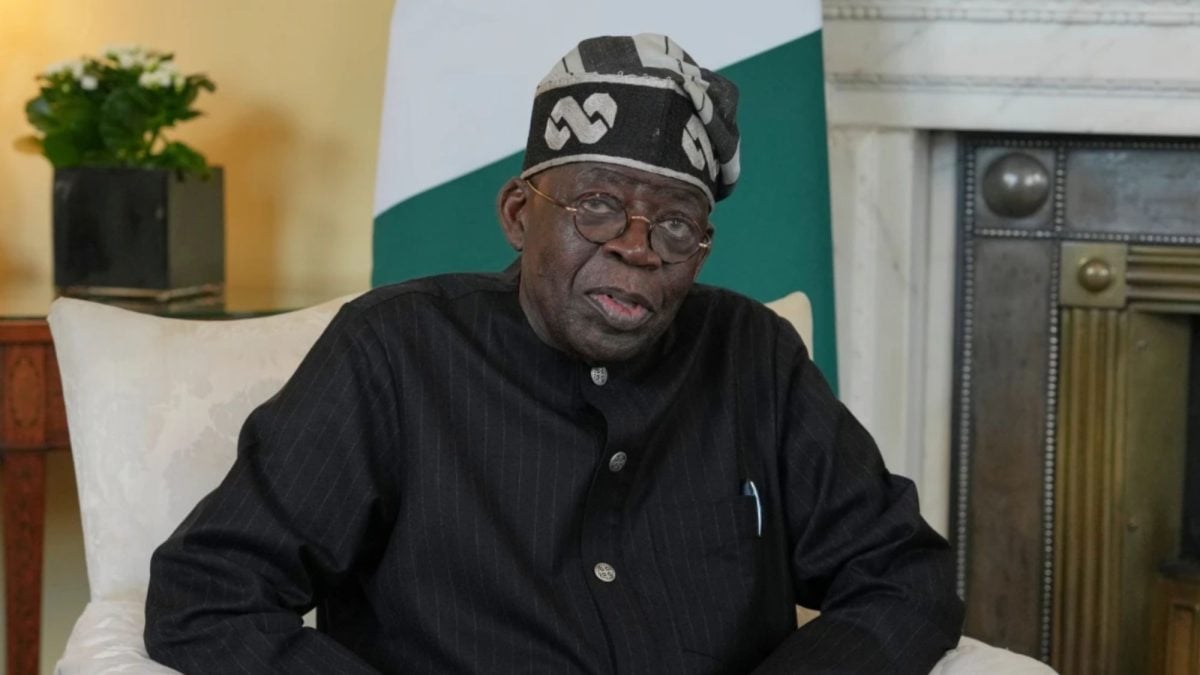
The October heat hung heavy over Abuja’s Eagle Square as Nigeria marked its 66th Independence Day, a day traditionally draped in green-and-white bunting and the sound of military bands. Yet beneath the official pomp, a different rhythm pulsed through the city—the weary tread of traders hauling sacks of garri whose prices had doubled in months, the hollow click of empty purses in market stalls where onions now cost more than meat, the quiet desperation in a mother’s eyes as she calculated how far N500 would stretch for her children’s breakfast. President Bola Tinubu stood before the nation, his voice amplified across crackling radios and flickering televisions, declaring not celebration but recalibration: the era of harsh economic medicine was over, he proclaimed, and the time for shared prosperity had begun. “Our priority is to bring down the cost of living,” he stated, his words landing like a promise and a challenge alike against the backdrop of a nation where hope had, as he himself admitted, once felt “nearly gone.” He framed this shift not as a retreat from reform but as its necessary evolution—the painful excision of economic cancer complete, now turning to stitch the wounds and feed the recovering body. Yet as his speech echoed, counter-narratives surged from opposition corners: the PDP likening his administration to Pharaoh chasing Nigerians through a Red Sea of pain, ADC chiefs decrying metastasizing corruption, and Atiku Abubakar vowing to reverse subsidy removals if elected in 2027.
The air thrummed with the central question hanging over Nigeria’s future—had the bitter cure finally worked, or was the patient merely learning to endure deeper wounds while chasing a mirage of abundance?
[The Anatomy of a Promise]: Reform's Scars and Sprouts
Tinubu’s address laid bare a strategic pivot forged in the crucible of three years of agonizing adjustment, a narrative meticulously constructed from the Leadership Newspaper’s report of his speech and reinforced by Blueprint Newspapers’ coverage of his “no looking back” exhortation. He presented hard data as trophies of endurance: Nigeria’s economy had grown by more than four percent in 2026, driven by both oil and non-oil sectors; foreign reserves had been painstakingly rebuilt after depletion; inflation, though still biting, had declined substantially from its terrifying peak; and crucially, non-oil export revenue had shattered records in 2025, exceeding $6 billion—a figure he invited international observers, journalists, and NGOs to verify. These weren’t abstract statistics to him but proof that the structural reforms—removing fuel subsidies, unifying the exchange rate, tightening monetary policy—had confronted, rather than created, the economy’s deep-seated weaknesses. “For too long, Nigeria’s leaders chose morphine while praying for a miracle that never came,” he intoned, invoking the cancer analogy that had become his administration’s leitmotif, arguing previous governments merely dulled symptoms while the disease spread. Now, he asserted, the emergency phase was over; the focus must shift to ensuring macroeconomic gains trickled down to the market stall and the kitchen table. This transition, he insisted, required attacking the root of high prices: the cost of producing and moving goods.
His vision was granular and infrastructural—expanding mechanised irrigation and dry-season farming to boost agricultural yields, improving access to seeds and fertiliser, increasing farm mechanisation, investing in cold storage to reduce post-harvest losses, and upgrading roads, railways, and ports to slash transportation bottlenecks. The logic, he argued with almost mathematical simplicity, was incontrovertible: when farmers produce more cheaply with less waste, when manufacturers pay less for reliable electricity, when trucks reach markets faster amid fair competition, those savings inevitably lower the final price Nigerians pay for bread, beans, or fuel. Prosperity, he stressed, wasn’t merely about cheaper goods but also productive employment—a nuanced acknowledgment that affordability alone couldn’t sustain dignity without meaningful work.
[The Red Sea Mirage]: Moses, Pharaoh and the Cost of Bread
Yet the opposition’s rebuttal, vividly chronicled across multiple Politics Nigeria articles, painted a landscape where Tinubu’s promised prosperity remained a cruel illusion for millions, transforming his own biblical metaphors into weapons of critique. The PDP faction led by Tanimu Turaki didn’t merely disagree; they inverted his narrative with searing irony, declaring, “So clearly, Tinubu and the APC are the Pharaoh who is chasing Nigerians.” They argued that by casting himself as Moses leading the nation out of economic hardship, Tinubu had reversed reality—Nigerians weren’t reaching the promised land of Canaan but were still trudging through a “Red Sea of economic pain” exacerbated, not alleviated, by his policies. Their evidence was visceral and specific: citing National Bureau of Statistics data, they highlighted food inflation at 19.57 percent in August 2026, insisting this represented continued, brutal increases in the cost of staples despite a nominal slowdown in overall inflation. They pointed to the lived reality of households spending enormous shares of income on food, where rising prices for eggs, bread, and garri forced families to skip meals or delay medical care. Furthermore, they challenged the administration’s claims on borrowing costs, noting that while the Monetary Policy Rate had been reduced from 26.5 to 23 percent, businesses still struggled to access affordable credit, undermining the very production-cost reductions Tinubu championed.
The PDP framed Tinubu’s “no looking back” directive as a deliberate evasion, accusing him of fearing comparisons to pre-2023 conditions when, they claimed, many Nigerians felt better off—a sentiment echoed with stark personal testimony by ADC chieftain Kenneth Okonkwo. Okonkwo didn’t just criticize; he presented a ledger of deterioration under Tinubu’s watch: petrol jumping from approximately N195 per litre at the administration’s start to a staggering N1,500; the naira plummeting from N450 to the dollar to N1,400; public debt ballooning from N77 trillion to N166.6 trillion. He decried worsening insecurity, alleging Tinubu spent over 290 days abroad in three and a half years, while transportation costs became “horrible,” electricity supply “absent,” and poverty “ravaging.” For Okonkwo and the ADC, the solution wasn’t doubling down on current policies but a radical political course correction—voting out the APC in 2027 to rescue Nigeria from what he termed an “inevitable cancerous demise,” even endorsing Atiku Abubakar as the antidote to Tinubu’s leadership style. This wasn’t mere policy disagreement; it was a fundamental clash over whether the reforms had been necessary surgery or self-inflicted wounds deepening the nation’s suffering.
[The Marketplace Ledger]: Wages, Wheels and the Weight of Wait
Atiku Abubakar’s Independence Day message, as recorded by Politics Nigeria, brought the macroeconomic debate down to the most intimate and urgent level—the daily arithmetic of survival—offering a counter-narrative where Tinubu’s growth statistics felt utterly disconnected from street-level reality. The former Vice President didn’t abstractly critique; he presented concrete, devastating comparisons that exposed the erosion of purchasing power despite nominal wage increases. “In April 2023,” Atiku declared, “a N30,000 minimum wage could buy about 118 litres of petrol. Today, N70,000 buys just 50 litres.” This stark metric—where even a more than doubling of wages bought less than half the fuel—illustrated how inflation and currency depreciation had hollowed out earnings, forcing families into impossible choices: skipping meals, delaying medical treatment, or borrowing desperately to bridge the gap until payday. He tied this directly to the fuel subsidy removal, arguing Tinubu had inflicted shock without adequate protection, leaving “the pain [with] an address in every home” three years later. Beyond fuel, Atiku highlighted the relentless pressure on food costs, citing specific increases in basics like eggs and bread that squeezed household budgets already strained by soaring transportation expenses—a point resonating with the PDP’s focus on food inflation as the most immediate hardship. He also challenged the credibility of Tinubu’s promised transport fare reductions, noting with biting irony that on October 1, 2026—the very day of the promise—Nigerians “cannot board an announcement,” highlighting a perceived gap between rhetoric and tangible relief.
Atiku’s alternative vision, should he win the 2027 election, centered on reinstating a carefully designed subsidy: a capped, budgeted production subsidy tied exclusively to verified domestically refined fuel (including modular refineries), explicitly excluding imported petrol to prevent leakage, with transparent, independently audited costs and payments. He framed this not as a return to “addictive subsidies” but as a targeted shield for consumers, arguing that without such protection, the benefits of macroeconomic stability—like the foreign exchange market stabilization Tinubu touted—would remain inaccessible to the average Nigerian struggling to afford kerosene for cooking or diesel for their generator. For Atiku, the core failure wasn’t the reform itself but the absence of a social contract to cushion its blow, a omission that turned economic necessity into societal trauma.
[Future Implications]: A Blueprint for Bread or a Band-Aid on Bullet Wounds?
As Nigeria stands at this crossroads, the implications of Tinubu’s cost-of-living pivot extend far beyond immediate price tags, touching the nation’s political stability, social cohesion, and long-term economic trajectory. If his production-focused strategy—centred on agricultural mechanisation, infrastructure investment, and reducing logistical friction—successfully lowers the fundamental cost of bringing goods to market, it could validate the administration’s core thesis: that shared prosperity emerges not from redistributing scarcity but from expanding abundance through efficiency. Success here might cement the APC’s electoral prospects in 2027, transforming the “age of reform” into a durable era of trust, potentially easing social tensions fueled by unaffordability and reducing the appeal of populist subsidy promises. Yet significant risks loom. The World Bank and IMF, while often cited by Tinubu’s team as validators of reform progress, consistently warn that Nigeria’s growth remains fragile and unevenly distributed; without concurrent, massive job creation—particularly in agro-processing and manufacturing linked to these infrastructure projects—lower production costs may simply boost corporate margins without significantly cutting retail prices, leaving the average trader in Mile 12 Market or the mother in Maiduguri unchanged. Furthermore, the opposition’s potent narrative, fueled by undeniable realities like soaring debt levels and persistent insecurity, could gain irreversible traction if inflation, especially food inflation, fails to retreat substantively toward single digits by late 2027—a scenario made more likely by climate volatility affecting harvests or global commodity shocks.
Atiku’s pledge to restore a targeted subsidy, while politically potent, carries its own dangers: reintroducing any form of price control risks re-creating the distortions and corruption Tinubu blamed for Nigeria’s original malaise, potentially triggering capital flight or undermining the hard-won exchange rate stability. Ultimately, the test won’t be in speeches or statistics alone but in whether the price of a measure of rice at Bodija Market or the cost of transporting tomatoes from Kano to Lagos demonstrably, persistently falls—not as a fleeting dip tied to seasonal harvests, but as a structural shift born of cheaper production and smoother movement. If that happens, Tinubu’s gamble might just yield the harvest he promises. If not, the Red Sea may yet reveal itself not as a path to freedom, but as an endless wilderness where the only certainty is the gnawing hunger of a nation waiting for bread that never arrives.
📰 Sources Cited
- Leadership Newspaper: My Priority Now To Bring Down Cost Of Living For Nigerians — Tinubu
- Politics Nigeria: You’re The Pharaoh Chasing Nigerians – PDP Tells Tinubu
- Politics Nigeria: APC Is Nigeria’s Cancer – Kenneth Okonkwo Tackles Tinubu
- Politics Nigeria: I’ll Bring Down Fuel, Food, Energy Costs If Elected – Atiku
- Blueprint Newspapers: ‘No looking back,’ Tinubu tells Nigerians at 66th Independence anniversary
- Politics Nigeria: Reject Those Promising Subsidy Return – Tinubu Tells Nigerians
0 Comments
Sign in to commentNo comments yet. Be the first to share your thoughts!