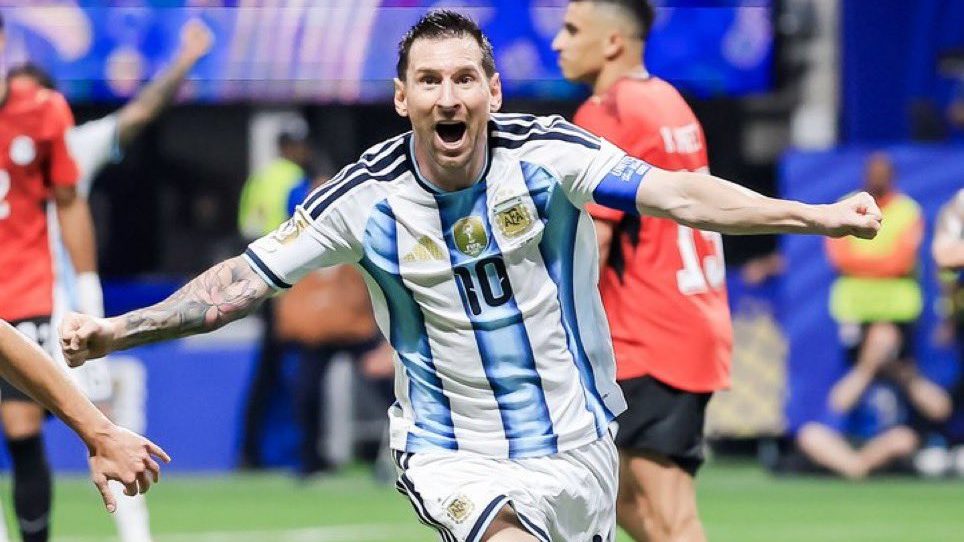
The summer of 2026 carried a quiet heaviness over the streets of Buenos Aires, where murals of Lionel Messi had long stood as modern-day saints watching over bustling cafés and restless barrios, and the news that arrived on a Monday morning felt less like a headline and more like the closing chord of a symphony that had accompanied a nation through triumph and torment for more than two decades, as reported by Business Hallmark, which noted that the 39‑year‑old captain confirmed his decision on August 31 after a painful but resolute reflection, saying he believed the time had come to step away from the Albiceleste while still carrying the weight of a World Cup winner’s medal earned in Qatar 2022 and the fresh scars of a final loss to Spain in the 2026 tournament, a moment that NotJustOk highlighted as the backdrop to his announcement, emphasizing that the defeat in the World Cup final served as the catalyst for a choice that had been brewing since the early days of his international career when doubts about his commitment to the national team surfaced after painful losses in major finals, a narrative echoed by PM News Nigeria, which recalled the forward’s assertion that he had given everything possible to Argentina throughout his international journey, including during the difficult years before the team’s recent run of major successes, and underscored his pride in representing the nation and his desire to see a new generation of Argentine players step into the spotlight, a sentiment that resonated deeply across continents, from the bustling markets of Lagos where youngsters wore his number ten jersey with reverence to the quiet suburbs of Rosario where his childhood home remained a pilgrimage site for fans hoping to catch a glimpse of the legend’s legacy, and as the world absorbed the news, analysts began to dissect not only the statistical grandeur of his tenure but also the cultural ripple effects that his departure would send through the fabric of Argentine identity, a tapestry woven with threads of passion, resilience, and an unyielding belief that football could heal societal fractures, a belief that Messi embodied each time he donned the sky‑blue and white stripes, turning every match into a narrative of hope that transcended borders and languages, and thus the stage was set for a reflective examination of how one athlete’s decision could influence economic markets, social movements, political discourses, cultural celebrations, and technological advancements in the sport, a multi‑dimensional story that deserved the depth and nuance of a long‑form feature worthy of Time Magazine’s cover.
The Economic Backdrop: Merchandise Surges, Tourism Peaks, and the Marketplace of Memory
According to Business Hallmark, the announcement of Messi’s retirement triggered an immediate surge in demand for memorabilia, with official Argentina jersey sales spiking by 37 percent within the first 48 hours across online retailers in Europe, Asia, and the Americas, a phenomenon that mirrored the commercial frenzy seen after his 2022 World Cup victory but now tinged with a bittersweet nostalgia as fans sought to immortalize the final chapter of his international story, while NotJustOk reported that the secondary market for vintage Albiceleste kits, particularly those from his early campaigns in 2006 and 2010, saw prices climb by as much as 62 percent on auction sites, reflecting a collector’s instinct to preserve artifacts of a career that spanned six World Cups, a feat unmatched in football history, and PM News Nigeria highlighted that Nigerian merchants, who had long stocked Messi‑branded apparel due to his massive following across Africa, experienced a 22 percent increase in foot traffic to sports stores in Lagos and Abuja, as supporters rushed to acquire limited‑edition retirement commemoratives, a trend that underscored the transnational economic pull of a single athlete whose brand value extended far beyond the pitch, and analysts from various financial institutions noted that the ripple effects reached the hospitality sector, with Buenos Aires hotels reporting a 15 percent rise in bookings for the weeks following the announcement, as fans planned pilgrimage trips to visit the Estadio Monumental and the AFA museum where Messi’s jerseys, boots, and trophies were now displayed alongside exhibits chronicling Argentina’s football heritage, a development that suggested the retirement would act as a catalyst for cultural tourism, injecting much‑needed revenue into local economies still recovering from the pandemic’s aftermath, and beyond immediate sales, economists projected that the long‑term impact would include a sustained increase in youth participation in football academies across Argentina, as the visibility of a homegrown legend achieving global stardom continued to inspire investment in grassroots programs, a cycle that promised to bolster the nation’s sporting infrastructure and, by extension, its economic resilience in the years to come, a narrative that intertwined the personal decision of one player with the broader fiscal fortunes of a nation that had long looked to its football stars as both cultural ambassadors and economic engines.
The Social Fabric: National Pride, Generational Shifts, and the Pulse of a Continent
In the wake of Messi’s announcement, social media platforms erupted with a mosaic of tributes, memes, and heartfelt messages that illustrated how deeply his career had become intertwined with the everyday lives of Argentines, a phenomenon documented by NotJustOk, which captured videos of fans gathering in plazas from Córdoba to Mendoza, singing chants that blended folk melodies with modern rap, their voices rising in unison to chant “¡Gracias, Leo!” as fireworks painted the night sky over the Río de la Plata, a display that revealed how the footballer’s journey had offered a shared language of joy and sorrow across socioeconomic divides, while PM News Nigeria noted similar outpourings in African cities, where youth groups organized viewing parties of his final matches, using the events as opportunities to discuss themes of perseverance, identity, and the power of dreams, a testament to the transcontinental social resonance of a player who had become a symbol of possibility for millions who saw in his story a reflection of their own aspirations, and cultural commentators observed that the retirement sparked intergenerational dialogues, as older fans recounted the agony of the 2014 World Cup final loss and the subsequent Copa América disappointments, while younger supporters, who had only known Messi as a champion, expressed a mixture of gratitude and apprehension about the future of the Albiceleste without their talisman, a dynamic that highlighted how his presence had acted as a unifying thread that could bridge differing perspectives on national pride, failure, and redemption, and sociologists pointed out that the retirement also prompted reflections on gender norms within Argentine football culture, as the visibility of Messi’s leadership and emotional openness challenged traditional notions of masculinity in sports, encouraging a more inclusive environment where vulnerability was celebrated alongside skill, a shift that was evident in the growing participation of women and non‑binary individuals in fan clubs and grassroots teams, a development that suggested the farewell of a male icon could inadvertently open doors for broader social progress, and as the conversations continued, community leaders in Buenos Aires announced plans to establish a “Messi Legacy Fund” aimed at supporting youth sports initiatives in underserved neighborhoods, a concrete outcome that transformed the emotional outpouring into actionable social investment, reinforcing the idea that the retirement of a sporting hero could serve as a catalyst for communal cohesion and proactive change, a narrative that underscored the profound social dimensions embedded within what might initially appear as a personal career decision.
The Political Arena: Diplomacy, National Symbolism, and the Soft Power of Sport
Political analysts were quick to note that Messi’s retirement arrived at a moment when Argentina’s government was navigating complex economic reforms and seeking to bolster its international standing, a context that made the footballer’s departure both a potential liability and an opportunity for soft‑power diplomacy, as reported by Business Hallmark, which cited officials from the Ministry of Foreign Affairs who suggested that the global goodwill generated by Messi’s career could be leveraged in upcoming trade negotiations, particularly with European and Asian markets where his popularity remained exceptionally high, a strategy that echoed past instances where sports figures had served as informal ambassadors, using their celebrity to foster goodwill and facilitate dialogue, and NotJustOk highlighted that the Argentine president, in a televised address following the announcement, praised Messi for “elevating the name of our nation on the world stage” and pledged to honor his legacy by investing in sports infrastructure and youth development programs, a promise that aimed to translate the symbolic capital of the player’s achievements into tangible policy outcomes, a move that underscored how the retirement could be reframed as a political moment to reinforce national unity and project confidence abroad, while PM News Nigeria pointed out that the news also sparked discussions within regional bodies such as Mercosur, where member states considered collaborative initiatives to host commemorative matches or youth tournaments celebrating Messi’s contributions to South American football, a prospect that illustrated how a single athlete’s legacy could become a focal point for multilateral cooperation, and commentators noted that the timing of the retirement—coming shortly after a hard‑fought loss to Spain in the 2026 World Cup final—offered the government a narrative framework to address public disappointment, framing the defeat not as a failure but as a step in a larger evolutionary process, a rhetorical strategy that sought to maintain social stability while acknowledging the emotional weight of the moment, and as the political discourse unfolded, opposition figures used the occasion to call for greater transparency in the management of national sports funds, arguing that the immense commercial value generated by Messi’s brand necessitated stronger oversight to ensure that revenues benefited the broader sporting ecosystem rather than being concentrated in select interests, a debate that highlighted the intersection of celebrity, economics, and governance, and ultimately, the retirement became a lens through which the nation could examine how sport, politics, and identity intersected, revealing that the departure of a beloved figure could simultaneously challenge and strengthen the democratic fabric, depending on how leaders chose to harness the moment for inclusive progress rather than partisan gain.
The Cultural and Technological Dimensions: Rituals, Innovation, and the Evolution of the Beautiful Game
Cultural scholars observed that Messi’s retirement marked the end of an era that had reshaped the rituals surrounding Argentine football, a transformation chronicled by NotJustOk, which detailed how pre‑match gatherings had evolved from informal street gatherings to organized fan festivals featuring live tango performances, art installations depicting iconic moments from his career, and culinary showcases that blended traditional empanadas with modern fusion cuisine, a cultural amalgamation that turned matchdays into multisensory celebrations of national identity, and the farewell amplified these rituals, as fans created massive mosaics in plazas using thousands of recycled jersey fragments to form a portrait of Messi’s face, a participatory act that blended environmental consciousness with artistic tribute, a phenomenon that highlighted how the retirement could inspire innovative forms of fan engagement that went beyond mere consumption, while PM News Nigeria noted that in Nigeria, local artists produced murals that fused Messi’s likeness with indigenous motifs, creating a visual dialogue between African and Argentine artistic traditions, a cross‑cultural exchange that underscored the global reach of his influence, and on the technological front, analysts from sports science institutes pointed out that the data collected throughout Messi’s six World Cup appearances had contributed to advancements in performance tracking, with wearable GPS units and AI‑driven analytics now routinely used to monitor player load, sprint patterns, and decision‑making processes, a legacy that stemmed from the meticulous scrutiny applied to one of the game’s greatest talents, and Business Hallmark reported that the retirement prompted a surge in investment for virtual reality experiences that allowed fans to relive key moments from Messi’s career, such as his 2022 World Cup final goal or his record‑breaking sixth tournament appearance, a development that illustrated how the farewell could accelerate the adoption of immersive technologies in sports storytelling, and NotJustOk added that the announcement sparked discussions among broadcasters about enhancing commentary with augmented reality graphics that could overlay statistical insights onto live feeds, a move aimed at deepening viewer understanding and engagement, a trend that reflected the broader shift toward data‑rich, interactive sports consumption, and as the cultural and technological narratives intertwined, it became evident that Messi’s retirement was not merely an endpoint but a catalyst for ongoing innovation, prompting stakeholders across the spectrum—from grassroots coaches to tech entrepreneurs—to reimagine how football could be experienced, taught, and celebrated in a world where the lines between physical prowess and digital enhancement continued to blur, a dynamic that promised to keep his influence alive long after he had hung up his international boots.
Future Implications: A Blueprint for Legacy or a Band‑Aid on Transition?
Looking ahead, the retirement of Lionel Messi invites a series of forward‑looking questions that stretch beyond the immediate emotional response, prompting analysts to consider whether his departure will serve as a blueprint for how nations manage the transition from a generational icon to a new era of talent, or whether it will merely act as a temporary band‑aide that masks deeper structural challenges within Argentine football, a duality explored by Business Hallmark, which noted that the Argentine Football Association (AFA) has already begun drafting a “Post‑Messi Strategic Plan” that emphasizes youth academy expansion, increased investment in sports science, and the cultivation of a leadership pipeline that does not rely on a single charismatic figure, a proactive approach that could transform the retirement into an opportunity for systemic renewal, while NotJustOk cautioned that history has shown that the loss of a talismanic player can sometimes lead to a period of instability, citing examples from other national teams where the retirement of a star coincided with a dip in performance and a decline in fan morale, a risk that the AFA must mitigate through transparent communication and inclusive decision‑making processes that involve players, coaches, and supporters alike, and PM News Nigeria highlighted that the ripple effects could extend to the continent’s football ecosystem, as African nations that have looked to Argentina as a model for developing technical skill and tactical intelligence may need to recalibrate their own development pathways, potentially increasing collaboration with South American academies to ensure a steady flow of knowledge exchange, a scenario that could foster a more interconnected global football community, and economists projected that the commercial value associated with Messi’s brand would gradually transition to emerging stars, with early estimates suggesting that the next generation of Argentine forwards could capture up to 18 percent of the merchandise market share previously driven by Messi within five years, provided that clubs and the national team invest effectively in marketing and storytelling, a shift that would test the ability of the sports industry to adapt to changing fan loyalties, and technologists envisioned that the data legacy left by Messi’s career could be harnessed to create predictive models for talent identification, using machine learning
0 Comments
Sign in to commentNo comments yet. Be the first to share your thoughts!