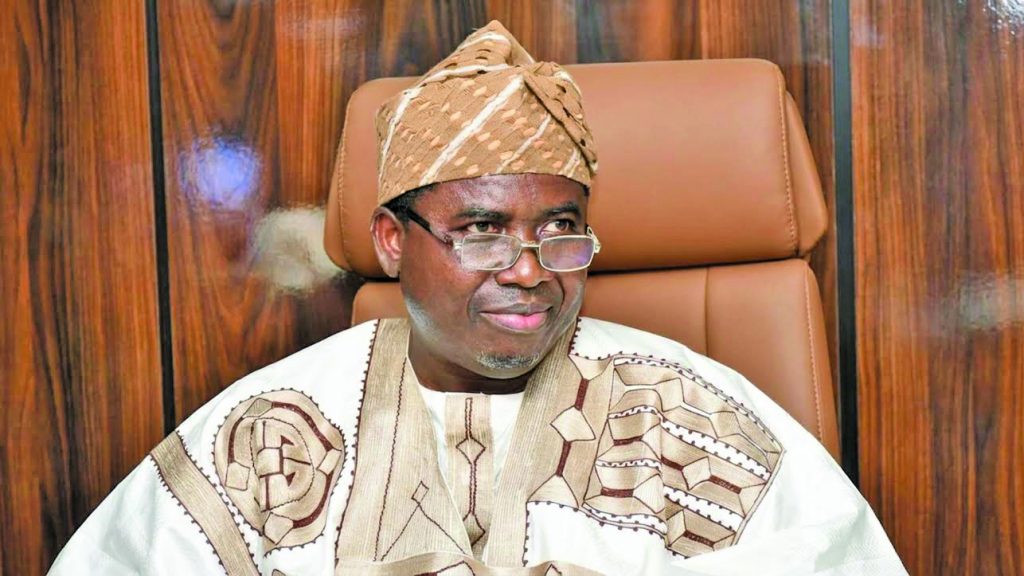
The air in Abuja’s conference hall hummed with a mixture of anticipation and apprehension as the clock ticked down to January 16, 2027, a date that now looms just 114 days away on the national calendar. Independent National Electoral Commission Chairman Professor Joash Amupitan, his robes a sober contrast to the vibrant banners of democracy adorning the walls, addressed a gathering of security officials, civil society leaders, and journalists with a voice that carried both the weight of constitutional duty and the urgency of unmet needs. He spoke not merely as an administrator but as a steward of a process that, in his words, must reflect the collective will of a nation stretched across three tiers of government, from the presidential villa to the smallest polling unit in a remote village. The forum, organized by West Africa Democracy Radio under its “Voices for Democracy and Freedoms in West Africa” initiative, had become a crucible where progress reports met stark warnings, where the commission’s meticulous timetable brushed against the persistent shadows of funding shortfalls, trust deficits, and communication gaps. As the Director of Planning and Monitoring, Mrs Helen Ajayi, detailed the coordinated rollout of activities across state offices and the 774 local government areas, the audience sensed that the success of the forthcoming election hinged not only on technical readiness but on the willingness of the state to underwrite that readiness with tangible resources.
In that moment, the narrative of Nigeria’s democratic journey shifted from a story of procedural compliance to one of financial resolve, setting the stage for a deeper examination of what it truly costs to safeguard the ballot.
The Pulse of Preparation: Funding Gaps and the March Toward 2027
According to Vanguard News, the commission had already translated its electoral timetable into a synchronized program that touched every department, directorate, state office, and local government area, with voter registration exercises completed and the display of the preliminary register for claims and objections concluded, while the generation of the PDF register for nationwide display remained ongoing. Yet, as Dr Abubakar Muhammad Kudu, a board member of WADR, warned in his keynote address, the progress recorded by INEC was counterbalanced by lingering gaps in funding, communication, and public trust that could erode the very foundations of credibility if left unattended. He emphasized that the commission must continuously educate voters, strengthen transparency, and ensure that funds released from the Consolidated Revenue Fund trickle down to the implementation chain without bureaucratic bottleneck, a point echoed by Amupitan himself when he noted that although the commission’s funding is constitutionally provided as a first‑line charge, the scale of its responsibilities often forces it to contend with what is merely affordable rather than what is ideal. The chairman’s candid admission that “sometimes, it is not what you would like to do that you are able to do because of financial constraints” resonated throughout the hall, underscoring a tension between aspiration and allocation that has plagued Nigerian elections for decades.
This tension is not merely fiscal; it is deeply political, as the ability to deploy security agencies, procure sensitive materials, and conduct voter education hinges on timely disbursements that, when delayed, can compromise the inclusiveness of the process, particularly for women, youths, persons with disabilities, and citizens in hard‑to‑reach communities whom the commission has pledged to prioritize in its intensified public enlightenment campaign. Thus, the pulse of preparation beats strongest when the nation’s purse strings are loosened enough to match the ambition of its democratic ideals.
The Ledger of Logistics: Deploying Personnel and Materials Across the Nation
Logistics, as Amupitan stressed in his address at the sixth Conference and Retreat for Senior Police Officers in Owerri, Imo State, is the invisible scaffolding that upholds the visible drama of election day, and adequate funding is particularly critical for the deployment of personnel and electoral materials to local government areas, wards, registration areas, and polling units. The chairman explained that INEC’s mandate extends beyond presidential and National Assembly contests to include governorship, state Houses of Assembly elections, voter registration, and the registration of political parties, each layer adding complexity to the logistical calculus that must be solved before ballots are cast. He pointed out that even where security agencies succeed in maintaining peace, inadequate logistics could still undermine the conduct of an election, a scenario that has played out in past cycles when delayed delivery of sensitive materials forced polling units to open late or operate under makeshift arrangements. The Inter‑Agency Consultative Committee on Election Security (ICCES), which began as a coordinating arrangement after the 2011 general election following concerns over post‑election violence, has evolved into a structured mechanism that now operates at federal, state, and local government levels, with the Inspector‑General of Police participating nationally, commissioners of police at the state level, and divisional police leadership represented locally.
Amupitan urged stronger coordination among these bodies ahead of 2027, noting that the police remain the lead agency in election security and that the experience of recent off‑cycle elections should be harnessed to sharpen intelligence gathering, streamline logistics, and fortify inter‑agency synergy. This logistical imperative is not merely an administrative concern; it is a social contract that promises every eligible Nigerian, whether in the bustling markets of Lagos or the pastoral plains of the Northeast, that their vote will be counted under conditions of order and dignity.
The Trust Equation: Communication, Transparency, and Public Confidence
Trust, the third pillar highlighted by experts at the WADR forum, is as essential as funding and logistics, for without public confidence the most securely funded election can falter under the weight of skepticism and disengagement. Dr Kudu urged the incoming leadership of the commission to maintain neutrality, ensure that funds were released down the implementation chain, and strengthen communication with stakeholders, a call that found resonance in the remarks of veteran journalist Mr Topsy Gimba and public policy analyst Mr Jide Ojo, who both urged the media to hold political actors accountable to the electorate. The commission’s own voter education strategy, as outlined by Mrs Ajayi, envisages an intensified public enlightenment campaign covering voting procedures, accreditation, the use of the Bimodal Voter Accreditation System (BVAS), election‑day procedures, and PVC collection, with particular attention to women, young people, persons with disabilities, and citizens in hard‑to‑reach communities. Yet, the success of such a campaign depends on the commission’s ability to counteract the rising tide of disinformation, deepfakes, and AI‑driven propaganda that threaten to distort reality and erode faith in the electoral process. Amupitan’s appeal to political actors — “you cannot love democracy and hate accountability” — serves as a reminder that trust is a two‑way street, demanding not only transparent conduct from the election body but also responsible behavior from those who seek office.
In this delicate equation, every naira spent on voter outreach, every press briefing that clarifies procedure, and every transparent release of result data becomes an investment in the social capital that sustains democracy beyond a single election day.
The Technological Frontier: BVAS, IReV, and the Battle Against Disinformation
Technology stands at the forefront of INEC’s efforts to modernize the electoral process, with the Bimodal Voter Accreditation System (BVAS) and the INEC Result Viewing (IReV) portal described by Dr Kudu as critical tools that have become important elements of the electoral experience for younger Nigerians who demand speed, transparency, and verifiability. The commission’s focus on improving BVAS and deploying the EC8A result form aims to strengthen end‑to‑end result visibility and reduce opportunities for manual interference, a technical upgrade that could significantly bolster confidence if adequately funded and uniformly implemented across the nation’s polling units. However, the very sophistication of these systems also creates new vulnerabilities, as malicious actors seek to exploit digital platforms to spread false narratives, manipulate perceptions of fraud, or undermine the integrity of the result transmission chain. The chairman’s acknowledgment that the commission must guard against artificial intelligence‑driven disinformation and deepfakes reflects an awareness that the battlefield has expanded from the physical polling station to the virtual realm of social media and messaging apps. To counter this, INEC has pledged to work with the media to promote conflict‑sensitive reporting, fact‑checking, and responsible dissemination of information, a collaborative effort that requires both financial resources for media outreach and institutional capacity for rapid response.
The technological dimension, therefore, is not merely about acquiring gadgets; it is about building a resilient ecosystem where innovation serves integrity, and where every investment in cybersecurity, data encryption, and public digital literacy pays dividends in the form of a credible, tamper‑evident election.
Future Implications: A Blueprint for Electoral Resilience or a Band‑Aid on Bleeding Institutions?
Looking ahead, the convergence of funding, logistics, trust, and technology presents Nigeria with a stark choice: either to treat the 2027 election as a catalyst for systemic reform that builds lasting electoral resilience, or to resort to stop‑gap measures that patch over deep‑seated weaknesses only to see them resurface in the next cycle. Amupitan’s framing of election expenditure as a collective national responsibility — because INEC conducts elections affecting the three tiers of government — invites a broader conversation about fiscal federalism, accountability, and the role of the Consolidated Revenue Fund in safeguarding democratic processes. If the heeds of experts like Dr Kudu are followed, with sustained funding, transparent communication, and robust inter‑agency coordination through ICCES, the commission could emerge from 2027 with a strengthened institutional capacity that endures beyond a single election. Conversely, if financial constraints continue to dictate what is merely affordable rather than what is necessary, the nation risks perpetuating a cycle where each election is greeted with cautious optimism, only to be tempered by reminders of unfinished business. The ultimate implication, therefore, extends beyond the immediate mechanics of vote counting; it touches the very soul of Nigerian democracy, asking whether the country will invest in the foundations of liberty or merely decorate the edifice while the cracks widen beneath the surface.
The answer, as the nation counts down those final 114 days, will be written not just in the tally of ballots, but in the ledger of choices made today about what price Nigeria is willing to pay for a free, fair, and credible future.
📰 Sources Cited
- Vanguard News: 114 Days to 2027 Polls: INEC lists progress, experts flag funding, trust gaps
- THISDAY: Amupitan: Adequate Funding Critical to the Security and Success of 2027 General Poll
- THISDAY: 2027: Adequate Funding Critical to Election Security, Success, Says Amupitan
- Nigerian Tribune: 2027: Election security depends on adequate funding — INEC chairman
- Vanguard News: 2027: INEC seeks adequate funding, 4 months to elections
- Peoples Gazette: 2027: Adequate funding key to credible elections, says INEC
- PM News Nigeria: 2026 Elections: INEC raises alarm over funding needs
- Sun News Online: Security in 2027 election will be determined by adequate funding, says INEC chairman
- Politics Nigeria: INEC Chairman Demands More Funding Ahead Of 2027 Elections
- TVC News: 2027: INEC Chairman Says Election Security Depends On Adequate Funding
0 Comments
Sign in to commentNo comments yet. Be the first to share your thoughts!