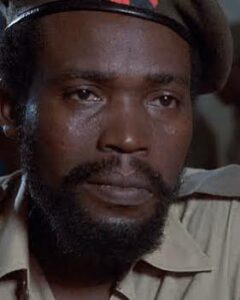
The news arrived on a quiet Wednesday morning in September 2026, when a simple Instagram post from his son Olusoji announced that the veteran thespian Oludotun Baiyewu Jacobs had slipped away at the age of eighty‑four, leaving behind a silence that resonated across auditoriums, living rooms, and the bustling streets of Lagos. As reported by BBC News, the announcement was met with an outpouring of tributes from governors, fellow artists, and ordinary citizens who recalled the deep, commanding voice that had once turned a simple line of dialogue into a moment of national reflection. According to Leadership Newspaper, Jacobs had been more than an actor; he was an elder statesman whose presence on stage and screen had helped to define the very aesthetics of Nigerian storytelling for over five decades. Punch Nigeria noted that his career spanned continents, beginning with the cobblestone stages of Britain’s repertory theatres before returning home to become one of the most recognisable faces of Nollywood’s golden era. The Daily Trust highlighted his roots in Kano, where the vibrant cultural tapestry of the north first sparked his fascination with performance, a fascination that would later be honed at the Royal Academy of Dramatic Art in London. As Channels TV observed, his early television appearances in British series such as The Goodies and The Professionals laid a foundation of discipline and versatility that he would later bring to epic portrayals of kings, chiefs, and patriarchs in Nigerian cinema.
In the years that followed, his work in international films like The Dogs of War, Baby: Secret of the Lost Legend, and Roman Polanski’s Pirates showcased a talent that transcended borders, yet it was his return to Nollywood that cemented his legacy as a bridge between global technique and local narrative. The Leadership Newspaper further emphasized that his deep baritone and regal bearing made him the go‑to choice for roles requiring authority, a choice that shaped audience expectations of leadership on screen for generations. As the nation mourned, the Federal Government’s earlier conferral of the Member of the Order of the Federal Republic in 2011 seemed a poignant reminder of how deeply his artistry had been woven into the fabric of national identity. In the days that followed, social media overflowed with clips of his most iconic scenes, each one a testament to a career that had not only entertained but also educated, inspired, and united a diverse populace through the shared language of story.
The Echoes of a Kingdom: From Kano Streets to RADA Lights
Born on July 11, 1942, in the ancient city of Kano, Oludotun Jacobs entered a world where the call to prayer mingled with the cadence of traditional Hausa storytelling, an environment that, according to Daily Trust, planted the first seeds of his artistic curiosity. His family traced its lineage to the Egba Alake community of Abeokuta in Ogun State, a heritage that Leadership Newspaper described as a wellspring of Yoruba oral tradition, proverbs, and theatrical flair that would later inform his approach to character. As a young boy, he would often gather with elders beneath the baobab trees, listening to tales of heroic kings and cunning tricksters, experiences that Punch Nigeria said deepened his fascination with the performing arts and inspired him to pursue acting professionally. After completing his secondary education, Jacobs made the bold decision to travel to the United Kingdom, where he enrolled at the Royal Academy of Dramatic Art in London, an institution renowned for its rigorous curriculum in voice, movement, and text analysis. According to Channels TV, his time at RADA not only honed his technical skills but also exposed him to a breadth of Western classical and contemporary works, from Shakespeare to Beckett, thereby expanding his artistic vocabulary.
During the 1970s, he began to appear in British television productions, featuring in popular series such as Till Death Us Do Part, The Professionals, The Tomorrow People, and Barlow at Large, roles that Leadership Newspaper noted allowed him to master the subtleties of small‑screen performance while maintaining the gravitas required for stage work. His international film credits soon followed, with notable appearances in The Dogs of War (1980), where he portrayed a mercenary leader with a quiet intensity, Baby: Secret of the Lost Legend (1985), in which he brought warmth and wisdom to a paternal guide, and Roman Polanski’s Pirates (1986), a swashbuckling adventure that showcased his ability to inhabit fantastical realms. As reported by Blueprint Newspapers, these experiences abroad gave him a unique perspective on the universality of human emotion, a perspective he would later bring back to Nigeria to enrich the burgeoning home‑grown film industry. The transition from British stages to Nigerian sets was not merely geographical; it represented a synthesis of disciplined Western technique with the vibrant, improvisational spirit of African storytelling, a blend that, according to Punch Nigeria, became his signature. Throughout this period, he remained deeply connected to his roots, often returning to Kano and Abeokuta to participate in community theatre projects that sought to preserve local dialects and folklore, efforts that Leadership Newspaper highlighted as early examples of his commitment to cultural stewardship.
By the time he settled permanently in Nigeria in the early 1980s, Jacobs carried with him a résumé that spanned continents, yet his heart remained firmly anchored in the soils of his homeland, ready to sow the seeds of a new cinematic era.
The Stage and the Screen: Crafting a Nation's Narrative
Upon his return to Nigeria, Olu Jacobs found an entertainment landscape in flux, a nascent video film industry that was beginning to challenge the dominance of celluloid and television, a shift that Punch Nigeria described as the birth of Nollywood. His arrival coincided with a period when aspiring filmmakers were experimenting with low‑budget productions shot on video, a democratization of media that, according to Leadership Newspaper, allowed stories rooted in everyday Nigerian life to reach mass audiences for the first time. Jacobs quickly became a cornerstone of this movement, lending his theatrical gravitas to productions that needed a figure of authority, whether a wise king in a historical epic or a steadfast patriarch in a contemporary drama. As Channels TV observed, his deep voice and commanding presence turned even the simplest dialogue into a moment of resonance, a quality that made him indispensable to directors seeking to imbue their films with a sense of legitimacy and gravitas. Throughout the 1990s and early 2000s, he appeared in hundreds of productions, a prolific output that, according to Business Hallmark, helped to establish a recognizable visual language for Nollywood, one that audiences could instantly associate with quality and tradition. His roles in films such as Aki na Ukwa, The Figurine, and Phone Swap showcased his versatility, moving seamlessly from comic relief to solemn adjudicator, a range that Punch Nigeria noted underscored his ability to adapt to evolving genre trends while maintaining a core of authenticity.
Beyond acting, Jacobs embraced the entrepreneurial spirit that was beginning to characterize the industry, co‑founding the Lufodo Group with his wife, fellow veteran actress Joke Silva, a venture that Leadership Newspaper described as a multifaceted enterprise encompassing film production, distribution, and performing arts education. Through Lufodo, he helped to professionalize aspects of the industry that had previously been informal, introducing standardized contracts, better remuneration structures, and a focus on quality control that, according to Blueprint Newspapers, contributed to the gradual upliftment of industry standards. The couple’s establishment of the Lufodo Academy of Performing Arts further demonstrated their commitment to nurturing the next generation, offering training in voice, movement, and script analysis that blended Jacobs’s RADA‑honed techniques with indigenous performance traditions, a synthesis that Daily Trust praised as a model for culturally relevant arts education. As the industry grew, so too did Jacobs’s influence on its economic dimensions; experts cited by Punch Nigeria estimated that Nollywood’s annual revenue surpassed six hundred million dollars by the mid‑2010s, a figure bolstered by the presence of seasoned professionals like Jacobs who attracted both local and international investment. His participation in co‑productions with foreign partners also helped to showcase Nigerian stories on global platforms, a cultural exchange that Leadership Newspaper argued enhanced Nigeria’s soft power and positioned Nollywood as a formidable competitor to Hollywood and Bollywood on the world stage.
The Lion's Roar: Honors, Influence and the Business of Nollywood
Recognition for Olu Jacobs’s contributions arrived in waves, each accolade a testament to the depth and longevity of his impact on the arts. In 2007, he received the Africa Movie Academy Award for Best Actor in a Leading Role, an honor that Leadership Newspaper described as a validation of his ability to convey complex emotions with subtlety and power. Four years later, in 2011, the Federal Government conferred upon him the national honor of Member of the Order of the Federal Republic, a distinction that Punch Nigeria noted signified official acknowledgment of his role in shaping Nigeria’s cultural heritage. The Industry Merit Award for outstanding achievement in acting followed at the 2013 Africa Magic Viewers’ Choice Awards, and in 2016 he was celebrated with the Motion Picture Association of Africa’s Lifetime Achievement Award, accolades that, according to Channels TV, collectively underscored a career marked by consistent excellence and reverence from peers. Beyond the trophies, Jacobs’s influence permeated the social fabric of Nigeria; his portrayals of traditional rulers and elders helped to reinforce respect for hierarchical structures in a rapidly modernizing society, a dynamic that Leadership Newspaper observed as both a preservation of cultural values and a gentle commentary on their evolution.
His marriage to Joke Silva, a partnership that spanned over four decades, became a symbol of artistic solidarity, with the couple frequently collaborating on projects that blended their individual strengths into a cohesive creative vision, a union that Punch Nigeria described as one of the most prominent in the nation’s entertainment history. Economically, the Lufodo Group’s ventures extended beyond film production into distribution networks that helped to combat piracy, a challenge that, according to Business Hallmark, had long plagued the industry’s profitability. By investing in legitimate channels and advocating for stronger intellectual property protections, Jacobs and Silva contributed to an environment where creators could reap fair returns on their work, a shift that Leadership Newspaper argued was essential for the sustainable growth of Nollywood. Technologically, Jacobs embraced the transition from analogue to digital, recognizing early on that digital cinematography and online streaming would democratize access to audiences both within Nigeria and across the diaspora. His involvement in workshops at the Lufodo Academy that introduced young filmmakers to editing software, color grading, and sound design helped to bridge the gap between traditional stagecraft and modern post‑production techniques, a forward‑thinking approach that Daily Trust highlighted as vital for keeping Nigerian content competitive in a global marketplace.
As the years advanced, his presence on set became less frequent, yet his mentorship endured; many emerging actors cited him as a guiding figure whose advice on voice modulation, character research, and professional conduct remained invaluable long after he stepped away from the camera.
The Quiet Curtain: Later Years, Health and Legacy
In the twilight of his career, Olu Jacobs retreated from the relentless glare of the spotlight, a decision shaped by both personal preference and the realities of aging, a shift that Leadership Newspaper described as a dignified step back from public life. In 2021, his wife Joke Silva disclosed in an interview that he had been living with dementia with Lewy bodies, a neurodegenerative condition that affected memory, cognition, and motor function, a revelation that prompted an outpouring of sympathy and respect from fans and colleagues alike, as reported by Punch Nigeria. Despite the progression of his illness, those close to him noted that his spirit remained vibrant; he continued to enjoy listening to classic radio dramas, watching old films, and engaging in lively conversations with family about the evolution of storytelling, moments that Channels TV characterized as quiet affirmations of a lifelong passion. His final years were marked by a steadfast commitment to the causes he championed; the Lufodo Academy continued to operate under the stewardship of Silva and their children, offering scholarships and workshops that kept his pedagogical vision alive, a fact highlighted by Blueprint Newspapers as a living legacy that transcended his physical presence. Economically, the academy’s programs contributed to the development of a skilled workforce capable of meeting
📰 Sources Cited
- PM News Nigeria: Sanwo-Olu mourns legendary Nollywood actor, Olu Jacobs
- Google News Nigeria: Legendary Nigerian actor Olu Jacobs dies aged 84 - BBC
- Punch Nigeria: 20 notable films starring late veteran actor Olu Jacobs
- Leadership Newspaper: Life And Times Of Veteran Nigerian Actor Olu Jacobs
- BBC News Africa: Legendary Nigerian actor Olu Jacobs dies aged 84
- Channels TV: Olu Jacobs: A Life On Stage
- Blueprint Newspapers: Olu Jacobs: Life and times of Nollywood veteran
- Punch Nigeria: Life, times of veteran Nigerian actor Olu Jacobs
- Daily Trust: Born in Kano, Trained in Britain: Things to Know About Olu Jacobs
- Business Hallmark: Olu Jacobs, veteran Nollywood actor, dies at 84
0 Comments
Sign in to commentNo comments yet. Be the first to share your thoughts!