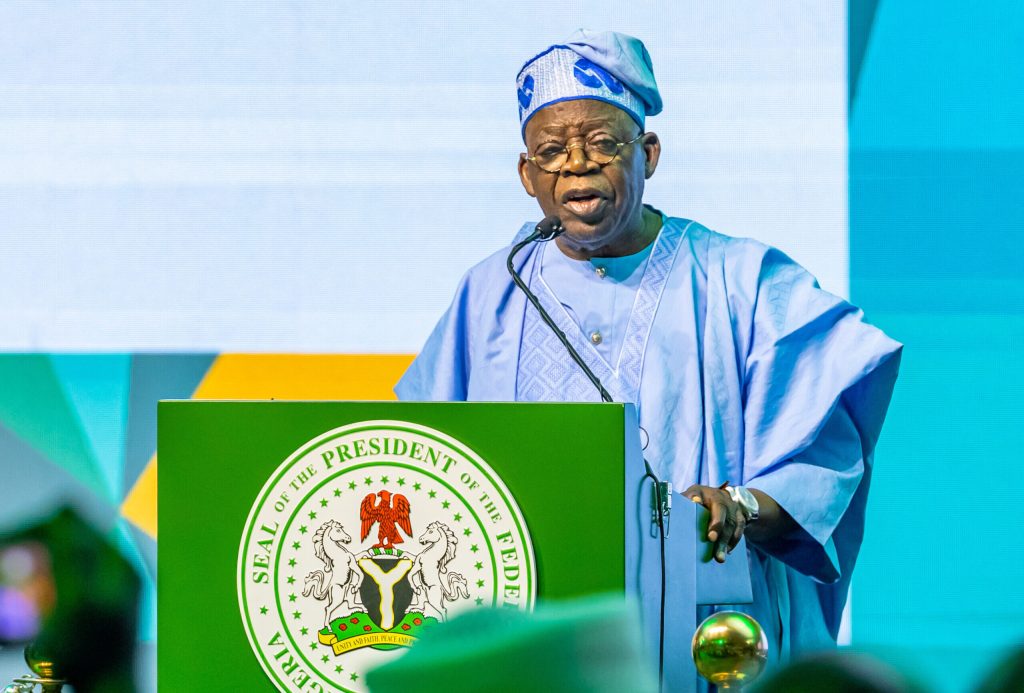
The sun rises over the ancient walls of Kano, casting a golden hue over bustling markets where traders haggle over sacks of rice and the call to prayer echoes from minarets that have stood for centuries, a reminder of the deep‑rooted faith that shapes daily life in Nigeria’s northern heartland. Here, the political landscape is as layered as the historic dye pits, with allegiances shifting like the sands of the Sahel, and the All Progressives Congress finds itself at a crossroads as it prepares to rally behind President Bola Tinubu’s bid for a second term in 2027. In the streets of Doguwa and Tudun Wada, local leaders speak of a newfound camaraderie, insisting that former rivals have folded into a single APC umbrella, a narrative that promises strength through unity. Yet, just a short drive away in the state capital, seasoned party chieftains whisper of lingering fissures, warning that superficial displays of harmony could mask deeper disputes that threaten to undermine the very cohesion they proclaim. This tension between proclaimed solidarity and palpable discord sets the stage for a high‑stakes drama where economic reforms, religious identity, and media narratives intertwine, each influencing whether Kano will deliver the votes Tinubu needs or become a cautionary tale of misplaced optimism.
As the nation watches, the outcome in Kano may well serve as a bellwether for the broader electoral calculus that will determine Nigeria’s democratic trajectory in the coming years.
The Economic Backdrop: Inflation, Reforms, and the Promise of Growth
Nigeria’s economy has been navigating a turbulent sea of policy shifts since Tinubu’s inauguration, with the removal of fuel subsidies and the unification of exchange rates sending ripples through household budgets and prompting analysts to recalibrate growth forecasts. The Economist’s October 2026 report highlighted that despite worsening security challenges and public discontent over rising prices, the president’s incumbency advantage—bolstered by access to party machinery and fiscal resources—could still tilt the scales in his favor, projecting a modest 4.1% GDP expansion for the year as a potential lifeline for his re‑election bid. According to Vanguard News, the same forecast acknowledged that while macro‑economic indicators may appear encouraging, the translation of growth into tangible improvements in Nigerians’ daily lives remains uncertain, a gap that could fuel voter apathy rather than enthusiasm. In Kano, where agriculture and trade dominate livelihoods, the impact of subsidy removal has been felt acutely, with market women reporting higher transport costs and farmers lamenting the price of fertilizer, yet some local officials argue that the anticipated influx of federal infrastructure projects could eventually offset these hardships. Experts note that if the administration succeeds in channeling oil revenues into rural roads, power plants, and agro‑processing zones, the northern belt might experience a delayed but meaningful uplift that could sway undecided voters.
Conversely, critics warn that without vigilant oversight, the benefits of growth may concentrate in urban centers, leaving the agrarian majority disillusioned and susceptible to opposition narratives that frame the reforms as elitist betrayal. The economic dimension, therefore, is not merely a set of statistics but a lived reality that will shape the political calculations of both the APC and its challengers as the 2027 election approaches.
The Social and Cultural Fabric: Faith, Identity, and the Muslim‑Muslim Ticket
In the north, religion is not merely a private conviction but a public language that informs political allegiance, and the prospect of a Muslim‑Muslim ticket has become a potent symbol in the electoral calculus surrounding Tinubu’s candidacy. The Economist’s analysis pointed out that running with a northern Muslim running mate could galvanize substantial support across the region, where shared faith often translates into trust in leadership that promises to uphold Islamic values and protect communal interests. This dynamic is especially salient in Kano, a historic seat of Islamic scholarship where the Emir’s palace remains a focal point of cultural identity and where religious leaders wield considerable influence over grassroots mobilization. Vanguard News noted that the ADC’s rebuttal to the forecast emphasized that Nigerians judge leadership not by abstract projections but by the tangible ability to provide for their families, a metric that intertwines economic performance with social expectations of justice and equity. Meanwhile, local commentators observe that the president’s southern‑western origins, coupled with his northern Muslim running mate, create a delicate balancing act: while his Yoruba heritage may endear him to southwestern voters, the northern electorate may view the ticket as an affirmation of regional inclusion, provided that policies reflect genuine respect for northern aspirations.
Cultural festivals such as the Durbar, which showcase horsemanship and traditional attire, have become informal venues where political messages are exchanged, and community leaders often use these gatherings to gauge public sentiment toward the incumbent administration. The interplay of faith, ethnicity, and cultural pride thus forms a layered backdrop that can either amplify the APC’s outreach or expose fault lines if perceptions of marginalization persist, making the social dimension a critical arena where votes are won or lost.
The Political Arena: Doguwa's Unity Claim vs. Sharada's Warning
Honorable Alhassan Ado Doguwa, the member representing Doguwa/Tudun Wada Federal Constituency, addressed his constituents with a resolute declaration that the APC in Kano State has achieved a newfound unity, insisting that former political opponents have now converged under a single party banner to work tirelessly for Tinubu’s re‑election in 2027. He cited specific figures—Doguwa Local Government Chairman Alhaji Umaru Haruna, retired Air Commodore Salisu Yusuf, and Hajiya Sa’adatu Soja, the Chairperson of Tudun Wada Local Government and Kano State ALGON leader—as emblematic of the broader realignment that has transformed the political atmosphere, describing the convergence as a level playing field where erstwhile rivals now operate as one family. According to Leadership Newspaper, Doguwa framed this consolidation as an opportunity to harness the collective strength of the constituency, arguing that the amalgamation of previously divided forces creates a stronger platform for electoral victory. In stark contrast, Aminu Shehu Uba Sharada, a party chieftain and aide to Senator Orji Uzor Kalu, issued a sobering warning through Sun News Online, asserting that lingering disagreements among Kano APC leaders could jeopardize the party’s prospects if not urgently addressed, and urging President Tinubu and the APC Presidential Campaign Council Director‑General Senator Abdulaziz Yari to intervene before divisions deepen.
Sharada emphasized that presenting a façade of unity might prevent the national leadership from grasping the true extent of internal strife, cautioning that superficial optimism could lead to complacency and ultimately erode the party’s chances. This dichotomy between Doguwa’s optimistic narrative and Sharada’s cautious counsel captures the essential tension within Kano’s APC: the drive to project solidarity versus the imperative to confront underlying disputes that, if left unresolved, could fracture the very coalition the party seeks to present to the electorate. The resolution of this internal debate will likely determine whether Kano delivers a unified bloc of votes or becomes a cautionary example of how unmanaged internal dissent can undermine even the most carefully crafted national strategy.
The Informational Battlefield: Forecasts, Reactions, and the Media Narrative
The media landscape surrounding the 2027 election has become a contested terrain where forecasts, rebuttals, and partisan commentary intertwine to shape public perception, and the recent exchange between The Economist’s projection and the African Democratic Congress’s response exemplifies this dynamic. Vanguard News reported that The Economist’s October 1 analysis suggested that despite economic woes, security challenges, and political opposition, President Tinubu could still prevail, attributing this potential advantage to incumbency benefits and the strategic appeal of a Muslim‑Muslim ticket in the north. In reaction, the ADC’s Presidential Campaign Council, through its Director of Strategic Communication Phrank Shaibu, dismissed the forecast as merely a projection, insisting that “a forecast is not a verdict” and urging Nigerians to look beyond statistical models to the lived realities of income, purchasing power, and family welfare. Shaibu further argued that low voter turnout in previous elections should not be misread as tacit support for the incumbent, pointing instead to apathy, insecurity, distrust, logistical barriers, and skepticism about the efficacy of the ballot as factors that depress participation. This media tug‑of‑war illustrates how competing narratives vie to frame the electoral discourse: one emphasizing structural advantages that could buoy Tinubu’s chances, the other emphasizing democratic agency and the power of the electorate to defy expectations.
Local journalists in Kano have noted that the dissemination of these national debates filters down to community radio stations and social media groups, where traders, farmers, and youth discuss not only the macro‑economic forecasts but also the personal implications of policy changes on their daily livelihoods. The interplay of elite forecasts, grassroots reactions, and media amplification creates a feedback loop that can either reinforce confidence in the incumbent’s prospects or galvanize opposition momentum, making the informational battlefield a decisive factor in shaping the eventual outcome.
Future Implications: A Blueprint or a Band‑Aid?
As Nigeria hurtles toward the 2027 general election, the convergence of economic reforms, religious identity, political maneuvering, and media narratives in Kano offers a microcosm of the broader forces that will determine the nation’s democratic trajectory, prompting analysts to ponder whether the strategies being forged today will serve as a durable blueprint for governance or merely a temporary band‑aid that masks deeper structural challenges. If the APC succeeds in translating the promised 4.1% growth into tangible improvements—such as upgraded rural infrastructure, reliable power supply, and accessible agro‑processing facilities—the party could cement a legacy of inclusive development that strengthens its electoral base not only in Kano but across the northern hinterland, potentially establishing a model for sustainable, growth‑driven politics. Conversely, should the benefits of economic reform remain unevenly distributed, with urban centers capturing the lion’s share of gains while rural communities continue to grapple with rising costs and limited access to services, the discontent could fuel a potent opposition narrative that exploits the gap between promise and performance, eroding trust in the incumbent irrespective of incumbency advantages. The religious dimension, meanwhile, cuts both ways: a Muslim‑Muslim ticket may solidify northern support if perceived as genuine representation, yet it could also alienate voters who prioritize competence and accountability over sectarian symmetry, especially if security concerns and economic hardship persist unchecked.
Politically, the resolution of internal APC tensions in Kano will be pivotal; a genuinely unified front, forged through transparent dialogue and compromise, could project strength and stability, whereas a superficial veneer of unity risked fracturing under the pressure of campaign realities, potentially handing opponents an opening to exploit disunity. Finally, the media’s role in shaping perceptions will remain decisive; balanced reporting that elucidates both the merits of forecasts and the limits of projections can empower voters to make informed choices, while sensationalist or partisan coverage may deepen polarization and undermine democratic deliberation. In sum, the stakes in Kano extend far beyond a single election cycle; they encapsulate a critical test of whether Nigeria’s leadership can navigate complex socio‑economic currents to deliver lasting progress, or whether short‑term tactical maneuvers will ultimately prove insufficient to address the nation’s profound challenges. The outcome will reverberate beyond the polls, influencing policy directions, party dynamics, and the very faith citizens place in their democratic institutions for years to come.
📰 Sources Cited
- Leadership Newspaper: Kano APC United For Tinubu’s Re-election – Doguwa
- Vanguard News: Why Tinubu may win 2027 election – The Economist; ‘Forecast isn’t verdict,’ ADC reacts
- Sun News Online: 2027: Kano APC crisis may hurt Tinubu’s re-election bid, chieftain warns
- Google News Nigeria: Why Tinubu may win 2027 election – The Economist; ‘Forecast isn’t verdict,’ ADC reacts - Vanguard News
0 Comments
Sign in to commentNo comments yet. Be the first to share your thoughts!