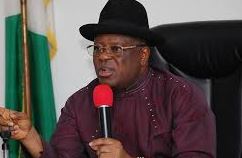
The early morning mist clings to the waters of the Niger, turning the great river into a silver ribbon that has carried traders, fishermen, and pilgrims for centuries, and now it bears the weight of a nation’s hopes as the First Niger Bridge prepares to stir back to life after a painful hiatus. For days the bridge lay silent, its steel ribs exposed like the bones of a leviathan stripped of flesh, after vandals daringly pried away bolts, nuts, and precious expansion‑joint steelwork, threatening the very integrity of a conduit that links the bustling markets of Onitsha in Anambra State with the oil‑rich ports of Delta State. The closure, announced in early September 2026, forced commuters onto the longer, more congested Second Niger Bridge, turning what should have been a swift crossing into a test of patience that rippled through the regional economy, delaying goods, inflating transport costs, and fraying the tempers of traders who rely on the swift movement of cassava, palm oil, and manufactured goods. Minister of Works David Umahi, a figure known for his blunt talk and relentless drive, arrived at the Onitsha bridge head with a contingent of engineers, surveyors, and security personnel, his eyes scanning the damage as he declared that the bridge would not be reopened until the major structural work had been achieved, a stance echoed in reports from Leadership Newspaper and Channels TV that emphasized safety over speed.
As the contractor SKECC raced against time and the relentless September rains, they manufactured a specialised expansion joint abroad and flew it into the country, replaced the pilfered bolts, and began resurfacing the carriageway with asphalt and concrete, a process documented in detail by Vanguard News and Punch Nigeria, which noted the minister’s order to repaint kerbs and metal components with oil paint and to install additional solar‑powered streetlights. Amid the clatter of welding torches and the hum of generators, Umahi also waded into the political arena, urging the South‑East and South‑South to rally behind President Bola Tinubu, framing the bridge’s revival as a testament to federal largesse and a call to reward loyalty in the looming 2027 presidential contest, a narrative that found its way into the columns of THISDAY and the Peoples Gazette. The scene on the bridge is thus more than a construction site; it is a stage where engineering, economics, politics, and culture converge, each actor playing a part in the drama of a nation striving to mend its infrastructure while navigating the choppy waters of patronage and public trust.
The Structural Symphony: Steel, Stone, and the Struggle Against Vandals
When the first alarm was raised about missing structural components, engineers described the scene as a surgical wound on the bridge’s body, with vital expansion joints—those flexible buffers that allow the steel to breathe under thermal stress—snatched away like organs from a living organism, leaving the structure vulnerable to catastrophic failure under the weight of heavy trucks and the sway of the river’s currents. According to Vanguard News, Minister Umahi revealed that the vandalised bolts and nuts had been sourced, replaced, and properly torqued to specification, while the specialised expansion joint, a custom‑fabricated piece critical for accommodating the bridge’s longitudinal movement, had been manufactured overseas and airlifted to Nigeria, a logistical feat highlighted also in Leadership Newspaper’s account of the contractor’s progress. The rehabilitation effort, as reported by Channels TV, involved not only the reinstallation of these components but also a thorough resurfacing of the deck with layers of asphalt and concrete, a process that required careful curing to achieve the requisite strength before any load could be borne, a point underscored by the minister’s insistence that one carriageway could only be opened once the concrete attained the required compressive strength, while work continued on the opposite side. In addition to the steelwork, the Punch Nigeria piece noted that Umahi directed the repainting of the bridge’s kerbs and metal components up to a specified height with oil paint, a cosmetic measure intended to deter corrosion and to present a renewed face to the public, while the installation of additional solar‑powered streetlights aimed to improve nighttime visibility and safety.
The contractor SKECC, praised by the Delta State Commissioner for Works Charles Aniagwu for the speed and quality of the works, had also been tasked with completing a closed‑circuit television network that would link the First Niger Bridge to its sister crossing, the Second Niger Bridge, creating a unified surveillance grid capable of detecting any future tampering in real time, a detail echoed in the THISDAY report. Beyond the physical repairs, Umahi ordered an empirical assessment of the bridge’s structural elements both above and below the water line, mandating that a committee submit its findings before the current phase concludes, a move designed to provide a data‑driven baseline for future maintenance and to signal a shift from reactive patchwork to proactive integrity management, a theme that ran through multiple sources and underscored the seriousness with which the ministry now views the bridge’s health.
The Economic Pulse: Commerce, Congestion, and the Cost of Closure
The shutdown of the First Niger Bridge sent shockwaves through the commercial corridors that hug its approaches, as traders who once relied on the ten‑minute crossing found themselves ensnared in detours that added upwards of forty minutes to their journeys, a delay that translated into higher fuel consumption, increased vehicle wear, and a tangible rise in the cost of moving goods such as yams, fish, and textile products between the southeastern markets and the delta’s industrial zones. As reported by Nairametrics, the Federal Government’s announcement of an imminent reopening next week was greeted with cautious optimism by market associations, who estimated that the daily loss in productivity during the closure ran into millions of naira, a figure derived from the volume of freight that typically traverses the bridge and the average hourly cost of idle trucks. The Vanguard News article painted a vivid picture of the human toll, describing how drivers, weary from the extra miles, gathered at makeshift rest stops along the old highway, sharing stories of spoiled perishables and missed deliveries, while the Leadership Newspaper piece noted that the closure had forced many small‑scale transporters to either raise their rates or absorb the losses, squeezing already thin profit margins.
In the economic analysis woven into the Channels TV report, analysts pointed out that the bridge’s restoration would not only relieve congestion on the Second Niger Bridge but also reduce the logistical bottleneck that had been inflating the price of imported goods entering the interior, a benefit that could translate into lower market prices for consumers and a boost to regional trade volumes. Furthermore, the Punch Nigeria coverage highlighted Minister Umahi’s directive to remove illegal roadblocks, task forces, and tax collection points situated within two hundred metres of the bridge, a move aimed at eliminating the artificial choke points that had exacerbated traffic snarls and contributed to the perception of corruption at the checkpoint, a step that traders welcomed as a potential reduction in informal levies. The economic dimension is thus inseparable from the engineering one: each bolt tightened, each metre of road repaved, and each illegal levy lifted represents a tangible gain in efficiency, a reduction in transaction costs, and a step toward restoring the bridge’s role as a vital artery in Nigeria’s inland commerce.
The Political Canvas: Propaganda, Patronage, and the Path to 2027
Amid the clang of hammers and the whir of generators, Minister David Umahi seized the moment to frame the bridge’s rehabilitation as a political triumph, a narrative that reverberated through the statements he made to the press and the subsequent coverage in THISDAY and the Peoples Gazette. He lauded President Bola Tinubu for what he described as a prompt intervention in infrastructure development across the country, asserting that the South‑East and South‑South regions owed their ongoing projects to the president’s commitment, a claim that served both as an acknowledgment of federal largesse and as a subtle appeal for electoral support in the forthcoming 2027 presidential contest. In a striking turn, Umahi went further, urging voters who had previously backed Peter Obi to demonstrate what the former Anambra governor had actually delivered to the Igbo heartland, challenging them to avoid “wasting their votes” in the next election, a rhetorical maneuver that blended personal camaraderie—he called Obi a brother—with a hard‑nosed political calculation aimed at consolidating Tinubu’s base. The Vanguard News report captured this moment vividly, quoting Umahi’s declaration that the South East and South South must support the President because of the massive infrastructure development ongoing in the two zones, a statement that was simultaneously a promise of continued investment and a veiled warning that neglect could stall future projects.
The THISDAY piece added a layer of visual politics, noting that the minister had ordered the removal of all illegal advertisement hoardings on the bridge and their replacement with images of President Tinubu, effectively turning the structure into a billboard for the incumbent’s visage, a move that drew both praise for its patriotic fervor and criticism for its overt partisanship. Meanwhile, the Leadership Newspaper article recorded Umahi’s directive to the governors of Anambra and Delta States, as well as heads of security agencies, to monitor scrap markets closely and to prevent the resale of stolen bridge components, a measure that underscored the administration’s concern over vandalism while also extending its surveillance reach into local economies. The political subtext is clear: the bridge is not merely a concrete and steel crossing; it is a symbol through which the federal government seeks to project competence, reward loyalty, and shape the electoral landscape, all while navigating the delicate balance between genuine infrastructural need and the optics of patronage.
The Cultural and Social Dimension: Memory, Mobility, and the People's Trust
For the communities that line the Niger’s banks, the First Niger Bridge is more than a conduit for commerce; it is a woven thread in the social fabric, a place where generations have met to exchange news, celebrate festivals, and mourn losses, and its sudden silence was felt as a cultural rupture. The Channels TV report recalled how commuters, traders, and even students expressed relief at the prospect of the bridge’s reopening, noting that the prolonged closure had forced families to take longer routes to visit relatives in the opposite bank, increasing travel costs and reducing the frequency of kinship gatherings that are central to Igbo and Ijo social life. In the Vanguard News narrative, residents spoke of the bridge as a landmark that had witnessed the ebb and flow of Nigerian history, from the colonial era’s railway ambitions to the post‑independence boom of oil wealth, and they voiced a collective yearning for its return to service as a restoration of normalcy and dignity. The Punch Nigeria piece highlighted the minister’s order to install additional solar‑powered streetlights and to link the bridge’s CCTV system to the Second Niger Bridge, measures that residents interpreted not only as safety upgrades but also as signals that the state was watching over their daily comings and goings, fostering a sense of security that had been eroded by the vandalism‑induced closure.
Moreover, the Leadership Newspaper article noted Umahi’s directive to repaint the bridge’s kerbs and metal components with oil paint, an aesthetic intervention that residents described as giving the structure a “fresh face,” a symbolic renewal that mirrored hopes for personal and communal rejuvenation. The Peoples Gazette account added a nuanced layer, quoting local leaders who praised the cooperation of motorists and road users during the rehabilitation, observing that the patience displayed by the public had facilitated the work and reinforced a belief that civic responsibility could coexist with state action. In this cultural tableau, the bridge emerges as a site of memory and mobility, a place where the act of crossing is imbued with meaning, and its rehabilitation becomes a metaphor for the society’s own capacity to heal, to rebuild trust, and to reaffirm the bonds that the river has long helped to sustain.
Future Implications: A Blueprint for Infrastructure Integrity or a Band‑Aid on Bleeding Steel?
Looking ahead, the rehabilitation of the First Niger Bridge offers a litmus test for Nigeria’s broader approach to infrastructure stewardship, raising the question whether the current effort will evolve into a enduring model of preventive maintenance or remain a episodic response to crises born of neglect and vandalism. The empirical assessment mandated by Minister Umahi, tasked with evaluating the bridge’s structural elements above and below the water line, promises to generate a data set that could inform not only the immediate post‑reopening monitoring but also the long‑term maintenance schedule, a prospect welcomed by analysts who argue that evidence‑based interventions are essential to curb the cycle of decay and repair that has plagued many of the nation’s bridges. If the committee’s findings lead to the institutionalisation of regular inspections, the use of corrosion‑resistant coatings, and the deployment of real‑time monitoring sensors—perhaps even an expansion of the CCTV network to cover critical joints—then the bridge could serve as a blueprint for other aging crossings, transforming a reactive fix into a proactive integrity management system. Conversely, should the post‑reopening period see a return to lax enforcement, the re‑emergence of illegal billboards, the reinstallation of roadside extortion points, and a waning of political will to fund ongoing upkeep, the current works risk being remembered as a costly band‑aid that merely delayed an inevitable deterioration, a scenario hinted at by the minister’s own lament that the country loses significant resources to vandalism.
The economic implications are equally stark: a well‑maintained bridge will continue to reduce transport costs, stimulate regional trade, and bolster investor confidence, whereas a neglected structure will once again choke commerce, inflate prices, and erode the gains made during this rehabilitation window. Politically, the bridge’s fate could influence public perception of the administration’s competence; a sustained, transparent maintenance regime would reinforce the narrative of effective governance, while a relapse into decay could fuel opposition claims of mismanagement and patronage‑driven neglect. Culturally, the bridge’s continued service would affirm its role as a shared communal space, fostering social cohesion and preserving the intangible heritage of movement and exchange that the Niger has nurtured for millennia. Ultimately, the First Niger Bridge stands at a crossroads: it can emerge as a testament to what is possible when engineering rigor, political commitment, and civic vigilance converge, or it can fade into another cautionary tale of infrastructure squandered, its steel ribs once again whispering of what might have been if the nation had chosen to build not just for the moment, but for the generations that will cross its span long after the headlines have faded.
📰 Sources Cited
- Nairametrics: FG to reopen First Niger Bridge next week after rehabilitation
- Vanguard News: Old Niger Bridge: First rehabilitated phase to reopen next week — Umahi
- THISDAY: Umahi: Reconstructed First Niger Bridge Opens Next Week
- Leadership Newspaper: First Niger Bridge To Reopen Next Week – Umahi
- Channels TV: First Niger Bridge To Reopen Next Week, Says Umahi
- Punch Nigeria: First Niger Bridge won’t reopen until rehabilitation is completed – Umahi
- Peoples Gazette: First Niger Bridge to remain closed until rehabilitation completed: Umahi
0 Comments
Sign in to commentNo comments yet. Be the first to share your thoughts!