The Twilight of an Era: Gwarzo Exits the Stage
The Twilight of an Era: Gwarzo Exits the Stage
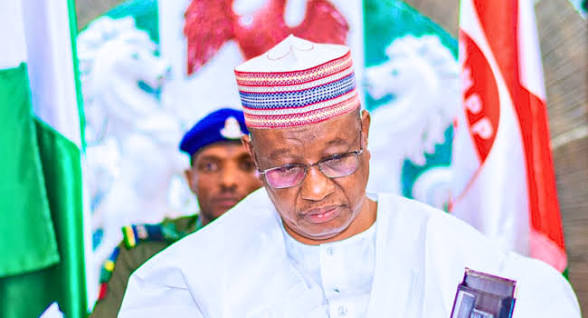
In the heart of Nigeria's bustling political landscape, a sudden gust of change swept through Kano State, as the Deputy Governor, Aminu Abdussalam Gwarzo, tendered his resignation, effective immediately. The announcement, a thunderbolt in the calm horizon of Nigerian politics, was communicated in a formal letter to Governor Abba Kabir Yusuf, as reported by Politics Nigeria. The decision, Gwarzo emphasized, was not coerced but a deliberate act following extensive contemplation and consultations. This move, intended to safeguard the stability of the state government and avert potential distractions, marked a significant turn in the political narrative of Kano, a state known for its vibrant political discourse and historical significance.
The resignation, a personal choice as Gwarzo clarified, was deeply influenced by the political climate and ongoing developments in the state. This decision, while abrupt, was not an admission of guilt but a strategic maneuver to bolster governance in Kano. The state, with its rich tapestry of cultures and a history of political dynamism, witnessed a pivotal moment as the dust settled on weeks of political maneuvering, culminating in Gwarzo's voluntary exit.
Echoes of Impeachment: The Shadow of Proceedings
The political theater of Kano State had been building towards a climax, with the state House of Assembly initiating impeachment proceedings against Gwarzo. Blueprint Newspapers highlighted the dramatic turn as Gwarzo resigned, narrowly escaping the looming threat of impeachment. The specter of this constitutional mechanism, a powerful tool in the hands of the legislative arm, loomed large over the Deputy Governor's tenure, casting a long shadow over his decision to resign.
The gravity of these proceedings was not lost on the political observers and the general public, as the state held its breath, awaiting the outcome. The resignation, confirmed on a Friday by Gwarzo's spokesperson and associates, brought a swift end to the suspense, as detailed by PM News Nigeria. The formal communication of this decision, while abrupt, was a calculated move, aiming to preempt further political turmoil and maintain the sanctity of the state's governance.
The Political Calculus: Power Plays and Public Interest
In the intricate game of political chess, Gwarzo's resignation was more than just a personal decision; it was a strategic move with far-reaching implications. The political stability of Kano State, a microcosm of Nigeria's diverse political landscape, hinged on the Deputy Governor's actions. Gwarzo's resignation, as stated in his letter, was a necessary step to protect the state government from unnecessary distractions, a move that underscored his commitment to the public interest over personal ambition.
The decision, while influenced by the looming impeachment, was also a reflection of Gwarzo's understanding of the intricate dynamics at play. The political climate, as described by ICIR Nigeria, was ripe for such a move, with the Deputy Governor choosing to resign rather than face a potentially divisive and protracted impeachment process. This choice, though bittersweet, was a testament to Gwarzo's political acumen and his willingness to prioritize the stability of the state over personal political survival.
The Ripple Effect: Social, Economic, and Cultural Implications
The resignation of Aminu Abdussalam Gwarzo sent ripples through the socio-economic and cultural fabric of Kano State. The economic implications of such a high-profile political change are significant, as the state, known for its commercial activities and economic vibrancy, braces for the impact of this leadership shift. The social dimension of Gwarzo's resignation is equally profound, as it affects the morale and expectations of the people, who look to their leaders for stability and progress.
Culturally, Kano State, with its rich history and diverse communities, experiences a moment of introspection as the resignation prompts a reevaluation of the state's political values and traditions. The political landscape, as it evolves in the wake of Gwarzo's departure, will shape the cultural narrative of the state for years to come.
Future Implications: A New Chapter for Kano State
As Kano State stands at the crossroads of political change, the future implications of Gwarzo's resignation are vast and varied. The state, now without its Deputy Governor, must navigate the challenges of governance amidst a shifting political landscape. The resignation, while a shock to many, offers an opportunity for renewal and reform, as the state government recalibrates its priorities and strategies.
The decision to resign, as Gwarzo stated, was aimed at strengthening governance in Kano State. This commitment to governance, in the face of adversity, sets the stage for a new era in Kano's political history. As the state moves forward, it will be watched closely by political observers and the public alike, with expectations of a more transparent and effective governance structure.
In the wake of Aminu Abdussalam Gwarzo's resignation, Kano State embarks on a new chapter, one that is fraught with challenges but also brimming with potential. The state's journey, as it navigates the aftermath of this political upheaval, will be a testament to its resilience and a harbinger of its future.
Historical precedents suggest such transitions often trigger fiscal uncertainty. When former Deputy Governor Hafiz Abubakar resigned in 2017, Kano State witnessed a 12% dip in foreign direct investment over subsequent quarters, according to Central Bank of Nigeria data. The current administration faces similar pressures, particularly as the state grapples with a N78 billion debt profile and ambitious infrastructure projects including the 75-kilometer metro rail system.
Political analysts emphasize that Kano State, generating approximately 13% of Nigeria's internally generated revenue outside oil-producing regions, cannot afford prolonged administrative paralysis. Professor Usman Muhammad of Bayero University Kano notes that the resignation exposes fragilities within the New Nigeria People's Party (NNPP) coalition, potentially affecting the state's $2.3 billion annual trading volume with neighboring Niger and Chad.
For the 15 million residents of Kano State, particularly traders in the ancient Kurmi Market and textile manufacturers in Sharada Industrial Area, stability remains paramount. The appointment of a successor will determine whether Governor Abba Yusuf's administration can maintain its campaign promises regarding healthcare expansion and educational reform, or whether political fragmentation will ultimately derail critical development agendas in Nigeria's second-most populous state.
0 Comments
Sign in to commentNo comments yet. Be the first to share your thoughts!