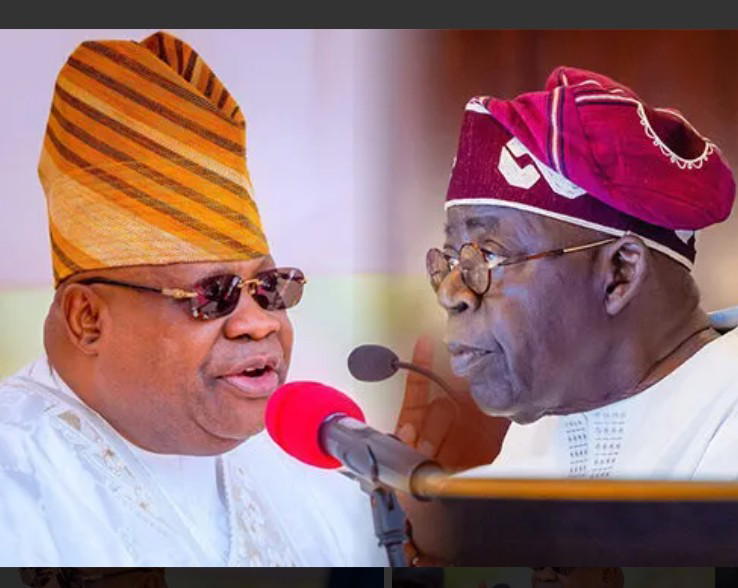
The State Banquet Hall in Abuja hummed with a restrained electricity on the morning of October 14, 2026, as President Bola Ahmed Tinubu presided over the inauguration of the All Progressives Congress Presidential Campaign Council for the 2027 general election. The room, filled with the soft rustle of agbada and the occasional murmur of polite applause, hosted a striking tableau of political opposites seated side by side: Nyesom Wike, the fiery Minister of the Federal Capital Territory whose loyalty to the Peoples Democratic Party is well known, stood alongside Professor Chukwuma Charles Soludo, the APGA governor of Anambra who had just declared his party’s backing for Tinubu’s re‑election bid, and Ademola Adeleke, the Osun State governor whose reputation for spontaneous dance had already become a political hallmark. Tinubu, his voice steady yet charged with the weight of expectation, reminded the assembled dignitaries that governance must continue alongside campaigning, a sentiment underscored by his recent disclosure that the federal government is seeking to mobilise $78.5 billion in private capital to fund a new national grid. The presence of thirty‑three governors from across the political spectrum, a number the president himself noted as unprecedented, lent the occasion a sense of both historic convergence and delicate balancing act, as each leader sought to signal allegiance while preserving their own regional base.
As the cameras flashed and the national anthem faded, the hall became a micro‑stage where Nigeria’s fragmented political landscape attempted, for a fleeting moment, to choreograph a unified step toward the upcoming electoral contest.
The Convergence of Parties: A Rainbow Coalition in the Making
Professor Soludo’s address at the inauguration carried the cadence of a statesman seeking to reframe old rivalries as a shared national project, invoking APGA’s historic claim as Nigeria’s first progressive party, registered in 2002, a dozen years before the APC’s formation. He described the gathering of thirty‑three governors as evidence of a burgeoning elite consensus, arguing that the unity of Nigeria, the pursuit of shared prosperity, and the commitment to pragmatic progressivism formed the three pillars that now bound APGA to the Tinubu administration. His words were echoed by Senate President Godswill Akpabio and Senate Leader Opeyemi Bamidele, who, speaking later in plenary, declared the rainbow coalition woven into the APC campaign council to be “on course” and hailed it as an unprecedented political alliance aimed at promoting inclusive governance. Meanwhile, Minister Wike, though a stalwart of the PDP, used the platform to issue a cautionary note to fellow campaign officials, insisting that electoral victory could not be claimed if they failed to deliver results in their respective states, a remark that underscored his belief in performance‑based accountability. Governor Adeleke, whose presence was already noted for his effervescent demeanor, pledged to mobilise Osun’s electorate behind Tinubu, expressing confidence that the president would secure a second term and return to Aso Rock.
The convergence of these figures—each representing distinct party loyalties, regional interests, and personal brands—created a tableau that political analysts described as both a strategic realignment and a symbolic gesture aimed at softening the nation’s entrenched partisan divides ahead of the 2027 poll.
The Critique: A Crowded Confession of Fear
Not all voices in the hall welcomed the spectacle of unity; former Vice‑President Atiku Abubakar, speaking through his media team, characterised the expanded presidential campaign council as “a crowded confession of Tinubu’s fear,” suggesting that the president’s reliance on a lengthy list of political allies betrayed an insecurity about his own record. Atiku’s statement, issued by the African Democratic Congress Presidential Campaign Council, warned that gathering every governor, minister and political defector would not alleviate the pressing challenges of hunger, violence, kidnappings and the rising cost of living that besiege ordinary Nigerians. He cited the 2026 Global Multidimensional Poverty Index, which recorded an increase of 17.9 million Nigerians living in multidimensional poverty, as evidence that the administration’s political maneuvering was detached from the socioeconomic realities on the ground. Vice President Kashim Shettima amplified this critique during his own remarks, directing pointed jabs at Atiku and Peter Obi, arguing that Nigeria’s vast population and complex economic structures rendered foreign‑derived policy prescriptions ineffective without careful local adaptation. Shettima likened the attempt to govern with borrowed statistics to trying to fit a cloth meant for a smaller body onto a much larger frame, a metaphor that resonated with many in the audience who felt that the administration’s reform agenda needed more grounding in domestic context.
In response, Tinubu defended the campaign council’s composition, insisting that the initiative would be performance‑driven and that officials would be held accountable for delivering tangible results in their constituencies, a pledge that sought to reframe the criticism as a call for rigor rather than a retreat from inclusivity.
The Symbolism and Culture: Dance, Drum, and Political Theater
Amid the speeches and policy pronouncements, the most resonant image to emerge from the inauguration was the spontaneous dance between President Tinubu and Governor Adeleke, a moment captured on video by Channels TV and quickly disseminated across social media platforms. The clip, showing the president swaying to a lively rhythm while the governor executed his signature steps, became an instant cultural touchstone, prompting commentators to note how such displays of communal joy can soften the often austere façade of political leadership. Adeleke’s dance, rooted in the Yoruba tradition of celebratory movement, was interpreted by some as a deliberate overture of goodwill, a non‑verbal affirmation that the campaign could embrace both gravitas and gaiety. The episode also highlighted the broader role of cultural symbols in Nigerian politics, where music, attire, and bodily expression frequently serve as conduits for messaging that words alone may struggle to convey. Minister Wike, reflecting on the atmosphere, reiterated his call for accountability, suggesting that the celebratory spirit must be matched by concrete performance in the field, a sentiment that aligned with the Senate’s endorsement of the rainbow coalition as a vehicle for inclusive governance. The tableau of dance, speech, and policy thus intertwined to create a multifaceted narrative: one that sought to project optimism, to acknowledge dissent, and to anchor the campaign in both cultural resonance and administrative rigor.
Future Implications: A Blueprint or a Band‑Aid?
Looking ahead, the convergence witnessed at the APC campaign council inauguration raises pivotal questions about Nigeria’s trajectory toward the 2027 election and beyond. The administration’s ambition to secure $78.5 billion in private capital for a new national grid, if realised, could transform the country’s power infrastructure, potentially alleviating chronic energy deficits that have long hampered industrial growth and household welfare. Simultaneously, the emphasis on a performance‑driven campaign, championed by figures like Wike and echoed by Tinubu’s insistence on accountability, may incentivise governors and ministers to prioritise deliverable outcomes over mere political loyalty, a shift that could improve service delivery if sustained beyond the electoral cycle. However, the critiques from Atiku, Shettima and various analysts warn that without addressing the underlying socioeconomic pressures—exemplified by the rising multidimensional poverty count—the political pageantry risked becoming a superficial band‑aid on deeper wounds. The success of the rainbow coalition will ultimately depend on its ability to translate symbolic unity into concrete policy coordination across federal, state and local levels, ensuring that the diverse interests represented in the council are harnessed toward shared goals rather than merely aggregated for electoral showmanship. As Nigeria approaches January 16, 2027, the dance between ambition and accountability will continue to unfold on the national stage, with the steps taken today shaping the rhythm of tomorrow’s governance.
📰 Sources Cited
- Punch Nigeria: Morning recap: Tinubu campaign council inaugurated, FG seeks $78.5bn capital, other stories
- Sun News Online: Soludo, APGA back Tinubu’s re-election bid at APC presidential campaign council inauguration
- THISDAY: Tinubu: I’m Ready to Renew Pact With Nigerians, Inaugurates 2027 Campaign Council
- THISDAY: Atiku Describes Tinubu’s Campaign Council as ‘Crowded Confession of Fear’
- Vanguard News: Video: Adeleke dances with Tinubu at APC campaign council inauguration
- Vanguard News: Wike, Soludo, Adeleke present at APC campaign council inauguration
- PM News Nigeria: Takeaways from the APC Presidential Campaign Council Inauguration
- Vanguard News: ‘Expanded APC Campaign Council a confession of fear’ — Atiku
- Google News Nigeria: 2027: Akpabio, Bamidele back Wike’s Rainbow Coalition, other opposition in APC campaign council - Premium Times Nigeria
- Premium Times: 2027: Tinubu inaugurates campaign council, says governance won’t take back seat
0 Comments
Sign in to commentNo comments yet. Be the first to share your thoughts!