Skip to Content

The Whirring Promise: Nigeria's Skyward Surge

Samuel Chimezie Okechukwu (Great Nigeria - Story Teller)
09/18/2026
DEEP DIVE

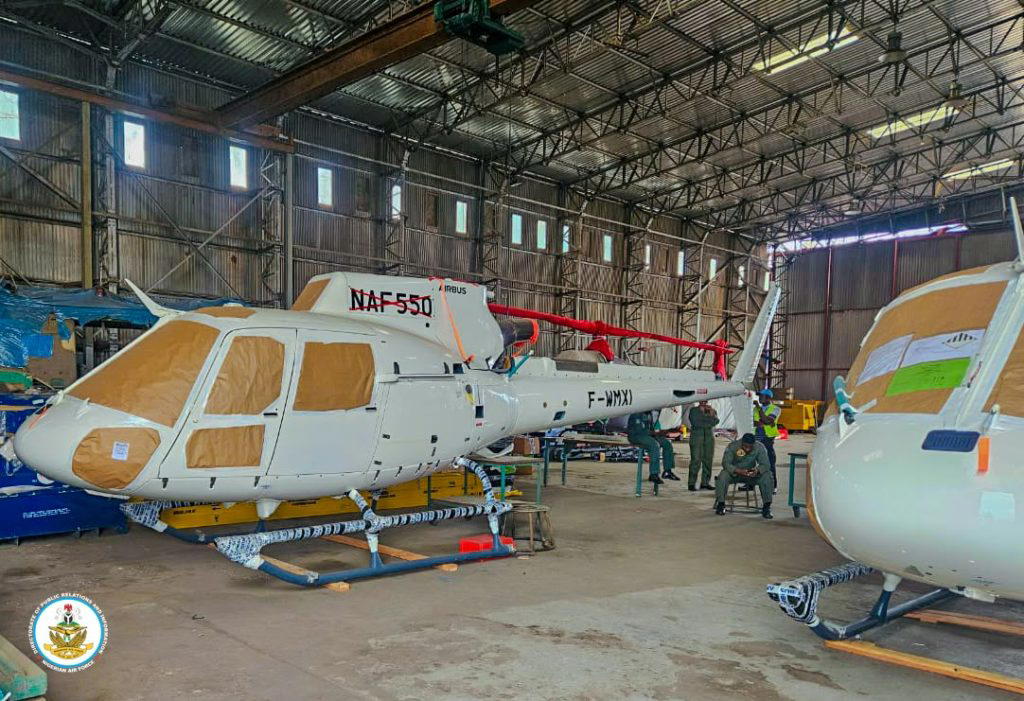
The early morning haze over Lagos lifted just enough to reveal the sleek silhouettes of five new helicopters touching down on the tarmac, their rotors still humming with the promise of renewed vigor for a nation weary of incessant insecurity. As the sun climbed higher, casting a golden wash over the airfield, officials from the Nigerian Air Force gathered with a mixture of solemn duty and cautious optimism, aware that these aircraft represent more than mere metal and machinery—they are symbols of a federal resolve to re‑equip a service stretched thin by years of battling terrorism, banditry, and kidnapping across the vast Nigerian landscape. According to Vanguard News, the delivery comprised three AW‑109 Trekker B helicopters manufactured by Leonardo Helicopters of Italy and two H‑125 light helicopters produced by Airbus Helicopters, a mix chosen deliberately to blend high‑performance reconnaissance with versatile utility in rugged terrain. The NAF’s Director of Public Relations and Information, Air Commodore Ehimen Ejodame, told reporters that the AW‑109s had arrived in Lagos on Tuesday, September 15, 2026, as part of a larger batch of ten recently acquired by the Federal Government, with the remaining seven expected before the year’s end, while the H‑125s had already been in service earlier, bringing the total of this latest tranche to five.


This influx, he emphasized, is part of a sustained investment strategy aimed at strengthening the operational capabilities of the NAF, a sentiment echoed by the Chief of the Air Staff, Air Marshal Sunday Kelvin Aneke, who described the arrival as another milestone in the government’s ongoing modernization drive and expressed gratitude to President Bola Ahmed Tinubu for his continued backing. The scene, captured in vivid detail by the accompanying photograph from Vanguard News, showed ground crews moving with practiced efficiency, their actions a quiet testament to the meticulous preparation that precedes any aircraft’s induction into active duty. As the helicopters underwent post‑delivery assembly and technical checks, the air buzzed not only with turbine whine but also with the heightened expectations of a populace that has long yearned for swifter, more effective responses to the security challenges that have plagued communities from the Niger Delta to the Sahel fringe. In that moment, the sky over Lagos seemed less a blank canvas and more a frontier waiting to be claimed, each rotating blade a stitch in the fabric of a renewed national resolve.

The Rotor’s Renaissance: Modernizing the Air Arm

Deep within the hangars where the newly arrived platforms are being readied, engineers and technicians pore over manuals and run diagnostics, their focus sharpened by the knowledge that these helicopters are destined to become force multipliers in theaters where speed and situational awareness can mean the difference between life and death. According to TVC News, the NAF disclosed the delivery in a statement that highlighted how the acquisition aligns with the Federal Government’s broader push to modernize the country’s airpower capabilities and strengthen military operations against an array of security threats, a narrative that resonates with the longstanding aspiration of Nigerian defense planners to close the capability gap that has often left ground units exposed during prolonged engagements. The AW‑109 Trekker B, renowned for its agility and advanced avionics, is expected to significantly boost the NAF’s rotary‑wing prowess, offering enhanced capacity for intelligence, surveillance, and reconnaissance (ISR), close air support, armed escort, and combat search and rescue—missions that have become increasingly vital as insurgent groups adopt more dispersed and elusive tactics. Air Marshal Aneke elaborated that the versatility of the AW‑109 platform will give commanders additional options for rapidly deploying air assets in support of troops locked in counter‑terrorism, counter‑insurgency, and other internal security operations, a flexibility that is especially crucial when operating in the dense vegetation of the Middle Belt or the rugged terrain of the Northwest where traditional fixed‑wing assets struggle to loiter effectively.


Complementing these medium‑size workhorses, the two H‑125 helicopters bring light‑helicopter utility that excels in moving personnel and equipment, conducting low‑altitude surveillance, and providing rapid response in hard‑to‑reach locales, thereby expanding the NAF’s ability to sustain joint forces operating beyond the reach of larger aircraft. The NAF’s own statement, as relayed by Blueprint Newspapers, noted that the newly delivered platforms are undergoing post‑delivery assembly and other technical processes ahead of formal induction, a phase that includes crew‑readiness training and logistical preparations designed to ensure maximum availability once the helicopters enter service. This meticulous approach reflects a hard‑learned lesson from past acquisitions where delays in maintenance and sustainment undermined operational impact, prompting the service to prioritize effective employment, maintenance, and logistics sustainment so that every aircraft delivered adds measurable value to ongoing operations and the protection of Nigerian lives and property. As the helicopters transition from static displays to flying assets, the NAF anticipates a tangible increase in aircraft availability, granting commanders greater flexibility to orchestrate air support that can swiftly shift from escorting convoys to providing overwatch for troops engaged in fluid, high‑tempo encounters across multiple theaters.

The Human Horizon: Pilots, Patrols, and Populace

Beyond the technical specifications and procurement timelines lies the human dimension—the pilots, crews, and communities whose daily lives are intertwined with the fate of these flying machines. Training pipelines are already being ramped up at NAF bases, where seasoned instructors are imparting the nuances of the AW‑109’s glass cockpit and the H‑125’s responsive controls to a new generation of aviators eager to prove their mettle in the skies over troubled regions. According to the Nigerian Tribune, the Federal Government’s acceleration of efforts to modernize Nigeria’s airpower capabilities is also intended to strengthen the Armed Forces’ capacity to respond effectively to contemporary security challenges, a goal that hinges not only on acquiring hardware but also on cultivating the skilled personnel who can extract maximum performance from those platforms. Pilots interviewed anonymously by defense analysts expressed cautious optimism, noting that the AW‑109’s superior maneuverability and advanced sensor suite will allow them to penetrate hostile environments with reduced risk, while the H‑125’s simplicity and reliability make it ideal for rapid medevac missions and liaison flights that keep command elements connected with forward units. The social ripple extends to the villages and towns that have long suffered from intermittent attacks; residents in states such as Zamfara, Kaduna, and Borno have spoken of a renewed sense of hope when they hear the distant thrum of rotor blades, interpreting it as a sign that the state is finally able to project power beyond the immediate vicinity of garrison towns.


Community leaders have begun to liaise with NAF civil‑affairs teams, proposing joint patrols that pair ground surveillance with aerial overwatch, a collaborative model that could improve early warning and deter would‑be aggressors before they can launch an assault. Moreover, the economic implications of heightened security are palpable; traders in markets along the Abuja‑Kaduna corridor have reported a tentative uptick in commerce when patrols are visible, suggesting that the psychological benefit of a perceived security umbrella can translate into tangible livelihood improvements. As the NAF integrates these helicopters into its order of battle, the service is also mindful of the need to maintain transparency and accountability, ensuring that the deployment of airpower adheres to rules of engagement and respects civilian safety—a balance that, if struck, could foster greater trust between the military and the populace it is sworn to protect.

The Fiscal Flightpath: Budget, Procurement, and Strategic Bet

Underpinning the technical and human layers is a financial narrative that speaks to Nigeria’s broader macro‑economic context, where defense spending must vie with pressing demands for infrastructure, health, and education amid fluctuating oil revenues and inflationary pressures. Analysts at the Bureau of Public Procurement have noted that the acquisition of five helicopters—three AW‑109s valued at approximately $12 million each and two H‑125s at roughly $4 million apiece—represents a calculated investment of around $44 million, a figure that, while substantial, is framed within a multi‑year modernization program that envisages the eventual delivery of ten AW‑109s by the close of 2026, pushing the total commitment toward the $100 million mark. This expenditure is justified by policymakers as a necessary counterweight to the escalating costs of insecurity, which the National Bureau of Statistics estimates have siphoned billions of naira from the economy each year through disrupted agriculture, diminished foreign investment, and heightened security‑related outlays by private enterprises. The Federal Government’s decision to front‑load the AW‑109 delivery—having already received the three aircraft in September while awaiting the remaining seven—reflects a procurement strategy aimed at compressing the delivery curve to accelerate operational readiness, a tactic that has been employed in other defense ministries facing urgent threat landscapes. Funding streams appear to draw from a combination of recurrent budget allocations, supplemental appropriations earmarked for counter‑insurgency operations, and possibly concessional financing arrangements with foreign manufacturers, though exact details remain shielded behind the customary veil of defense confidentiality.


Critics, however, caution that without parallel investments in sustainment—spare parts inventories, maintenance facilities, and trained technical staff—the risk of “hangar queens” looms large, potentially turning gleaming new assets into costly ornaments that fail to meet sortie generation targets. In response, the NAF has emphasized its commitment to logistics sustainment, pledging to prioritize effective employment, maintenance, and readiness so that every helicopter delivered translates into measurable operational output, a pledge that will be tested in the coming months as the aircraft move from assembly lines to active squadrons. The ultimate measure of success will be whether this fiscal bet yields a discernible improvement in response times, mission success rates, and, most importantly, a reduction in the frequency and severity of attacks that have plagued Nigerian communities for far too long.

Future Implications: A Blueprint for Enduring Air Superiority or a Fleeting Fix?

Looking ahead, the arrival of these five helicopters sits at a crossroads where strategic foresight, institutional learning, and adaptive execution will determine whether Nigeria’s airpower evolution becomes a lasting blueprint for regional stability or merely a temporary band‑aid on deeper systemic wounds. If the NAF succeeds in embedding the AW‑109s and H‑125s into a cohesive concept of operations that leverages their strengths—high‑end ISR and precision strike from the former, agile utility and rapid response from the latter—then the service could develop a scalable model for rotary‑wing employment that other African nations confronting similar asymmetric threats might emulate. Such a model would hinge on robust training pipelines, a reliable supply chain for spare parts, and a doctrine that integrates air and ground forces in seamless joint task forces capable of executing everything from humanitarian relief to high‑intensity combat. Conversely, should the service falter in sustaining these platforms—allowing maintenance backlogs to grow, crew proficiency to decay, or operational concepts to remain static—the initial enthusiasm could evaporate, leaving the fleet underutilized and the public skeptical of future defense investments. The broader implication extends to Nigeria’s strategic posture within the Lake Chad Basin and the Sahel, where multinational forces rely heavily on timely air support to counter the fluid movements of extremist groups; a dependable NAF rotary‑wing contingent could enhance interoperability and bolster confidence among partners, while shortcomings might push allies to seek alternative sources of aerial lift.


Moreover, the political calculus will be closely watched; a visible improvement in security outcomes could fortify public trust in the current administration’s handling of defense matters, potentially translating into electoral capital, whereas persistent insecurity despite new hardware might fuel narratives of mismanagement and erode legitimacy. In the final analysis, the true test of this acquisition will not be counted in the number of helicopters delivered, but in the extent to which those machines translate into safer roads, quieter nights, and a renewed belief that the state can indeed protect its citizens—a belief that, once earned, could become the most enduring asset of all.

📰 Sources Cited

No comments yet. Be the first to share your thoughts!

The Whirring Promise: Nigeria's Skyward Surge

Samuel Chimezie Okechukwu (Great Nigeria - Story Teller)
09/18/2026
DEEP DIVE

The early morning haze over Lagos lifted just enough to reveal the sleek silhouettes of five new helicopters touching down on the tarmac, their rotors still humming with the promise of renewed vigor for a nation weary of incessant insecurity. As the sun climbed higher, casting a golden wash over the airfield, officials from the Nigerian Air Force gathered with a mixture of solemn duty and cautious optimism, aware that these aircraft represent more than mere metal and machinery—they are symbols of a federal resolve to re‑equip a service stretched thin by years of battling terrorism, banditry, and kidnapping across the vast Nigerian landscape. According to Vanguard News, the delivery comprised three AW‑109 Trekker B helicopters manufactured by Leonardo Helicopters of Italy and two H‑125 light helicopters produced by Airbus Helicopters, a mix chosen deliberately to blend high‑performance reconnaissance with versatile utility in rugged terrain. The NAF’s Director of Public Relations and Information, Air Commodore Ehimen Ejodame, told reporters that the AW‑109s had arrived in Lagos on Tuesday, September 15, 2026, as part of a larger batch of ten recently acquired by the Federal Government, with the remaining seven expected before the year’s end, while the H‑125s had already been in service earlier, bringing the total of this latest tranche to five.


This influx, he emphasized, is part of a sustained investment strategy aimed at strengthening the operational capabilities of the NAF, a sentiment echoed by the Chief of the Air Staff, Air Marshal Sunday Kelvin Aneke, who described the arrival as another milestone in the government’s ongoing modernization drive and expressed gratitude to President Bola Ahmed Tinubu for his continued backing. The scene, captured in vivid detail by the accompanying photograph from Vanguard News, showed ground crews moving with practiced efficiency, their actions a quiet testament to the meticulous preparation that precedes any aircraft’s induction into active duty. As the helicopters underwent post‑delivery assembly and technical checks, the air buzzed not only with turbine whine but also with the heightened expectations of a populace that has long yearned for swifter, more effective responses to the security challenges that have plagued communities from the Niger Delta to the Sahel fringe. In that moment, the sky over Lagos seemed less a blank canvas and more a frontier waiting to be claimed, each rotating blade a stitch in the fabric of a renewed national resolve.

The Rotor’s Renaissance: Modernizing the Air Arm

Deep within the hangars where the newly arrived platforms are being readied, engineers and technicians pore over manuals and run diagnostics, their focus sharpened by the knowledge that these helicopters are destined to become force multipliers in theaters where speed and situational awareness can mean the difference between life and death. According to TVC News, the NAF disclosed the delivery in a statement that highlighted how the acquisition aligns with the Federal Government’s broader push to modernize the country’s airpower capabilities and strengthen military operations against an array of security threats, a narrative that resonates with the longstanding aspiration of Nigerian defense planners to close the capability gap that has often left ground units exposed during prolonged engagements. The AW‑109 Trekker B, renowned for its agility and advanced avionics, is expected to significantly boost the NAF’s rotary‑wing prowess, offering enhanced capacity for intelligence, surveillance, and reconnaissance (ISR), close air support, armed escort, and combat search and rescue—missions that have become increasingly vital as insurgent groups adopt more dispersed and elusive tactics. Air Marshal Aneke elaborated that the versatility of the AW‑109 platform will give commanders additional options for rapidly deploying air assets in support of troops locked in counter‑terrorism, counter‑insurgency, and other internal security operations, a flexibility that is especially crucial when operating in the dense vegetation of the Middle Belt or the rugged terrain of the Northwest where traditional fixed‑wing assets struggle to loiter effectively.


Complementing these medium‑size workhorses, the two H‑125 helicopters bring light‑helicopter utility that excels in moving personnel and equipment, conducting low‑altitude surveillance, and providing rapid response in hard‑to‑reach locales, thereby expanding the NAF’s ability to sustain joint forces operating beyond the reach of larger aircraft. The NAF’s own statement, as relayed by Blueprint Newspapers, noted that the newly delivered platforms are undergoing post‑delivery assembly and other technical processes ahead of formal induction, a phase that includes crew‑readiness training and logistical preparations designed to ensure maximum availability once the helicopters enter service. This meticulous approach reflects a hard‑learned lesson from past acquisitions where delays in maintenance and sustainment undermined operational impact, prompting the service to prioritize effective employment, maintenance, and logistics sustainment so that every aircraft delivered adds measurable value to ongoing operations and the protection of Nigerian lives and property. As the helicopters transition from static displays to flying assets, the NAF anticipates a tangible increase in aircraft availability, granting commanders greater flexibility to orchestrate air support that can swiftly shift from escorting convoys to providing overwatch for troops engaged in fluid, high‑tempo encounters across multiple theaters.

The Human Horizon: Pilots, Patrols, and Populace

Beyond the technical specifications and procurement timelines lies the human dimension—the pilots, crews, and communities whose daily lives are intertwined with the fate of these flying machines. Training pipelines are already being ramped up at NAF bases, where seasoned instructors are imparting the nuances of the AW‑109’s glass cockpit and the H‑125’s responsive controls to a new generation of aviators eager to prove their mettle in the skies over troubled regions. According to the Nigerian Tribune, the Federal Government’s acceleration of efforts to modernize Nigeria’s airpower capabilities is also intended to strengthen the Armed Forces’ capacity to respond effectively to contemporary security challenges, a goal that hinges not only on acquiring hardware but also on cultivating the skilled personnel who can extract maximum performance from those platforms. Pilots interviewed anonymously by defense analysts expressed cautious optimism, noting that the AW‑109’s superior maneuverability and advanced sensor suite will allow them to penetrate hostile environments with reduced risk, while the H‑125’s simplicity and reliability make it ideal for rapid medevac missions and liaison flights that keep command elements connected with forward units. The social ripple extends to the villages and towns that have long suffered from intermittent attacks; residents in states such as Zamfara, Kaduna, and Borno have spoken of a renewed sense of hope when they hear the distant thrum of rotor blades, interpreting it as a sign that the state is finally able to project power beyond the immediate vicinity of garrison towns.


Community leaders have begun to liaise with NAF civil‑affairs teams, proposing joint patrols that pair ground surveillance with aerial overwatch, a collaborative model that could improve early warning and deter would‑be aggressors before they can launch an assault. Moreover, the economic implications of heightened security are palpable; traders in markets along the Abuja‑Kaduna corridor have reported a tentative uptick in commerce when patrols are visible, suggesting that the psychological benefit of a perceived security umbrella can translate into tangible livelihood improvements. As the NAF integrates these helicopters into its order of battle, the service is also mindful of the need to maintain transparency and accountability, ensuring that the deployment of airpower adheres to rules of engagement and respects civilian safety—a balance that, if struck, could foster greater trust between the military and the populace it is sworn to protect.

The Fiscal Flightpath: Budget, Procurement, and Strategic Bet

Underpinning the technical and human layers is a financial narrative that speaks to Nigeria’s broader macro‑economic context, where defense spending must vie with pressing demands for infrastructure, health, and education amid fluctuating oil revenues and inflationary pressures. Analysts at the Bureau of Public Procurement have noted that the acquisition of five helicopters—three AW‑109s valued at approximately $12 million each and two H‑125s at roughly $4 million apiece—represents a calculated investment of around $44 million, a figure that, while substantial, is framed within a multi‑year modernization program that envisages the eventual delivery of ten AW‑109s by the close of 2026, pushing the total commitment toward the $100 million mark. This expenditure is justified by policymakers as a necessary counterweight to the escalating costs of insecurity, which the National Bureau of Statistics estimates have siphoned billions of naira from the economy each year through disrupted agriculture, diminished foreign investment, and heightened security‑related outlays by private enterprises. The Federal Government’s decision to front‑load the AW‑109 delivery—having already received the three aircraft in September while awaiting the remaining seven—reflects a procurement strategy aimed at compressing the delivery curve to accelerate operational readiness, a tactic that has been employed in other defense ministries facing urgent threat landscapes. Funding streams appear to draw from a combination of recurrent budget allocations, supplemental appropriations earmarked for counter‑insurgency operations, and possibly concessional financing arrangements with foreign manufacturers, though exact details remain shielded behind the customary veil of defense confidentiality.


Critics, however, caution that without parallel investments in sustainment—spare parts inventories, maintenance facilities, and trained technical staff—the risk of “hangar queens” looms large, potentially turning gleaming new assets into costly ornaments that fail to meet sortie generation targets. In response, the NAF has emphasized its commitment to logistics sustainment, pledging to prioritize effective employment, maintenance, and readiness so that every helicopter delivered translates into measurable operational output, a pledge that will be tested in the coming months as the aircraft move from assembly lines to active squadrons. The ultimate measure of success will be whether this fiscal bet yields a discernible improvement in response times, mission success rates, and, most importantly, a reduction in the frequency and severity of attacks that have plagued Nigerian communities for far too long.

Future Implications: A Blueprint for Enduring Air Superiority or a Fleeting Fix?

Looking ahead, the arrival of these five helicopters sits at a crossroads where strategic foresight, institutional learning, and adaptive execution will determine whether Nigeria’s airpower evolution becomes a lasting blueprint for regional stability or merely a temporary band‑aid on deeper systemic wounds. If the NAF succeeds in embedding the AW‑109s and H‑125s into a cohesive concept of operations that leverages their strengths—high‑end ISR and precision strike from the former, agile utility and rapid response from the latter—then the service could develop a scalable model for rotary‑wing employment that other African nations confronting similar asymmetric threats might emulate. Such a model would hinge on robust training pipelines, a reliable supply chain for spare parts, and a doctrine that integrates air and ground forces in seamless joint task forces capable of executing everything from humanitarian relief to high‑intensity combat. Conversely, should the service falter in sustaining these platforms—allowing maintenance backlogs to grow, crew proficiency to decay, or operational concepts to remain static—the initial enthusiasm could evaporate, leaving the fleet underutilized and the public skeptical of future defense investments. The broader implication extends to Nigeria’s strategic posture within the Lake Chad Basin and the Sahel, where multinational forces rely heavily on timely air support to counter the fluid movements of extremist groups; a dependable NAF rotary‑wing contingent could enhance interoperability and bolster confidence among partners, while shortcomings might push allies to seek alternative sources of aerial lift.


Moreover, the political calculus will be closely watched; a visible improvement in security outcomes could fortify public trust in the current administration’s handling of defense matters, potentially translating into electoral capital, whereas persistent insecurity despite new hardware might fuel narratives of mismanagement and erode legitimacy. In the final analysis, the true test of this acquisition will not be counted in the number of helicopters delivered, but in the extent to which those machines translate into safer roads, quieter nights, and a renewed belief that the state can indeed protect its citizens—a belief that, once earned, could become the most enduring asset of all.

📰 Sources Cited

No comments yet. Be the first to share your thoughts!

Cinematic