The dry season had settled over Zamfara like a thick, amber haze, turning the scrubby plains of Bungudu into a landscape where every shadow seemed to conceal a threat and every breeze carried the faint echo of gunfire. In the quiet of a July night, the modest residence of Hon. Nura Umar Abdullahi, the elected chairman of Bungudu Local Government Area, was shattered when armed men slipped through the fence, their silhouettes moving with the practiced ease of those who know the terrain intimately. According to Peoples Gazette, the abductors seized the chairman from his bedroom, dragging him into the waiting darkness while two of his security detail fell in a hail of bullets and his elder brother was struck down, later succumbing to his wounds in a nearby hospital. The news spread quickly through the town’s narrow alleys, igniting a mixture of dread and defiant hope among residents who had long lived under the specter of banditry that had turned farms into no‑go zones and markets into ghostly corridors. Daily Trust later reported that the kidnappers, identifying themselves as terrorists, moved their captives deep into the forest belt surrounding Kaura Namoda, where the canopy swallowed sound and the night grew thick with the scent of damp earth and fear.
As the days turned into weeks, the chairman and four other hostages found themselves bound not only by ropes but by a relentless psychological pressure, their captors demanding ever‑larger sums while promising release that never came. Vanguard News noted that the victims were held in a makeshift den, a collection of tarpaulin shelters and dug‑out pits where food was scarce, water was rationed, and the only communication with the outside world came through the occasional crackle of a distant radio signal. The atmosphere inside the den was one of suspended animation, each hour measured not by clocks but by the beating of hearts that refused to stop hoping for dawn.
The Veil of Night: Abduction in Bungudu
The abduction of Chairman Nura Umar Abdullahi was not an isolated incident but a flashpoint in a longer, simmering crisis that has plagued Zamfara’s rural heartlands for years, where the vacuum left by retreating state authority has been filled by armed groups that blend criminality with ideological rhetoric. As reported by TVC News, the attackers struck in the early hours of July 2026, a time when most villagers were still wrapped in the thin blankets of sleep, exploiting the lull between night patrols and the early morning mist that cloaks their movements. The operation bore the hallmarks of a well‑rehearsed raid: intelligence gathered from local informants, a swift breach of the chairman’s compound, and a coordinated withdrawal that left behind a scene of carnage and confusion. PM News Nigeria highlighted that two security agents attached to the chairman were killed outright, their bodies left in the courtyard as a grim warning to any who might consider resistance, while the chairman’s elder brother, who attempted to intervene, was shot and later died despite frantic efforts to save him. This brutality served a dual purpose: to incapacitate immediate opposition and to send a chilling message to the broader community that no official, no matter how modest their office, is beyond reach.
The kidnapping also underscored the porous nature of local governance in Zamfara, where local government chairmen often operate with limited resources, relying on modest stipends and community goodwill rather than robust security apparatuses. Analysts familiar with the region’s security dynamics noted that such abductions are frequently used as leverage to extract ransom, to destabilize local administrations, and to demonstrate the reach of non‑state actors who can strike at the very symbols of civic authority. The chairman’s abduction, therefore, became a grim tableau of how personal vulnerability intertwines with institutional fragility, turning a private residence into a stage for a larger drama of power, fear, and survival.
The Echoes of Captivity: Survival Inside the Bandits’ Lair
Within the confines of the bandits’ den, time lost its linear quality, stretching into an agonizing loop of anticipation and dread as the chairman and his fellow captives clung to fragments of normalcy to preserve their humanity. According to Arise News, the Zamfara State Police Command confirmed that the chairman spent sixty‑one days in captivity, a period marked by intermittent bouts of illness, malnutrition, and the constant threat of violence that hung over every whispered conversation. The victims were forced to endure harsh conditions: sleeping on bare ground under thin covers, subsisting on meager rations of dried maize and occasional goat meat, and drinking water that was often murky and insufficient, leading to dehydration and bouts of dysentery that weakened their resolve. Yet, amid the deprivation, stories emerged of quiet resilience; the chairman, known for his calm demeanor, reportedly organized small prayer circles, shared whatever food he could spare, and encouraged his companions to maintain hope by recalling memories of their families and the fields they tended back in Bungudu. Vanguard News described how the captives developed a rudimentary system of communication, using taps on the wooden frames of their shelters to signal distress or to share news of any movement outside the den, a silent language that became a lifeline in an environment where spoken words could invite punishment.
The psychological toll was immense; the constant fear of execution, the humiliation of being bound, and the uncertainty of whether any ransom would ever be paid eroded their sense of self, yet each day they awoke with a renewed determination to see their children again. Reports from PM News Nigeria hinted at a possible ransom demand of approximately N200 million that had been whispered among negotiators, though the kidnappers reportedly accepted an initial payment only to revise their demands upward, prolonging the ordeal and deepening the victims’ anguish. This financial tug‑of‑war illustrated the mercenary calculus that often underpins such abductions, where monetary gain intertwines with the desire to exert control over a community’s psyche. Throughout the ordeal, the chairman’s leadership qualities surfaced not as a title but as a moral compass, guiding the group through moments of despair and reinforcing the belief that freedom, however distant, remained a goal worth fighting for.
The Dawn of Liberation: Operation Fansan Yamma’s Strike
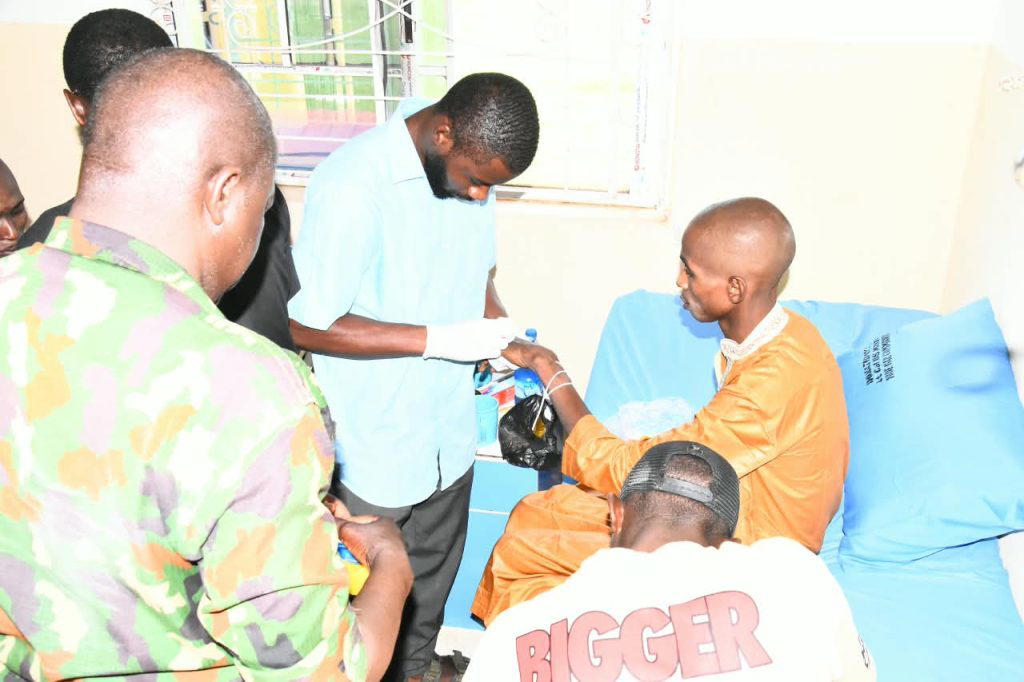
The turning point arrived in the pre‑dawn hours of Thursday, September 24, 2026, when a coordinated intelligence‑led operation by troops of Operation Fansan Yamma pierced the veil of the bandits’ hideout, transforming the night’s darkness into a sudden, fierce burst of light and action. As disclosed by the Joint Task Force North West’s Media Information Officer, Lt. Aliyu Danja, the victims escaped during a raid aimed at a suspected terrorist location in the general area of Kaura Namoda Local Government Area, a strike that was the culmination of weeks of surveillance, intercepted communications, and painstaking groundwork by intelligence units. Daily Trust reported that the five hostages, including Chairman Nura Umar Abdullahi, burst from their makeshift shelters just as the first light crept over the horizon, their hearts pounding with a mixture of terror and exhilaration as they sprinted toward the waiting soldiers who had established a security perimeter. The troops, having been alerted by anomalous radio traffic and the presence of fresh footprints near the den, moved swiftly to secure the area, providing immediate cover and escorting the emancipated captives to a nearby military medical facility where they could receive urgent care. Vanguard News emphasized that the victims were received by troops deployed in the vicinity, given security blankets, and then evacuated for treatment and routine debriefing, a process designed to address both physical injuries and the psychological scars left by weeks of captivity.
The Theatre Command, in a statement cited by both PM News Nigeria and Arise News, commended the courage, resilience, and determination of the victims, praising their ability to endure hardship while maintaining the will to survive, and lauded the troops for their vigilance, professionalism, and swift execution of the operation. The command also noted that one of the victims had already been reunited with his family, while arrangements were being made for the safe return of the remaining hostages to their loved ones and to the Zamfara State Government, a process that involved coordination with local leaders, traditional rulers, and humanitarian agencies to ensure a dignified reintegration. The successful rescue not only restored liberty to five individuals but also served as a tangible demonstration that concerted security efforts, when guided by accurate intelligence and decisive action, can reclaim territory from the grip of terror, offering a glimmer of hope to communities that have long lived under the shadow of uncertainty.
Future Implications: Healing the Scarred Heartland
The liberation of Chairman Nura Umar Abdullahi and his fellow captives opens a critical chapter for Zamfara, one that demands a multifaceted response extending far beyond the immediate celebration of freedom to address the underlying conditions that allowed such an abduction to flourish. Economically, the region suffers from chronic underinvestment, with agricultural productivity hampered by insecurity that keeps farmers away from their fields, disrupts supply chains, and deters both local and foreign investment; analysts estimate that each month of heightened banditry can reduce rural household incomes by as much as fifteen percent, perpetuating a cycle of poverty that fuels recruitment into criminal networks. Socially, the trauma inflicted on hostages and their families reverberates through communal trust, weakening the social fabric that once relied on kinship ties and mutual aid societies to cope with hardship; psychosocial support programs, therefore, must be scaled up, incorporating culturally sensitive counseling and community‑based healing rituals that acknowledge the collective grief while fostering resilience. Politically, the incident highlights the urgent need to strengthen local governance structures, equipping chairmen and councilors with adequate security details, reliable communication equipment, and clear protocols for emergency response, thereby reducing the vulnerability of public officials to targeted abductions. Technologically, the successful rescue underscored the value of real‑time intelligence gathering, satellite imagery, and drone surveillance, suggesting that continued investment in these capabilities, coupled with training for personnel in data analysis and rapid deployment, could pre‑empt future kidnappings by detecting suspicious movements before they culminate in violence.
Culturally, the narrative of the chairman’s endurance can be woven into local storytelling traditions, transforming a tale of terror into a source of communal pride and a reminder that courage can emerge even in the darkest moments. Looking ahead, the Zamfara State Government, in partnership with federal security agencies and international donors, should consider establishing a rapid‑response fund specifically designed to support victims’ immediate needs—medical care, livelihood restoration, and family reunification—while simultaneously launching a comprehensive de‑radicalization and reintegration initiative for low‑level offenders who might be persuaded to lay down their arms. Only through such an integrated approach, one that balances hard security measures with soft investments in human capital, can the whispering savannah begin to echo not with the footsteps of abductors, but with the steady rhythm of farmers returning to their fields, children attending school, and communities reclaiming the peace that has long been elusive.
📰 Sources Cited
- Peoples Gazette: Abducted Zamfara LG chairman, four others escape from bandits’ den
- Daily Trust: Zamfara LG Chair Regains Freedom After Two Months In Captivity
- Vanguard News: Zamfara council chairman, four others escape captivity
- TVC News: Bungudu LGA Chairman, Four Others Escape After Nearly Three Months in Captivity
- PM News Nigeria: Zamfara LG boss, four others escape from terrorists’ captivity
- Arise News: Zamfara LG Chairman Regains Freedom After 61 Days In Captivity
0 Comments
Sign in to commentNo comments yet. Be the first to share your thoughts!