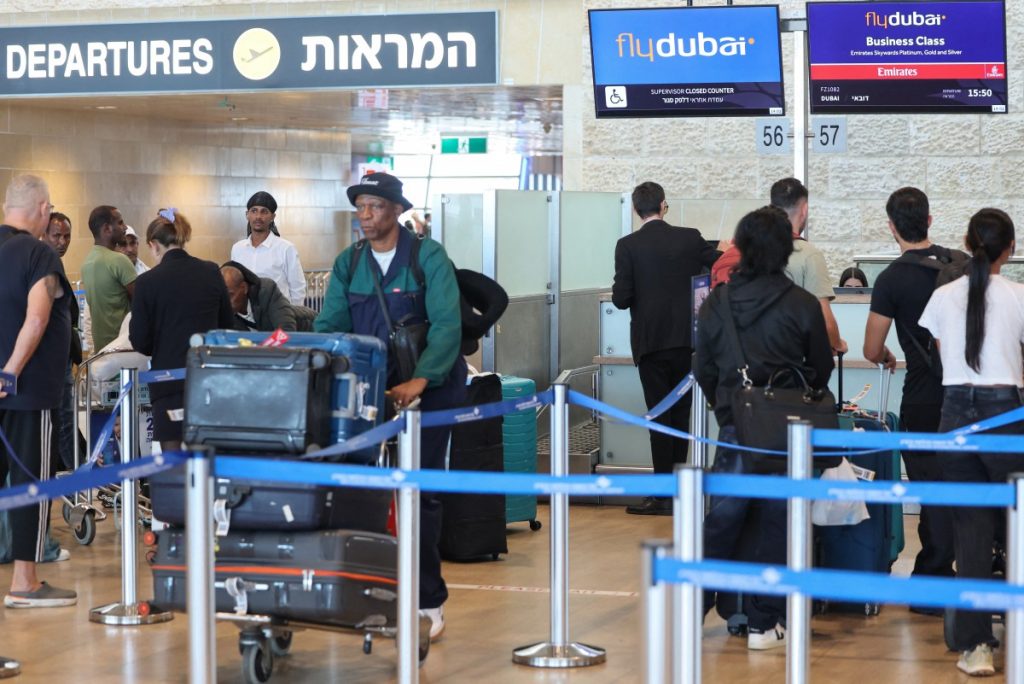
The sun had barely begun its ascent over the Arabian Peninsula when Flydubai flight FZ1073 sliced through the crisp morning air, a slender silver arrow bound for Tel Aviv carrying roughly 150 Israeli souls, many of them heading home to mourn loved ones lost in the brutal October 7, 2023 Hamas assault. What began as a routine journey from Dubai’s gleaming hub to the ancient streets of Jerusalem quickly morphed into a nightmare that unfolded not in the turbulent skies above conflict zones but within the sealed sanctum of the cockpit, where trust is supposed to be absolute. According to Vanguard News, a passenger later recounted how the co‑pilot, whose identity remains shielded by ongoing investigations, launched a sudden, violent assault on the captain, wielding what appeared to be a blunt instrument and attempting to seize control of the aircraft’s flight path. The assault was not merely a bout of cockpit frustration; witnesses described a deliberate effort to push the nose of the Boeing 737 toward the earth, a move that, if successful, would have turned the jet into a flying tomb. As the plane shuddered over Jordanian airspace, emergency blares crackled through the cabin, and the scent of adrenaline mingled with the metallic tang of blood that, according to Channels TV, one brave passenger glimpsed when she peered into the flight deck.
In those terrifying seconds, the aircraft teetered on the brink of catastrophe, its fate hanging on the split‑second reactions of a handful of crew members and passengers who refused to surrender to terror.
The Fury in the Flight Deck
Inside the cramped cockpit, the co‑pilot’s aggression escalated with alarming speed, transforming a routine instrument check into a struggle for survival that echoed the worst fears of aviation security experts worldwide. As reported by Al Jazeera Africa, investigators are painstakingly reconstructing the sequence of events from cockpit voice recordings and flight data, seeking to understand what triggered the co‑pilot’s sudden descent into violence—whether personal distress, ideological extremism, or a psychotic break. The pilot, despite suffering a stab wound that left him bleeding profusely, managed to retain enough consciousness to transmit a mayday signal, a act that aviation analysts say likely saved dozens of lives by alerting air traffic control to the unfolding crisis. According to Business Hallmark, the aircraft, carrying about 150 Israeli passengers, diverted to Tabuk Airport in north‑western Saudi Arabia after the crew initiated emergency procedures, a maneuver that required the remaining pilots to wrestle control from the assailant while navigating through congested Middle Eastern airspace. The successful landing at Tabuk, a remote desert airfield not equipped for wide‑body jets, underscored both the skill of the substitute pilots and the fortuitous timing of the diversion, as the plane touched down just before fuel reserves would have become critically low.
In the aftermath, ground crews rushed to the scene, medical teams tended to the wounded captain, and security personnel detained the co‑pilot, who was subdued by a combination of crew strength and the brave intervention of passengers who rushed forward to restrain him.
Echoes of Terror: Passenger Testimonies
The human dimension of the tragedy emerged most vividly through the raw, trembling voices of those who sat in the cabin, their ordinary flight transformed into a crucible of fear and heroism. Miryam Shira Ohayon, a passenger whose brother had been killed in the October 7 Hamas attack, told reporters—her voice relayed via speakerphone held aloft by her mother—that the plane felt “pretty much out of control” when the stabbing occurred over Jordan, and that she believed they were moments away from death. Her mother, Yasmin Abukasis, added that one woman had braved the cockpit door, witnessed a scene saturated with blood, and helped rally others to subdue the attacker, a detail corroborated by Channels TV’s coverage of the incident. Other passengers described a surreal tableau: the hum of engines juxtaposed with shouted commands, the smell of sweat and fear, and the sudden, fierce solidarity that arose as strangers became impromptu guardians. According to Punch Nigeria, the co‑pilot’s attempt to crash the plane was framed by some as a suicide attack, a claim that Israeli officials echoed when they labeled the act a terror incident, though investigators cautioned against premature conclusions until forensic and psychological analyses are complete. The emotional toll was palpable; many passengers later recounted sleepless nights, lingering flashbacks of the cockpit’s violent struggle, and a profound gratitude toward the unnamed doctor who administered first aid to the wounded pilot amid the chaos.
The Geopolitical Aftermath: Diverted Destinies
Beyond the immediate human drama, the incident sent ripples through the delicate web of international aviation politics, especially given the flight’s origin, destination, and the nationalities of those aboard. The diversion to Tabuk Airport placed Saudi Arabia at the center of an unexpected diplomatic moment, as the kingdom, which maintains a cautious stance toward Israel, suddenly found itself hosting a planeload of Israeli nationals en route to Tel Aviv. As noted by AfricaNews.com, the passengers eventually arrived in Tel Aviv on a replacement Flydubai aircraft, describing the ordeal as “very terrifying” yet praising the efficiency of the Saudi authorities who facilitated their swift transfer. Meanwhile, analysts speculated about the potential ramifications for regional air corridors, noting that any perception of insecurity over Jordanian or Saudi airspace could prompt airlines to reroute flights, increase security expenditures, or press for enhanced intelligence sharing among Gulf carriers. According to unnamed aviation safety experts cited in multiple outlets, the event may accelerate the adoption of reinforced cockpit doors, real‑time biometric monitoring of crew members, and mandatory psychological evaluations for pilots operating on high‑risk routes. The incident also reignited debates about the balance between security and privacy, with some advocating for greater surveillance of crew communications while others warned against eroding the trust essential to cockpit teamwork.
Future Implications: A Blueprint or a Band‑Aid?
As the investigation continues, the aviation industry stands at a crossroads where the lessons drawn from this near‑disaster could either forge a stronger, more resilient safety culture or merely produce superficial fixes that fail to address underlying vulnerabilities. Experts urge a holistic approach that combines technological upgrades—such as tamper‑proof flight controls and automated emergency override systems—with robust human‑factor programs designed to identify stressors, mental health concerns, and radicalization tendencies before they manifest in the cockpit. Historical precedents, from the Germanwings tragedy of 2015 to the EgyptAir crash of 2016, suggest that while hardware solutions can mitigate risk, the human element remains the most unpredictable variable. In the wake of the Flydubai incident, regulators across the Middle East are expected to review crew screening protocols, potentially integrating psychometric testing and real‑time stress monitoring into routine assessments. Airlines may also revisit crew resource management training, emphasizing de‑escalation techniques and the empowerment of flight attendants to intervene when cockpit hierarchy appears compromised. Ultimately, the true measure of success will be whether the industry can transform this harrowing episode into a catalyst for lasting change, ensuring that the skies remain a realm where the promise of safe passage outweighs the specter of hidden malice.
📰 Sources Cited
- Al Jazeera Africa: How will investigation into Flydubai flight attack unfold?
- Punch Nigeria: Flydubai co-pilot attacked pilot, tried to crash plane as Israel claims ‘terror attack’
- Business Hallmark: 150 Israeli passengers bound for Tel Aviv diverted to Saudi Arabia after Flydubai pilots clash mid-air
- Vanguard News: Israel-bound co-pilot attacked pilot in ‘suicide attack’, passenger says
- Al Jazeera Africa: Passengers tell of ‘nightmare’ onboard diverted Flydubai flight
- Channels TV: Flydubai Co-Pilot Attacked Pilot In ‘Suicide Attack’, Passenger Says
- Al Jazeera Africa: Flydubai flight to Israel diverted after attack on pilot
- Google News Nigeria: What happened on diverted Flydubai flight from Dubai to Tel Aviv? - Al Jazeera
- Al Jazeera Africa: Flydubai passengers arrive in Tel Aviv after pilot stabbing
- AfricaNews.com: Passengers of diverted flydubai flight land in Israel
0 Comments
Sign in to commentNo comments yet. Be the first to share your thoughts!