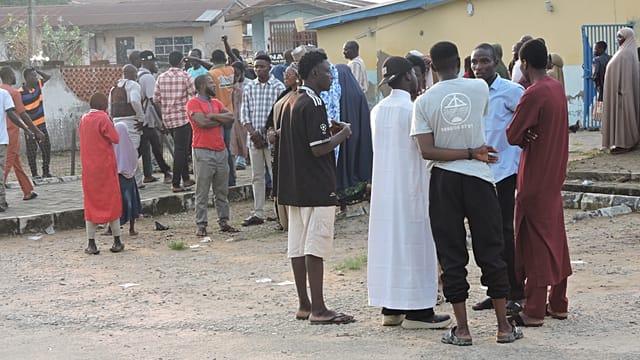
The dusty roads of Minna, Niger State, bore witness to a grim tableau in late September when thirty‑seven suspected illegal miners were ushered into the holding cells of the Nigeria Security and Civil Defence Corps, only to emerge lifeless days later, their bodies a silent indictment of systemic neglect. Eyewitnesses described overcrowded chambers where men lay shoulder to shoulder, the air thick with sweat and desperation, while officials outside the facility spoke of routine arrests for illegal mining, a practice that has long thrived in the mineral‑rich belts of northern Nigeria. The incident ignited a firestorm of condemnation from civil society, political figures, and ordinary citizens, each demanding answers for what many called a preventable custodial tragedy. As news channels replayed footage of the NSCDC parading its suspended Niger commandant and several officers, the nation was forced to confront the uncomfortable reality that the very institutions tasked with protecting citizens had become sites of suffering. In the days that followed, statements from former military president Ibrahim Babangida, senator Shehu Sani, and youth coalitions painted a picture of a state grappling with the dual pressures of resource exploitation and institutional accountability, while the families of the deceased waited in anguish for a truth that seemed perpetually out of reach.
According to Channels Television, the NSCDC’s public parade of the suspended commandant and his subordinates was intended to signal accountability, yet critics argued that the spectacle merely underscored the depth of institutional rot, with the accused officers facing allegations of negligence that allowed the miners to perish in squalid conditions. The Coalition of Nigerian Youth Leaders, in a press release disseminated through Blueprint Newspapers, called for a full judicial inquiry, insisting that the deaths were not isolated incidents but symptomatic of a broader pattern of abuse within paramilitary detention facilities across the country. Shehu Sani, speaking to Punch Nigeria, warned that overcrowded cells—often designed for a fraction of the occupants they now hold—create a lethal cocktail of poor ventilation, inadequate sanitation, and delayed medical attention, turning temporary holding spaces into de facto death traps. These voices converged on a single point: the need for an independent, transparent investigation that could pierce the veil of bureaucratic defensiveness and deliver justice to the bereaved families of Minna.
The Shadows in the Holding Cell: Overcrowding and Silence
Inside the NSCDC holding cell where the thirty‑seven miners drew their final breaths, the physical environment told a story of neglect that transcended mere accident; reports from Punch Nigeria indicated that the facility, originally intended for short‑term detainees, was forced to accommodate far beyond its capacity, with inmates packed like sardines in a tin, their movements restricted to the barest shift of a foot. Legal experts consulted by the Nigerian Bar Association noted that such conditions violate both national statutes on detention standards and international human rights conventions that prohibit cruel, inhuman, or degrading treatment, yet the NSCDC’s internal protocols appeared to have been ignored or overridden in the rush to process suspected illegal miners. The BBC’s Hausa‑language service, Legit News, echoed these concerns, describing how the lack of basic amenities—clean water, functional toilets, and timely medical checks—created an environment where treatable ailments could quickly escalate to fatal outcomes, especially among men already weakened by the rigors of artisanal mining. As the Niger State government moved to constitute a ten‑member independent panel, as announced by the Interior Minister on AfricaNews.com, activists warned that without immediate remedial action—such as decongesting cells, providing regular health screenings, and training officers in detainee welfare—the same tragedy could repeat itself in any of the nation’s numerous holding facilities.
The economic dimension of the crisis further complicates the picture, as illegal mining in Niger State is not merely a law‑and‑order issue but a livelihood strategy for countless youths who see little alternative in a region where formal employment opportunities remain scarce. According to Ripples Nigeria, former president Babangida denied any ownership of the gold mining sites from which the suspects were arrested, attempting to distance himself from narratives that linked political elites to the exploitative networks that fuel the informal sector. Yet, analysts from TVC News observed that the very existence of such sites points to a shadow economy where state officials, traditional leaders, and foreign interests intersect, often turning a blind eye to illegal extraction in exchange for a share of the proceeds. This tangled web creates a paradox: the state arrests miners for breaking the law while simultaneously benefiting from the mineral wealth that those same miners extract, a contradiction that fuels public cynicism and undermines trust in governmental institutions. The civil society group that backed the federal investigation, as reported by Punch Nigeria, emphasized that any lasting solution must address the root economic drivers, offering viable livelihood programs and formalizing artisanal mining under regulated frameworks that protect both workers and the environment.
The Echoes of Youth Outcry: Demands for Justice Across the Nation
The outcry that followed the miners’ deaths was not confined to the corridors of power in Abuja or the streets of Minna; it resonated in university campuses, market squares, and social media platforms where young Nigerians articulated a collective frustration with a system that appears to value mineral wealth over human life. The Coalition of Nigerian Youth Leaders, as highlighted in Blueprint Newspapers, organized peaceful protests and issued statements demanding not only the prosecution of those directly responsible but also a comprehensive reform of the NSCDC’s detention policies, including mandatory oversight by civilian bodies and the installation of independent monitoring committees in all paramilitary holding facilities. Shehu Sani’s warnings, amplified by Punch Nigeria, served as a rallying cry for activists who pointed out that overcrowding is a nationwide malaise, with prisons and detention centers across Nigeria routinely operating at double or triple their intended capacity, a situation exacerbated by judicial delays and inadequate funding for alternative sentencing. In response, the Nigerian Bar Association, as detailed in Punch Nigeria, constituted a legal team to probe the deaths, signaling that the legal profession views the incident as a litmus test for the country’s commitment to rule of law and human rights. Meanwhile, the Peoples Redemption Party, in a statement carried by Punch Nigeria, called for an independent inquiry that would transcend partisan interests, insisting that the families of the deceased deserve answers untainted by political maneuvering or institutional cover‑ups.
The Politics of Denial and Condemnation: Elite Reactions and Public Trust
Amid the growing chorus for accountability, the reactions of prominent political figures added layers of complexity to the unfolding narrative. Former military president Ibrahim Babangida’s dual stance—denying ownership of the mining sites while condemning the deaths and urging calm—was reported by both Ripples Nigeria and The Sun News Online, illustrating a delicate balancing act where elite figures seek to preserve their reputations while acknowledging public outrage. His call for a transparent, independent committee of inquiry and his expression of condolences were echoed by the Niger State government’s swift decision to constitute a panel, a move that some analysts interpreted as an attempt to preempt further escalation and demonstrate responsiveness to civil society pressure. However, critics argued that such gestures risk becoming performative if not backed by concrete reforms; the Interior Minister’s announcement of the ten‑member panel on AfricaNews.com, while a step forward, raised questions about the panel’s mandate, independence, and access to evidence, especially given the NSCDC’s hierarchical structure and potential internal resistance to scrutiny. The Nigerian Newspapers roundup on TVC News highlighted how the miner deaths competed for headlines with other national issues such as transport costs, indicating that sustaining public attention would require persistent advocacy and media vigilance to keep the case from fading into the background of Nigeria’s relentless news cycle.
The Institutional Response: Panels, Probes, and the Path Forward
The formation of the ten‑member independent panel, as announced by the Interior Minister, represents the most formal institutional response to date, yet its effectiveness hinges on several critical factors that observers have begun to scrutinize. According to AfricaNews.com, the panel comprises members from the judiciary, civil society, and the medical profession, tasked with conducting forensic examinations, reviewing custodial logs, and determining whether the deaths resulted from neglect, violence, or a combination of both. The Nigerian Bar Association’s involvement, as noted in Punch Nigeria, adds a layer of legal expertise that could ensure that any findings are grounded in due process and that recommendations align with both national legislation and international human rights obligations. Meanwhile, the NSCDC’s internal disciplinary actions—evidenced by the parade of suspended officers—suggest that the corps is attempting to address the issue from within, though skeptics question whether such measures are sufficient without external oversight. Civil society groups, as reported in Punch Nigeria, have urged that the panel’s proceedings be made public, with regular briefings to ensure transparency and to prevent the investigation from becoming a closed‑door exercise that shields culpable parties. The involvement of the PRP, demanding an independent inquiry, further underscores the desire for a process that is perceived as impartial and capable of delivering tangible outcomes such as prosecutions, policy revisions, and compensation for victims’ families.
Future Implications: A Blueprint or a Band‑Aid?
Looking ahead, the tragedy of the thirty‑seven miners in NSCDC custody presents a stark crossroads for Nigeria: will the incident catalyze systemic reform, or will it become another cautionary tale that fades as the news cycle shifts? The economic imperative to formalize and regulate artisanal mining offers a pathway to reduce the incentives that drive youths into illegal extraction, thereby decreasing the likelihood of mass arrests that overwhelm detention facilities. Programs that provide vocational training, access to micro‑credit, and legal mining concessions could transform a source of conflict into a engine of inclusive development, a strategy echoed by experts interviewed in TVC News who argue that addressing the root causes of illegal mining is as vital as reforming detention practices. Simultaneously, the political will to enforce detention standards—such as limiting cell occupancy, guaranteeing timely medical care, and establishing independent monitoring mechanisms—will determine whether the NSCDC can shed its reputation as a violator of human rights and regain public trust. The ongoing investigations, if conducted with rigor and transparency, have the potential to set precedents for accountability that extend beyond Niger State, influencing how other paramilitary agencies handle detainees across the federation. Ultimately, the legacy of this episode will be measured not in the number of statements issued or panels convened, but in the tangible improvements to the lives of those who, like the thirty‑seven miners, seek dignity and safety in a nation rich in resources yet often poor in justice.
📰 Sources Cited
- Google News Nigeria: JUST IN: NSCDC Parades Suspended Niger Commandant, Officers Over Miners’ Deaths - Channels Television
- Blueprint Newspapers: Nigerian youth leaders demand probe, justice over deaths of 37 miners in NSCDC custody
- Punch Nigeria: Niger miners’ deaths: Shehu Sani warns of overcrowded cell dangers
- Ripples Nigeria: Babangida denies ownership of mining sites from which 37 miners died in NSCDC custody
- Punch Nigeria: Group backs probe into 37 miners’ deaths in Niger
- AfricaNews.com: Nigeria appoints panel to probe deaths of 37 miners in holding cell
- TVC News: Nigerian Newspapers September 20: Transport Costs, Miners Death, Others
- Punch Nigeria: NBA names team to probe death of 37 miners in Niger
- Punch Nigeria: Niger miners’ deaths: PRP demands justice, inquiry
- Sun News Online: IBB condemns deaths of 37 miners in NSCDC custody
0 Comments
Sign in to commentNo comments yet. Be the first to share your thoughts!