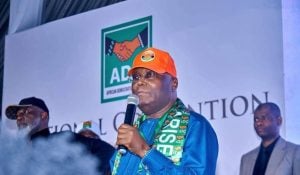
The early September sun filtered through the polished glass of Atiku Abubakar’s Abuja residence, casting long shadows that seemed to stretch across the nation’s uncertain horizon. In a quiet study adorned with framed photographs of past campaigns and diplomatic engagements, the former vice‑president received a visitor whose name still echoes in the corridors of power: Aisha Buhari, the widow of Nigeria’s late president Muhammadu Buhari. According to THISDAY, the encounter was disclosed by Atiku himself on his social media platforms, where he described the visit as “warm and deeply appreciated,” a phrase that carried both personal courtesy and a subtle political resonance. Business Hallmark noted that the meeting arrived amid intensifying political manoeuvring ahead of the 2027 general elections, suggesting that even seemingly private gatherings are scrutinized for signs of emerging alliances. Punch Nigeria echoed the sentiment, reporting that neither party revealed the exact purpose of their discussion, yet the atmosphere was undeniably charged with the weight of national expectation. As the two figures exchanged pleasantries, the room seemed to hold its breath, aware that the conversation could ripple beyond the walls of the mansion and into the bustling markets, classrooms, and clinics where ordinary Nigerians grapple with daily survival. The visit, though brief, became a symbolic touchstone—a moment when two strands of Nigeria’s recent history brushed against each other, inviting observers to wonder whether such contact could sow the seeds of a broader concord aimed at healing a fractured polity.
The Economic Backdrop: Inflation, Unemployment, and the Hope for Renewal
Nigeria’s economy has been navigating a turbulent stretch, with inflation hovering above 22 percent and unemployment gripping nearly 35 percent of the labor force, figures that analysts cite as evidence of a cost‑of‑living crisis that has stretched household budgets to breaking point. In his social media post, Atiku emphasized that families across the country are being strained by the rising cost of food, transportation, education, healthcare, and other essential needs, a sentiment that mirrors the findings of recent surveys conducted by the National Bureau of Statistics. He went on to declare that Nigerians deserve an economy that rewards hard work, restores opportunities, and enables families to live with dignity and hope, echoing a refrain that has become common among opposition figures seeking to differentiate themselves from the incumbent administration’s handling of macroeconomic policy. According to Business Hallmark, Atiku framed the meeting with Aisha Buhari as a reminder that those aspiring to lead must prioritize the welfare and dignity of citizens, a call that resonates with grassroots organizations advocating for targeted subsidies, job‑creation programs, and investment in agro‑processing to reduce reliance on imported staples. TheCable added that the former vice‑president invoked the slogan “Make Nigeria Affordable Again,” a phrase that encapsulates his vision of recalibrating fiscal policy to ease the burden on ordinary Nigerians while stimulating domestic production.
Economic analysts, speaking on condition of anonymity, warned that without structural reforms—such as diversifying the revenue base beyond oil, tightening monetary policy to curb inflation, and improving power supply—any rhetorical promise of affordability risks remaining aspirational. Yet the very act of a high‑profile opposition figure meeting a former first lady known for her advocacy of education and human capital development hints at a potential convergence of ideas around investing in skills training and vocational centers as a pathway to employment. The discussion, though undisclosed in detail, likely touched upon how public‑private partnerships could be leveraged to revive moribund industries, thereby creating jobs that pay living wages and reduce the informal sector’s prevalence. In a nation where over 60 percent of the population lives below the poverty line, such economic deliberations are not merely academic; they are a matter of survival for millions who queue daily for subsidized rice, trek long distances for affordable transport, and struggle to pay school fees. The meeting, therefore, serves as a symbolic checkpoint where the rhetoric of economic renewal is measured against the stark realities of market prices, exchange rate volatility, and the urgent need for inclusive growth strategies that can withstand external shocks.
The Political Landscape: Alliances, Realignments, and the Shadow of 2027
The encounter between Atiku Abubakar and Aisha Buhari cannot be divorced from the shifting tectonics of Nigerian politics as parties and personalities reposition themselves for the 2027 electoral contest. Politics Nigeria highlighted that the meeting drew attention precisely because it occurs amid heightened political activity, with Atiku emerging as the presidential candidate of the African Democratic Congress (ADC) while opposition parties continue to explore possible cooperation frameworks. Earlier in the year, the ADC had explained Atiku’s absence from an opposition summit in Abuja, asserting that the gathering was focused on party‑level discussions rather than individual candidacies—a nuance that underscores the delicate balance between collective strategy and personal ambition. TheCable’s photo spread, which accompanied the story, captured the two figures sharing a warm exchange, an image that quickly circulated across social media platforms and sparked speculation about a tacit understanding that could transcend party lines. Historical context reveals that Aisha Buhari, during her husband’s tenure, cultivated a network of influence that extended into the northern political establishment, a network that still holds sway in constituencies such as Katsina, where her son Yusuf Buhari recently secured the APC nomination for the Sandamu/Daura/Mai’adua Federal Constituency with a commanding 6,386 votes against a mere 322 for his rival, as reported by Politics Nigeria.
This victory has reignited interest in the Buhari family’s political capital, suggesting that any engagement with figures like Atiku could be interpreted as an attempt to either consolidate or recalibrate that influence in anticipation of future electoral battles. Analysts note that the opposition’s challenge lies in forging a cohesive front capable of challenging the incumbent party’s structural advantages, including control of state resources and patronage networks. In this light, the meeting may be seen as a exploratory gesture—a test of whether shared concerns over governance, economic hardship, and national unity can outweigh lingering partisan loyalties. Some commentators argue that Aisha’s continued promotion of her late husband’s legacy, particularly through the groundbreaking ceremony for a Computer Science Complex at Al‑Qalam University financed by proceeds from the book From Soldier to Statesman: The Legacy of Muhammadu Buhari, signals a willingness to engage in nation‑building projects that transcend partisan rhetoric. If such initiatives attract bipartisan support, they could become the foundation for a broader coalition that emphasizes technocratic governance and investment in human capital. Conversely, skeptics caution that without concrete policy commitments and a clear power‑sharing arrangement, such encounters risk remaining symbolic gestures that fail to translate into electoral gains. The coming months will reveal whether the dialogue between these two prominent figures evolves into a formal alliance, a loose coalition of convenience, or simply a footnote in the intricate choreography of Nigeria’s democratic journey.
The Cultural and Social Dimension: Legacy, Memory, and Grassroots Aspirations
Beyond the ledgers of economics and the calculus of politics, the meeting between Atiku and Aisha Buhari taps into deep cultural currents that shape Nigerian identity, particularly the veneration of legacy and the yearning for moral leadership. Aisha Buhari has been steadfast in preserving the memory of Muhammadu Buhari’s tenure, emphasizing his commitment to education and human capital development as his most enduring contribution—a narrative she reinforced during the groundbreaking ceremony for the Computer Science Complex at Al‑Qalam University, where she declared that the project was intended to honor the late president’s legacy through investment in knowledge rather than through monuments. This focus on education as a vehicle for legacy resonates with Atiku’s own longstanding advocacy for vocational training and youth empowerment, a policy thread that has featured prominently in his campaign platforms over multiple election cycles. Social observers note that in a society where extended family ties, communal responsibility, and respect for elders remain strong, the image of a former first lady engaging with a former vice‑president carries symbolic weight; it suggests a moment of intergenerational dialogue where the values of service, sacrifice, and national pride are reaffirmed. Grassroots movements, particularly those advocating for women’s participation in politics and the empowerment of youths, have welcomed such high‑profile interactions as potential catalysts for broader civic engagement.
According to community leaders interviewed by local radio stations in Kaduna and Kano, the sight of two prominent figures discussing the need to “ease the burden, restore hope, and make Nigeria affordable again” inspires optimism among market traders, teachers, and healthcare workers who daily confront the consequences of economic hardship. Cultural analysts argue that the meeting also reflects a subtle renegotiation of the public’s expectation of leadership: rather than seeking charismatic strongmen, there is a growing appetite for leaders who embody empathy, integrity, and a willingness to listen across divides. This shift is evident in the rising popularity of civic forums, town hall meetings, and social media campaigns that demand transparency and accountability from public officials. Moreover, the encounter highlights the role of symbolism in Nigerian politics—where a handshake, a shared smile, or a jointly issued statement can carry as much weight as a policy white paper, especially in a climate where trust in institutions is eroded. By appearing together, Atiku and Aisha Buhari implicitly signal that the pursuit of a better Nigeria is not the sole preserve of any one party or individual, but a collective endeavor that invites contributions from diverse quarters of society. Whether this symbolism translates into tangible programs that uplift marginalized communities, improve access to quality education, or strengthen social safety nets remains to be seen, but the cultural resonance of their meeting undoubtedly adds a layer of moral authority to the ongoing discourse about Nigeria’s future.
Future Implications: A Blueprint for Coalition or a Fleeting Gesture?
Looking ahead, the significance of the September meeting will be measured not by the warmth of the exchange captured in photographs, but by the concrete steps that follow in the realm of policy formulation, electoral strategy, and governance. If the dialogue between Atiku Abubakar and Aisha Buhari evolves into a structured collaboration, it could serve as a linchpin for a broader opposition coalition that blends the ADC’s national reach with the Buhari family’s entrenched influence in the northwest—a combination capable of challenging the incumbent party’s dominance in both the Senate and the House of Representatives. Political strategists suggest that such a coalition might prioritize a platform centered on economic revitalization through industrialization, investment in renewable energy to alleviate power deficits, and comprehensive education reform aimed at aligning curricula with the demands of a modern, technology‑driven economy. Technological dimensions, often overlooked in traditional political analyses, could gain prominence if the partnership embraces digital governance initiatives—such as e‑procurement systems to curb corruption, broadband expansion to bridge the urban‑rural divide, and support for tech startups that create jobs for the burgeoning youth population. Experts from the Nigerian Institute of Social and Economic Research warn, however, that any alliance must contend with the formidable obstacles of ethnic politics, resource‑based patronage, and the incumbent’s control over state security apparatuses, which could impede efforts to level the playing field.
Moreover, the timing of any formal agreement will be critical; early mobilization could allow the opposition to build grassroots structures, register new voters, and craft a resonant narrative that speaks to the everyday anxieties of Nigerians grappling with inflation, unemployment, and insecurity. Conversely, if the meeting remains an isolated courtesy visit without subsequent joint policy pronouncements or campaign coordination, it may be remembered as a poignant but ultimately inconsequential episode—a reminder that in the volatile arena of Nigerian politics, personal rapport does not automatically translate into electoral power. The coming months will reveal whether the whispered dialogues in Abuja sow the seeds of a durable blueprint for national renewal or simply echo as a fleeting whisper in the wind, leaving the nation to continue its search for a leadership that can truly deliver on the promise of a better, more affordable, and hopeful Nigeria.
📰 Sources Cited
- THISDAY: Aisha Buhari Visits Atiku
- Business Hallmark: Aisha Buhari visits Atiku amid 2027 political realignment
- Punch Nigeria: Aisha Buhari visits Atiku
- Politics Nigeria: 2027: Details Emerge As Atiku Hosts Aisha Buhari in Abuja
- Google News Nigeria: PHOTOS: Atiku hosts Aisha Buhari in Abuja, says visit underscores need for ‘better Nigeria’ - TheCable
0 Comments
Sign in to commentNo comments yet. Be the first to share your thoughts!