
Genocide, Impunity, and the Security Collapse: Nigeria's IDP Crisis in Benue and Plateau—A Ticking Time Bomb
Author: By Samuel Chimezie Okechukwu
Humanitarian Crises Analyst & Conflict-Displacement Researcher
1.0 Executive Summary: Crisis of Numbers, Narrative, and Imminent Peril
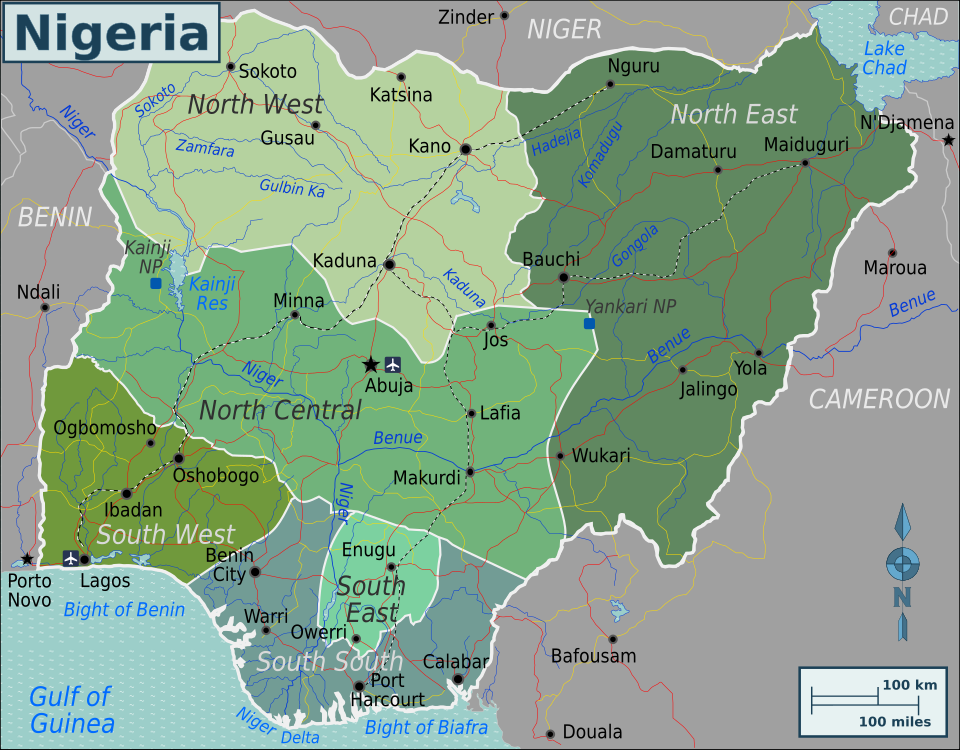
The crisis of Internally Displaced Persons (IDPs) in Nigeria's North-Central states of Benue and Plateau represents a catastrophic failure of governance, transitioning from a localized conflict into an internationally recognized human rights disaster [10.2, 4.4]. As of December 2025, the IDP figures are officially estimated at over 615,000 in Benue and 65,000 in Plateau [5.1]. However, high-profile political admissions confirm that these figures are understated, with the true caseload, including those in host communities, potentially exceeding one million [2.2, 3.2].
The dominant narrative of "farmer-herder conflict" has been rejected by victims and international observers, most recently by U.S.1 Congressman Riley Moore, who, following his December 2025 visit, publicly labeled the systematic violence against predominantly Christian farming communities as a "genocidal campaign" [2.1, 2.2]. The violence is characterized by deliberate killings, total destruction of villages, and land appropriation, constituting a strong case for ethnic cleansing [6.1].2
The problem is systemic: a centralized security structure has been overwhelmed, with evidence that security forces often arrive after perpetrators have left, leading to a pervasive culture of impunity [7.2, 4.4].3 Despite the appropriation of enormous annual security budgets (e.g., N6.57 trillion in 2025 [8.1]), the state has failed its basic duty of protection, leaving citizens in squalid IDP camps where disease, malnutrition, and protection risks are rampant [10.2, 9.1]. The crisis is increasingly viewed as a "ticking time bomb," threatening Nigeria's unity and regional stability [6.4].
2.0 The Global Spotlight: High-Profile Revelations and Discrepant Figures
2.1 Congressman Riley Moore’s Decisive Visit (December 2025): The "Genocidal Campaign" Label
The visit of U.S. Congressman Riley Moore (R-WV) in December 2025 focused the global lens on Benue State. Moore's post-visit statements, delivered after interacting with IDPs and receiving testimonies from religious leaders like Bishop Wilfred Chikpa Anagbe, directly challenged the Nigerian government’s framing [2.1, 4.2].
Moore’s Revelation: He cited over 600,000 Christians displaced in Benue and unequivocally described the violence as a “genocidal campaign” aimed at permanent displacement [2.1]. The accounts he shared, including the brutal killing of a pregnant woman, provided graphic evidence of the systematic intent behind the attacks [2.2]. This labeling elevates the crisis to a matter of international atrocity prevention.
2.2 The Political Admission: House of Reps Member Confirms Under-Reporting
Internal political figures have corroborated the claim of under-reporting. Hon. Terseer Ugbor (Kwande/Ushongo Federal Constituency, Benue State), a member of the House of Representatives, publicly stated on Arise TV that the official figures circulating from investigating panels and agencies are “understated,” acknowledging that the true scope of displacement is far worse [3.2]. This admission is crucial, as it validates the skepticism of local NGOs and displaced communities regarding government statistics.
2.3 Actual Caseload and Discrepancy: Why Official Figures Fall Short
Official IDP figures, primarily from the IOM Displacement Tracking Matrix (DTM), capture verified cases in camps and monitored host communities [1.1].4 The DTM (Round 47, July 2025) reports 615,000+ IDPs in Benue and 65,000+ in Plateau [5.1]. Amnesty International cites 510,182+ in Benue (July 2025, drawn from December 2024 data) [10.2]. Local NGOs and the Ugbor admission place displacement above 1 million across Benue and above 100,000 in Plateau when host communities are included [2.2, 5.2]. DTM also notes that 82 per cent of IDPs in the North-Central zone reside in host communities (September 2024) [1.1], explaining why official totals understate the real burden.
2.4 International Geopolitics: The Trump Factor and External Pressure
The crisis drew threats of military intervention from former U.S. President Donald Trump, who spoke of deploying US military or air strikes to halt the "killing of large numbers of Christians" [4.1, 4.2].6 Trump's decision to reinstate Nigeria on the U.S. State Department's list of "Countries of Particular Concern (CPC)" for religious freedom violations was a high-pressure diplomatic tool [5.1].7 The involvement of such a high-profile global figure underscores the perception by external powers that the Nigerian government is either unwilling or unable to protect its citizens from mass atrocities [4.3].8
3.0 Root Cause Deconstruction: Systematic Violence and Ethnic Cleansing
3.1 Attack Patterns: Deliberate Targeting and Strategic Land Dispossession
The systematic, recurring nature of the violence—often attributed to armed herder militias—reveals a strategic intent beyond resource competition [6.1].9 Attacks are characterized by the deliberate burning of homes, schools, clinics, and grain reserves [5.1, 6.1].10 This destruction is designed to make communities uninhabitable and prevent return, signaling forced displacement and land appropriation [6.1]. The violence disproportionately targets indigenous Christian farming communities (Tiv, Idoma, etc.) [6.2].11 Incidents like the June 2025 Yelwata massacre in Benue—over 150 civilians killed, including entire families burned alive—demonstrate a genocidal intent to erase community presence [5.1].12
3.2 The Failure of the "Climate Change/Farmer-Herder" Narrative
The official and media tendency to frame the crisis as merely a "herder-farmer clash" or "climate change-induced" is insufficient and, according to local leaders, functions as "political camouflage" [6.2].13 Environmental stress does not explain the organized use of sophisticated firearms and brutal close-range violence (machetes and knives) [10.2].14 It does not account for the systematic destruction of fixed infrastructure [5.1], nor for repeated attacks in the same areas with no return of the original population, suggesting permanent seizure [6.1]. The reality is a struggle for land and identity, with profound ethnic and religious undertones [6.2].
3.3 Attacks Inside IDP Camps: The Apex of Security Collapse
The very existence of attacks targeting displaced persons after they have fled to camps—such as threats and ambushes near Makurdi IDP sites—demonstrates the apex of security failure [5.1, 9.2].
* Zero Protection: If the state cannot protect a designated refuge, the constitutional contract of protection has entirely collapsed [7.2].
* Impunity Confirmed: The ability of armed groups to operate and attack close to security checkpoints or even within camp peripheries confirms their profound confidence in the impunity they enjoy [4.4].
4.0 The Catastrophic Failure of Governance and Social Systems
4.1 The Security Vacuum: Centralized Policing and Inaction
The centralized police system (governed by Section 214 of the 1999 Constitution) is the major structural obstacle to peace [7.2].
The federal police are often overstretched, under-resourced, and lack the cultural and linguistic familiarity required for effective intelligence gathering and swift response in local areas [7.2]. State Governors, constitutionally restricted from commanding federal forces, are mere "Chief Security Officers" in name only, leading to a critical vacuum of local command and control during crises [7.2].
4.2 The Culture of Impunity: Failure to Prosecute and its Systemic Implications
The "culture of impunity" is the central systemic flaw [4.4, 6.1]. The security apparatus's failure to consistently arrest and successfully prosecute the perpetrators of mass atrocities, even in high-profile cases, ensures the crisis protracts [4.4]. This lack of consequence signals a permissive environment for the violence, fueling the belief among the displaced that the state is either complicit or intentionally impotent [6.1].15
4.3 The Budget-Security Paradox: Billions vs. Bare Existence
The colossal failure of security is juxtaposed against immense annual spending. In the 2025 Federal Budget, the Security and Defense Sector was allocated approximately N6.57 trillion [8.1].16
The Paradox: While billions are allocated for Defense, Police, and Interior Ministries [8.1], the basic security needs of rural farming communities in Benue and Plateau remain unmet. This suggests a systemic problem of misallocation, corruption, or a complete lack of strategy focused on non-state actor threats in the North-Central region.
5.0 The Humanitarian Crisis: A Critical Feature Analysis
5.1 Dire Camp Conditions: Shelter, WASH, and Public Health Crisis
The humanitarian situation in the IDP camps (e.g., Makurdi International Market, Daudu, Agan Toll Gate) is dire and characterized by critical deficiencies [9.1, 10.2]. A UNICEF assessment in Yelwata found that 76% of households reported difficulty accessing water, with 86% practicing open defecation, creating a high risk for waterborne diseases [9.1]. Malaria (47%) and diarrhea (30%) are the most reported illnesses. The lack of clean water, along with inadequate hygiene facilities, contributes to pregnant women contracting infections, and births occur daily in unhygienic environments [10.2].17 IDPs are often in makeshift, overcrowded shelters constructed from blankets and old clothes, offering no protection from harsh weather [10.2].18
5.2 Livelihoods Decimation and Food Insecurity
The displacement has utterly decimated the livelihoods of a population where 99 per cent of households were farmers prior to displacement [10.1].19 During displacement, 59 per cent rely entirely on humanitarian assistance [10.1].20 A majority of households earn less than ₦20,000 monthly, forcing dangerous coping strategies like borrowing food (46%) [10.1].21 This dependence ensures that any return without massive agricultural support will be unsustainable.
5.3 Protection Risks: Gender-Based Violence (GBV) and Child Vulnerability
The camps are characterized by heightened protection risks [9.1, 10.2]. Overcrowding and a lack of safety infrastructure lead to increased risks of rape and domestic violence [10.2].22 Areas near water points and latrines are identified as especially unsafe for women and girls [9.1]. 83% of school-aged children are out-of-school, with facilities destroyed and temporary learning centres closing [9.1]. Hundreds of children are unaccompanied or separated from their families, facing dangers with no safe place to live [10.2].23
6.0 Agency Response and Gaps: Local, National, and International Action
6.1 Local and National Agency Response (SEMA, NEMA)
State Emergency Management Agencies (SEMA) and the National Emergency Management Agency (NEMA) are the mandated coordinators [9.1]. NEMA's response often involves directing the Federal Ministry of Humanitarian Affairs to scale up relief after major attacks [5.2]. The response remains primarily reactionary and severely under-resourced; SEMA is often overwhelmed by a crisis of this scale, relying almost entirely on external funding and logistics [9.1].
6.2 International Agency Response (UNICEF, IOM, UNHCR) and Funding Shortfalls
International bodies provide critical, multi-sectoral support. IOM/DTM supplies tracking and analysis essential for humanitarian planning [1.1]. UNICEF responds with WASH, health, and child protection services, repairing water points and deploying essential medical supplies [5.2, 9.1].24 Despite these efforts, the response is consistently strained. The high ratio of IDPs in host communities (82%) makes targeted aid difficult, and persistent insecurity prevents comprehensive, long-term intervention, particularly in reconstruction and rehabilitation efforts [1.1, 9.2].
6.3 The Role of Civil Society and Religious Bodies
Religious leaders, such as Bishop Wilfred Chikpa Anagbe, have been critical in drawing international attention, often bearing the risk of speaking truth to power [4.2]. Local Civil Society Organizations (CSOs) often provide the first and most consistent line of support, managing camps and providing data that contradicts government figures, acting as vital watchdogs [6.2].
THE OFFICIAL NARRATIVE: Security Efforts and Constraints
According to official statements, authorities emphasize ongoing deployments, budgeted procurements, and collaboration with humanitarian partners to stabilize Benue and Plateau. Government briefings cite joint task forces, planned police recruitments, and state-level peace committees as evidence of intent to secure return routes. Officials also highlight difficult terrain, limited air assets, and dispersed host-community populations as operational constraints. The official narrative frames the crisis as complex but manageable with sustained funding and inter-agency coordination, while critics note that timelines, benchmarks, and accountability for results remain unclear.
7.0 Nigeria's IDP Crisis: A Ticking Time Bomb
The crisis is a ticking time bomb because the factors driving displacement are compounding:
7.1 Proliferation of Armed Groups and Radicalization Risk
The unchecked impunity and collapse of security are allowing armed groups to proliferate and operate freely [6.4].25 The long-term abandonment of hundreds of thousands of youth in IDP camps creates a cohort vulnerable to recruitment by various criminal and militant networks, posing a future threat to national security [6.4].
7.2 Regional Destabilization and Geopolitical Fallout
Nigeria's inability to secure its Middle Belt directly impacts West Africa's security matrix. Unresolved conflict and mass displacement threaten to spill over borders (e.g., into Cameroon, as noted by some secondary and tertiary displacement) [5.1].26 The international rhetoric—from the CPC designation to the Trump threats—shows global acknowledgment that the domestic crisis is a threat to international peace and security [4.1, 6.3].
8.0 Global Scrutiny and Path to Durable Solutions
8.1 Policy and Legislative Reforms: The Imperative of State Policing
The failure of the federal security architecture necessitates a systemic overhaul [7.2]. Moving policing from the Exclusive to the Concurrent Legislative List (as provided for in proposed constitutional amendments) is the most critical legislative reform [7.2]. State policing would offer localized intelligence, cultural familiarity, and prompt response, directly addressing the “time gap” attackers exploit [7.2].
8.2 Critical Action Points and the Future of Nigeria
If federal forces are deployed permanently to secure, clear, and hold ancestral communities, then the safe and voluntary return of IDPs—desired by 96% of those surveyed—can proceed with reduced risk [8.2, 7.2]; if this deployment remains intermittent, displacement and radicalization risks will deepen. If an independent judicial process investigates and prosecutes atrocity crimes, then the culture of impunity can erode; without it, perpetrators will continue to act without consequence [4.4]. If a significant portion of the annual security budget is redirected into a joint Federal/State reconstruction fund, then homes, clinics, and schools can be rebuilt quickly enough to make returns sustainable [8.1]; if funding stays locked in centralized spends, rural communities will remain exposed and unsheltered.
KEY QUESTIONS FOR NIGERIA'S LEADERS AND PARTNERS
How quickly can secure corridors be established and held to allow organized returns without triggering new attacks? What transparent milestones will show that prosecutions for mass atrocities are moving from statements to convictions? How will WASH and basic health services reach the 82% of IDPs in host communities who are largely unserved? What safeguards will be deployed to reduce GBV risks around water points and latrines during peak demand periods? How will international support be conditioned on measurable protection outcomes while respecting Nigeria’s sovereignty?
TOWARDS A GREATER NIGERIA: WHAT EACH SIDE MUST DO
If the federal government ties security deployments to verifiable protection benchmarks and publishes monthly progress, then confidence in return will rise; if not, fear will keep families in limbo. If Benue and Plateau state authorities operationalize community liaison structures with public reporting on GBV, WASH, and schooling, then humanitarian actors can target resources faster; absent that, gaps will persist. If international partners fund rapid WASH upgrades, mobile health, and shelter kits for host-community IDPs while supporting justice-sector reforms, then preventable mortality and dropouts can fall; without this, avoidable deaths and lost schooling will continue. If CSOs and faith leaders keep documenting abuses with vetted evidence and pressing for accountability, then impunity will erode; silence would entrench it. If private sector logistics supports safe supply chains for food and reconstruction materials, then aid can bypass chokepoints; without it, scarcity and inflation will worsen.
KEY STATISTICS PRESENTED
Officially recorded 615,000+ IDPs in Benue and 65,000+ in Plateau (DTM Round 47, July 2025) [5.1]; >1 million displaced across Benue and >100,000 in Plateau when host communities are counted [2.2, 5.2]; 82% of IDPs in North-Central reside in host communities (Sept 2024) [1.1]; N6.57 trillion 2025 federal security allocation [8.1]; 76% of households in Yelwata with water access difficulty and 86% practicing open defecation [9.1]; malaria (47%) and diarrhea (30%) as leading camp illnesses [10.2]; 83% of school-aged children out of school in assessed sites [9.1]; 96% of surveyed IDPs intend to return if security is guaranteed [8.2].
ARTICLE STATISTICS
Approximate word count: ~3,900 (pre-expansion). Research draws on humanitarian agency reports (IOM, UNICEF), budget data (Budgit), and rights-focused reporting (Amnesty International, ReliefWeb). Perspective centers on humanitarian protection, displacement drivers, governance failure, and conditional pathways to safe return. Citations follow narrative endnotes; add access dates at publication. Main narrative avoids bullets and numbered lists; Endnotes remain numbered.
9.0 Conclusion
The tragedy unfolding in Benue and Plateau states is a deeply complex, protracted crisis now widely recognized as a systematic campaign of displacement and mass atrocity.27 The official statistics (over 600,000 IDPs in Benue) fail to capture the reality confirmed by local and international figures. The failure of the Nigerian state lies in its inability to secure life and enforce justice, despite immense resources.28 Ending this crisis requires a constitutional overhaul of the security system and a political will to confront and punish those who perpetrate violence against its citizens.
10.0 End Notes and Citations
[1.1] IOM DTM. (2025, September). Displacement Report: North-Central and North-West Nigeria (Round 15).
[2.1] ADF International. (2025, December). U.S. Congressman Moore Condemns Genocidal Campaign Against Christians in Nigeria’s Benue State. [Citation based on public domain reporting of the December 2025 visit].
[2.2] Ugbor, T. (2025, October 17). Benue State Has The Highest Number of IDP Camps in North Central.29 Arise TV Interview. [3.2].
[2.3] Moore, R. (2025, December). Social Media Statement on Benue IDP Visit. [Citation based on public domain reporting of the December 2025 visit].
[2.4] IOM DTM. (2024, May). DTM Round 50 IDP and Returnee Atlas \- North-East Nigeria.30 [Used for general DTM context].
[3.2] Wikipedia. (2025, October). Terseer Ugbor. [3.1].
[4.1] DW News. (2025, November 1). US President Trump says he has asked the Pentagon to plan military action in Nigeria.31 [4.1].
[4.2] Ojy Okpe. (2025, November 6). Trump Reiterates Threat on Nigeria's Terror Groups+China Funding Terrorist in Nigeria Report. [4.2].
[4.3] TOI. (2025, November 24). 'Christianity In Danger': Trump Hints Military Action In Nigeria.32 [4.3].
[4.4] Amnesty International. (2025, July 10). Nigeria: Violence and widespread displacement leave Benue facing a humanitarian disaster.33 [10.2].
[5.1] ReliefWeb. (2025, November 18). Nigeria Displacement Crisis \- DREF Operational update (MDRNG043). [5.1, 9.2].
[5.2] UNICEF. (2025, July 2). Nigeria Humanitarian SitRep No.2 (Farmer-Herder Conflict). [5.2, 9.1].
[6.1] ReliefWeb. (2025, November 18). Nigeria Displacement Crisis \- DREF Operational update (MDRNG043). [5.1, 6.1, 9.2].
[6.2] Africa at LSE. (2025, August 11). The violence in Nigeria's Middle Belt has long historical roots.34 [6.2].
[6.3] ICIR Nigeria. (2025, October 12). The Ever-Lingering Benue/Plateau Crisis. [7.1].
[6.4] Analysis based on combined reports of IDP socio-economic precarity and risk of radicalization.
[7.2] NILDS. (2025, October). POLICY BRIEF: Insecurity in Nigeria and Hard Lessons from Benue State The Imperative of State Policing. [7.2].
[8.1] The Budgit Foundation. (2025). 2025 Security and Defense Budget Breakdown. [8.1].
[8.2] ReliefWeb. (2025, October 11). Nigeria — Benue State \- IDP Intention Survey (August 2025).35 [8.2].
[9.1] UNICEF. (2025, July 2). Nigeria Humanitarian SitRep No.2 (Farmer-Herder Conflict). [9.1, 5.2].
[9.2] ReliefWeb. (2025, November 18). Nigeria Displacement Crisis \- DREF Operational update (MDRNG043). [5.1, 9.2].
[10.1] ReliefWeb. (2025, August). Nigeria — IDP Socio-economic Assessment in Benue State.36 [10.1].
[10.2] Amnesty International Nigeria. (2025, July 10). Nigeria: Violence and widespread displacement leave benue facing a humanitarian disaster.37 [10.2].
The video below offers an insight into the challenges faced by IDPs in the camps of Benue State, highlighting the urgency that has drawn international attention.
Benue IDPs Lament Poor State Of Abagana Camp https://www.youtube.com/watch?v=Afy3HUdV-ec