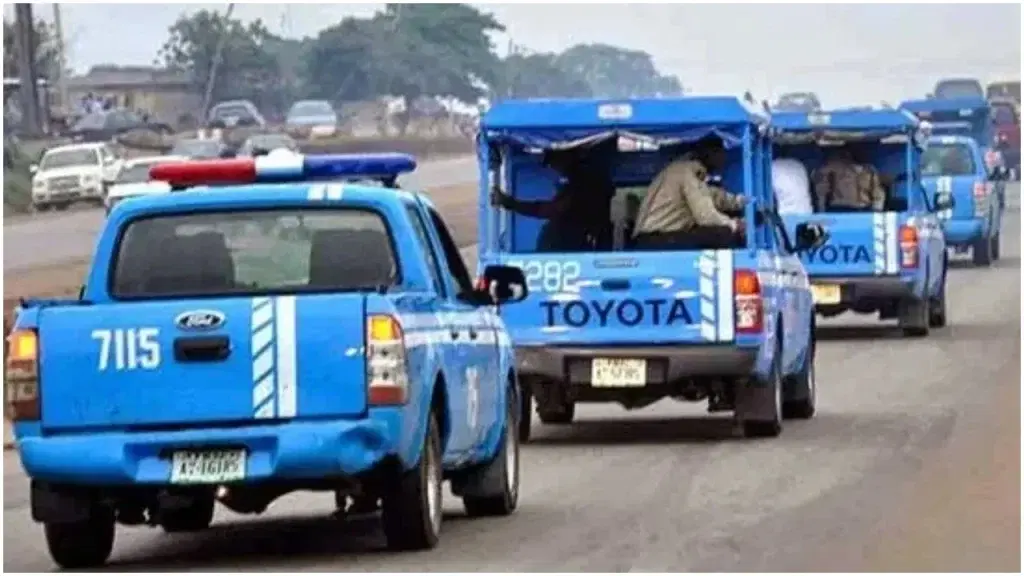
The early morning haze over the Lagos-Ibadan Expressway clung to the asphalt like a weary sigh, turning the ribbon of concrete into a mirror of frustration and resilience. Commuters, their faces etched with the quiet desperation of those who have watched hours dissolve into idle engine hums, inched forward in a serpentine line that seemed to stretch beyond the horizon. Around the Kara Bridge, where steel girders lay exposed beneath the weight of repair crews, the air was thick with diesel fumes and the distant honk of horns that sounded more like pleas than warnings. A container‑laden truck, its cargo a silent testament to the nation’s reliance on overland trade, had jackknifed earlier that week, spilling metal and chaos across the carriageway and turning a routine stretch of road into an impromptu obstacle course. As the sun climbed higher, the temperature rose not just in degrees but in tempers, with drivers resorting to counter‑flow maneuvers that snarled the already compromised lanes further. In the midst of this rolling stalemate, the Ogun State government announced the deployment of TRACE officers—a specialized traffic unit tasked with restoring order amid the cacophony of broken signals and weary souls. Their presence, marked by crisp uniforms and handheld radios, promised a thin line of authority against the tide of indiscretion, yet the question lingered: could a handful of officers truly reroute a river of humanity that had burst its banks?
The scene was a living tableau of a nation’s infrastructural aspirations colliding with the gritty reality of daily survival, each honk a note in a symphony of delay, each paused footstep a testament to the endurance of those who call this corridor home.
The Human Toll on the Ribbon of Steel
Stories emerged from the gridlock like whispers from the edge of a cliff, each one revealing the personal cost etched into the asphalt. A young trader from Berger recounted how he had trekked over three hours on foot from New Garage to his destination, his shoes worn thin by the relentless pavement, his mind replaying the lost sales that slipped away with each stationary minute. A truck driver headed toward Aba described the surreal experience of being trapped at Ikeja since the early hours of Wednesday, his cab turning into a makeshift dormitory as he waited for the line to inch forward, his cargo of perishable goods slowly losing value with every passing hour. Commuters speaking to Channels TV spoke of abandoned vehicles, of families who had left their cars behind and sought refuge in the informal minibuses that dared to weave through the shoulders, their fares spiking to as much as four thousand naira for a short hop from Berger to Oshodi. The Federal Road Safety Corps, through its Lagos Sector Commander Kehinde Hamzat, acknowledged that the situation had been exacerbated by drivers who chose to travel against the flow, a reckless decision that turned the already narrowed lanes into a chaotic ballet of near‑misses.
He noted that a joint meeting involving works controllers from Lagos and Ogun states, police commissioners, and other stakeholders had convened that morning to devise a maximum deployment strategy aimed at curbing the counter‑flow menace. Yet, even as authorities spoke of restoring flow, the reality on the ground remained a snail’s pace crawl, a reminder that the bridge repairs—though necessary for long‑term safety—had reduced the corridor’s capacity to a fraction of its usual flow, leaving it vulnerable to any incident, however minor. The human dimension of the crisis was not merely measured in lost hours but in the erosion of trust, in the quiet resignation that settled over those who had come to expect the expressway as a lifeline rather than a gauntlet.
The Machinery of Control: TRACE and the FRSC Gambit
In response to the mounting chaos, Ogun State’s governor emphasized that the immediate priority of his administration was to protect lives and maintain order, a statement that framed the deployment of TRACE officers as both a tactical and symbolic intervention. TRACE, an acronym for the Traffic Regulation and Control Agency, had been mobilized with a clear mandate: to intercept and deter drivers who flouted traffic regulations, particularly those engaging in the perilous practice of counter‑flow driving that the FRSC had identified as a key aggravator. According to Vanguard News, the FRSC had blamed such drivers for worsening the gridlock, pointing to specific hotspots around Kara, OPIC, and Fagbems where the illicit maneuvers created bottlenecks that rippled outward. The presence of TRACE officers, equipped with radios and a visible authority, sought to re‑establish a semblance of normalcy by issuing warnings, directing traffic, and, when necessary, apprehending repeat offenders. This move was not isolated; it dovetailed with a broader coordination effort that saw LASTMA and Ogun State traffic officials stationed at critical junctions, their whistles cutting through the haze as they attempted to guide vehicles onto the limited open lanes. The Federal Ministry of Works, meanwhile, continued its phased rehabilitation of the Kara Bridge, replacing expansion joints that had exceeded their service life—a project initially slated for August but postponed after concerns over traffic management surfaced.
The work, carried out under the watchful eye of Minister David Umahi, required closing half of the affected section while allowing traffic to flow on the other side, a delicate balancing act that left the corridor perpetually teetering on the edge of collapse. As the TRACE officers patrolled, their radios crackling with updates from the FRSC’s command center, a tentative rhythm began to emerge: the flow, though still sluggish, showed signs of incremental improvement, a fragile testament to the power of coordinated enforcement when met with the relentless pressure of daily demand.
Economic Ripples and the Ghost of Infrastructure
Beyond the immediate inconvenience, the gridlock sent shockwaves through the local economy, exposing the fragility of a region that relies heavily on the seamless movement of goods and people. Market vendors in Oshodi reported a sharp decline in foot traffic, their stalls echoing with the absence of the usual lunchtime crowd as commuters opted to skip meals rather than risk another hour trapped in transit. Transport operators, faced with elongated routes and idle fleets, began to adjust their pricing structures, with fares from Berger to Mowe climbing to thirty‑five hundred naira and those from Agege to OPIC hitting fifteen hundred naira—a surge that squeezed already thin profit margins and passed the burden onto consumers. The ripple effect extended to the logistics sector, where trucking companies lamented increased fuel consumption and delayed deliveries, their supply chains strained by the unpredictable stop‑start rhythm of the expressway. Analysts noted that the Kara‑OPIC corridor, which carries a substantial volume of commercial traffic between Lagos, Ogun State, and points north, had become a choke point that threatened to undermine broader economic activity, particularly as the nation grappled with inflationary pressures and a need for efficient intra‑regional trade. The Federal Government’s justification for the bridge repairs—citing safety risks posed by deteriorated expansion joints that could lead to more serious structural failures—resonated with engineers who warned that deferring such maintenance would invite catastrophic consequences.
Yet, the timing of the work, coinciding with a period of heightened traffic vulnerability, underscored a recurring tension between long‑term infrastructural integrity and short‑term economic fluidity. As the TRACE officers sought to impose order on the surface, the deeper question remained: could a corridor perpetually caught between repair and rush ever truly serve as the economic artery it was meant to be, or would it continue to oscillate between bouts of gridlock and fleeting relief, a mirror of the nation’s broader struggle to balance immediate needs with future resilience?
Future Implications: A Blueprint or a Band-Aid?
Looking ahead, the Lagos-Ibadan expressway saga offers a lens through which to examine the interplay of governance, infrastructure, and civic behavior in Nigeria’s urban corridors. The deployment of TRACE officers, while yielding a modest amelioration of flow, raises critical questions about the sustainability of relying on enforcement alone to manage systemic choke points. Experts suggest that a more holistic approach—integrating advanced traffic management systems, real‑time monitoring, and robust public transportation alternatives—could reduce the propensity for counter‑flow driving and mitigate the impact of inevitable accidents or maintenance works. The FRSC’s emphasis on joint stakeholder meetings points to a recognition that siloed efforts are insufficient; yet, the translation of such coordination into concrete, funded initiatives remains a work in progress. Historically, the expressway has been a barometer of Nigeria’s infrastructural ambitions, having undergone multiple upgrades since its inception, each promising smoother transit only to be tested by the relentless pressure of population growth and vehicular expansion. The current crisis, sparked by a combination of bridge repairs and human indiscretion, may serve as a catalyst for rethinking the corridor’s design—perhaps incorporating dedicated lanes for public transit, expanding shoulder space for emergency maneuvers, or investing in intelligent signaling that adapts to real‑time conditions. If the lessons of this episode are internalized, the Lagos-Ibadan route could evolve from a perennial bottleneck into a model of resilient urban mobility, embodying a blueprint that other congested arteries might emulate.
Conversely, if the response remains confined to temporary deployments and reactive measures, the expressway risk becoming a perpetual band‑aid, a stark reminder that without sustained investment and forward‑looking planning, the veins that connect Nigeria’s economic heartlands will continue to clot, leaving countless commuters stranded in the liminal space between aspiration and reality.
📰 Sources Cited
- Peoples Gazette: Ogun deploys TRACE officers to tackle Lagos-Ibadan road traffic snarl-up
- Vanguard News: LAGOS-IBADAN GRIDLOCK: Counter-flow drivers worsened crisis – FRSC
- Channels TV: Trapped Commuters, Motorists Lament As Lagos-Ibadan Expressway Gridlock Worsens
- Vanguard News: Lagos-Ibadan Expressway remains blocked
0 Comments
Sign in to commentNo comments yet. Be the first to share your thoughts!