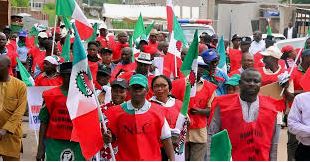
The early morning light filtered through the dusty windows of Labour House in Abuja, casting long shadows over the polished mahogany table where the Nigeria Labour Congress’s National Executive Council and Central Working Committee had convened. Outside, the hum of generators blended with the distant honk of motorbikes, a reminder of the city’s relentless pulse even as the nation grappled with a deepening economic malaise. Inside, the air was thick with the scent of strong coffee and the weight of unresolved grievances, as delegates exchanged terse glances before the chairman called the meeting to order. Comrade Joe Ajaero, his voice steady yet urgent, rose to address the assembled leaders, his words slicing through the tension like a blade through silk. He recalled the promises made when the current national minimum wage was signed in 2024, a pledge that now seemed a distant echo amid soaring fuel prices and a naira that had lost more than half its value against the dollar. The communiqué that followed was not merely a list of demands; it was a clarion call, a warning that the patience of Nigerian workers had reached its breaking point. As the deliberations continued, the gravity of the situation settled over the room like a heavy blanket, each member aware that the decisions taken here would ripple through markets, households, and the very fabric of Nigerian society.
The ultimatum they forged was rooted in concrete figures: a demand to roll back petrol prices to the level prevailing at the time of the 2024 wage agreement, a call to renegotiate the minimum wage before the end of October, and a insistence on implementing outstanding settlements with health and public sector unions. Outside the hall, the city buzzed with speculation, traders adjusting their prices, commuters bracing for possible disruptions, and policymakers weighing the cost of concession against the risk of unrest. In that moment, the labour movement stood at a crossroads, ready to transform frustration into action if the government failed to heed the call.
The Economic Backdrop: Inflation, Naira Depreciation, and the Fuel Price Shock
According to Leadership Newspaper, the NLC’s ultimatum explicitly tied the demand for lower petrol prices to the erosion of workers’ purchasing power, insisting that fuel costs be reduced to the level that existed when the current minimum wage was signed in 2024. The Guardian Nigeria News noted that the labour centre argued the astronomical rise in fuel prices had intensified transportation expenses, which in turn pushed up the prices of food and other essential commodities, creating a vicious cycle that squeezed household budgets from multiple angles. Punch Nigeria highlighted that the NLC pointed to the naira’s depreciation as a central factor, observing that the currency had lost significant value since the wage agreement, thereby rendering the nominal minimum wage effectively worthless in real terms. Peoples Gazette added that the communiqué warned that without immediate relief, workers would be unable to afford basic necessities such as shelter, healthcare, and education, a scenario that threatened to plunge millions deeper into poverty. Vanguard News reported that the labour congress also demanded the implementation of tax relief measures and the prompt payment of previously agreed wage awards, arguing that such steps would provide immediate fiscal breathing room for beleaguered employees. Analysts interviewed by these outlets suggested that the government’s recent fiscal policies, which included the removal of fuel subsidies and the unification of exchange rates, had inadvertently shifted the burden of macroeconomic adjustment onto the most vulnerable segments of society.
Historical context reveals that similar confrontations erupted in 2016 and 2020 when fuel price hikes triggered nationwide strikes, forcing successive administrations to negotiate under pressure. The current situation, however, is distinguished by the convergence of multiple pressures: spiraling inflation, a volatile foreign exchange market, and a growing informal sector that lacks the protections enjoyed by formal workers. Economists warn that if the government accedes to the NLC’s demands without a complementary strategy to boost domestic refining capacity and stabilize the currency, the short‑term relief could be offset by longer‑term fiscal imbalances. Conversely, a refusal to act risks igniting a wave of industrial action that could disrupt oil production, sabotage supply chains, and deter foreign investment at a time when the country desperately needs inflows to shore up reserves. The stakes, therefore, extend far beyond the immediate price at the pump; they touch upon the credibility of Nigeria’s economic management and the social contract between the state and its labour force.
The Social and Cultural Dimensions: Solidarity, Street Protests, and the Quest for Dignity
The Guardian Nigeria News captured the mood on the streets of Lagos and Abuja, where traders, students, and informal workers gathered in impromptu circles to discuss the NLC’s ultimatum, their faces reflecting a mixture of hope and apprehension. Leadership Newspaper reported that the labour congress deliberately framed its demands as a moral imperative, invoking the dignity of work and the right of every Nigerian to earn a living wage that could sustain a family. Punch Nigeria noted that the communiqué emphasized the cultural value of solidarity, urging affiliates and progressive allies to remain on high alert and prepared for what it described as “decisive efforts” against policies deemed anti‑worker and anti‑people. Peoples Gazette highlighted that the NLC’s call to action resonated with deep‑rooted traditions of collective bargaining and communal support, echoing the historic struggles of the 1945 general strike and the 1994 fuel subsidy protests that had shaped Nigeria’s labour consciousness. Vanguard News added that the labour leadership invoked the imagery of a flame, suggesting that the workers’ resolve burned bright and would not be easily extinguished by governmental inertia. Social commentators observed that the ultimatum had sparked conversations in marketplaces, places of worship, and online forums, where ordinary citizens debated the fairness of a system that allowed a privileged few to prosper while the majority struggled to meet daily needs.
The cultural dimension of the dispute is further enriched by the role of music and art; street musicians began composing songs that celebrated the NLC’s stance, while graffiti artists painted murals depicting clenched fists and oil rigs, symbols of both resistance and the nation’s resource wealth. Religious leaders, too, weighed in, with some urging the government to heed the pleas of the poor as a moral duty, while others warned against allowing the situation to descend into chaos that could threaten social harmony. The interplay of these social forces creates a potent mix: on one side, a labour movement seeking to reclaim its historic role as the champion of the downtrodden; on the other, a populace weary of repeated promises that have failed to materialize. Should the government ignore the ultimatum, analysts warn that the resulting unrest could transcend traditional strike actions, potentially igniting broader civil disobedience that would test the resilience of Nigeria’s democratic institutions. Conversely, a responsive approach could reinforce the social contract, fostering a sense of inclusion that might quell the simmering discontent and pave the way for more collaborative policymaking in the future.
Political Maneuvering and Labor Strategy: Negotiations, Alliances, and the Looming Deadline
Leadership Newspaper detailed that the NLC’s ultimatum was not a spontaneous outburst but the culmination of weeks of internal deliberation, during which the congress consulted with its affiliates, legal experts, and international labour organizations to craft a legally grounded and politically viable set of demands. The Guardian Nigeria News reported that the labour centre had set a clear timeline, beginning the two‑week countdown on Friday, October 9, 2026, and giving the federal government until the end of the month to initiate renegotiations of the national minimum wage. Punch Nigeria highlighted that the NLC also demanded the immediate implementation of the February 5, 2026 settlement terms with the Joint Health Sector Unions and Assembly of Healthcare Professionals (JOHESU), as well as the outstanding demands of the Joint Public Sector Negotiating Council (JPSNC), signalling a comprehensive approach that sought to address multiple sectoral grievances simultaneously. Peoples Gazette noted that the communiqué warned that failure to meet the demands would compel the NLC to take “remedial steps” as directed by its relevant organs, a veiled reference to the possibility of strikes, go‑slow actions, or other forms of industrial action. Vanguard News added that the labour congress called on its members and allies to remain prepared for what it described as “decisive efforts,” indicating a readiness to escalate should negotiations stall.
Political analysts suggest that the Tinubu administration now faces a delicate balancing act: acceding to the labour’s demands could alleviate immediate social pressures but might also be perceived as conceding to militant unionism, potentially emboldening other groups to issue similar ultimatums. Conversely, a hardline stance risks alienating a crucial constituency ahead of upcoming electoral cycles, especially given the NLC’s ability to mobilize millions of workers across the formal and informal sectors. Historical precedents show that governments that have successfully negotiated with labour during crises often employed a combination of temporary relief measures—such as targeted subsidies or tax rebates—paired with longer‑term structural reforms aimed at boosting productivity and reducing reliance on imported fuel. The NLC’s strategy appears to hinge on leveraging its moral authority and the broad public sympathy generated by the visible hardship faced by ordinary Nigerians, thereby creating a political cost for inaction that could outweigh the fiscal concessions required. Observers note that the labour movement has also begun to cultivate alliances with civil society groups, student unions, and even certain business chambers that share concerns about inflation and exchange‑rate volatility, broadening the base of support beyond traditional union strongholds. As the deadline looms, back‑channel discussions are rumored to be taking place between senior government officials and NLC representatives, though the outcomes remain shrouded in uncertainty.
The resolution of this standoff will likely shape not only the immediate economic landscape but also the broader trajectory of labour‑state relations in Nigeria for years to come.
Future Implications: A Blueprint for Inclusive Growth or a Temporary Band‑Aid?
As the two‑week window draws to a close, economists and policy experts are already sketching possible scenarios that could emerge from the NLC’s ultimatum, each carrying distinct implications for Nigeria’s development trajectory. Leadership Newspaper warned that if the government merely accedes to the surface demands—cutting petrol prices to 2024 levels and restarting wage talks—without addressing the root causes of naira instability and fuel import dependence, the relief may prove fleeting, setting the stage for another cycle of agitation once market forces reassert themselves. The Guardian Nigeria News suggested that a more enlightened response would pair immediate fiscal relief with strategic investments in domestic refining capacity, renewable energy projects, and mechanisms to hedge against exchange‑rate shocks, thereby building resilience into the economy’s core. Punch Nigeria highlighted that the successful implementation of the JOHESU and JPSNC agreements could serve as a model for sector‑specific cooperation, demonstrating that when labour and state engage in good‑faith negotiations, productivity gains and service improvements often follow. Peoples Gazette warned that failure to act decisively risks eroding public trust in governmental institutions, potentially fueling a rise in populist movements that reject conventional political channels in favor of direct action. Vanguard News added that the labour movement’s emphasis on tax relief and the payment of wage awards could stimulate consumer demand, offering a short‑term boost to GDP growth if accompanied by measures to prevent inflationary spirals.
Analysts from various think tanks argue that the ultimate test lies in whether the Tinubu administration can transform this crisis into an opportunity to renegotiate the social contract, forging a compact that guarantees a living wage, affordable energy, and equitable taxation while simultaneously encouraging private sector investment and export diversification. The cultural resonance of the NLC’s call—its evocation of dignity, solidarity, and historical struggle—suggests that any lasting solution must also honor the symbolic aspirations of workers, not merely their material needs. Looking ahead, the outcome of this showdown could either reinforce Nigeria’s reputation as a nation where dialogue and compromise prevail, or it could deepen the fissures between the state and its labour force, with repercussions that echo through investment decisions, social stability, and the country’s long‑term quest for inclusive development. As the nation watches and waits, the flame of labour continues to burn, casting its light on the path that Nigeria must choose to walk.
📰 Sources Cited
- Leadership Newspaper: NLC Gives Federal Govt 2-week Ultimatum To Cut Petrol Prices
- Google News Nigeria: NLC gives FG two-week ultimatum on wage talks, petrol price - The Guardian Nigeria News
- Punch Nigeria: NLC gives FG two weeks to cut petrol price, begin minimum wage talks
- Peoples Gazette: NLC gives Tinubu govt two-week ultimatum to cut petrol price, renegotiate minimum wage
- Vanguard News: NLC draws battle line with FG, gives 14-day ultimatum on petrol, wages
0 Comments
Sign in to commentNo comments yet. Be the first to share your thoughts!