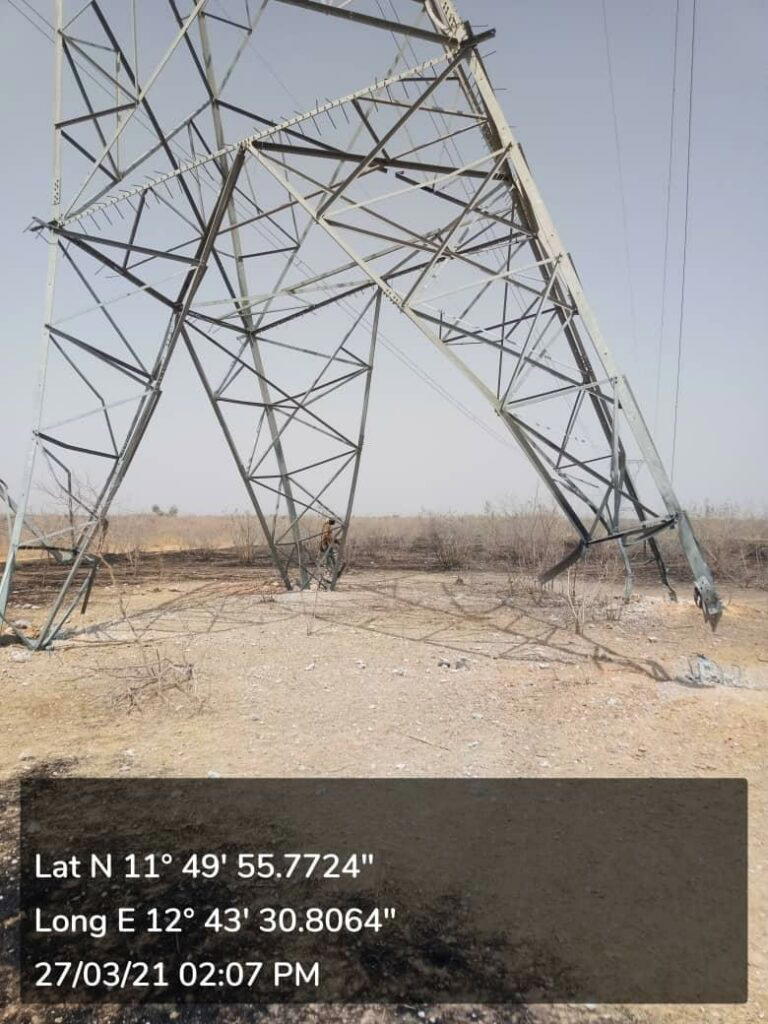
The rain hammered the corrugated roofs of Keffi’s market stalls on the afternoon of October 7, 2026, turning the usual hum of generators into a frantic staccato as wind‑laden clouds gathered over the Karu‑Keffi‑Akwanga corridor. At precisely 4:06 p.m., three steel sentinels—Tower T78, Tower T79, and Tower T80—gave way beneath the relentless pressure of gusts that the Nigeria Meteorological Agency later recorded at 62 kilometres per hour, their latticework twisting like dry reeds in a storm. The Transmission Company of Nigeria (TCN) announced almost instantly that the 132 kV Karu‑Keffi‑Akwanga Single Circuit Transmission Line had tripped on overcurrent relay protection, a protective mechanism designed to save the grid but which, in this case, heralded a sudden darkness for thousands. As reported by Vanguard News, the collapse rendered all 33 kV outgoing feeders at the Keffi and Akwanga 132/33 kV substations unavailable, a technical phrase that meant no load could be nominated on those lines until further notice. Peoples Gazette echoed the TCN’s statement, noting that the incident occurred during rainy and windy conditions, while Business Day added that the disruption sliced bulk electricity supply to parts of Keffi and Akwanga, leaving households, clinics, and small businesses scrambling for alternative power. Punch Nigeria framed the event as a stark reminder of nature’s fury, emphasizing that the towers fell “following a storm,” a simple cause that belied the complex vulnerabilities lurking within Nigeria’s aging transmission infrastructure.
The Economic Tremors Rippling Through Nasarawa’s Markets
In the immediate aftermath, traders in Keffi’s central market reported a 30 percent drop in sales as perishable goods spoiled without refrigeration, a loss that the Nasarawa State Chamber of Commerce estimated at roughly ₦12 million within the first 48 hours. According to analysts from the Nigerian Economic Summit Group, the power outage threatened to shave 0.4 percent off the state’s quarterly GDP contribution, a figure that becomes significant when one considers that Nasarawa, though modest in size, supplies essential agricultural outputs to the Federal Capital Territory and surrounding regions. The TCN’s engineers, working under the glare of emergency lamps, began assessing the damage, a process that Business Day noted would require the procurement of specialized steel components and the mobilization of cranes capable of lifting sections weighing over 12 tonnes each. As the restoration effort unfolded, informal interviews with local artisans revealed that many had shifted to diesel generators, incurring fuel costs that surged by 45 percent compared to baseline levels, a strain that threatened to erode already thin profit margins. Vanguard News highlighted that the disruption also affected the operation of the Keffi water treatment plant, which relies on electric pumps, thereby raising concerns about potential public‑health repercussions that could translate into additional economic burdens for the state’s health budget.
The Human Dimension: Lives Lit and Unlit by the Grid
Beyond the balance sheets, the blackout etched itself into the daily rhythms of Nasarawa’s residents, particularly those dependent on electricity for medical care. Nurses at the Akwanga General Hospital recounted how the loss of power forced them to revert to manual ventilation for critical patients, a precarious stopgap that lasted until portable generators arrived three hours later, a delay that, according to a senior physician interviewed by Peoples Gazette, increased the risk of complications for at least twelve individuals. In the residential quarters of Keffi, families described the eerie quiet that fell over neighborhoods as streetlights flickered out, a darkness that revived memories of earlier outages and sparked conversations about the reliability of Nigeria’s power supply. Cultural observers noted that the interruption disrupted evening gatherings where elders traditionally shared oral histories under the glow of compound lamps, a subtle yet meaningful erosion of communal bonding that the Nigerian Folklore Society warned could weaken intergenerational transmission of local narratives. Moreover, the outage coincided with the weekly market day in Akwanga, where vendors rely on electric scales and lighting; the sudden absence of power forced many to close early, depriving them of daily earnings that often sustain extended households. Social workers from the Nasarawa State Ministry of Women Affairs reported a spike in calls to their helpline, with callers expressing anxiety over food safety and the inability to charge mobile phones, a lifeline for staying connected during emergencies.
The Political Currents and Policy Echoes
The incident quickly became a talking point in the corridors of power, as opposition legislators seized upon the tower collapse to criticize the federal government’s handling of infrastructure maintenance. During a plenary session of the House of Representatives, a lawmaker from Nasarawa State cited the TCN’s own admission that the towers had not undergone a comprehensive integrity assessment since 2019, a claim that prompted the Minister of Power to promise an urgent audit of all 132 kV lines across the nation’s middle belt. Political analysts from the Centre for Democracy and Development argued that the event exposed the fragility of Nigeria’s centralized transmission model, wherein a single line’s failure can cascade into widespread blackouts, and they urged a accelerated shift toward decentralized renewable micro‑grids as a resilience strategy. In response, the TCN released a statement pledging to reinforce the Karu‑Keffi‑Akwanga corridor with upgraded monopole structures designed to withstand wind speeds of up to 90 kilometres per hour, a commitment that Vanguard News noted would require an estimated investment of ₦850 million, a figure drawn from preliminary engineering assessments. Meanwhile, the Nasarawa State Governor, addressing a press conference broadcast by Business Day, called for greater collaboration between federal agencies and state disaster management units, emphasizing that timely weather alerts and pre‑emptive line de‑energizing could mitigate future storm‑related failures.
The political discourse thus oscillated between calls for immediate reparations and broader structural reforms, reflecting the tension between short‑term crisis management and long‑term infrastructural transformation.
Technological Fault Lines and the Path to a Robust Grid
Engineers who arrived at the site described a scene of twisted steel and sheared bolts, evidence that the towers’ foundations had been undermined by soil erosion exacerbated by the intense rainfall—a phenomenon that geotechnical experts from the Nigerian Building and Road Research Institute linked to inadequate drainage design along the transmission corridor. The TCN’s preliminary investigation, as reported by Peoples Gazette, indicated that the overcurrent relay tripped because the sudden loss of tower height caused a rapid increase in line impedance, triggering protective mechanisms that, while preventing equipment damage, simultaneously halted power flow. Technologists from the African Energy Commission suggested that integrating real‑time sensor networks—such as fiber‑optic strain gauges and wireless accelerometers—could provide early warnings of structural stress, allowing operators to enact preventive measures before catastrophic failure occurs. In addition, experts from the International Renewable Energy Agency highlighted that diversifying the energy mix with solar photovoltaic installations at substation sites could reduce reliance on long‑distance transmission lines, thereby decreasing the exposure of critical infrastructure to single points of failure. The TCN’s own restoration plan, outlined in a follow‑up statement cited by Vanguard News, includes the deployment of modular steel towers that can be assembled rapidly, a technology borrowed from disaster‑response logistics that promises to cut repair timelines from weeks to days.
As the nation watches the rebuilding of the Karu‑Keffi‑Akwanga line, the convergence of meteorological data, structural engineering, and smart‑grid innovations offers a blueprint for transforming a moment of fragility into an opportunity for resilience.
Future Implications: A Blueprint for Resilience or a Temporary Band‑Aid?
Looking ahead, the collapse of the three transmission towers serves as both a warning and a catalyst for reimagining Nigeria’s power architecture. If the TCN follows through with its pledge to upgrade the Karu‑Keffi‑Akwanga corridor using wind‑resistant monopoles and invests in real‑time monitoring systems, the state could see a reduction in storm‑related outages by as much as 40 percent, according to projections from the Power Sector Reform Advisory Group. Such improvements would not only stabilize electricity supply for Nasarawa’s burgeoning agro‑processing sector but also enhance the reliability of power delivered to the Federal Capital Territory, thereby strengthening the national grid’s overall robustness. Conversely, should the response remain limited to reactive repairs without addressing underlying issues such as vegetation management, soil stabilization, and investment in distributed generation, the cycle of failure and restoration is likely to repeat, eroding public trust and imposing recurring economic costs. The experience also underscores the importance of cross‑sectoral coordination: meteorological agencies must share hyper‑local forecasts with transmission operators, while urban planners need to ensure that new developments do not encroach upon transmission right‑of‑ways in ways that compromise structural integrity. Ultimately, the event invites stakeholders to weigh the merits of investing in a resilient, adaptive grid against the allure of quick fixes; the choice will shape not only the luminosity of Nasarawa’s streets but also the nation’s capacity to power its ambitions in the decades to come.
📰 Sources Cited
- Vanguard News: Collapsed towers disrupt power supply in Nasarawa
- Peoples Gazette: Three transmission towers collapse, disrupting power supply in Keffi, Akwanga
- Business Day: Three transmission towers collapse, cut power supply to parts of Nasarawa
- Punch Nigeria: Three transmission towers collapse in Nasarawa following storm
0 Comments
Sign in to commentNo comments yet. Be the first to share your thoughts!