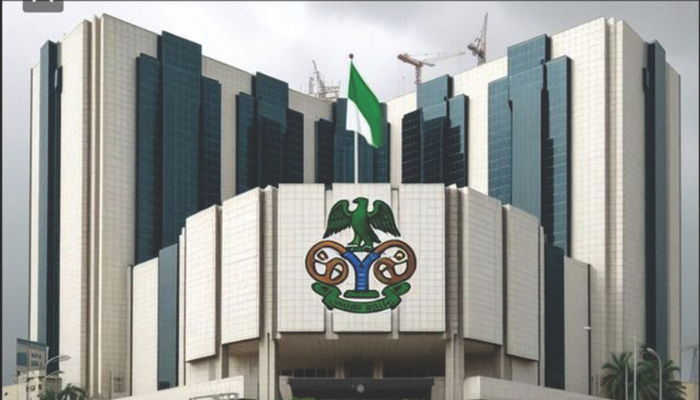
The Central Bank of Nigeria’s sudden 350‑basis‑point slash to the Monetary Policy Rate sent ripples through the nation’s financial arteries like a stone dropped into the Lagos lagoon, stirring both hope and apprehension in equal measure. As the benchmark fell from 26.5 percent to a still‑elevated 23 percent, analysts whispered that the move marked the end of a prolonged tightening cycle, a concession to easing inflation that had begun to loosen its grip on household budgets. Bismarck Rewane, Managing Director of Financial Derivatives Company, warned that the naira could face depreciation pressure, a sentiment echoed in the corridors of Business Day where journalists noted the “jumbo rate reset” as a pivotal moment for fixed‑income and equity markets alike. Simultaneously, the Economic Confidential piece highlighted that the Monetary Policy Committee’s decision came after months of steadfast hikes, framing the cut as a strategic pivot rather than a retreat. In the bustling trading floors of the Nigerian Stock Exchange, brokers began to recalibrate models, anticipating a shift of capital from low‑yielding bonds toward equities that might benefit from cheaper borrowing costs. The decision, therefore, stood at a crossroads where macro‑economic prudence met market opportunism, setting the stage for a nuanced interplay of currency dynamics, investor sentiment, and the broader socio‑economic fabric that underpins Africa’s largest economy.
The Economic Backdrop: Inflation’s Ebb and the Liquidity Tug‑of‑War
Nigeria’s inflation trajectory has been a rollercoaster, climbing to double‑digit heights amid foreign‑exchange scarcity and supply‑chain disruptions before beginning a gradual descent that gave the Monetary Policy Committee room to maneuver. According to Nairametrics, the latest consumer price index showed inflation easing to around 22 percent, a figure that, while still high, signaled enough relief for policymakers to contemplate a rate cut without reigniting price pressures. Business Day’s coverage emphasized that the 350‑bps reduction was not a timid tweak but a “jumbo” reset, designed to inject liquidity into a banking sector that had been starved of cheap funds during the tightening phase. Analysts quoted in the same outlet suggested that lower rates could reduce the cost of capital for manufacturers, potentially boosting production and easing the upward pressure on prices that had plagued the economy for months. Yet, the same analysts cautioned that the naira’s vulnerability to depreciation—highlighted by Rewane’s warning—could offset any domestic gains, as a weaker currency raises import costs and feeds back into inflation. The interplay between these forces creates a delicate balancing act: too much easing risks currency weakness and renewed price spikes, while too little keeps credit expensive and stifles growth. In this context, the CBN’s move reads as a calculated gamble, betting that the immediate stimulus to credit markets will outweigh the latent exchange‑rate risks, a bet that will be tested in the coming months as market participants watch the naira’s reaction to the new policy stance.
Social and Cultural Dimensions: Market Moods on Main Street and in the Marketplace
Beyond the charts and central bank communiqués, the rate cut reverberates through the everyday lives of Nigerians, influencing everything from the price of a bag of rice to the ambition of a young entrepreneur seeking a loan. Social commentators noted that the anticipation of cheaper credit sparked conversations in Lagos markets, where traders discussed the possibility of expanding inventory without the burden of exorbitant interest payments. Cultural narratives around risk‑taking and resilience found fresh fodder in the debate, as the cut was framed by some as an affirmation of the nation’s capacity to adapt its monetary tools to shifting realities, while others viewed it as a concession that undermined the hard‑won credibility of the CBN’s inflation‑fighting stance. In informal savings groups, known locally as “esusu,” members debated whether to redirect contributions from low‑yielding savings accounts toward nascent business ventures, a shift that could amplify grassroots economic activity if access to credit improves. Simultaneously, tech‑savvy youth in Abuja and Port Harcourt began scouring fintech platforms for loan products that now advertised lower annual percentage rates, hoping to fund start‑ups in agritech and renewable energy. These on‑the‑ground reactions illustrate how monetary policy is not an abstract lever but a lived experience that shapes aspirations, consumption patterns, and the cultural discourse surrounding economic self‑determination.
The cut, therefore, becomes a mirror reflecting both the optimism of those eager to seize new opportunities and the anxiety of those wary of a potential currency slide that could erode purchasing power.
Political and Technological Crosswinds: Governance, Reforms, and the Digital Economy
The timing of the rate cut also intersects with Nigeria’s broader political agenda, particularly the ongoing push for financial‑sector reforms aimed at enhancing stability and operational efficiency. Business Day’s article on the CBN’s proposed HoldCo reforms highlighted a parallel effort to strengthen governance structures within banks, a move that could amplify the impact of looser monetary policy by ensuring that additional liquidity is channeled prudently rather than fueling speculative bubbles. Political analysts observed that the decision may serve as a signal to investors that the administration is willing to employ orthodox tools to stimulate growth, thereby bolstering confidence ahead of upcoming electoral cycles. At the same time, the technological dimension cannot be ignored: Nigeria’s burgeoning fintech ecosystem, which has attracted significant venture capital, stands to benefit from lower borrowing costs as digital lenders adjust their pricing models. Reports from Nairametrics pointed to an expected rotation of investor demand from fixed income toward equities, a shift that could be amplified by algorithmic trading platforms that react swiftly to changes in interest‑rate benchmarks. Moreover, the central bank’s own digital currency initiatives, such as the eNaira pilot, may find renewed relevance in a lower‑rate environment, as policymakers explore alternative mechanisms to transmit monetary stimulus directly to consumers and businesses.
Thus, the rate cut sits at a nexus where traditional monetary policy, political signaling, and technological innovation converge, each influencing the other in a complex feedback loop that will shape Nigeria’s economic trajectory for years to come.
Future Implications: A Blueprint for Balanced Growth or a Temporary Band‑Aid?
Looking ahead, the true test of the CBN’s 350‑bps maneuver will be whether it can catalyze sustained, inclusive growth without reigniting inflationary flames or precipitating a disorderly naira depreciation. Economists cited in Economic Confidential warned that if inflation continues its downward trajectory, further cuts may be on the table, potentially pushing the MPR toward levels not seen since the pre‑tightening era, a scenario that would require vigilant monitoring of external reserves and capital flows. Conversely, should the naira weaken sharply, the CBN might be forced to intervene—either through direct foreign‑exchange sales or by adjusting the policy corridor—to protect external stability, a move that could blunt the stimulative intent of the rate cut. Equity strategists from Nairametrics anticipate that sectors with high debt exposure, such as telecommunications and real estate, could experience a short‑term boost in valuations as financing costs fall, while export‑oriented industries might suffer if a weaker currency erodes competitiveness abroad. Socially, the policy’s success will be measured by its ability to translate cheaper credit into tangible job creation, especially for the youth demographic that bears the brunt of unemployment. Technologically, the acceleration of digital lending platforms could democratize access to capital, but only if regulatory frameworks keep pace with innovation to prevent predatory practices.
In sum, the rate cut represents a pivotal inflection point: if accompanied by complementary fiscal discipline, structural reforms, and prudent exchange‑rate management, it could lay the groundwork for a resilient growth narrative; if left isolated, it risks becoming a fleeting band‑aid that masks deeper vulnerabilities. The coming quarters will reveal whether Nigeria’s policymakers can steer this delicate dance toward a horizon of shared prosperity or whether the nation will once again find itself navigating the treacherous waters of abrupt policy swings.
📰 Sources Cited
- Nairametrics: Naira may depreciate following CBN’s 350bps rate cut – Rewane
- Business Day: What CBN jumbo rate reset means for fixed income, equities
- Nairametrics: CBN’s 350bps rate cut reshapes stocks, bonds and bank earnings outlook
- Economic Confidential: Why CBN Cut Rate After Months of Tightening – Cardoso
- Nairametrics: CBN 350bps MPR cut to drive equities demand as investors rotate from fixed income
0 Comments
Sign in to commentNo comments yet. Be the first to share your thoughts!